Key points
- Stretford’s ground‑floor car park is earmarked for conversion into a new food hall and events space with around 6,000 sq ft of area.
- The project is part of wider regeneration of Stretford town centre, which includes other housing and infrastructure works.
- The food hall is expected to house a mix of independent food and drink vendors, plus space for community events and pop‑ups.
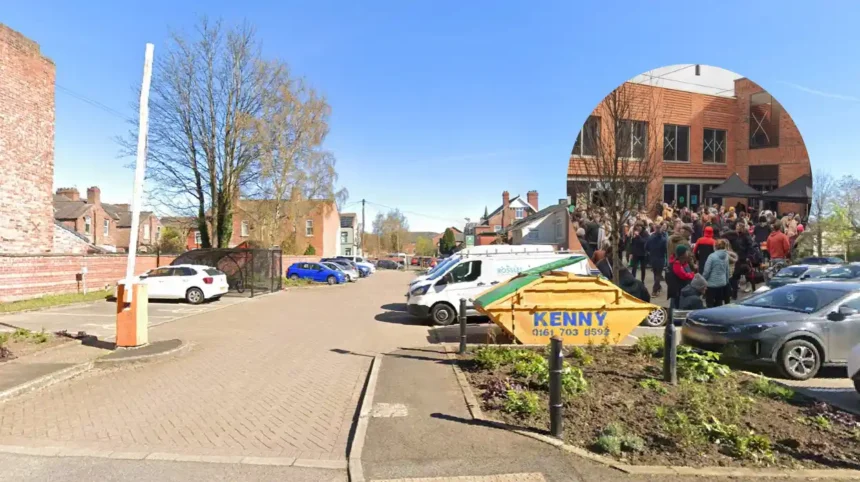
- Planning and preparatory work for the wider Stretford Lacy Street car park redevelopment has already begun, with the car park set to close in early 2026.
- Trafford Council and partner developers describe the scheme as aiming to boost footfall, support local businesses, and diversify the town’s evening‑time offer.
Stretford (Manchester Mirror)May 21, 2026-Stretford’s long‑standing multi‑storey car‑park site is being reimagined as a destination for food‑lovers and event‑goers, under current plans for a 6,000 sq ft food hall and events space on its ground floor. As outlined in early planning materials, the space would provide a permanent home for independent food vendors rather than remaining purely as parking, reflecting a shift in how the town is using its under‑used town‑centre land. The proposal is being framed as complementary to wider regeneration work already underway on nearby sites, including new housing and active‑travel routes into and around the town centre.
How the plan came about
Trafford Council’s long‑term town‑centre masterplan has repeatedly highlighted the need to repurpose parts of the Stretford Mall and Lacy Street car‑park area to create more residential, retail, and community‑focused uses. In December 2025 planning permission was granted for a 53‑home scheme on the Lacy Street car‑park site, which relies on the existing car park closing so that preparatory ground and utility works can begin. At the same time, the council and its development partners have explored options for the multi‑storey car‑park building itself, including the idea of converting a portion of its ground floor into a food‑hall and events operation.
Local stakeholders, including the Stretford Town Centre Development Board, have supported the idea as a way of attracting more visitors during evenings and weekends, when the town centre traditionally sees quieter footfall. The working concept is that the food hall would occupy roughly 6,000 sq ft of the ground‑floor area, with the remaining space reserved for car parking or other commercial uses that can co‑exist with the food‑venue operation.
What the new food hall will be like
According to the current planning direction, the proposed Stretford food hall would be designed as a flexible, mixed‑use space rather than a single restaurant or bar. The plan is to host a rotating or semi‑permanent mix of independent food vendors, including local street‑food operators, coffee roasters, and specialist producers, to create a “destination” offer that draws visitors from across Greater Manchester. The events‑space element would allow the venue to run supper clubs, cooking demonstrations, small markets, and other community‑focused activities, particularly during evenings and at weekends.
Part of the rationale, as outlined by Trafford Council officers in early public materials, is to diversify the town’s evening economy beyond mainstream chain restaurants and pubs. The council has pointed to the success of similar food‑hall and indoor‑market formats in other Greater Manchester towns, where such spaces have helped sustain footfall after shopping hours and created opportunities for small, independent traders. In Stretford’s case, the multi‑storey car‑park location offers a central, well‑connected site with existing parking above and alongside the proposed food‑hall footprint, which planners see as an advantage for both visitors and operators.
Current status and timeline
As of early 2026, the Lacy Street car‑park site is already in the preparatory phase for its own housing scheme, with the existing car park scheduled to close from 16 February 2026 to allow for site‑investigation and utility‑diversion works. That closure is part of the same regeneration package that includes promises of new homes, reintroduced streets such as Bannister Street as a landscaped active‑travel route, and improved links to the Ship Canal and Edge Lane. The separate multi‑storey car‑park building, which would house the proposed food hall on its ground floor, remains under various regeneration studies and feasibility checks, rather than being at full construction stage.
Trafford Council has indicated that the food‑hall element will depend on securing a suitable operator or consortium willing to invest in fit‑out and long‑term management of the space. Officials have said they are exploring options with several hospitality and events‑space operators, while also inviting local food‑business owners to express interest in taking stalls or kitchens within the proposed hall. Because final business models and tenancy arrangements are still being negotiated, the exact opening date for the food hall has not been fixed, though the council has signalled that the project is expected to move forward in the 2026–27 period if investor and operator talks are successful.
How this affects Stretford town centre
If the food‑hall plans proceed as currently envisaged, the biggest immediate impact would be on the town’s evening and weekend economy. By adding a central, indoor‑market‑style venue with a changing line‑up of food traders and events, the scheme could help extend the time people spend in the town, particularly after the main shopping hours and on days when the cinema and leisure venues are busy. The presence of a well‑branded food hall may also encourage more visitors to arrive by car, bus, or tram, supporting nearby high‑street retailers and pubs that benefit from higher footfall.
For local independent food businesses, the project offers the prospect of lower‑risk entry into a town‑centre location, with the food hall taking on the bulk of building‑level costs and marketing. In previous similar projects across Greater Manchester, such spaces have enabled small operators to trial menus, build customer bases, and sometimes spin‑off into standalone premises once demand is proven. At the same time, council documents stress that the food‑hall operator would need to agree local‑sourcing targets and price‑point guidelines to ensure the offer remains accessible to a broad range of residents, not just visitors from outside the immediate area.
Impact on traffic, parking, and the town’s image
The transformation of any part of the multi‑storey car‑park into a food hall inevitably raises questions about how many parking spaces will remain available during peak times. Early feasibility work suggests that the 6,000 sq ft allocation would be carved out from the ground‑floor area while still preserving a significant proportion of the original parking capacity, with the upper floors continuing to function as a car park. Trafford Council has also indicated that the wider town‑centre regeneration includes measures to improve public transport links and active‑travel routes, partly to offset any potential reduction in readily available parking.
From an image‑building perspective, the planned food hall is being positioned as a way to modernise Stretford’s reputation beyond its traditional role as a residential and commuting hub. By installing a curated, Instagram‑friendly food venue in the heart of the town, the council hopes to attract food‑minded visitors and media interest, which could in turn stimulate further private‑sector investment in shops, cafés, and housing. Community‑consultation feedback collected in 2025 suggested that many residents and traders would welcome more “life” in the town centre, especially if the new venue can be designed to feel open, welcoming, and integrated with the surrounding streetscape.
Background of the development
The Stretford multi‑storey car‑park site lies at the western edge of Stretford town centre, close to Chester Road and the Metrolink stops serving the area. For several decades, the structure has served primarily as municipal car parking, with limited ground‑floor commercial use and minimal integration with the pedestrian environment. Trafford Council’s long‑term regeneration strategy for Stretford has treated the car‑park complex as a “key opportunity site” where a mix of residential, commercial, and leisure uses could be stacked vertically, rather than letting the land remain purely as surface or multi‑storey parking.
Earlier town‑centre masterplans and funding bids identified the broader Stretford Mall and car‑park area as a candidate for brownfield‑funding programmes, with visions of new homes, improved public realm, and more active‑travel routes. Separately, the neighbouring Lacy Street car‑park was approved in 2025 for a 53‑home scheme by Trafford Developments, the council’s in‑house development arm, which set the precedent for the wider car‑park site being redeveloped rather than maintained in a purely utilitarian role. Against that backdrop, the idea of a food hall on the multi‑storey car‑park’s ground floor emerged as a way to test a mixed‑use, hospitality‑led model that could be scaled up if successful.
Predictions for how this development will affect the audience
For Stretford residents and regular visitors, the most noticeable change, if the food‑hall plan is delivered, would likely be an increase in evening and weekend activity around the town centre. With a dedicated indoor food venue offering a rotating line‑up of vendors and events, locals may find more options for casual dining, family nights out, and small‑scale social gatherings without needing to travel to Manchester city centre or other suburbs. This could, in turn, encourage more frequent visits to nearby shops, pubs, and cinemas, potentially supporting the commercial viability of the high street.
For independent food traders and small hospitality operators in Trafford and neighbouring boroughs, the Stretford food hall could act as a low‑capital‑entry route into a central‑location venue. If the operator enforces fair rental terms and local‑sourcing expectations, the space may help smaller businesses grow their customer bases, refine their menus, and build brand recognition before committing to long‑term leases elsewhere. At the same time, the council’s emphasis on maintaining a broad price range and accessibility suggests the project is intended to serve a socially mixed audience, rather than becoming a purely “premium” or “destination‑only” space.
Across the wider Greater Manchester area, the success or failure of the Stretford food‑hall project could influence how other local authorities view the reuse of under‑used car‑park land in their own town centres. If the scheme proves capable of boosting footfall, supporting local businesses, and integrating with active‑travel improvements, it may be cited as a model for similar car‑park‑to‑food‑hall conversions elsewhere in the conurbation. Conversely, if the project struggles with parking loss, tenant churn, or low visitor numbers, it could prompt more cautious approaches to repurposing car‑park sites in other towns.