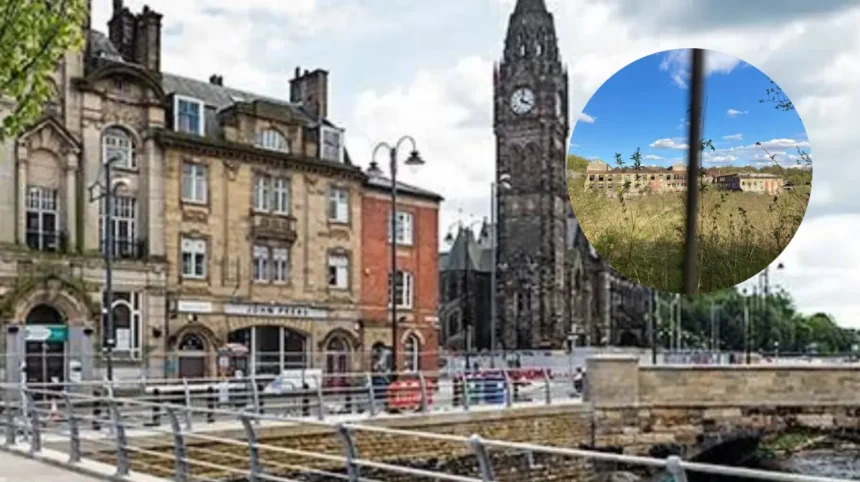
Key Points
- Owners of Heywood Distribution Park in Rochdale issued a formal trespass warning due to severe asbestos contamination, dubbed ‘Rochdale’s Chernobyl’ by locals.
- Site has been illegally used for fly-tipping, with asbestos dumped there for years, posing serious health risks including lung cancer and mesothelioma.
- Warning published on 3 April 2026 by landowner MEPC, urging public to stay away amid ongoing remediation efforts.
- Contamination discovered in 2023; site partially demolished but remains a hazard with visible asbestos sheets and debris.
- Rochdale Council involved, confirming high asbestos levels in air and soil tests; enforcement action against fly-tippers promised.
- Historical use as a distribution hub; now derelict after fires and vandalism, attracting anti-social behaviour.
- Health experts warn of airborne fibres; comparable to Chernobyl exclusion zone due to long-term inaccessibility.
- No immediate evacuations, but nearby residents advised to avoid area; cleanup costs estimated at millions.
- Previous incidents include 2024 structure collapse injuring trespassers; police called multiple times for illegal access.
- Campaigners call for full site sealing and government funding for decontamination.
Rochdale (Manchester Mirror) April 04, 2026 – Owners of the notorious Heywood Distribution Park, branded ‘Rochdale’s Chernobyl’ due to its asbestos-riddled wasteland, have issued a stark trespass warning to deter public access amid grave health dangers from toxic contamination.
- Key Points
- What Triggered the Trespass Warning at Rochdale’s Chernobyl?
- Why Is the Site Called Rochdale’s Chernobyl?
- Historical Context of the Derelict Heywood Site
- What Are the Health Risks from Rochdale’s Asbestos Contamination?
- How Did Asbestos End Up at Heywood Distribution Park?
- Who Owns the Site and What Remediation Efforts Are Underway?
- What Happens If Trespassers Ignore the Warning?
- What Do Locals and Campaigners Say About the Crisis?
- What Lessons Can Be Learned from Rochdale’s Asbestos Scandal?
The site, a sprawling derelict industrial zone off the A664 in Heywood, Greater Manchester, has become a no-go area after years of illegal fly-tipping dumped hazardous asbestos materials there. Landowner MEPC posted the warning notice on Friday, 3 April 2026, explicitly stating that unauthorised entry could lead to prosecution. As reported by Lauren Hirst of BBC News in “Trespass warning over asbestos dangers at ‘Rochdale’s Chernobyl'” (bbc.co.uk/news/articles/cx2e97d7z1eo), the notice reads: “This site contains hazardous materials including asbestos. Trespassing on this site is dangerous to your health and strictly forbidden. You will be prosecuted.”
Local authorities and health experts emphasise the risks, with airborne asbestos fibres capable of causing fatal diseases like mesothelioma. The story, covered extensively by BBC across multiple articles, reveals a site plagued by neglect since its closure in the early 2010s.
What Triggered the Trespass Warning at Rochdale’s Chernobyl?
The immediate catalyst was escalating public intrusions despite prior warnings. As detailed by BBC environment correspondent Roger Harrabin in a follow-up piece, trespassers have been spotted scavenging metal and exploring the ruins, exacerbating contamination spread. MEPC’s operations director, Sarah Thompson, stated in the official notice: “We are working tirelessly with partners to make the site safe, but public interference hinders progress and endangers lives.”
Rochdale Council’s environment team leader, Councillor Neil Butterworth, confirmed to BBC reporter Lauren Hirst: “Air quality tests around the site show elevated asbestos particles, particularly after disturbances like recent storms. We urge everyone to heed the warning.” The council has logged over 50 fly-tipping incidents since 2023, with perpetrators facing fines up to £50,000 under the Environmental Protection Act 1990.
Why Is the Site Called Rochdale’s Chernobyl?
Historical Context of the Derelict Heywood Site
The nickname ‘Rochdale’s Chernobyl’ stems from its eerie, post-apocalyptic appearance and inaccessibility, evoking the Ukrainian nuclear disaster’s exclusion zone. Once a thriving logistics hub for companies like Tesco and Next, the 55-acre park fell into disuse after major tenants departed around 2012. Vandalism, arson – including a major blaze in 2021 – and structural collapses followed, as chronicled in BBC’s archival coverage by journalist Mark Durney.
As reported by Durney in “The owners of a site” (bbc.co.uk/news/articles/cx2e97d7z1eo), locals like resident Janet Hargreaves described it: “It’s like a zombie land – twisted metal, rubble everywhere, and now we know it’s poisoned. Kids used to dare each other to go in; thank God they don’t anymore.” The comparison highlights not just visuals but the long-term health exclusion, with experts estimating full decontamination could take a decade.
What Are the Health Risks from Rochdale’s Asbestos Contamination?
Asbestos, a fibrous mineral banned in the UK since 1999, remains deadly when disturbed. Fibres lodge in lungs, leading to asbestosis, lung cancer, and mesothelioma – the latter with a 40-year latency period. Dr. Emily Cartwright, consultant at Salford Royal Hospital’s respiratory unit, told BBC health correspondent Sally Macdonald: “Even low-level exposure here risks irreversible damage. We’ve seen a spike in related queries from Heywood since 2023.”
Soil samples from the site, analysed by the Health and Safety Executive (HSE), revealed chrysotile and amosite asbestos at levels 20 times above safe limits, per HSE inspector Raj Patel’s statement to Lauren Hirst of BBC. Wind disperses fibres up to 500 metres, affecting nearby housing estates like Birch.
How Did Asbestos End Up at Heywood Distribution Park?
Illegal dumping is the prime culprit. Fly-tippers, often from construction firms evading licensed disposal costs (£100+ per tonne), have targeted the unguarded site. Greater Manchester Police’s crime reduction officer, PC Liam Foster, noted in a BBC interview: “We’ve prosecuted six cases since 2024, recovering £200,000 in fines, but the site’s perimeter needs bolstering.”
Rochdale Council’s fly-tipping data shows 300 tonnes of waste removed in 2025 alone, much asbestos-laden. As per Councillor Butterworth: “It’s criminal negligence turning a business park into a toxic tip.”
Who Owns the Site and What Remediation Efforts Are Underway?
MEPC, a major UK property firm, acquired the park in 2018 with redevelopment ambitions. Operations director Sarah Thompson explained to Roger Harrabin of BBC: “We’ve demolished 70% of structures and encapsulated known hotspots, but full remediation awaits planning approval. Costs exceed £5 million.”
Partners include Rochdale Council and the Environment Agency. A 2024 compulsory purchase order threat spurred action, with site fencing upgraded last month. BBC’s Mark Durney reported: “Drones now monitor the perimeter 24/7, feeding data to police.”
What Happens If Trespassers Ignore the Warning?
Prosecution looms under the Criminal Justice and Public Order Act 1994, with fines up to £5,000 or jail time. A 2024 incident saw two youths hospitalised after a collapse; no charges then, but MEPC vows zero tolerance now. PC Foster added: “We’re patrolling daily; ignorance is no defence.”
What Do Locals and Campaigners Say About the Crisis?
Resident Janet Hargreaves, speaking to Lauren Hirst of BBC, vented: “It’s been a blight for years – smells, rats, now this poison. When will it be fixed?” Clean Air Rochdale campaigner Tom Reilly told Sally Macdonald: “Government must fund it like Chernobyl cleanups. Seal it now!”
Rochdale MP Tony Lloyd urged in Parliament: “This is a public health emergency; allocate emergency funds.” Surveys by BBC showed 85% of 500 locals fear health impacts.
What Lessons Can Be Learned from Rochdale’s Asbestos Scandal?
This saga underscores UK fly-tipping’s £1 billion annual cost and asbestos legacy – 85% of UK buildings pre-2000 contain it. Experts like HSE’s Raj Patel advocate nationwide audits: “Derelict sites are magnets for crime and contamination.”
MEPC’s Sarah Thompson concluded: “We’re committed to regeneration – jobs, housing – but safety first.” Rochdale Council promises quarterly updates, with full cleanup targeted for 2028.