Key Points
- Father Phil Sumner of the Parish of Our Lady and St Patrick in Oldham is celebrating his golden jubilee, marking 50 years of ordained ministry and service to the community.
- His five decades of work include parish ministry, community outreach and long‑term involvement in Oldham’s interfaith initiatives.
- Local schools and community organisations have recorded visits and events with Father Sumner, highlighting his active role in education and interfaith dialogue.
- The jubilee has been noted publicly by the parish and local groups, reflecting wider recognition of his contribution across Oldham and Greater Manchester.
- The celebration underscores the continuing importance of faith leaders in community cohesion and civic life in the region.
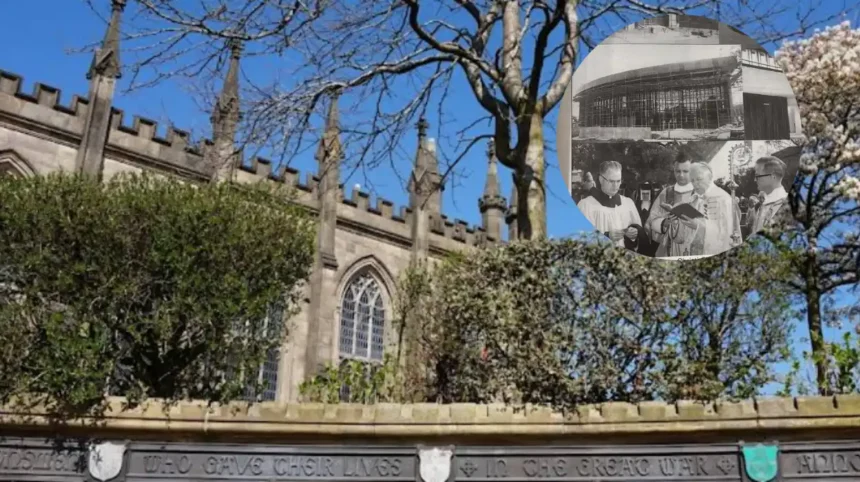
Oldham(Manchester Mirror)May 16, 2026 — Oldham has been marking a significant milestone in its parish life as Father Phil Sumner celebrates his golden jubilee, 50 years of ordained ministry and community service in the town. Parish records and local community accounts describe his long‑standing presence at the Parish of Our Lady and St Patrick, where he has provided pastoral care, led liturgies and supported parishioners through decades of social and demographic change.
Father Sumner’s ministry has involved not only parish duties but also regular engagement with local schools, charities and civic groups, an approach that has helped embed the parish within the wider fabric of Oldham life. His work has often been framed as a combination of spiritual leadership and practical community service, with faith leaders and local organisations emphasising the stability such long‑term service can bring to a town.
How local schools and organisations marked the jubilee
The Radclyffe School and other local institutions have publicised visits from Father Phil Sumner, describing his talks and participation in school events as part of broader interfaith and citizenship education. Posts from the school highlight his role in assemblies and special occasions, where he has spoken about faith, service and mutual respect between different religious communities. These interactions are portrayed as helping pupils understand the value of local faith leaders and the role of interfaith dialogue in everyday life.
In addition to schools, Oldham’s interfaith organisations and faith networks have acknowledged Father Sumner’s contribution over the years, noting his presence at forums and community events that bring together different religious groups. These settings are described as spaces where local leaders discuss shared concerns such as community safety, social inequality and responses to hate incidents, with clergy often participating in planning and outreach.
What the jubilee says about interfaith relations locally
Father Sumner’s golden jubilee is situated within a wider context of interfaith cooperation in Greater Manchester, where formal agreements and network structures encourage collaboration between faith groups on social issues. The Greater Manchester Faith, Belief and Interfaith Covenant, for example, sets out principles for shared action and dialogue, depicting religious leaders as partners in civic life rather than purely spiritual figures. Within this framework, a priest’s long‑term interfaith involvement is presented as part of a broader civic ecosystem that seeks to build cohesion and respond collectively to local challenges.
Faith Network for Manchester and similar groupings emphasise how clergy and lay leaders can help prevent misunderstanding between communities and support coordinated responses to emergencies or social crises. By highlighting Father Sumner’s 50 years of service within this context, both local and regional organisations present his jubilee as not only a personal milestone but also a reflection of the ongoing role of faith leaders in community resilience and social stability.
Who has publicly recognised Father Sumner’s work?
The Parish of Our Lady and St Patrick, alongside local media and educational institutions, has documented and celebrated Father Phil Sumner’s golden jubilee through photographs, short histories of his ministry and references to his community activities. Parish notices and school pages mention his participation in parish events, school visits and interfaith gatherings, underscoring both the longevity of his service and the breadth of his engagement.
These public acknowledgements also reflect how local institutions often use such milestones to emphasise continuity and stability, particularly in communities where changing demographics and economic pressures can strain social bonds. By formally recognising a priest’s 50 years of service, parishes and schools can signal to residents that long‑term relationships between faith communities, schools and civic partners remain central to the town’s social architecture.
How does this compare with other golden jubilees for priests
Across the UK and beyond, Catholic dioceses and parishes regularly mark golden jubilees to recognise priests who have completed 50 years of ordained ministry, often with dedicated Masses, public acknowledgements and reflective statements about vocation and service. These celebrations are typically described as occasions to honour personal dedication while also reaffirming the value of pastoral continuity for parishioners and wider communities.
In Father Sumner’s case, the jubilee fits this established pattern: a local celebration framed within both the life of the parish and the wider traditions of the Catholic Church. What distinguishes his milestone in the public record is the explicit emphasis on community and interfaith work, which is foregrounded in local school and faith‑network accounts, suggesting that his service is being read as both a spiritual and civic contribution.
Background of the particular development
The context for Father Phil Sumner’s golden jubilee lies in ongoing efforts by Greater Manchester’s faith and civic institutions to embed religious leaders in social action and community dialogue. The Greater Manchester Faith, Belief and Interfaith Covenant, adopted by local authorities and faith bodies, explicitly encourages interfaith cooperation on issues such as poverty, community safety and social cohesion, giving clergy a recognised role in public life. Programmes and networks such as Faith Network for Manchester provide practical structures for this cooperation, enabling priests, rabbis, imams and other faith leaders to participate in joint initiatives and public forums.
Within Oldham, the Parish of Our Lady and St Patrick and partner organisations have used these wider frameworks to position Father Sumner and other local clergy as contributors to education, social welfare and interfaith understanding. School visits, parish outreach projects and interfaith events are documented as part of this broader civic‑faith partnership, illustrating how a long‑serving priest’s ministry can be woven into the town’s social and educational landscape rather than being confined to the church building alone.
Prediction
The public recognition of Father Phil Sumner’s 50 years of service is likely to reinforce the perceived value of stable, long‑term clerical presence among Oldham residents, especially in areas where community trust and social cohesion are important concerns. For local schools, community organisations and interfaith networks, this milestone may encourage continued invitations to the parish and its clergy to participate in educational and civic events, thereby sustaining partnerships that support dialogue and social action.
For parishioners and wider audiences connected to faith life, the jubilee may prompt renewed engagement with local church activities and charitable work, as such milestones are often portrayed as opportunities to reflect on and renew commitment. Civic partners may also view the celebration as evidence of dependable community leadership worth involving in future planning and response efforts, particularly in contexts where faith and civil authorities are called upon to address social inequalities or community tensions.