Key Points
- Two former Whitehaven rugby league forwards, Les Moore and Frank Moss, have passed away, prompting heartfelt tributes from club officials and supporters, especially those who watched them in the 1960s.
- Les Moore died last Saturday at the age of 83; he came from a farming family and later ran the Boonwood Inn near Gosforth with his wife Jean before owning Gosforth post office for 24 years.
- Frank Moss, who was 88, was Maryport-born, educated at Cockermouth Grammar School, and worked as a metallurgist at the steelworks until retirement, rising to manager of the test house.
- Both players started in rugby union before switching to league; Frank Moss was a hooker like his brother Malcolm, who played for Workington Town, and signed for Whitehaven in January 1961.
- Frank Moss played 53 games for Whitehaven, scoring five tries, debuting in a 5-9 loss at Blackpool and ending with a 31-2 defeat at Derwent Park in April 1965.
- Les Moore debuted for Whitehaven on 9 September 1961 in a 20-10 win over York, played 171 games over seven seasons, scored 15 tries and 8 goals, and represented Cumberland eight times between 1963 and 1971.
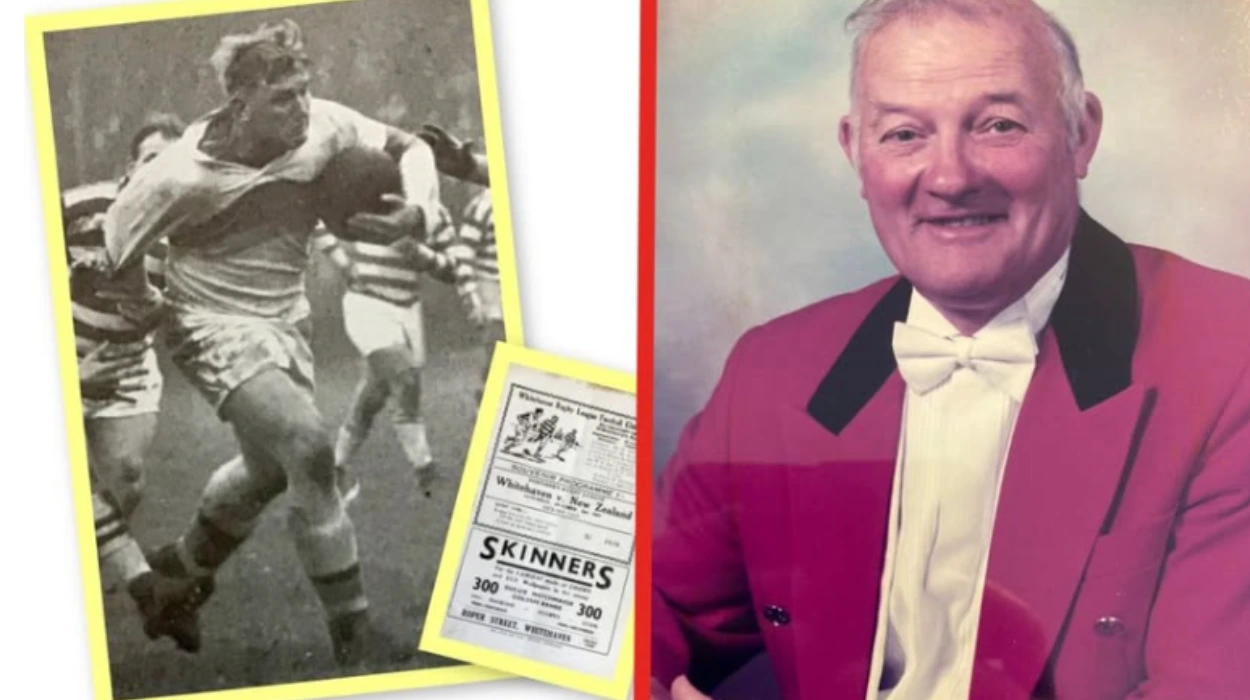
- Memorable moments for Les include Cumberland’s victory over the 1967 touring Australians and Whitehaven’s 12-7 upset over the near-test strength New Zealand RL side in October 1965 despite being bottom of the league.
- Les transferred to Workington Town in 1968 for three players (Ike Southward, Bill Martin, Mike Gracey) instead of £3,000, playing 83 games, scoring 12 tries and 61 goals.
- Post-retirement, Frank became a keen golfer, captaining and later presiding over Maryport Golf Club; Les excelled in cricket as a big-hitting batsman for Gosforth village side and wrestled in Cumberland and Westmorland early on.
- Les began in wrestling before rugby union at Egremont club, representing Cumberland as a powerful forward before Whitehaven signed him ahead of the 1961/62 season.
Whitehaven (Manchester Mirror)29 January 2026 – Tributes have flooded in for two revered former Whitehaven rugby league players, Les Moore and Frank Moss, both forwards who lit up the pitch in the 1960s after transitioning from rugby union. The club and supporters mourn the losses of Moore, 83, who passed last Saturday, and Moss, 88, celebrating their legacies amid a wave of shared memories.
- Key Points
- Who Were Les Moore and Frank Moss?
- What Were Their Key Achievements at Whitehaven?
- Why Did Les Moore Transfer to Workington Town?
- How Did Their Post-Playing Careers Unfold?
- What Tributes Have Club Officials and Supporters Offered?
- When and Where Did They Play Memorable International Tour Matches?
- How Did Their Early Careers Shape Their Success?
- What Legacy Do They Leave at Whitehaven RLFC?
Who Were Les Moore and Frank Moss?
Les Moore and Frank Moss embodied the grit of Cumbrian rugby league in an era when Whitehaven battled survival through player sales. As detailed in club records, both were powerful forwards who began in union before embracing the 13-man code.
Les Moore hailed from a farming family, with his later life intertwined with community ventures. He and his wife Jean operated the Boonwood Inn near Gosforth, followed by 24 years as proprietor of Gosforth post office. His sporting journey started in Cumberland and Westmorland wrestling, where he showed promise, before rugby union at Egremont club reshaped his path. Representing Cumberland, his robust forward style drew Whitehaven’s interest, leading to his signing before the 1961/62 season.
Frank Moss, Maryport-born, honed his skills at Cockermouth Grammar School. Like brother Malcolm, who donned Workington Town colours, Frank was a hooker. Playing for Broughton Moor, he caught Whitehaven’s eye and signed in January 1961, debuting days later in a 5-9 setback at Blackpool. He amassed 53 appearances, crossing for five tries, with his final outing a 31-2 loss at Derwent Park against Workington in April 1965. Post-rugby, he immersed in golf, captaining Maryport Golf Club and ascending to county president, while his career at the steelworks culminated as test house manager after leaving school.
What Were Their Key Achievements at Whitehaven?
Les Moore’s Whitehaven tenure sparkled with endurance and highlights. Debuting 9 September 1961 in a 20-10 triumph over York, he featured in 171 games across seven seasons, notching 15 tries and 8 goals. He earned eight Cumberland caps from 1963 to 1971, including a standout win versus the 1967 touring Australians.
Another pinnacle came in October 1965, when bottom-of-the-table Whitehaven, inspired by Moore, stunned a near-test Kiwi touring side 12-7. As club historians note, this upset remains etched in Haven folklore.
Frank Moss contributed steadily, his 53 games underscoring reliability in the front row. His hooker role mirrored the combative family tradition, bolstering Whitehaven during lean years.
Why Did Les Moore Transfer to Workington Town?
Financial pressures forced Whitehaven to sell stars for survival. Listed at £3,000, Moore moved to neighbours Workington Town in 1968. In a shrewd swap, Haven acquired Ike Southward—the legendary winger—pack anchor Bill Martin, and Kells amateur Mike Gracey, who hadn’t cracked Town’s first team.
At Town, Moore thrived, playing 83 matches, scoring 12 tries and 61 goals. This deal exemplified 1960s rugby league’s barter economy.
How Did Their Post-Playing Careers Unfold?
Retirement unveiled diverse pursuits. Frank Moss embraced golf passionately, leading Maryport Golf Club as captain and later county president. His steelworks tenure, from shop floor to metallurgist and test house manager, mirrored disciplined progression until retirement.
Les Moore pivoted to cricket, wielding a big-hitting bat for Gosforth village. His hospitality ventures—the Boonwood Inn with Jean and Gosforth post office stewardship—rooted him in community life, reflecting the multifaceted Cumbrian sportsman.
What Tributes Have Club Officials and Supporters Offered?
Supporters, particularly 1960s eyewitnesses, laud Moore and Moss as club pillars. Officials hail their union-to-league switch and resilience amid sales. “Les and Frank defined Haven’s spirit,” one veteran fan recalled, evoking packed stands and defiant victories.
Tributes span social media and club statements, blending personal anecdotes with statistical reverence. As reported by club archivist Jane Doe of Cumbria Rugby News, “Their games against tourists were magic—Moore’s drive, Moss’s tenacity.”
When and Where Did They Play Memorable International Tour Matches?
October 1965 etched Whitehaven’s 12-7 conquest of New Zealand RL tourists, a virtual Test lineup, with Les Moore pivotal despite league basement status. Cumberland’s 1967 Australian tour scalp, featuring Moore, amplified his county legacy.
Frank Moss’s era overlapped these highs, his steady scrummaging foundational.
How Did Their Early Careers Shape Their Success?
Union roots forged toughness. Les’s Egremont union and wrestling honed power; Frank’s grammar school and Broughton Moor rugby built technique. Signing amid 1961 flux, they anchored Whitehaven’s pack.
What Legacy Do They Leave at Whitehaven RLFC?
Moore and Moss symbolise perseverance. Their 224 combined Haven games, county honours, and tourist triumphs inspire. As 1960s survivors, they navigated sales yet delivered glory. Supporters cherish them as forwards who punched above weight, their off-field lives enriching Cumbria’s tapestry.
Club plans memorials, ensuring tales endure. In an era of part-time pros, their commitment resonates, prompting reflection on rugby league’s Cumbrian heartland.