Key Points
- The Portico Library in Manchester receives £6.4m from The National Lottery Heritage Fund.
- This sum represents one of the main elements of the overall £12m Portico Reunited development scheme.
- All three floors of the Grade II* building at 7 Mosley Street will become a library once again.
- It will receive step-free access, an elevator, a Changing Places toilet, and a quiet room.
- The plan includes repairs, preservation of its historic interiors and upgrades of the glazed dome.
- There will be a Northern bookshop that will promote local authors and local publishers.
- Also, there will be exhibition spaces, school workshops and the Portico Kitchen, which will focus on Manchester’s food scene.
- Low-carbon heating and other eco-improvements will help to achieve net-zero carbon footprint by the library.
- It is scheduled to close for construction by late spring 2028 and reopen in early March 2030.
- Until then, the collections, discussions, and creative activities of the library will move outside, to temporary sites in the community, as well as online.
- It is estimated that after renovation the number of visitors will increase from 30,000 a year to 95,000.
Manchester (Manchester Mirror) September 17, 2026 — The historic library has secured £6.4m from The National Lottery Heritage Fund towards a major restoration and expansion project intended to bring its entire Grade II* listed building back into public use.
- Key Points
- How will the £6.4m grant change the library?
- What accessibility improvements are planned?
- What will happen to the library’s collection?
- What did the Portico Library say about the funding?
- What did the Heritage Fund say?
- What did Lucy Powell say about the project?
- What environmental work is included?
- When will the Portico Library close?
- What is the Portico Reunited project?
- Background: why is the Portico Library important?
- Prediction: how could the redevelopment affect visitors and Manchester audiences?
The funding is a significant step in the £12m Portico Reunited campaign. The project will return the ground floor and basement to library use, meaning visitors will eventually be able to experience all three floors of the building as part of a connected cultural and learning venue.
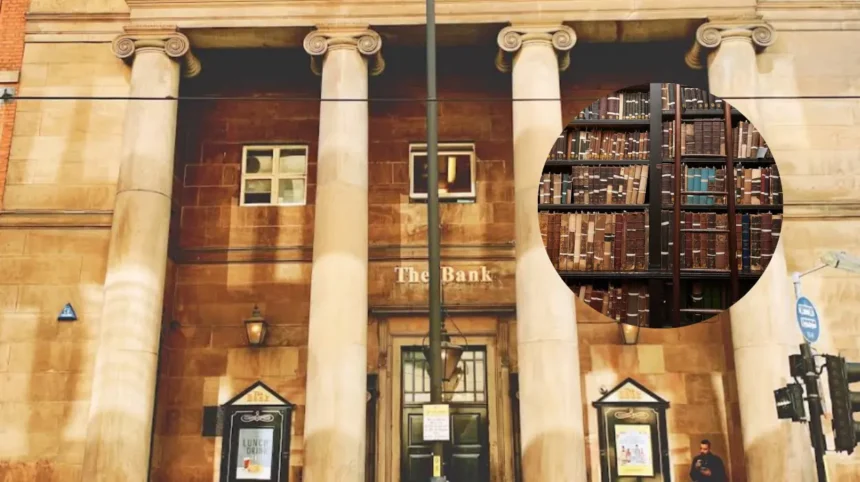
The Portico Library, located on Mosley Street in Manchester city centre, was established in 1806. It currently occupies only the first floor, while stairs restrict access for visitors with mobility difficulties. The redevelopment will address those limitations by creating step-free access throughout the building.
The grant announcement was reported by several Manchester and regional media organisations, including the BBC, TheBusinessDesk.com, the Manchester Evening News and Manchester Wire. The original local report supplied by The Manc also described the award as support for the library’s wider transformation.
How will the £6.4m grant change the library?
According to BBC reporting, the funding will support urgent repairs, new public spaces and the opening of all three floors for the first time in a century. The BBC reported that the plans include a bookshop featuring Northern writers and publishers, alongside a kitchen where visitors can explore Manchester’s food culture.
Manchester Wire reported that the redevelopment would create new spaces for reading, creativity, discovery and learning. Its report, written by Bradley Lengden and published on September 16, said the project would include a Northern bookshop, the Portico Kitchen, an exhibition and creative workshop programme, and the reinstatement of the ground floor and basement for library functions.
The planned Northern bookshop is intended to give regional writers and publishers a dedicated platform. It will form part of a broader effort to strengthen the Portico’s role as a cultural venue focused on Manchester and the North of England.
The Portico Kitchen will provide another new use for the building. According to TheBusinessDesk.com, the facility will explore Manchester’s food culture as part of the expanded offer. The project will also include exhibition areas and workshop spaces for schools.
The redevelopment is not limited to public programming. It will also involve conservation work to protect the building and its collections.
What accessibility improvements are planned?
The architectural plans, developed by heritage specialists Purcell, will introduce step-free access throughout the building. Manchester Wire reported that the proposals include a lift, a Changing Places toilet and a quiet room.
A reinstated, step-free entrance on Mosley Street is also planned. This will provide a more accessible route into the building and allow visitors to move more easily between the different floors.
The project will include the Portico LightBox, a new architectural feature intended to connect the ground floor, first floor and dome. The plans aim to make the building easier to navigate while retaining its distinctive historic character.
The library’s existing access arrangements have been shaped by the building’s historic layout. At present, visitors must use stairs to reach the library’s first-floor facilities. The proposed changes are designed to open more of the building to a wider range of visitors.
What will happen to the library’s collection?
The Portico Library holds about 25,000 books and archive materials covering subjects including novels, poetry, science, travel, history and maps.
The BBC reported that the changes would provide greater public access to the collection and that the library currently receives about 30,000 visitors each year. Dr Thom Keep, the library’s chief executive and librarian, told BBC Radio Manchester that visitor numbers could increase to about 95,000 a year after the redevelopment is completed.
The collection is closely connected to Manchester’s intellectual, social and commercial history. The library was founded as a subscription library and newsroom at a time when the city did not yet have a free public library. Members used it to access books, newspapers and periodicals for education, leisure and debate.
Its historic collection also reflects the inequalities of the period in which it was established. Membership was not equally available to all sections of society, but the materials preserved by the library now provide a record of ideas and debates that influenced Manchester and the wider nation.
The redevelopment will create additional opportunities for people to engage with those materials through exhibitions, school visits, creative workshops, research and other learning activities.
What did the Portico Library say about the funding?
Dr Thom Keep described the grant as a landmark moment in the library’s history.
As reported by Manchester Wire, Keep said: “This is a landmark moment in the Portico’s rich and complex history, and a huge achievement for our staff, trustees, volunteers, and partners.” He credited National Lottery players with helping the library reunite the building and create more space for people to discover, learn and create together.
Keep also said the library had listened to thousands of people about its future and that their ideas and experiences had helped shape the plans.
“Our ambition is a library that belongs to the whole city,” he said, according to Manchester Wire, describing the Portico as a place where people could discover its collections, question inherited narratives and develop new possibilities together.
He added that books and stories could help people understand different perspectives and build empathy. The future Portico, he said, should be a place where people could read, share food, join conversations or spend time quietly.
The comments indicate that the project is intended to extend the library’s role beyond traditional book access. It is being planned as a combined heritage, cultural, educational and community venue.
What did the Heritage Fund say?
Helen Featherstone of The National Lottery Heritage Fund described the Portico as an “architectural gem”, according to the BBC.
She said the organisation was pleased to support what it regarded as an exciting next chapter for the library. Featherstone added that the project would strengthen the Portico’s position as a destination within Manchester’s cultural offer and help preserve its nationally significant collection for future generations.
The Heritage Fund’s publicly available records show that the Portico project has received earlier development-stage support. In a June 2025 decision, the fund recorded a £67,474 grant increase, taking the total grant at that stage to £521,438, with a change in the grant percentage from 66% to 68%.
That earlier award was associated with the development of plans to transform the Portico into an accessible, sustainable and dynamic arts, learning and heritage hub. The newly reported £6.4m award represents a much larger contribution towards the project’s delivery and construction phase.
What did Lucy Powell say about the project?
Lucy Powell, MP for Manchester Central, welcomed the funding.
Manchester Wire reported that Powell described the Portico Library as a home for books, learning and new ideas that had stood at the heart of Manchester for more than two centuries. She said the Heritage Fund support represented a “once-in-a-generation opportunity” to reunite the historic building, open it fully to everyone and secure its collections for the future.
Powell also paid tribute to the library’s staff, trustees, volunteers and partners. She said their ambition and persistence had helped bring the project to this stage.
The Manchester Evening News similarly reported Powell’s support for making the landmark fully accessible and preserving its collections for future generations.
What environmental work is included?
The transformation will also include environmental improvements.
According to Manchester Wire, the plans include low-carbon heating and other measures intended to put the building on a path towards a net-zero carbon future. The work is expected to help reduce the impact of a changing climate on the historic fabric of the building and its delicate collections.
Balancing environmental improvements with conservation requirements will be an important part of the project. The Portico is a historic Greek Revival building, and any changes must be made while protecting its architectural features and collection-storage conditions.
The restoration plans also include work on historic interiors and the building’s glazed dome. These elements are central to the character of the library and will require specialist conservation.
When will the Portico Library close?
The Portico Library is expected to close for construction in late spring 2028. The planned reopening date is early March 2030.
Until the closure, the library will continue to welcome visitors and deliver its existing programme. Manchester Wire reported that Manchester City Council had already granted planning permission and listed building consent for the project.
The closure will allow the construction and conservation work to take place across the building. It will also mark the transition from the current arrangement, where the library mainly occupies the first floor, to a fully connected three-floor facility.
The library has not indicated that its work will stop during the construction period. Instead, its Porti-Go! programme will take collections, conversations and creative activities to temporary venues, community settings and online platforms.
This approach is intended to maintain public engagement while the main building is unavailable.
What is the Portico Reunited project?
The Portico Reunited campaign is a £12m project to restore and expand the library’s use of its Grade II* listed building.
The main objective is to bring all three floors into library use for the first time in a century. The scheme combines building repairs, access improvements, environmental upgrades and new cultural facilities.
The project’s proposed features include:
- A reinstated ground floor and basement for library use.
- Step-free access throughout the building.
- A lift and a Changing Places toilet.
- A quiet room for visitors.
- New exhibition and education spaces.
- A Northern bookshop.
- The Portico Kitchen.
- Restoration of historic interiors and the glazed dome.
- Low-carbon heating and environmental improvements.
- New ways to display and interpret the library’s collection.
The library’s longer-term fundraising continues because the £6.4m grant does not represent the full £12m project cost. TheBusinessDesk.com reported that fundraising would continue for the match funding required to complete the scheme.
Background: why is the Portico Library important?
The Portico Library was founded in 1806 as a subscription library and newsroom. It was created before Manchester had a free public library and provided members with access to books, newspapers and periodicals.
The building is a Grade II* listed Greek Revival landmark on Mosley Street. Its surviving collection contains around 25,000 books and archive materials, giving it importance not only as a library but also as a record of the city’s intellectual and cultural development.
Earlier development work was supported by National Lottery funding. Manchester Wire reported in 2023 that the library had received a £453,964 development grant for the initial “Reuniting The Portico Library, Uniting People” phase. That stage was intended to help develop plans for a more accessible and sustainable space for arts, books, learning and history.
The Heritage Fund later recorded a grant increase to £521,438 during the development phase in 2025.
The latest £6.4m award moves the project closer to its planned construction and delivery stage. If the remaining fundraising is completed, the Portico is expected to reopen in 2030 with a substantially wider public role.
Prediction: how could the redevelopment affect visitors and Manchester audiences?
The redevelopment is likely to make the Portico Library more accessible to residents, tourists, schools, researchers, readers and cultural visitors. Step-free access and new facilities could remove barriers that currently prevent some people from using the building.
Visitor numbers may increase significantly if the project reaches completion as planned. The library currently receives about 30,000 visitors a year, while its leadership expects approximately 95,000 annual visitors after reopening, according to the BBC.
The new bookshop, exhibitions, school workshops and Portico Kitchen could also broaden the library’s audience beyond existing members and heritage visitors. Northern writers and publishers may gain a prominent platform, while schools and community groups could have more opportunities to engage with Manchester’s history.
The temporary Porti-Go! programme should help maintain the Portico’s public presence during the construction period. However, audiences will need to account for the planned closure from late spring 2028 until the expected reopening in early March 2030.
For Manchester’s cultural sector, the completed project could strengthen the city-centre heritage offer and create a new venue combining literature, local history, food, education and exhibitions. Its eventual effect will depend on the delivery of the building work, completion of match funding and the library’s ability to sustain the expanded programme after reopening.