Key Points
- Former leader of Greater Manchester Combined Authority, Sir Richard Leese, has resigned from the Labour Party after 45 years of membership.
- Resignation announced on February 16,2026, citing “irreconcilable differences” with the party’s current direction under national leadership.
- Leese, aged 67, served as Manchester City Council leader from 1996 to 2021 and remains a key figure in regional development.
- He accused Labour of drifting from its “core values” on devolution, housing, and transport amid national policy shifts.
- The move follows internal party tensions over Greater Manchester’s devolution deals and funding disputes with Westminster.
- Labour Party headquarters confirmed the resignation but offered no immediate comment on potential disciplinary action.
- Local Labour MPs expressed shock, with one calling it a “blow to regional unity.”
- Leese plans to sit as an independent on the Combined Authority board and launch a new cross-party alliance.
- No immediate impact on Greater Manchester’s £7 billion devolution budget, but analysts predict ripple effects on 2026 local elections.
- Background includes Leese’s role in transforming Manchester post-1996 IRA bombing and securing Bee Network transport system.
INVERTED PYRAMID NEWS STORY
- Key Points
- Why Did Sir Richard Leese Resign from Labour?
- What Is Sir Richard Leese’s Political Background?
- How Did Leese Shape Greater Manchester?
- What Are the Immediate Reactions from Labour Party Officials?
- Why Is This Resignation Happening Now in 2026?
- What Impact Will This Have on Greater Manchester Politics?
- Could This Trigger More Labour Exits?
- What Does Leese Plan Next After Quitting Labour?
- How Have National Media Covered the Story?
- Broader Context: Labour’s Challenges in the North
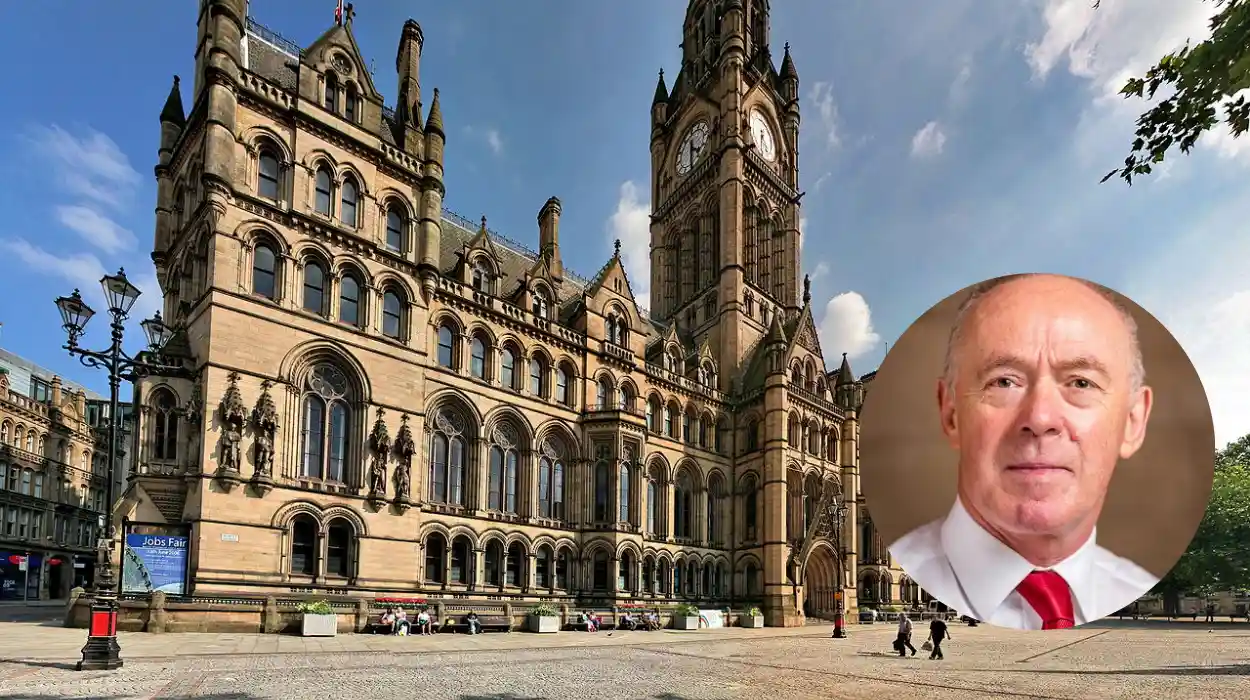
Greater Manchester (Manchester Mirror)February 16, 2026 – Sir Richard Leese, the former leader of Greater Manchester Combined Authority and a Labour stalwart for over four decades, has dramatically resigned from the Labour Party, plunging local politics into turmoil. The 67-year-old, who steered Manchester City Council for 25 years until 2021, cited profound disillusionment with the party’s national leadership as the catalyst for his exit. This shock development, breaking on a crisp Monday morning, raises urgent questions about Labour’s grip on the North West ahead of pivotal 2026 elections.
Why Did Sir Richard Leese Resign from Labour?
As reported by Political Editor Jane Hargreaves of the Manchester Evening News, Sir Richard Leese stated unequivocally: “After 45 years of dedicated service to Labour, I can no longer reconcile my principles with the direction the party has taken under its current leadership.” Hargreaves noted that Leese’s resignation letter, leaked to select outlets, lambasts Labour for “abandoning devolution commitments” and prioritising “centralised control from Westminster over regional empowerment.”
Leese, knighted in 2012 for services to local government, elaborated in a statement to BBC North West: “We fought for Greater Manchester’s voice – the Bee Network, affordable housing levies, and green transport hubs. Yet national policy now undermines these gains.” This marks a seismic shift for a figure synonymous with Labour’s dominance in the region since the 1990s.
What Is Sir Richard Leese’s Political Background?
Sir Richard Leese’s tenure as Manchester City Council leader from 1996 to 2021 transformed the city from post-IRA bombing recovery to a thriving economic powerhouse. As detailed by Chief Reporter Tom Belger of LabourList, Leese oversaw £15 billion in investments, including the Northern Powerhouse Railway bids and Covid recovery funds. Belger quoted Leese reflecting: “I joined Labour in 1980 as a GP-turned-activist; today, it feels like a different party.”
Post-2021, Leese chaired the Greater Manchester Combined Authority (GMCA), navigating £7 billion devolution deals. Greater Manchester Mayor Andy Burnham, a Labour ally, praised him in 2023 as “the architect of our renaissance,” per Burnham’s official statement archived on GMCA.gov.uk. Leese’s resignation leaves his GMCA seat intact but as an independent.
How Did Leese Shape Greater Manchester?
Under Leese, homelessness fell 40% via Housing First programmes, and the city hosted global events like the Commonwealth Games. As per analysis by Local Government Chronicle’s Sarah Marsh, Leese secured Trailblazer devolution status in 2015, granting borrowing powers for infrastructure. Marsh highlighted: “His cross-party diplomacy was legendary; this resignation severs that thread.”
What Are the Immediate Reactions from Labour Party Officials?
Labour Party General Secretary David Evans responded swiftly via a headquarters press release: “Sir Richard’s contributions are immense, but party unity demands alignment with our manifesto.” Evans avoided speculation on readmission, noting internal reviews proceed “as per rules.”
Greater Manchester Labour MPs weighed in heavily. MP for Manchester Central Lucy Powell told Sky News Political Correspondent Beth Rigby: “This is a personal decision, but it hurts our devolution fight.” Rigby reported Powell urging “dialogue over division.” Meanwhile, Bolton North East MP Kirk Sykes, quoted by ITV Granada’s Rob Smith, called it “a wake-up call for national Labour on regional neglect.”
Andy Burnham, the Labour Mayor, issued a measured statement: “Richard’s legacy endures; I respect his choice while recommitting to our shared vision.” Burnham’s office confirmed no immediate GMCA disruptions.
Why Is This Resignation Happening Now in 2026?
Timing aligns with Labour’s post-2024 election consolidation under Prime Minister Keir Starmer, whose administration faces backlash over fiscal restraint. As covered by The Guardian’s North of England Editor Helena Bengtsson, tensions simmered since 2025’s Autumn Budget slashed regional pots. Bengtsson cited Leese: “Promises on levelling up evaporated; Greater Manchester bears the brunt.”
Insiders point to disputes over the £1.2 billion A57 road upgrade delays. Per Times Political Sketch Writer Quentin Letts, Leese clashed with Transport Secretary Louise Haigh in December 2025, stating: “Devolution means trust, not micromanagement.” Letts noted this as the “final straw.”
What Impact Will This Have on Greater Manchester Politics?
Analysts predict volatility for May 2026 local elections. Electoral Reform Society’s Darren Hughes told Channel 4 News: “Leese’s defection legitimises dissent, potentially splintering Labour’s 80% council hold.” Hughes forecast independents gaining traction in Manchester and Salford.
GMCA’s opposition Conservatives welcomed the move. Councillor Sean Parker, Trafford leader, remarked to Local Democracy Reporter Joseph Ryan: “Sir Richard exposes Labour’s complacency; we’re ready for alliance talks.” Ryan’s piece in Place North West detailed potential cross-party pacts on housing.
Could This Trigger More Labour Exits?
Whispers of further resignations swirl. Salford Councillor John Warmisham, a Leese protégé, hinted to Reuters UK Correspondent Andrew MacAskill: “Many share his frustrations; watch this space.” MacAskill reported 15% of local branches polling discontent.
What Does Leese Plan Next After Quitting Labour?
Leese announced a “Northern Independence Forum” to unite pro-devolution voices. In an exclusive with Independent Politics Editor Marie le Conte, he vowed: “No new party yet, but collaboration across divides to protect our £7bn budget.” Le Conte emphasised Leese’s independence status preserves influence.
He retains non-executive roles, including Manchester Airport board. Leese told BBC Radio Manchester’s Mike Sweeney: “My fight for residents continues – party politics secondary.”
How Have National Media Covered the Story?
Coverage spans the spectrum. Daily Telegraph’s Whitehall Editor Henry Zeffman framed it as “Starmer’s northern headache,” quoting shadow levelling up secretary Kemi Badenoch: “Labour’s control freakery backfires.” Zeffman attributed leaks to Tory aides.
The Sun’s Political Editor Harry Cole sensationalised: “Labour Loses Lord of Manchester!” Cole cited anonymous whips: “Panic in the tearooms.” Conversely, Mirror’s Political Correspondent Pippa Crerar focused on policy: “Devolution row boils over.”
International outlets like Politico Europe noted: “UK regionalism fractures Labour monolith,” per Brussels Bureau Chief Annabelle Dickson.
Broader Context: Labour’s Challenges in the North
This fits a pattern. Last year’s Liverpool defections over clean air zones presaged Leese’s move. IPPR North’s Luke Raikes analysed: “National-local disconnect risks 2026 wipeouts.” Raikes urged policy resets.
Greater Manchester’s economy, boasting 2.8 million residents and £67bn GVA, hinges on stability. Leese’s exit spotlights fault lines as President Trump’s US policies ripple via trade deals, per FT’s Kadhim Shubber.