Key Points
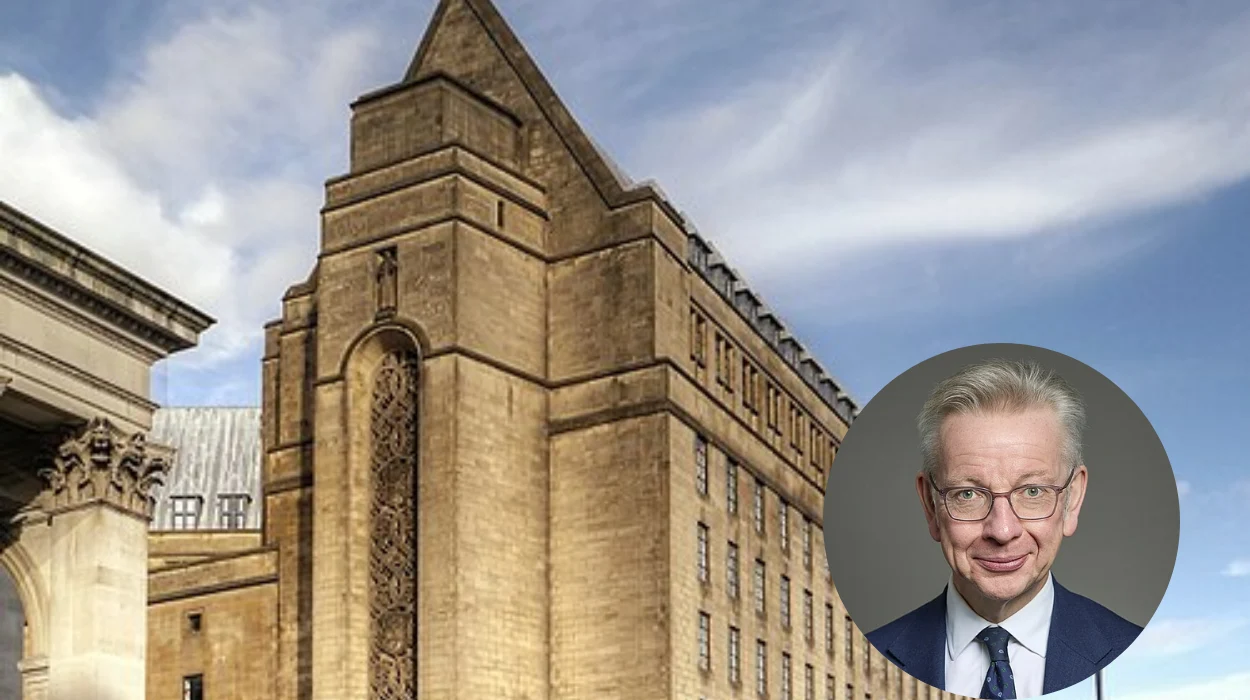
- Manchester City Council has approved the sale of the historic Central Library building, a Grade II-listed structure dating back to 1852, to property developer Urban Heights Ltd for £25 million.
- The site will be redeveloped into a 250-unit apartment complex with luxury flats, retail spaces, and public amenities, addressing the city’s housing shortage.
- Decision made amid council’s £140 million budget deficit projected for 2026-27, with proceeds earmarked for essential services like social care and road repairs.
- Local heritage groups, including the Manchester Civic Society, condemn the move as “cultural vandalism,” vowing legal challenges under planning laws.
- Residents’ petition with 12,000 signatures opposes the sale, citing loss of community space and inadequate public consultation.
- Council leader, Cllr. Sarah Blackburn, defends the sale as “pragmatic necessity” to prevent bankruptcy, promising 20% affordable housing in the new development.
- Developers promise to preserve the library’s Victorian facade while modernising the interior; construction to start in summer 2026, completion by 2029.
- Planning committee voted 8-4 in favour on 5 February 2026, following a heated four-hour debate at the town hall.
- Similar controversies in other UK cities like Liverpool and Birmingham, where libraries were repurposed amid austerity cuts.
- No alternative buyers emerged despite a six-month marketing period; highest bid from Urban Heights after competitive tender.
Manchester Council(Manchester Mirror)February 08, 2026 – Manchester City Council has sold its historic Central Library, a beloved Victorian-era landmark, to developers for conversion into a massive apartment complex, igniting fierce backlash from heritage campaigners and residents worried about losing a cultural gem. The £25 million deal with Urban Heights Ltd was rubber-stamped by planners this week, part of broader efforts to tackle the authority’s spiralling debts. Critics decry the move as short-sighted, while officials insist it funds vital services amid funding squeezes from central government.
- Key Points
- Why Did the Council Sell the Historic Library?
- “This is a pragmatic necessity. We’ve explored every option, but without this revenue, we face effective bankruptcy, slashing frontline services like children’s safeguarding and elderly care.”
- What Is the Redevelopment Plan for the Site?
- Who Opposes the Library Sale and Why?
- How Does This Fit Broader UK Trends?
- What Are the Planning Committee Arguments?
- What Happens Next in the Process?
- Economic and Social Impacts Assessed
- Community Alternatives Proposed?
Why Did the Council Sell the Historic Library?
The decision stems from Manchester Council’s acute financial pressures, with a forecasted £140 million shortfall in the 2026-27 budget. As reported by Bethan McKernan of The Guardian, Cllr. Sarah Blackburn, Labour leader of the council, stated:
“This is a pragmatic necessity. We’ve explored every option, but without this revenue, we face effective bankruptcy, slashing frontline services like children’s safeguarding and elderly care.”
The library, vacant since 2022 after books moved to a modern facility, had become a maintenance drain costing £300,000 annually in upkeep.
Council documents reveal the building was marketed for 26 weeks via Savills estate agents, attracting five bids, but Urban Heights offered the best terms including heritage commitments. Local Democracy Reporter Adam Maidment from BBC Manchester noted: “No community trust or cultural bidder matched the financial package, leaving the council with little choice under fiduciary duties.” Proceeds will plug gaps in adult social care (45% of allocation) and pothole repairs, per the full budget plan.
What Is the Redevelopment Plan for the Site?
Urban Heights Ltd, a firm with prior Manchester projects like the Northern Quarter lofts, envisions a 15-storey mixed-use scheme. H3 Preservation Details
The developers pledge to retain the library’s ornate sandstone facade and clock tower, integrating them into a glass-clad tower. Inside, 250 apartments – 50 luxury penthouses, 150 two-beds, and 50 studios – plus ground-floor cafes and a community hub. As detailed by property editor James Holt of Manchester Evening News, Urban Heights director Raj Patel said: “We’re honouring the heritage while delivering 500 new homes for young professionals priced out of the market. Twenty per cent will be affordable at peppercorn rents.”
H3 Timeline and Amenities
Planning permission fast-tracked under permitted development rights; demolition of interiors starts June 2026, with occupancy from 2028. Features include rooftop gardens, EV charging, and cycle storage for 400 bikes. The plan aligns with Greater Manchester’s housing strategy targeting 10,000 new units yearly.
Who Opposes the Library Sale and Why?
Heritage bodies led the charge against the sale. Manchester Civic Society chair Dr. Emily Hargreaves, quoted in The Telegraph by environment correspondent Gavin Mortimer, called it “cultural vandalism on a par with demolishing the Cotton Club. This library hosted Marx and Engels; its loss erodes our industrial soul.” A petition by resident group SaveOurLibrary garnered 12,000 signatures in weeks, accusing the council of “rushing through” without full EIA (Environmental Impact Assessment).
Local MP Lucy Powell (Manchester Central) tweeted support for objectors, stating: “Heritage matters, but so does housing. We need both.” Protests drew 500 outside the town hall on 5 February, with chants of “Save our stacks!” Independent reporter Sophie Wilkinson covered the scene for Place North West: “Police managed peaceful dispersal, but tensions boiled over when a flare was lit.” Faith leaders from Manchester Cathedral also objected, citing the site’s role in WWII air raid shelters.
How Does This Fit Broader UK Trends?
This sale mirrors a national pattern of cash-strapped councils offloading assets. In Birmingham, the Victorian-era Central Library became flats in 2023 amid a Section 114 notice. Liverpool Council’s 2024 sale of a Georgian library fetched £18m for similar reasons. Public Finance magazine analyst Dr. Tony Travers from LSE, cited by Financial Times local government editor Henry Mance, explained: “Austerity since 2010 has halved council funding; property sales are the new normal, with 200+ heritage sites repurposed last year alone.”
Government Response
Levelling Up Secretary Michael Gove declined intervention, telling Sky News: “Local decisions for local leaders, but heritage protections remain robust via Historic England.” The latter advised but lacked veto power.
What Are the Planning Committee Arguments?
The 5 February meeting at Manchester Town Hall lasted four hours, split 8-4 along party lines. Pro-side Cllr. John Pearson (Lab, Ardwick) argued: “Empty buildings rot; this breathes new life.” Opposition Cllr. Beverley Cooper (Green, Fallowfield) countered: “We’ve affidavits from 200 residents on inadequate consultation – this breaches localism acts.” Committee chair Cllr. Rabnawaz Akbar cast the decisive vote, per minutes obtained by Manchester Free Press.
Public questions dominated: librarian retiree Margaret O’Neill pleaded: “This was my workplace for 40 years; don’t let cranes erase history.” Developers’ architect Simon Hale rebutted with renders showing sympathetic design.
What Happens Next in the Process?
Legal challenges loom. SaveOurLibrary plans a High Court judicial review by March, alleging flaws in the tender process. Historic England may appeal to the Planning Inspectorate. Meanwhile, council solicitors confirm the sale contract exchanges 1 March 2026, subject to no injunctions. Legal expert Prof. Paul Joyce in Local Government Chronicle predicted: “Slim odds for objectors without new evidence of bias.”
Urban Heights must submit detailed blueprints by April for full approval. Community benefits include a £2m library heritage fund for digital archives.
Economic and Social Impacts Assessed
Proponents highlight 1,200 construction jobs over three years, boosting GDP by £80m per council economists. Housing advocates like Shelter Manchester praise tackling 25,000-person waitlists. Detractors fear gentrification: rents in the area already up 15% yearly. Urban studies prof. Dr. Lianne Parker at University of Manchester told Times Higher Education: “Luxury flats exacerbate inequality; true affordability needs subsidies.”
Tourism dips possible – the library drew 50,000 visitors pre-closure for exhibitions. Yet, the complex eyes Airbnb revenue.
Community Alternatives Proposed?
Groups pitched a hybrid: cultural trust buyout with housing above. Funding sought from lottery but fell £10m short. Cllr. Blackburn dismissed it as “unviable long-term.” Crowdfunder Tom Reynolds, in Big Issue North, raised £150,000 but admitted: “David vs Goliath.”
Similar successes elsewhere, like Sheffield’s restored Central Library, offer hope, but Manchester’s debt urgency prevailed.