Key Points
- Stefan Hoyle, aged 33, a DJ and musician known by his stage name Syd Far-I, was found dead in his bedroom on Monday 16 June 2025.
- He was a well-known and respected member of Manchester’s creative and squatting communities.
- The inquest into his death was opened and adjourned at Manchester Coroner’s Court on Thursday 29 January 2026, during a short administrative hearing.
- Toxicology reports cited the cause of death as “pneumonia” and “ketamine toxicity”.
- Stefan’s father, Mark Hoyle, frontman of cult Manchester band Dub Sex, described him as “so well loved and respected by his contemporaries”.
- Mark Hoyle noted Stefan’s involvement in the squatting scene, encouraging musical pursuits and helping with soup kitchen-type work.
- Hundreds attended a celebration of Stefan’s life, reflecting his community impact.
- Stefan was raised in Longsight, Levenshulme, and Hulme areas of Manchester.
- He leaves behind father Mark Hoyle, mother Beverley Gallier (prominent in Manchester music scene), and sister Ellis.
- Mark Hoyle and Ellis are completing Stefan’s unfinished solo album.
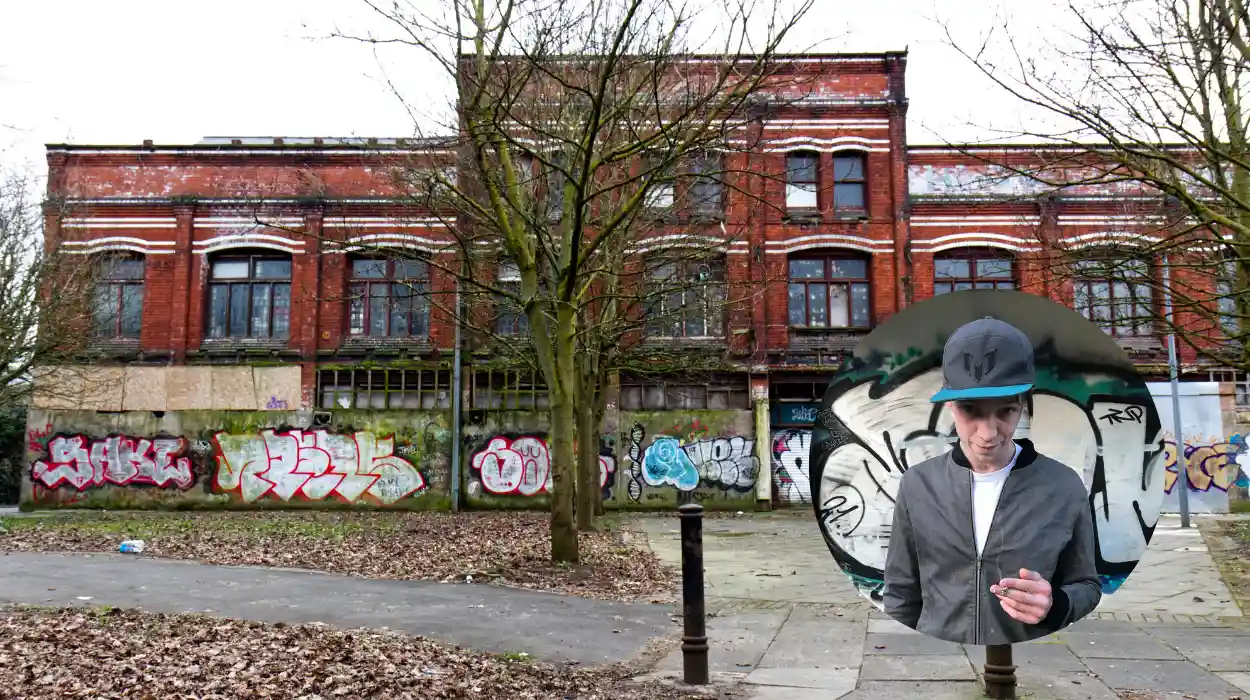
- Stefan was a key figure in Manchester’s squatting scene and spoke to media after reclaiming Hulme Hippodrome on Warwick Street in 2017.
- Following his death, graffiti art commemorating Stefan appeared across the city.
- Mark Hoyle said of their bond: “Me and Stef were as close as any father and son had a right to be.”
- Beverley Gallier “very well loved and looked after” Stefan.
- Stefan showed early talent as an “intuitive and skilled musician”.
- Mark Hoyle described Stefan’s communication through music, his selflessness, lack of interest in money, career, fame, or fortune, and his ground-level community love.
- Stefan was a “real one-off guy”, mirrored by the community’s reaction to his death.
Levenshulme (Manchester Mirror) February 03, 2026 – The parents of Stefan Hoyle, a 33-year-old DJ and musician from Manchester’s vibrant creative scene, have spoken publicly following the opening of the inquest into his death last summer. Known professionally as Syd Far-I, Stefan was discovered deceased in his bedroom on 16 June 2025, with toxicology reports confirming pneumonia and ketamine toxicity as the causes, as detailed during the hearing at Manchester Coroner’s Court on 29 January 2026. A respected figure in the local squatting and music communities, his loss has prompted tributes highlighting his profound influence.
- Key Points
- Who Was Stefan Hoyle and What Was His Role in Manchester’s Scene?
- What Did the Inquest Reveal About Stefan Hoyle’s Cause of Death?
- How Have Stefan Hoyle’s Family Described Their Loss?
- What Tributes Have Emerged in Manchester Following His Death?
- What Background Ties Stefan Hoyle to Manchester’s Cultural Fabric?
- How Does This Fit into Broader Manchester Music Scene Narratives?
Who Was Stefan Hoyle and What Was His Role in Manchester’s Scene?
Stefan Hoyle, 33, was not just a DJ but a cornerstone of Manchester’s underground creative world, performing under the stage name Syd Far-I. Raised across Longsight, Levenshulme, and Hulme—working-class neighbourhoods known for their cultural grit—he immersed himself in the squatting scene, a movement tied to reclaiming disused buildings for art and community purposes. As reported in original coverage by the Manchester Evening News, Stefan spoke directly to the paper after a group reclaimed the derelict Hulme Hippodrome on Warwick Street in 2017, underscoring his activism in preserving cultural spaces.
His father, Mark Hoyle, frontman of the cult Manchester band Dub Sex, told the Manchester Evening News: “He was so well loved and respected by his contemporaries. He was involved in the squatting scene, he encouraged people with musical pursuits and helped with soup kitchen type work.” Mark added: “There was a lot of love for him in the community. Hundreds and hundreds of people came to celebrate his life. It’s bittersweet for us, but it was wonderful to know that he had an impact on the people that he cared about.” This outpouring reflects Stefan’s selfless ethos, as he prioritised community over personal gain.
What Did the Inquest Reveal About Stefan Hoyle’s Cause of Death?
The inquest, opened and adjourned at Manchester Coroner’s Court on Thursday 29 January 2026, was a brief administrative hearing. Court proceedings heard toxicology reports stating the cause of death as “pneumonia” and “ketamine toxicity”, providing the first formal medical insight since his passing on 16 June 2025. No further details on contributing factors were disclosed during this preliminary stage, with the full inquiry pending.
As per Manchester Evening News reporting, this revelation came amid family reflections on Stefan’s life. The hearing’s brevity underscores standard procedure for such cases, focusing on immediate factual establishment before deeper probes.
How Have Stefan Hoyle’s Family Described Their Loss?
Stefan leaves behind his father Mark Hoyle, mother Beverley Gallier—a prominent figure in Manchester’s music scene—and sister Ellis. Mark Hoyle, speaking to the Manchester Evening News, shared intimately: “Me and Stef were as close as any father and son had a right to be.” He praised Beverley, saying: “He was very well loved and looked after by his mother Beverley. From very early on we knew he was an intuitive and skilled musician.”
Mark elaborated on Stefan’s character: “That was his language, that was his way of communicating with people. All through his life he would relate with people, he was selfless, he didn’t care about money, career, fame or fortune. He was a ground level, street level person and he had a lot of love for the community.” Concluding, Mark stated: “He was a real one-off guy and that’s reflected in the way the community reacted to his death.” Meanwhile, Mark and Ellis are honouring Stefan by completing his unfinished solo album, a project blending grief with legacy.
What Tributes Have Emerged in Manchester Following His Death?
In the wake of Stefan’s death, graffiti art has appeared across Manchester, commemorating the musician’s legacy visually on city walls. These murals serve as public acknowledgements from the creative community he championed.
Hundreds attended a celebration of his life, as noted by Mark Hoyle to the Manchester Evening News, turning mourning into a communal affirmation of his impact. Stefan’s prior involvement in the 2017 Hulme Hippodrome reclamation—speaking to media then—further cements his role as a bridge between activism and art. Such tributes align with Manchester’s tradition of grassroots memorials for lost talents, echoing responses to other local figures.
What Background Ties Stefan Hoyle to Manchester’s Cultural Fabric?
Born into music, Stefan’s lineage includes Mark Hoyle of Dub Sex and Beverley Gallier, both embedded in Manchester’s post-punk and alternative scenes. Raised in Longsight, Levenshulme, and Hulme, areas synonymous with Manchester’s countercultural history, he naturally gravitated to squatting—a practice peaking in the city during economic downturns and venue shortages.
His encouragement of musical pursuits and soup kitchen efforts positioned him as a community anchor. The Hulme Hippodrome reclamation in 2017, where he gave interviews, highlighted squats as hubs for creativity amid housing crises. This context frames Stefan not as an isolated figure but as emblematic of Manchester’s enduring DIY spirit.
How Does This Fit into Broader Manchester Music Scene Narratives?
Stefan’s story resonates amid recent losses in Manchester’s music world, though distinct in its circumstances. His parents’ determination to finish his solo album mirrors familial legacies in the scene, while community vigils recall tributes to figures like Alfonso ‘Fonzo’ Buller. Neutral observers note the squatting scene’s dual role: fostering art but exposing vulnerabilities, as toxicology hints.
The inquest’s findings prompt discussions on harm reduction in creative circles, without speculation. Manchester Coroner’s Court’s process ensures thoroughness, with adjournment allowing evidence gathering.