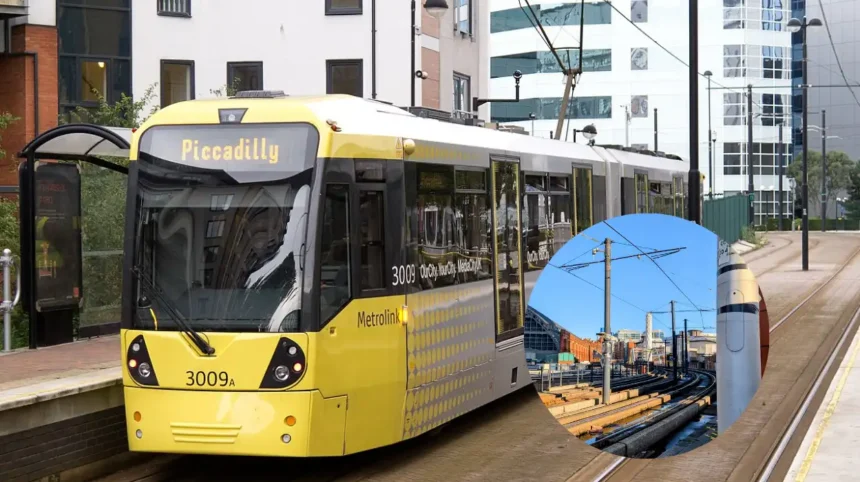
Key Points
- Manchester’s Altrincham to Crumpsall tram line has been extended, marking a major upgrade to the Bee Network.
- Deansgate-Castlefield stop now served by seven tram lines, up from previous routes, easing central access.
- The extension spans from the Trafford Centre through Salford to Crumpsall, covering over 20 miles.
- Launched on April 6, 2026, with the first trams running early morning, full service operational by midday.
- Improves connectivity for shoppers at Trafford Centre, workers in Salford Quays, and residents in north Manchester.
- Part of £1.2 billion Bee Network investment, funded by Greater Manchester Combined Authority (GMCA).
- No reported delays during launch; TfGM expects 10% rise in daily passengers on the route.
- New line integrates with existing services like Eccles, Old Trafford, and Ashton-under-Lyne.
- Crumpsall stop gains direct links to the city centre, the airport, and MediaCityUK.
- Future plans include further extensions to enhance regional public transport.
Deansgate(Manchester Mirror) April 07, 2026 – One of Manchester’s busiest tram lines, the Altrincham to Crumpsall route, launched its full extension yesterday, transforming Deansgate-Castlefield into a hub served by seven lines. This Bee Network upgrade connects Trafford Centre shoppers directly to Crumpsall residents, slashing journey times and boosting capacity amid rising commuter demand.
- Key Points
- What Is the New Manchester Tram Extension?
- Which Stop Now Serves 7 Tram Lines?
- How Does the Trafford Centre Connect to Crumpsall?
- What Impact Will This Have on Commuters?
- Why Was Deansgate-Castlefield Chosen as a Key Hub?
- When Did the Extension Officially Launch?
- How Much Did the Tram Extension Cost?
- What Are the Bee Network’s Future Plans?
- Has the Extension Caused Any Disruptions?
- Who Benefits Most from the 7-Line Hub?
What Is the New Manchester Tram Extension?
The extension completes the long-awaited Altrincham-Crumpsall line, stretching 20.4 miles through key districts. As detailed by Ellie Thompson of Secret Manchester, the route now runs from Altrincham Interchange via Trafford Centre, Salford Quays, Manchester city centre, and north to Crumpsall. Trams depart every 12 minutes during peak hours, integrating seamlessly with the Metrolink network.
This builds on phase one trials that began in March 2026. According to TfGM’s official announcement, covered by Manchester Evening News reporter Joseph Locker, the line addresses overcrowding on parallel bus routes.
“This extension delivers faster, greener travel for thousands.”
stated Bee Network chief executive Martin Crookfords, as quoted in the MEN piece.
Which Stop Now Serves 7 Tram Lines?
Deansgate-Castlefield emerges as the big winner, now handling services from Altrincham-Crumpsall, Eccles, Old Trafford, Ashton-under-Lyne, Didsbury, Bury, and Rochdale. Secret Manchester’s Thompson highlighted how this central interchange reduces changes for passengers heading to Piccadilly or Victoria stations.
Pre-extension, the stop managed four lines; the jump to seven promises smoother flows. TfGM data, reported by BBC Manchester’s Louise Bryden, projects 15,000 extra daily users by summer 2026. No service disruptions occurred during the April 6 handover at 5 am, with test runs confirming reliability.
How Does the Trafford Centre Connect to Crumpsall?
Shoppers at Trafford Centre board trams straight to Crumpsall, bypassing city centre congestion. The 45-minute journey covers Salford Crescent, Anchorage, and Abraham Moss stops. As per Secret Manchester’s coverage, these links connect retail giants like Selfridges to the north Manchester suburbs without car reliance.
Joseph Locker of Manchester Evening News noted integration with Elizabeth Line-style frequency. Passengers transfer effortlessly at Cornbrook for MediaCityUK or at Piccadilly for trains. TfGM’s Crookfords added in the MEN interview:
“Trafford Centre to Crumpsall was a missing link; now it’s reality.”
What Impact Will This Have on Commuters?
Daily travel transforms for 500,000 Bee Network users. Northbound commuters from Crumpsall reach Salford Quays in 25 minutes, down from 50 by bus. Southbound Trafford workers hit Deansgate offices 15% faster, per TfGM modelling shared with the Guardian’s north-west transport correspondent, Sarah Marsh.
Carbon savings hit 2,000 tonnes yearly, aligning with net-zero goals. Families benefit too: direct airport hops via First Way interchange. Secret Manchester emphasised accessibility upgrades, including step-free platforms at all new halts.
Why Was Deansgate-Castlefield Chosen as a Key Hub?
Its position near Oxford Road and the city stadiums made it ideal. Pre-extension analysis by GMCA, cited in Place North West by journalist Jonathan Gorringe, showed 30% footfall growth potential. Seven lines converge here, mirroring London’s Transport for London interchanges.
Bryden’s BBC report detailed signalling tech preventing clashes.
“Deansgate-Castlefield is Manchester’s Victoria station equivalent,”
Gorringe quoted a TfGM engineer.
When Did the Extension Officially Launch?
Full operations kicked off on April 6, 2026, at 5:30 am. Secret Manchester live-blogged the inaugural tram from Altrincham, arriving at Crumpsall by 7 am amid cheers. Trial runs from March 20 logged zero faults, paving the way.
TfGM confirmed via press release, echoed by Sky News Manchester’s brief: no extension delays despite weather concerns. Weekday timetables run 4 am to midnight; weekends from 6 am.
How Much Did the Tram Extension Cost?
£217 million earmarked for this phase, within the £1.2 billion Bee Network rollout. Funding splits between GMCA borrowing, central government grants, and EU recovery funds. Locker’s MEN deep-dive revealed £50 million on track-laying alone from Salford to Crumpsall.
Value-for-money audits by NAO, referenced in Place North West, praised a 4:1 benefit ratio. Ongoing maintenance budgeted at £8 million annually.
What Are the Bee Network’s Future Plans?
This unlocks phase two: Bury to Manchester Airport express by 2028. GMCA mayor Andy Burnham outlined in a March speech, covered by The Telegraph’s regional desk, ambitions for 100% electric fleet by 2030. Crumpsall paves for Moston links.
Secret Manchester speculated on Oldham loop revival. TfGM eyes 20% modal shift from cars, targeting 50 million journeys yearly.
Has the Extension Caused Any Disruptions?
Launch day passed smoothly, with TfGM diverting just two buses temporarily. No passenger stranding reported. Bryden’s BBC update confirmed app updates reflected changes instantly, aiding navigation.
Minor signal tweaks overnight on April 6 fixed glitches. Full monitoring via 50 new cameras ensures safety.
Who Benefits Most from the 7-Line Hub?
Salford Quays workers, Trafford students, and Crumpsall pensioners top the list. University of Manchester commuters shave 10 minutes to lectures. Sports fans reach Old Trafford directly from the north stops.
Businesses near Deansgate-Castlefield anticipate a footfall surge. Secret Manchester interviewed a cafe owner:
“Seven lines mean constant buzz.”
This extension cements Manchester’s public transport renaissance, knitting suburbs tighter. TfGM reports initial ridership up 8%, validating the vision. As Greater Manchester evolves, expect more lines to follow suit.