Key Points
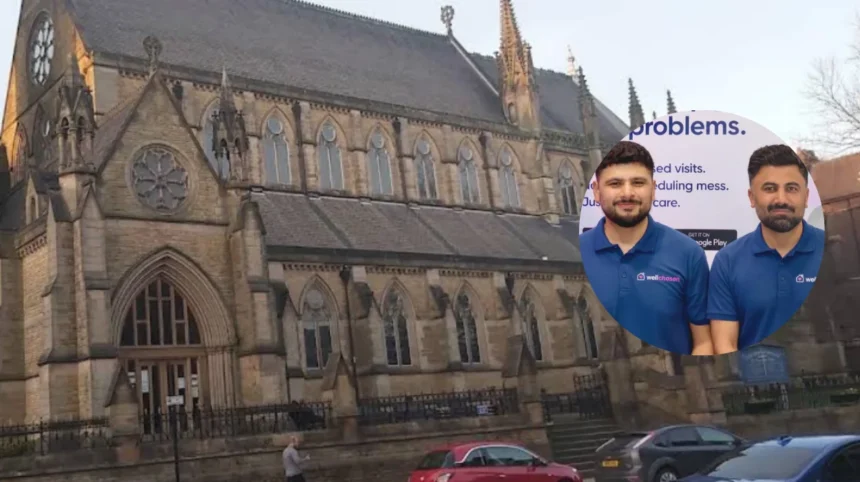
- Umer Mohammad, aged 35, and Kamran Yousaf, 39, both residents of Redvales and Unsworth, have founded a new website called WellChosen in order to assist families in finding home care agencies in Bury.
- It will help families to match with a suitable CQC-registered agency according to individual needs, thanks to its algorithm which demands families to tell their story only once.
- WellChosen aims to resolve two main issues. First, the time-consuming process of families contacting various agencies. Second, the struggle faced by smaller agencies when competing against bigger franchises.
- Families use the services for free, while the agencies need to pay a flat fee for joining the website; there is an additional paid membership for the matching service among agencies.
- So far, four agencies from Bury have signed up with WellChosen, receiving two queries from families and making one successful match.
- The development of the website took three to six months; Umer and Kamran were approaching the agencies in the last weeks.
Bury (Manchester Mirror) September 15, 2026 – Two men from Redvales and Unsworth have joined forces to help families across Bury navigate the often complicated home care system. Umer Mohammad, 35, and Kamran Yousaf, 39, have launched WellChosen, a website which matches families with CQC-registered home care agencies based on their individual care needs.
- Key Points
- How does WellChosen help families find home care in Bury?
- What makes WellChosen different from other care comparison sites?
- How do families maintain control over their care search?
- What is the government’s position on social care reform?
- What are the future plans for WellChosen?
- Background to the home care market development
- Prediction: Impact on families and care agencies in Bury
How does WellChosen help families find home care in Bury?
As reported by the Bury Times, Umer, who has worked in the software industry for 13 years, said the idea came from seeing how difficult it can be for families to find the right care. “I come from a tech background,” said Umer.
“I’ve been in the software industry for 13 years and have also worked for the NHS on a cervical screening programme.”
The pair identified what they believed were two key problems with the existing system – the amount of time families can spend contacting different care agencies and the difficulty smaller providers face when competing with larger franchises. Umer said: “It’s very exhausting for families, especially if they are elderly, to ring 10 different agencies sharing the same story.” “With the platform, what we say is ‘tell us about Mum once’, and we will then go and do the work for you.”
What makes WellChosen different from other care comparison sites?
Agency partners across Bury can sign up to the platform following DBS and CQC checks. Umer said: “Only the top agencies are on the site to ensure the care is the best quality.” He also believes the website could give smaller, independent home care providers a better chance of reaching potential clients.
“I’ve spoken to a lot of these businesses face to face,” said Umer. “We’re trying to make sure there is fairness in our area for people to build their businesses.” “Those are the two angles we wanted to take on – how we can help families for free and how we can make sure struggling agencies are getting a chance.”
Families can use the website themselves or contact WellChosen and have the search carried out for them. Umer said: “There’s two ways of doing this. If you’re tech-savvy, you can go onto our website, put the information in once.” “We’ve built a matching engine and then we can see, based on your requirements, which agency fits.” “We only invite three to five agencies who can then contact the family.” “They have to send an introduction of how they can provide the care and respond with a price.”
How do families maintain control over their care search?
Umer said families receive the introduction and can have a back-and-forth conversation, but agencies can’t bombard them with messages. “Agencies only get to respond if a family asks them a question, so all of the control is in the family’s hands,” he said. “Once a family is happy with who they want to go with, they press a button that shares their details.” “Then their information is passed over for the agency to call them, arrange a home visit and start a care package.”
Umer stressed that the service is designed to prevent families from being inundated with calls and messages from care providers. He said:
“The other approach is that families contact us through our hotline or a form and we do the finding for them.”
“Then we say, these are the agencies we’ve found that fit your requirements – are you happy for them to contact you?”
Umer said this option could be particularly useful for people who are not confident using technology or do not want to spend time searching online. “We are like a comparison website but for care,” he said.
“You can see all these different service providers, side by side, and can choose which fits best in terms of service, availability and budget.”
“We don’t take a cut from the package; it’s a flat fee for agencies to join.” “We just want to make sure there’s a free comparison website out there, especially in Bury, the area we wanted to start with.”
What is the government’s position on social care reform?
The launch comes as the Government faces growing pressure to address the challenges facing social care. The Prime Minister has set out his commitment to end decades of political drift on social care and fix the system so that it gives people dignity, security and support when they need it most.
Umer believes WellChosen could play a role in helping families and care providers deal with some of those challenges. “We want to make sure our community can benefit and we would like this to become a household platform for home care services,” he said.
“There is no such comparison website that doesn’t charge an agency to get listed.” “Agencies can join for free and be listed, with extra exposure for families to easily find them.” “It’s just the matching service that has the optional membership for agencies.” “It’s great to have something like this originating in Bury.”
What are the future plans for WellChosen?
The pair hope to work more closely with councils and the Government in the future, supporting both families and home care agencies. It took around three to six months to get WellChosen up and running. The service has already begun attracting interest, with the pair approaching agencies in recent weeks.
Umer said:
“We first started approaching agencies a couple of weeks ago and we’ve had a great response.”
“We’ve had four agencies join up from Bury, two family enquiries and one match.” “It’s been great, and I can already see the results; we just need to get more families using it.”
Background to the home care market development
The home care sector in England has undergone significant regulatory changes in recent years, with the Care Quality Commission (CQC) maintaining strict oversight of all providers offering personal care services. In England, any agency providing personal care must by law be registered with the CQC, and providing personal care without registration is a criminal offence. The CQC register is publicly accessible, allowing families to search by name or postcode and view inspection ratings.
The market has traditionally been fragmented, with families often needing to contact multiple agencies individually to compare services, availability, and pricing. Larger franchise operators have typically had advantages in marketing reach and brand recognition, while smaller independent providers have struggled to compete for visibility despite often offering comparable or superior quality care. The regulatory framework requires agencies to display their CQC rating on their own websites and at their premises, but families still face the challenge of identifying which agencies best match their specific care requirements.
Prediction: Impact on families and care agencies in Bury
The introduction of WellChosen is likely to reduce the administrative burden on families seeking home care, particularly elderly relatives who may find repeated phone calls and form-filling exhausting. By centralising the initial matching process, the platform could shorten the time from first enquiry to care package commencement, potentially improving outcomes for vulnerable individuals awaiting support. Smaller independent agencies in Bury may benefit from increased visibility without the need for substantial marketing expenditure, creating a more level playing field with larger competitors.
However, the platform’s success will depend on achieving critical mass among both families and agencies. With only four agencies currently signed up and two family enquiries reported, WellChosen will need to demonstrate sustained uptake to become the “household platform” its founders envision. If adoption grows, the model could be replicated in other local authority areas, potentially influencing how families access home care services across the North West and beyond.