Key Points
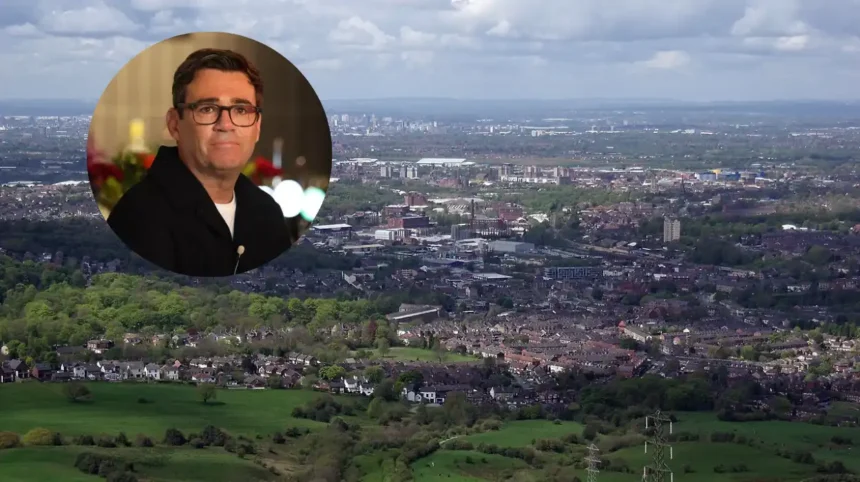
- Andy Burnham, Labour Mayor of Greater Manchester, is reportedly planning a return to Westminster within weeks to position himself for a leadership challenge against Prime Minister Sir Keir Starmer.
- He has identified several Labour-held seats where incumbent MPs are willing to step aside, triggering by-elections to allow his candidacy.
- Reports stem from The Guardian, Evening Standard, The Independent, and BBC, highlighting Burnham’s manoeuvres amid Labour’s declining poll ratings and internal discontent.
- Betting markets show rising odds of Starmer’s ousting by June 30, 2026, at 46.5% YES, linked to Burnham’s potential bid.
- Previous attempts by Starmer to block Burnham’s return were criticised by Labour MPs as a “stitch-up”.
- Labour faces eroding majority ahead of local elections, boosting anti-Starmer sentiment.
Manchester(Manchester Mirror)May 02, 2026 – Andy Burnham, the Labour Mayor of Greater Manchester, is plotting a rapid return to the House of Commons to launch a leadership challenge against Prime Minister Sir Keir Starmer, according to multiple reports. The development, first detailed in The Guardian and echoed across outlets like the Evening Standard and The Independent, centres on Burnham identifying Labour-held constituencies where sitting MPs are prepared to resign, paving the way for by-elections.
- Key Points
- What Seats Has Andy Burnham Identified for By-Elections?
- Why Is Andy Burnham Challenging Keir Starmer Now?
- How Did Starmer Previously Block Burnham’s Return?
- What Do Prediction Markets Say About Starmer’s Future?
- Who Supports Andy Burnham’s Leadership Ambitions?
- What Risks Do By-Elections Pose for Labour?
- Background of the Development
- Prediction: Impact on Labour Party Members and Voters
This strategic move comes amid mounting pressure on Starmer’s leadership, with Labour’s parliamentary majority shrinking and local elections looming. As reported by journalists at The Guardian, Burnham has lined up several potential seats, aiming for a parliamentary foothold “within weeks” to mount his bid.
What Seats Has Andy Burnham Identified for By-Elections?
Reports indicate Burnham has approached MPs in safe Labour seats willing to trigger by-elections for his benefit. According to The Guardian, as cited in the Evening Standard, these incumbents are ready to step aside, a tactic that could fast-track Burnham back to Westminster without a full leadership reselection battle.
The Independent’s coverage specifies that this plan hinges on swift resignations to avoid broader party infighting. No specific constituencies have been named publicly, but sources suggest northern England strongholds aligned with Burnham’s regional base.
As noted by BBC political correspondent Chris Mason in an analysis, such manoeuvres carry risks, including voter backlash in by-elections and potential party resistance to the costs of extra polls.
Why Is Andy Burnham Challenging Keir Starmer Now?
Burnham’s timing aligns with Labour’s sliding fortunes. Mexc News reported on April 24, 2026, that Burnham’s eyeing of a challenge has spiked prediction market odds for “Starmer out by June 30, 2026?” to 46.5% YES, up from 41%, with the year-end contract at 68.5%.
LabourList’s February poll showed Starmer vulnerable, losing hypothetical contests to Angela Rayner (48% vs 37%) but beating Wes Streeting. Burnham, a left-leaning figure with strong northern support, positions himself as a “saviour” amid these woes, per BBC reports.
A YouTube political debate from January 2026 framed it as Starmer vs Burnham, with MPs decrying Starmer’s prior block on Burnham’s return as a “stitch-up”.
How Did Starmer Previously Block Burnham’s Return?
In January 2026, Starmer reportedly thwarted Burnham’s earlier Westminster bid, drawing fire from Labour MPs. The Times debate video, uploaded January 27, 2026, questioned if this was “worth it”, noting widespread criticism of the Prime Minister’s tactics.
BBC analysis described Burnham’s path as an “intricate and lengthy course” with barriers, including party’s refusal of his mayoral resignation due to by-election costs and political risks. Some Labour figures view his ambition as “excessive”, while others see him as essential for revival.
What Do Prediction Markets Say About Starmer’s Future?
Mexc News detailed the market surge: a YES share at 46.5¢ offers a 2.15x return if Starmer exits by June 30. The afternoon spike from 42% to 45% tied directly to Burnham rumours and Labour’s local election fears.
This reflects broader anti-Starmer sentiment, with the December 31 contract even higher at 68.5%, signalling traders’ long-term doubts.
Who Supports Andy Burnham’s Leadership Ambitions?
Burnham draws strength from the North West, where Rayner polled 59% against Starmer’s 37% in LabourList’s survey. His mayoral record in Greater Manchester bolsters his profile as a pragmatic leftist.
BBC noted significant Labour movement backing, viewing him as a counter to Starmer’s challenges. However, obstacles remain, including reselection rules and Starmer loyalists.
What Risks Do By-Elections Pose for Labour?
Triggering multiple by-elections could expose Labour’s vulnerabilities, especially with an eroding majority. The Guardian reports emphasise the expense and optics of MPs resigning for Burnham.
Evening Standard highlighted potential voter fatigue and Reform UK gains in northern seats. Independent analysis warned of internal divisions if the plan falters.
Background of the Development
Andy Burnham’s political journey traces back to his 2001 entry into Parliament as Leigh’s MP, rising to roles like Health Secretary under Gordon Brown. He ran for Labour leadership in 2010 and 2015, placing second both times to Ed Miliband and Jeremy Corbyn, establishing his left-of-centre credentials. Since 2017, as Greater Manchester Mayor, he has championed regional devolution, notably during the 2020 COVID tier disputes with central government, earning a reputation as a defender of the North. His current bid revives long-speculated national ambitions, fuelled by Starmer’s post-2024 election struggles, including policy U-turns and by-election losses. This context, drawn from consistent media coverage since early 2026, underscores Burnham’s evolution from backbencher to potential kingmaker.
Prediction: Impact on Labour Party Members and Voters
This development could galvanise Labour’s grassroots, particularly in the North West, by offering a familiar, anti-austerity alternative to Starmer’s centrist pivot, potentially boosting turnout in local elections. However, it risks deepening factional rifts, with Starmer loyalists in London and the South mobilising against “disloyalty”, leading to messy by-elections where Reform or Lib Dems exploit voter disillusionment. For party members, a successful Burnham return might trigger leadership ballots by summer 2026, per market odds, reshaping policy towards regional investment but alienating moderates. Voters in target seats face disrupted representation, while nationally, it signals Labour instability, possibly eroding Starmer’s authority and handing opposition ammunition ahead of 2029. Ultimately, success hinges on by-election wins; failure could sideline Burnham indefinitely, stabilising Starmer but entrenching internal malaise.