Key Points
- Six men have pleaded guilty for taking part in a huge conspiracy to import and supply cannabis in Bolton.
- A total of 2,000kg of cannabis was recovered from Leigh Tenement Farm in Blackrod, Bolton.
- The cannabis had a street value of around £24 million.
- These men include Usman Latif, Raheem Latif, Musa Kala, Nahzeeb Hussain, Calvin Gregg and Nehmaan Rashid.
- These men pleaded guilty to offenses of fraudulently evading the prohibition on the importation of cannabis or conspiring to supply the drug.
- Another four men had previously pleaded guilty to other Class B drug supply offenses in previous hearings.
- All six men have been remanded in custody until sentencing.
- The matter will come up again at Manchester Crown Court on 14 October 2026.
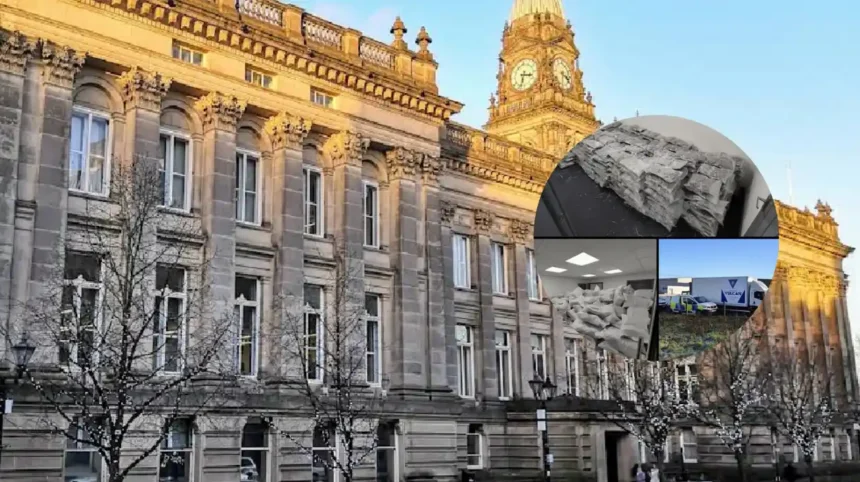
Bolton (Manchester Mirror) September 24, 2026 — Six men have admitted their roles in a major Bolton cannabis conspiracy after Greater Manchester Police seized around two tonnes of the drug, estimated to be worth approximately £24 million.
The guilty pleas were entered before a trial scheduled to begin at Manchester Crown Court this week. The defendants admitted offences connected with the importation and supply of cannabis following the police operation at Leigh Tenement Farm in Blackrod.
The case concerns one of the largest cannabis seizures reported in the area. Police said the discovery removed a substantial quantity of illegal drugs from circulation and disrupted an organised criminal operation.
The six men who admitted their involvement are Usman Latif, Raheem Latif, Musa Kala, Nahzeeb Hussain, Calvin Gregg and Nehmaan Rashid. Their pleas covered different offences, depending on the alleged role each defendant played in the wider conspiracy.
The case was reported by The Bolton News, which identified the defendants and outlined the charges accepted by each man. The report did not identify an individual journalist by name in the available article information.
Which men admitted charges?
According to The Bolton News, Usman Latif, 26, of Leverhulme Avenue, Great Lever, admitted conspiring to fraudulently evade the prohibition on the importation of cannabis.
Calvin Gregg, 21, of Croyd Road, Lytham St Annes, admitted the same offence.
Musa Kala, 36, of Dunbar Drive, Great Lever, admitted conspiring to fraudulently evade the prohibition on importing cannabis. He also pleaded guilty to conspiracy to supply cannabis.
Raheem Latif, 28, of Leverhulme Avenue, Great Lever, admitted conspiracy to fraudulently evade the prohibition on the importation of cannabis.
Nahzeeb Hussain, 36, of Brazley Avenue, Great Lever, admitted conspiracy to supply cannabis.
Nehmaan Rashid, 35, of Worsley Road, Farnworth, also admitted conspiracy to supply cannabis.
The charges relate to criminal conduct involving the movement and distribution of cannabis. The precise sentences will be determined at a later hearing, and the guilty pleas mean the court will now consider the individual roles and circumstances of each defendant.
How much cannabis did police seize?
Police seized approximately 2,000kg of cannabis at Leigh Tenement Farm in Blackrod in January. The estimated street value of the drugs was around £24 million.
Sky News reported that Greater Manchester Police made the discovery during a raid at the property and described the seizure as potentially one of the largest of its kind in the United Kingdom. The broadcaster reported that Musa Kala and Raheem Latif were initially charged with conspiracy to supply cannabis and were remanded in custody after the seizure.news.sky
BBC News also reported that officers found approximately two tonnes of the Class B drug at a farm in Blackrod, Bolton. Its report said the seizure was regarded as one of the most significant confiscations of cannabis in the UK.bbc
The quantity recovered indicates the scale of the alleged operation. However, the value placed on illegal drugs can vary according to factors such as purity, form, intended market and the method used to calculate a potential street price. The £24 million figure is therefore an estimated value rather than a confirmed amount of money generated by the defendants.
What did Greater Manchester Police say?
Detective Superintendent Joe Harrop, from Greater Manchester Police’s Serious Crime Division, described the operation as a large-scale and sophisticated illegal enterprise.
As quoted by The Bolton News, Det Supt Harrop said officers had uncovered an operation containing a significant volume of illegal drugs. He said the seizure represented a major success because it removed a source of harm, disrupted criminal networks and contributed to safer neighbourhoods.
He also said the police response demonstrated an ongoing commitment to targeting large-scale drug production and distribution. According to the statement reported by The Bolton News, the work was intended to safeguard vulnerable people and ensure those responsible were brought before the courts.
Sky News published a similar statement from Det Supt Harrop. The force said the seizure removed a major source of harm, disrupted criminal networks and helped make communities safer.news.sky
The police comments relate to the alleged criminal operation and the quantity of drugs recovered. They do not establish that every person connected to the wider investigation played the same role. That distinction will remain relevant when the court considers sentencing.
Who else admitted involvement?
The case includes other defendants who had already pleaded guilty at earlier hearings.
The Bolton News reported that Hashim Rahman, 27, of Lowick Avenue, Great Lever, admitted conspiracy to supply Class B drugs.
Faizan Ali, 24, of Armadale Road, Ladybridge, admitted the same offence. Aman Hussain, 24, of Hilden Street, The Haulgh, also pleaded guilty to conspiracy to supply Class B drugs.
Muhammed Asghar, 24, of Glenbrook Gardens, Farnworth, admitted the same charge.
The earlier admissions mean the prosecution case involves a larger group than the six men who entered pleas before the planned trial. The defendants are alleged to have been involved in different parts of the broader cannabis supply and importation conspiracy.
The court will need to assess the conduct attributed to each individual. Factors likely to be considered at sentencing include the offence admitted, the defendant’s position within the operation, the quantity of drugs involved, the duration of the activity, any previous convictions and the extent of cooperation with investigators.
What happens next in court?
All the defendants have been remanded into custody ahead of a future sentencing hearing.
The case is expected to return to Manchester Crown Court on 14 October 2026. The sentencing hearing will determine the penalties for those who have admitted the offences.
A guilty plea generally means the court does not need to conduct a full trial on the admitted charges. However, the court may still examine evidence about the defendants’ individual roles when deciding the appropriate sentence.
The final outcome will depend on the evidence presented to the court and the sentencing decisions made by the judge. Until those hearings take place, the full legal consequences for each defendant remain undecided.
The available reports confirm the guilty pleas and the estimated value of the seizure, but they do not provide the final sentences. It would therefore be inaccurate to state that any defendant has already received a particular prison term.
Why is the case significant?
The case is significant because of the amount of cannabis seized and the number of people who have admitted offences linked to the alleged operation.
Two tonnes of cannabis represents a substantial volume of a Class B controlled drug. Police and prosecutors have presented the seizure as an important disruption to an organised supply network operating in and around Greater Manchester.
The case also illustrates how a complex drugs investigation can involve several alleged activities, including importing cannabis, storing it and supplying it to others. The charges accepted by the defendants differ, which suggests the prosecution has attributed separate responsibilities within the wider conspiracy.
The £24 million estimate has also attracted attention because it indicates the potential scale of the intended market. However, the figure should be treated as a police or prosecution estimate of street value, not as evidence that the defendants earned or possessed £24 million.
The earlier charges against Kala and Raheem Latif were reported by BBC News and Sky News after the January seizure. The later guilty pleas provide a further development in the same case, with additional defendants accepting responsibility for offences connected to the alleged conspiracy.news.
What is the background to the development?
Greater Manchester Police began the investigation after officers discovered around two tonnes of cannabis at Leigh Tenement Farm in Blackrod in January 2026.
Initial reports focused on Musa Kala and Raheem Latif, who were charged with conspiracy to supply cannabis. Sky News reported that both men were remanded in custody and due to appear before Manchester City Magistrates’ Court.
BBC News reported that the seizure was made at a farm in the Blackrod area of Bolton and that the cannabis had an estimated street value of £24 million. The report also identified the two initial defendants and described the seizure as one of the most significant in the country.
The investigation subsequently involved further defendants. According to The Bolton News, six men entered guilty pleas before the case was due to proceed to trial at Manchester Crown Court. Four additional men had admitted related conspiracy charges during earlier hearings.
The police operation is part of wider efforts to target the production, importation and distribution of controlled drugs in Greater Manchester. The force has said that removing large quantities of cannabis can disrupt criminal networks and reduce the supply reaching local communities.
The next major stage is sentencing. Until the October hearing, the court has not issued final penalties for the defendants covered in the latest development.
How could this affect the Bolton community?
The development could affect people in Bolton mainly through the disruption of an alleged drug supply network and the continuing court process.
If the seized cannabis was intended for distribution, its removal prevents that specific quantity from reaching the illegal market. Police may also use evidence gathered during the investigation to identify other people, locations or assets connected to the alleged operation.
Residents may see further police activity or court coverage as the case progresses. However, the guilty pleas do not mean that every drug-related issue in Bolton has been resolved. The case concerns one alleged conspiracy, and its wider effect will depend on whether investigators can identify and disrupt other networks.
The sentencing hearing may also provide more information about the defendants’ roles and the scale of the operation. For the local community, the most immediate confirmed outcome is that around two tonnes of cannabis have been removed from circulation and that the defendants have admitted the offences recorded by the court.
The final impact will depend on future enforcement, sentencing decisions and whether the investigation leads to further proceedings.