Key Points
- Manchester officials are actively campaigning for the construction of an underground railway station at Manchester Piccadilly as a foundational first step toward a city-wide underground network.
- City projections indicate that Greater Manchester’s current central transport infrastructure, which relies heavily on the Metrolink tram network, will lack sufficient capacity by the middle of the century.
- The projected shortfall in transport capacity is a primary concern for Bev Craig, who is noted in the report as leading one of the United Kingdom’s fastest-growing regions.
Manchester (Manchester Mirror) November 23, 2026 – Manchester officials are actively pushing for the development of a new underground railway station at Manchester Piccadilly to serve as the initial phase of a potential London-style underground transit network.
- Key Points
- Why are Manchester officials proposing an underground station at Piccadilly?
- Who is raising concerns about Manchester’s future transport capacity?
- What is the background of Manchester’s transport capacity challenge?
- How could an underground railway development affect Manchester commuters and residents?
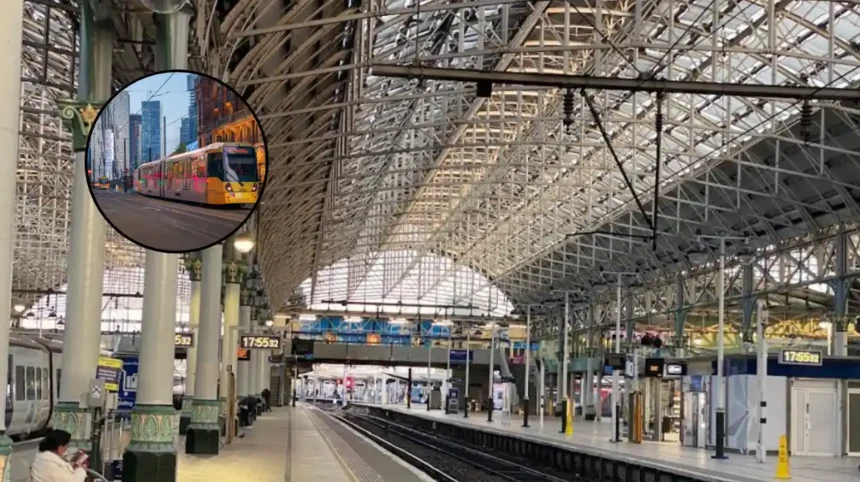
The proposal stems from official predictions that the city’s existing central transport infrastructure will reach capacity limits within the next few decades. Currently, Manchester’s urban transit relies predominantly on the surface-level Metrolink tram system, which transport planners forecast will be unable to meet passenger demand by the middle of the century.
Why are Manchester officials proposing an underground station at Piccadilly?
Officials in the city view an underground station at Manchester Piccadilly as a necessary “first step” toward establishing a broader underground railway system. Because the city’s central transport network is projected to run out of capacity by 2050, moving transit infrastructure beneath the surface is being examined as a way to expand passenger volume without further congesting street-level routes.
Who is raising concerns about Manchester’s future transport capacity?
The capacity shortfall is identified as a primary concern for Bev Craig, who leads one of the fastest-growing regions in the United Kingdom. As rapid regional growth continues to place increasing demand on local infrastructure, ensuring that the central transport system can accommodate future population and commuter numbers has become a critical priority for regional leadership.
What is the background of Manchester’s transport capacity challenge?
Greater Manchester’s public transport network is anchored by the Metrolink, a light rail and tram system that operates largely at street level through the city centre. While the Metrolink forms the backbone of local commuter travel, Greater Manchester is experiencing rapid regional expansion. Long-term infrastructure assessments have determined that relying primarily on the existing surface tram network will not provide adequate capacity to support the region’s projected growth by the mid-21st century.
How could an underground railway development affect Manchester commuters and residents?
If the proposed underground station at Piccadilly and a subsequent underground network progress, the development would directly affect daily commuters, local residents, and businesses across Greater Manchester. For passengers, an underground rail network would provide an alternative to surface-level trams, potentially alleviating overcrowding and reducing journey times through the city centre as the population expands. Conversely, the construction of underground rail infrastructure at a major hub such as Piccadilly would likely require significant long-term capital investment and entail extended periods of engineering disruption in central Manchester before the expanded capacity becomes operational.