Key Points
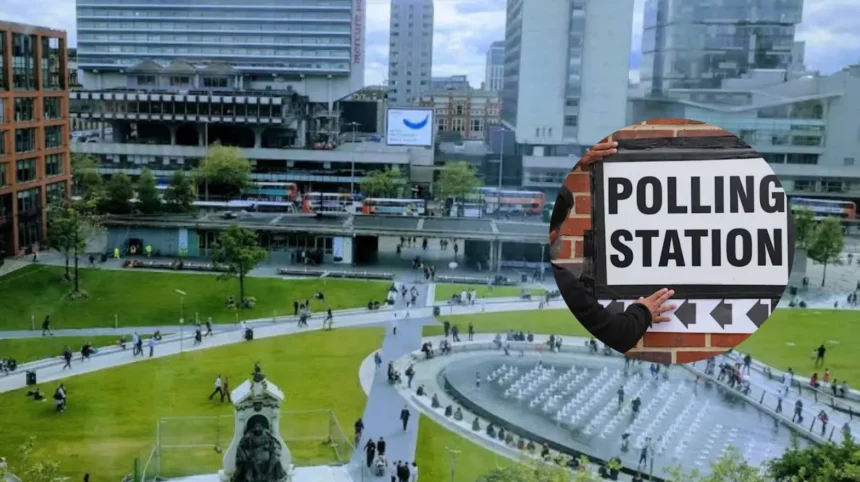
- Polling stations across Greater Manchester opened at 7am on Thursday 30 July 2026 and will close at 10pm.
- More than two million people are eligible to vote in the contest, making it the biggest by-election in UK history.
- The vote was triggered after Andy Burnham left the mayoralty and returned to Westminster as MP for Makerfield, with the rule that the mayor cannot simultaneously be a sitting MP.
- Seven candidates are on the ballot: Sian Astley, Geraldine Coggins, Bev Craig, Phil Eckersley, Marcus Farmer, Richard Kilpatrick and Marlon West.
- The election is being held under the supplementary vote system, with voters selecting a first and second choice.
- Votes will be counted on Friday, with the result expected in the afternoon.
- The successful candidate will serve until the next scheduled mayoral election in May 2028.
Manchester Election (Manchester Mirror) July 30, 2026 – polling stations across Greater Manchester have opened for the mayoral by-election to choose the region’s next mayor. As reported by BBC News, voting began at 7am and will continue until 10pm, with the count due to take place on Friday and the result expected later in the day.
The contest follows Andy Burnham’s departure from the post after he returned to Westminster as MP for Makerfield, which created a vacancy at the top of the Greater Manchester Combined Authority. According to ITV News, the region’s 10 boroughs are taking part in the vote, and the winner will hold the office until the next scheduled election in May 2028.
Why is this election being held?
The by-election was triggered because the mayor cannot be a sitting MP, and Burnham had to leave the role after winning the Makerfield parliamentary seat. ITV News reported that the election is the first of its kind to fill a vacancy for one of England’s combined authority mayors.
The scale of the vote is unusually large for a by-election. The Independent reported that more than two million people are eligible to vote, across Bolton, Bury, Manchester, Oldham, Rochdale, Salford, Stockport, Tameside, Trafford and Wigan.
Who are the candidates?
Seven candidates are standing. The Independent listed them in alphabetical order as Sian Astley of Reform, Geraldine Coggins of the Green Party, Bev Craig of Labour, Phil Eckersley of the Conservatives, Marcus Farmer as an Independent, Richard Kilpatrick of the Liberal Democrats and Marlon West of Restore Britain.
ITV News said Astley is a councillor in Baguley and runs a design and property business, while Coggins has represented Altrincham since 2018. It also reported that Craig is leader of Manchester City Council, Eckersley is a Trafford councillor, Farmer is a businessman making a third attempt at the mayoralty, Kilpatrick is a former teacher and councillor in Didsbury West, and West is a former mental health nurse.
How does the voting work?
This election is being run under the supplementary vote system. Voters mark a first choice and can also mark a second choice; if a candidate wins more than half of the first-choice votes, they win immediately, but if nobody reaches that threshold, all but the top two are eliminated and second preferences are counted.
The Independent noted that voters do not have to mark a second choice, but they must make a first choice for the ballot to count. Manchester City Council said people should check their polling cards for their allocated station, and that accepted photo ID is required to vote in person.
What has happened before polling day?
BBC News said the by-election is taking place after months of campaigning in what has been described as a highly significant political contest for the region. The Independent reported that Burnham won the mayoralty comfortably in previous elections, but turnout remained relatively low in 2024 at 32 per cent.
ITV News said the successful candidate will take office until the next scheduled mayoral election in May 2028. Manchester City Council also set out the registration and postal vote deadlines, along with the 7am to 10pm polling hours for Thursday.
Background of the development
The Greater Manchester mayoralty was created as a directly elected post to provide strategic leadership across the city region. Burnham became the first directly elected mayor in 2017 and later won re-election, but the vacancy opened when he moved back to Parliament after the Makerfield by-election.
The role has grown in political significance over time because it covers transport, housing, skills and wider regional priorities across 10 local authority areas. This election is also notable because it is the first time a by-election has been needed to replace an English combined authority mayor.
Prediction
For voters across Greater Manchester, the result is likely to shape day-to-day issues such as transport, local investment, and regional coordination for the next two years. The scale of the electorate and the use of the supplementary vote system mean the outcome may depend not only on first preferences but also on second-choice support, which could affect how parties campaign in future local and regional elections.