The transit route connecting Liverpool Lime Street station to Manchester Airport covers approximately 30 miles across North West England. This transport corridor relies on direct rail services, major expressways, and intercity coach connections to move passengers between regional hubs.
- How do direct train services operate between Liverpool and the airport?
- What are the ticketing options and fare structures for this journey?
- How does road transport compare to rail travel on this route?
- What terminal connections exist at Manchester Airport station?
- Frequently Asked Questions
- What is the fastest train time from Lime Street to Manchester Airport?
- Are there early morning trains for international flight connections?
- Can I travel directly without changing trains at Manchester Piccadilly?
- How far in advance should I book tickets for cheap fares?
- Is there step-free access between Manchester Airport train station and the terminals?
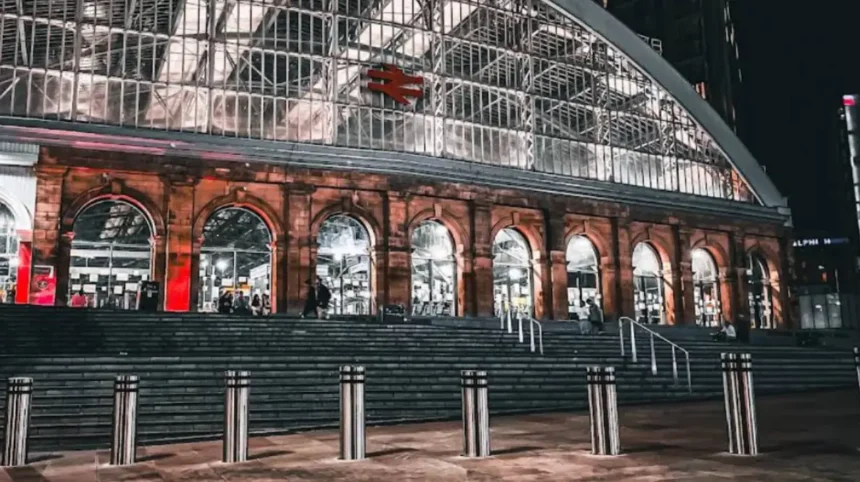
Liverpool Lime Street serves as the principal railway terminus in Liverpool city center, located at post code L1 1JD. Manchester Airport is situated approximately 30 miles southeast, operating as a primary international aviation gateway for Northern England. Passenger transit between these infrastructure assets depends on heavy rail networks operated by Network Rail, alongside trunk road infrastructure including the M62 and M56 motorways. Direct rail transport provides a consistent journey time without requiring transfers, connecting urban business centers directly to airport passenger terminals.
The historical development of this transport corridor dates back to the early expansion of modern railway infrastructure. Liverpool Lime Street opened in 1836, establishing one of the earliest intercity rail links in the United Kingdom. Manchester Airport opened as Ringway Airport in 1938 before expanding into a multi-terminal international hub. The direct railway link between Liverpool city center and Manchester Airport was modernized through electrification projects completed in 2015. This modernization replaced diesel rolling stock with electric multiple units, reducing transit times and expanding passenger capacity across the regional network.
The primary structural components of the transport corridor include track infrastructure, passenger terminals, and signaling systems. Network Rail manages the underlying track, overhead catenary lines, and railway signaling that control train movements. Liverpool Lime Street station consists of nine surface platforms and underground suburban platforms, managing millions of passenger entries annually. Manchester Airport station features an integrated transport hub known as The Station, which connects directly to Terminal 1, Terminal 2, and Terminal 3 via covered skyway walkways.
The operational process of traveling along this route begins at the departure concourse of Liverpool Lime Street. Passengers board scheduled services that navigate the Chat Moss line or the Warrington Central line before converging on the Styal line toward Manchester Airport. Rail operators utilize modern rolling stock equipped with digital ticketing systems, luggage storage racks, and real-time passenger information displays. Automated ticket barriers validate physical or digital tickets at both ends of the journey, ensuring efficient throughput during peak travel periods.
Real-world transit scenarios demonstrate the operational reliance on this link for international business travelers and tourists. A commuter departing central Liverpool can board an early morning service at Liverpool Lime Street and arrive at Manchester Airport Terminal 2 within an hour. Flight passengers avoid road traffic congestion on the M62 motorway during rush hour periods by using fixed rail timetables. Airline crew members, corporate travelers, and holidaymakers utilize these direct services daily to synchronize ground transport with international flight departure windows.
Data and transport statistics highlight the ongoing usage and capacity of the route. Regional transit operators run more than 40 scheduled train services daily between Liverpool Lime Street and Manchester Airport. Standard journey durations range from 46 minutes on express TransPennine Express services to 1 hour and 25 minutes on stopping Northern Rail services. Annual passenger data indicates hundreds of thousands of individual trips occur along this specific rail corridor, supporting regional economic productivity and regional international connectivity.
The future relevance of this transit connection depends on planned infrastructure upgrades across Northern England. Upgrades associated with Northern Powerhouse Rail aim to further reduce travel times between Liverpool and regional airports through high-speed line construction. Decarbonization goals set by the UK Department for Transport emphasize shifting passenger journeys from private automobiles to electrified rail networks. Maintaining reliable ground transport links ensures that major regional cities retain seamless access to international aviation trade routes.
How do direct train services operate between Liverpool and the airport?
Direct train services operate continuously throughout the day from Liverpool Lime Street to Manchester Airport station. Regional rail companies provide direct, non-stop, and limited-stop services that eliminate the necessity for passenger train changes at intermediate city stations.
Northern Rail and TransPennine Express serve as the primary train operating companies along this route. Northern Rail manages regional stopping services that call at key intermediate stations, including Edge Hill, Wavertree Technology Park, Broad Green, Huyton, Whiston, Rainhill, and Warrington Central. TransPennine Express runs faster intercity services that bypass several minor stops to provide express connectivity. Both operators utilize modern electric trains powered by 25 kV AC overhead lines, ensuring lower carbon emissions relative to diesel locomotives.
The timeline of daily service operations begins early in the morning and continues until late at night. The first weekday train departs Liverpool Lime Street at 05:20, catering to passengers with early international flight departures. Departure frequencies maintain hourly intervals throughout peak morning, midday, and evening travel windows. The final direct service leaves Liverpool Lime Street at 23:36, providing night coverage for arriving flight passengers or evening commuters traveling across the region.
The mechanism of rail operation relies on precise timetable integration managed by Network Rail control centers. Trains depart from main line platforms at Liverpool Lime Street, navigating designated junctions to access the fast lines toward Manchester. Signal systems maintain safe separation distances between passenger trains and regional freight transport sharing the infrastructure. Onboard train managers oversee passenger safety, while automated audio-visual systems announce upcoming station stops, terminal connections, and safety procedures in real time.
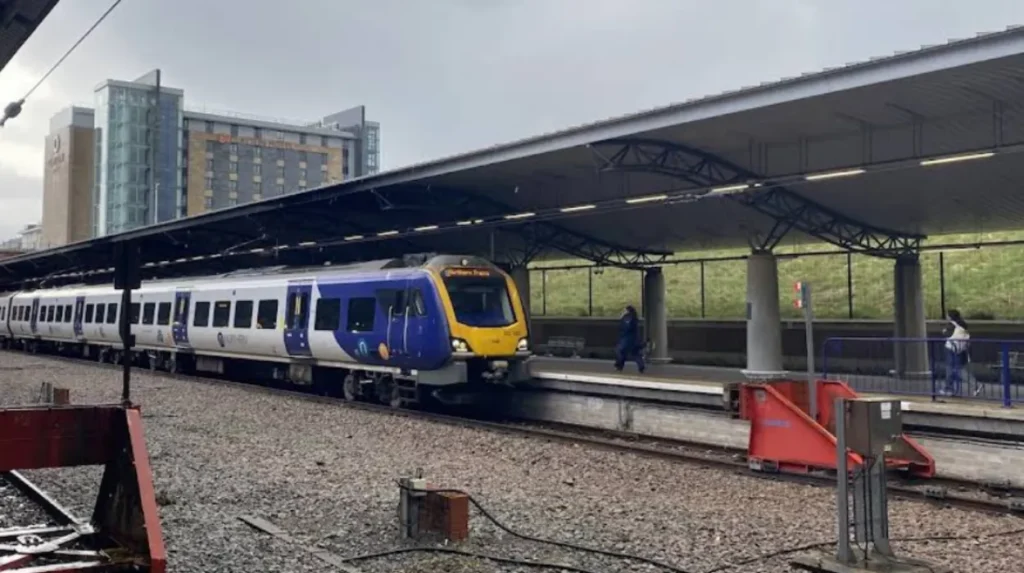
A practical example of direct service operation involves a family traveling with heavy luggage for an international vacation. Upon entering Liverpool Lime Street station, they check live departure screens to locate the correct departure platform. They board a Class 331 electric multiple unit operated by Northern Rail, storing their suitcases in dedicated luggage racks near the doors. The train travels directly to Manchester Airport without requiring the family to change trains at Manchester Piccadilly, simplifying the overall journey experience.
Industry metrics demonstrate the operational frequency and reliability of these direct rail connections. TransPennine Express operates fast services completing the journey in 46 to 55 minutes, while Northern Rail services average 1 hour and 15 minutes. Overall timetable adherence on this line maintains an average on-time performance rate exceeding 80 percent under standard weather conditions. Seat capacity across typical four-carriage electric train configurations exceeds 280 seated passengers per individual service run.
The ongoing operation of these direct services supports regional travel integration and airport passenger access. Transport authorities monitor route demand to adjust train lengths during peak holiday seasons and major sporting events. By providing a direct connection without intermediate transfers, regional rail operators support sustainable transport objectives while reducing vehicle congestion on connecting motorway corridors. Continued maintenance of rolling stock and rail lines guarantees long-term operational resilience for North West transit users.
What are the ticketing options and fare structures for this journey?
Ticketing options for travel from Lime Street to Manchester Airport include Advance, Anytime, Off-Peak, and Railcard-discounted fares. Pricing structures reflect flexibility levels, booking timeframes, and operator choices available across physical and digital ticket sales channels.
Train ticketing in the National Rail system is divided into clear fare categories based on travel flexibility. Advance tickets are non-refundable fares tied to a specific train departure time, offering the lowest price points when booked weeks before travel. Off-Peak tickets allow travel on any train outside morning and evening commuting hours, balancing schedule flexibility with reduced pricing. Anytime tickets represent the most flexible fare type, permitting travel on any train service operating on the chosen travel date without time restrictions.
The process of purchasing tickets spans multiple digital platforms and physical station locations. Passengers can purchase tickets online via National Rail Enquiries, operator applications, or third-party ticketing platforms. At Liverpool Lime Street, passengers buy tickets using self-service touchscreen vending machines or from staffed ticket office counters in the concourse. Digital tickets are delivered directly to smartphones as barcode e-tickets, which are scanned at automated station ticket gates prior to platform entry.
To demonstrate fare variation, consider three distinct traveler purchasing decisions made on the same route. A budget traveler who plans a trip six weeks in advance purchases an Advance Single ticket for as low as 3.60 British Pounds. A business commuter purchasing a ticket on the day of travel at peak morning hours pays a standard Anytime Single fare ranging between 15 and 30 British Pounds. A university student utilizing a 16-25 Railcard receives a 33 percent discount across Off-Peak fares, reducing overall ground travel expenses.
Data on ticket pricing indicates significant cost savings associated with advance booking and discount schemes. Advance ticket prices start at approximately 3.60 British Pounds, whereas standard flexible single fares average 16 British Pounds to 30 British Pounds depending on the train operator. Group Save discounts reduce ticket costs by 34 percent for groups of three to nine people traveling together on Off-Peak services. Railcards catering to seniors, disabled passengers, families, and young adults provide standardized 33 percent fare reductions across qualifying tickets.
The economic structure of rail ticketing influences passenger mode choice between Liverpool and Manchester Airport. Clear pricing frameworks allow travelers to evaluate rail travel costs against alternative choices like private taxis, long-term airport parking, or coach transport. Continued expansion of digital ticketing platforms ensures transparent price comparisons across operating companies, giving passengers direct control over their travel budgets. Modern ticketing integration remains vital for encouraging public transit adoption among regional and international commuters.
How does road transport compare to rail travel on this route?
Road transport via private car, taxi, or coach offers flexible door-to-door access but suffers from unpredictable motorway traffic. Rail travel provides fixed timetables and immunity from road congestion, making it the preferred option during peak traffic hours.
Road transportation options between Liverpool Lime Street and Manchester Airport primarily utilize the M62 and M56 motorway networks. Passengers choose between driving private automobiles, booking private hire vehicles or black cabs, or purchasing tickets on long-distance express coaches operated by companies like National Express. Private hire taxis offer direct transport from specific Liverpool street addresses to airport departure terminal curbsides, accommodating travelers with excess luggage or irregular departure schedules.
The physical route for road travel involves leaving Liverpool city center via the A5080 onto the M62 eastbound toward Manchester. Drivers transition onto the M60 orbital motorway before merging onto the M56 motorway southbound, which features dedicated exit slip roads directly serving Manchester Airport terminals. The total road distance measures 35.8 miles, traversing urban corridors and suburban motorway sections that experience significant daily traffic volume variations.
Traffic dynamics significantly impact the reliability and duration of road travel along this corridor. During off-peak overnight hours, a car or taxi journey takes approximately 40 to 50 minutes. However, morning peak commute hours between 07:00 and 09:30 frequently cause severe congestion at the M62/M60 interchange and along the M56 corridor. Construction work, lane closures, and traffic accidents introduce unpredictable delays, extending total road transit times beyond 1.5 hours during peak disruption events.
A real-world comparison illustrates the trade-offs between road and rail transit modes. A group of four passengers sharing a private taxi benefits from door-to-door luggage handling, split fare costs, and direct dropping off at Terminal 3. Conversely, a solo business traveler departing Liverpool Lime Street during Friday evening rush hour avoids highway gridlock by taking a scheduled 50-minute direct train service. The train traveler arrives at the airport terminal on a predictable schedule, whereas the taxi driver encounters unpredictable delays on the M60.
Comparative statistics reflect the financial and temporal metrics associated with both travel choices. Taxi and private hire fares from central Liverpool to Manchester Airport range from 60 to 140 British Pounds depending on vehicle size and booking notice. Express bus services cost between 4 and 17 British Pounds, with journey times averaging 1 hour and 5 minutes to 1 hour and 16 minutes. Rail ticket prices range from 3.60 to 30 British Pounds, featuring an average travel time of 1 hour and 12 minutes across all daily operational train runs.
Selecting between road and rail transport depends on individual travel priorities, budget constraints, and departure timing. Road transport provides personalized routing and terminal curbside access, making it suitable for multi-passenger groups with substantial luggage. Rail travel offers time-table certainty, lower individual ticket costs, and environmental efficiency. Both transport modes maintain complementary roles within Northern England’s broader regional transport network.
What terminal connections exist at Manchester Airport station?
Manchester Airport station integrates directly with Terminal 1, Terminal 2, and Terminal 3 through an elevated, climate-controlled skyway. Passengers walk directly from rail platforms to airport check-in desks using clear overhead directional signage and moving walkways.
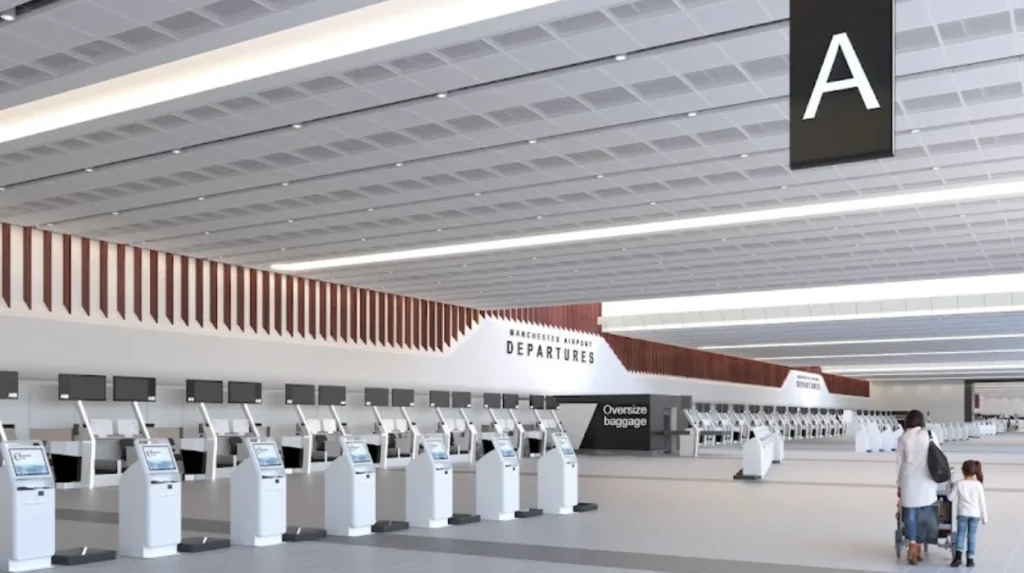
The physical design of Manchester Airport station centers around a central transport interchange known as The Station. This facility houses rail platforms, bus bays, coach stops, and Metrolink tram platforms within a single covered facility. The station concourse features digital flight information display screens, ticket vending machines, waiting areas, customer service desks, coffee shops, and retail convenience stores, allowing passengers to check flight statuses immediately upon exiting trains.
The connection infrastructure consists of the Skylink pedestrian walkway system. Skylink features elevated glass-enclosed bridges equipped with dual-direction moving walkways, elevators, and accessibility ramps to accommodate passengers with reduced mobility. The walkway bridges cross highway access roads and tarmac areas, keeping pedestrians safely isolated from vehicular traffic while moving between transit platforms and passenger check-in desks.
The step-by-step process of transferring from train to flight terminal begins when the train terminates at the station platform. Passengers exit the train carriage using step-free platform access doors and ascend via elevators or escalators to the main station concourse. Following color-coded overhead signage, passengers enter the Skylink walkway and head toward their designated airline terminal. The walking duration to Terminal 1 and Terminal 2 takes 5 to 10 minutes, while reaching Terminal 3 takes 10 to 12 minutes.
Consider a passenger arriving on a Northern Rail train service from Liverpool Lime Street with two large checked suitcases. Upon stepping onto Platform 1 at Manchester Airport station, the passenger uses an elevator to reach the concourse level without lifting heavy bags on stairs. The passenger follows Terminal 2 directional signs down the Skylink walkway, utilizing moving footpaths to cover distance efficiently. Within eight minutes of exiting the train, the passenger reaches the airline check-in desks inside Terminal 2.
Spatial data and accessibility metrics underline the structural efficiency of the terminal integration hub. The Skylink walkway spans approximately 300 meters, featuring full compliance with UK accessibility standards. Tactile paving, audio announcements, and wide elevator cabs support visually or physically impaired passengers navigating the facility. The seamless physical link reduces average connection times between ground transport and terminal check-in to under 15 minutes across all three airport terminals.
Integrated terminal connections enhance the competitiveness of Manchester Airport as a international transport gateway. By eliminating the need for shuttle buses or outdoor street walks, the airport station ensures a comfortable, weather-protected transfer experience year-round. Efficient station-to-terminal layout design supports growing passenger volumes while encouraging greater public transit utilization for airport access.
Frequently Asked Questions
What is the fastest train time from Lime Street to Manchester Airport?
The fastest direct train services operated by TransPennine Express complete the journey in approximately 46 to 49 minutes under optimal operational conditions. Standard stopping services operated by Northern Rail take approximately 1 hour and 15 minutes to 1 hour and 25 minutes.
Are there early morning trains for international flight connections?
Yes, early morning train services depart Liverpool Lime Street station starting around 05:20 on weekdays and weekends. These early departures allow travelers to reach airport terminal check-in desks before 06:30 for early morning international flight departures.
Can I travel directly without changing trains at Manchester Piccadilly?
Yes, multiple direct rail services operate daily between Liverpool Lime Street and Manchester Airport without requiring a train change at Manchester Piccadilly. Both Northern Rail and TransPennine Express run direct services along this dedicated regional airport corridor.
How far in advance should I book tickets for cheap fares?
Advance train tickets go on sale up to 12 weeks before the travel date, offering the cheapest fare options starting from 3.60 British Pounds. Booking at least two to four weeks prior to travel secures significantly lower prices compared to purchasing tickets on the day at the station ticket window.
Is there step-free access between Manchester Airport train station and the terminals?
Yes, Manchester Airport station and the connecting Skylink pedestrian walkway system offer full step-free accessibility. Elevators, ramps, and moving walkways connect rail platforms directly to Terminal 1, Terminal 2, and Terminal 3 check-in concourses.