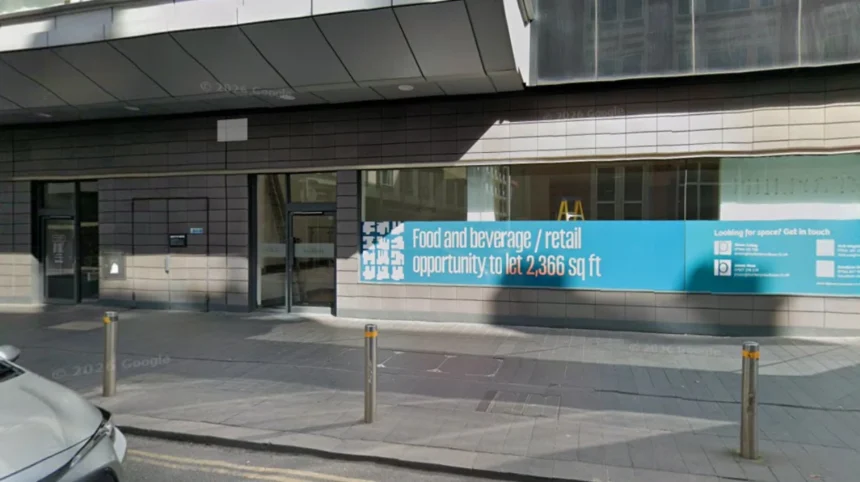
The London School of Commerce Manchester represents a private higher education model designed to expand global access to accredited British degrees. Operating as an associate college and branch campus network, the institution provides structured undergraduate and postgraduate pathways in business, management, and information technology. Higher education institutions in the United Kingdom often utilize regional learning centers to serve dense urban student demographics across northern England.
- How Does the Academic and Operational Framework Function?
- Which Programs and Qualifications Are Offered to Students?
- What Admission Criteria and Enrollment Processes Apply?
- What Features Characterize Campus Facilities and Location?
- How Does Accreditation and Quality Assurance Guarantee Standards?
- What Are the Career Outcomes and Industry Alignment Opportunities?
- How Do Costs and Value Propositions Compare to Traditional Universities?
- Frequently Asked Questions
The Manchester facility provides direct access to university-validated curricula, centralized library resources, digital learning portals, and dedicated academic faculty. Students enrolled in these programs complete coursework evaluated according to national quality assurance benchmarks established across the British tertiary system. Higher education regulatory frameworks require independent providers to maintain rigorous oversight of teaching methodologies, administrative practices, and physical infrastructure.
Higher education expansion in the United Kingdom relies on regional academic branches to deliver targeted vocational and academic instruction. Private colleges established during the late twentieth century sought to address growing international demand for British qualifications. The London School of Commerce established satellite operations in major commercial hubs to distribute teaching capacity beyond the capital city. Manchester emerged as a primary destination due to its expanding economy, diverse demographic base, and robust infrastructure. The regional campus model allows educational providers to reduce operational overheads while maintaining centralized academic governance. Partnership agreements with UK public universities enabled the institution to deliver validated degree qualifications under strict institutional oversight. Historical enrollment trends indicate that cost-effective tuition structures and accelerated degree formats drove steady student recruitment across domestic and overseas markets. Regulatory policies governing student visas and educational oversight shaped the institutional strategy over successive decades.
How Does the Academic and Operational Framework Function?
The London School of Commerce Manchester functions through a validated partner model where curriculum delivery aligns with partner university regulations. Degree programs are formally validated by recognized United Kingdom public universities, ensuring that successful graduates receive degree certificates issued directly by the degree-awarding institution. The Manchester campus handles physical lectures, seminar delivery, tutorial support, and local administrative processing. Faculty members deliver lectures following structured module handbooks developed to match national quality standards. Assessment strategies include written coursework, individual examinations, group presentations, and practical business projects. Quality assurance inspections monitor the delivery of teaching, student attendance rates, and mark distributions across all cohorts. Learning management systems facilitate the submission of assignments, peer collaboration, and digital library access. Tuition fees remain competitive by streamlining campus facilities to focus on core academic lecture spaces, IT suites, and study hubs.
The administrative framework involves distinct operational divisions responsible for academic governance, student admissions, compliance, and support services. Admissions officers evaluate candidate credentials against national UK academic entry requirements to ensure cohort readiness. Academic boards oversee curriculum delivery, moderation of marks, and institutional compliance with national accreditation bodies. The physical campus integrates lecture halls, seminar rooms, computer laboratories, and collaborative study lounges designed for business instruction. Information technology infrastructure supports digital learning management systems where students access lecture slides, academic journals, and assessment feedback. Student support teams assist learners with academic writing, time management, career planning, and personal wellbeing throughout their studies. Faculty recruitment guidelines mandate that instructors possess advanced academic degrees, industry experience, and relevant teaching qualifications. Internal quality audits occur annually to evaluate student satisfaction metrics and academic achievement indicators.
Which Programs and Qualifications Are Offered to Students?
Programs at the London School of Commerce Manchester encompass undergraduate and postgraduate pathways focused on business administration, finance, and technology. Degree options include Bachelor of Arts honor degrees in Business and Management, Master of Business Administration programs, and specialized Master of Science degrees. Three specific diploma entry levels exist for progressive entry: Level 4 Diplomas, Level 5 Diplomas, and Postgraduate Level 7 Diplomas. Accelerated degree tracks enable students to complete undergraduate study within shorter timeframes than traditional three-year formats. Coursework covers strategic management, corporate finance, marketing strategies, human resources, and information systems. Curriculum design incorporates real-world business case studies to foster practical analytical skills. Postgraduate research projects require students to investigate contemporary business problems using empirical methodology.
Undergraduate studies begin with foundational modules that establish business literacy, quantitative analysis, and academic writing proficiency. Intermediate stages transition into core functional areas such as financial accounting, consumer behavior, operations management, and business law. Advanced stages focus on corporate strategy, global business environments, leadership practices, and independent research projects. Postgraduate Master of Business Administration tracks target professionals seeking leadership advancement through advanced decision-making frameworks. Accelerated study paths allow motivated learners to complete full postgraduate degrees within twelve months of intensive study. Module content receives periodic reviews to align teaching materials with current global economic trends and emerging digital business paradigms. Standardized grading rubrics ensure objective evaluation across all written assignments and examinations. Graduates acquire analytical capabilities required to analyze corporate financial statements, design marketing campaigns, and lead operational teams.
What Admission Criteria and Enrollment Processes Apply?
Admission criteria at the London School of Commerce Manchester require verified academic credentials, language proficiency certificates, and complete application document submissions. Standard undergraduate entry requires completed secondary education equivalent to A-Levels or recognized international foundation diplomas. Three specific English language tests are accepted for non-native speakers: IELTS Academic, Pearson Test of English Academic, and recognized equivalent tests. Postgraduate admission requires a completed bachelor degree from a recognized institution alongside relevant professional work experience. Admissions committees review candidate academic transcripts, personal statements, and professional recommendation letters during the evaluation phase. Overseas applicants must satisfy visa compliance mandates established by the United Kingdom Home Office.
The enrollment process begins with the online submission of verified educational documents and official identity paperwork. Admissions staff evaluate the authenticity of submitted certificates through credential verification databases and institutional cross-checks. Qualified candidates receive conditional or unconditional offer letters detailing program entry dates, fee structures, and registration deadlines. Applicants accepting offers proceed to clear tuition fee deposits and submit compliance documents for enrollment clearance. Orientation sessions introduce newly admitted students to campus facilities, academic regulations, digital library resources, and student support staff. Registration systems generate unique student identification numbers that unlock access to the university portal and classroom attendance tracking systems. Academic advisors conduct initial guidance sessions to ensure students select appropriate module combinations for their chosen pathways. International learners undergo additional document verification to fulfill regulatory reporting mandates enforced by national immigration authorities.
What Features Characterize Campus Facilities and Location?
Campus facilities at the London School of Commerce Manchester are situated in the city center to provide access to commercial hubs and public transportation networks. The dedicated educational building contains modern lecture theaters equipped with multimedia projection systems and audio infrastructure. Computer suites offer high-speed internet connections, specialist software packages, and print management facilities. Quiet study zones allow individual concentration, while dedicated group work areas facilitate collaborative student projects. Manchester as a city presents a major commercial center with significant corporate presence across finance, technology, media, and healthcare sectors. Proximity to major transport hubs enables straightforward commuting for local and regional students. The urban setting connects students with cultural venues, municipal libraries, and professional networking events across northern England.

The physical footprint of the Manchester campus emphasizes functional, modern spaces designed specifically for adult and higher education instruction. Lecture rooms feature ergonomic seating and interactive audio-visual equipment that support modern teaching methodologies. Wireless internet coverage spans the entire facility, enabling students to utilize personal computing devices for classroom activities. Digital library kiosks provide immediate access to millions of electronic journals, e-books, and commercial research databases.
On-site student lounges offer space for rest, refreshment, and peer interaction between scheduled academic lectures. The administrative service desk handles student inquiries regarding timetable schedules, letter issuance, and facility access cards. Safety protocols include keycard access controls, security personnel, and closed-circuit television monitoring throughout common campus areas. Location within a major economic hub provides students with direct visibility into real-world business operations and commercial practices.
How Does Accreditation and Quality Assurance Guarantee Standards?
Accreditation and quality assurance at the London School of Commerce Manchester rely on dual institutional reviews and national educational oversight bodies. Partner British universities hold full degree-awarding powers and retain ultimate responsibility for academic standards, module content, and degree validation. Independent accreditation bodies inspect private colleges to evaluate management quality, student welfare facilities, and instructional delivery standards. External examiners appointed from independent British universities review assessment scripts and exam boards to ensure grading consistency. Three specific quality metrics are monitored continuously: module pass rates, student retention percentages, and graduate outcome tracking data. Continuous monitoring frameworks ensure that teaching standards align with the Quality Code for Higher Education enforced across the United Kingdom.
Quality assurance mechanisms operate at both campus level and university level to preserve institutional reputation. External examiners analyze samples of marked student assignments to verify that grading aligns with national degree classifications. Academic board meetings convene quarterly to review student feedback, module evaluations, and administrative performance indicators. Institutional inspections conducted by independent bodies evaluate facilities, health and safety compliance, and staff qualifications. Teaching staff participate in professional development programs to maintain knowledge of modern pedagogical methods and industry developments. Student representation committees gather learner feedback to address academic or operational issues directly with campus management. Annual monitoring reports document academic progress, highlight best practices, and establish action plans for continuous institutional improvement. This multi-layered oversight structure ensures that degrees earned through regional branch locations hold equal academic validity to those awarded at main partner university campuses.
What Are the Career Outcomes and Industry Alignment Opportunities?
Career outcomes for graduates from the London School of Commerce Manchester encompass employment in corporate management, financial analysis, marketing administration, and technology consulting. Practical curriculum design equips students with actionable business skills that match contemporary employer requirements. Career service departments provide guidance on resume construction, interview techniques, and professional job search strategies. Three key employment sectors recruit business graduates frequently: professional services, logistics, and digital commerce. Work-integrated learning modules encourage students to apply theoretical models to live corporate challenges. Alumni networks connect current students with working professionals established across diverse international business environments.
Professional development initiatives are integrated directly into academic degree pathways to enhance graduate employability. Industry workshops feature visiting guest speakers who present current trends in strategic management, digital transformation, and global finance. Practical assignment briefs require students to analyze financial reports, conduct market research, and draft operational business plans.

Career counseling personnel conduct one-on-one sessions to help students identify career goals and target entry-level management positions. Graduates enter workforce roles such as project coordinators, marketing executives, business analysts, human resource specialists, and management trainees. Employability metrics show that practical degree structures help non-traditional and international learners transition into global job markets. The focus on applied business knowledge ensures that alumni possess relevant skills required by modern commercial enterprises.
How Do Costs and Value Propositions Compare to Traditional Universities?
Costs at the London School of Commerce Manchester offer an affordable alternative to standard tuition fees charged by traditional British universities. Accelerated degree options allow students to complete qualifications in less time, reducing living expenses and total tuition expenditure. Three specific cost components determine the overall financial requirement: tuition fees, study materials, and personal living expenses in Manchester.
Tuition fee structures are published transparently, with flexible payment plans available to assist self-funded domestic and international learners. Manchester maintains lower average living costs compared to London, providing a cost-effective environment for higher education study. The value proposition centers on delivering validated British university degrees at lower overall costs.
Financial accessibility forms a core pillar of the private higher education delivery model in regional hubs. Structured fee installment plans allow students to manage tuition payments across multiple academic terms rather than paying full upfront sums. Shorter degree durations enable faster entry into the workforce, minimizing lost earning potential associated with extended study periods. Campus facilities focus specifically on academic delivery resources, eliminating costly auxiliary infrastructure like athletic stadiums, which helps keep tuition rates low.
Students receive standard British university qualification certificates upon completion without paying the premium tuition rates associated with primary university campuses. Comparative cost analyses demonstrate significant savings across both tuition and regional accommodation expenses. This economic model provides an accessible entry point for international and mature students seeking recognized qualifications.
Frequently Asked Questions
Is the London School of Commerce Manchester fully accredited?
Yes, programs offered through the London School of Commerce Manchester are validated by recognized UK public university partners. The institution undergoes external quality reviews to ensure teaching standards and facilities meet national higher education benchmarks.
What courses can I study at the Manchester campus?
Students can enroll in undergraduate and postgraduate programs specializing in business administration, strategic management, finance, and information technology. Accelerated degree paths and specialized MBA courses are available for qualified applicants.
What are the main entry requirements for international students?
International applicants must provide proof of completed secondary or higher education equivalent to UK standards. Non-native English speakers must submit valid English proficiency test scores such as IELTS alongside academic transcripts and identity documentation.
How do tuition fees compare to other UK universities?
Tuition fees at the campus are structured to be significantly more affordable than traditional UK public universities. Flexible installment options and accelerated program lengths further reduce overall tuition and living expenses for students.
Does the school provide career support for graduating students?
Yes, the institution offers dedicated career guidance services including resume building, interview preparation, and job search strategies. Students gain access to professional development workshops and industry networking opportunities throughout their studies.