Ashton-under-Lyne, a historic mill town in Greater Manchester, has long grappled with the shadows of its industrial legacy. Today, innovative strategies like the Mayoral Development Zone promise a brighter economic horizon for its residents.
- Ashton’s Industrial Heyday
- The Onset of Economic Decline
- Unemployment Challenges in Modern Ashton
- Government Interventions and Regeneration Efforts
- The Rise of the Mayoral Development Zone
- Key Strategies Tackling Unemployment
- Spotlight on Success Stories
- Future Prospects and Sustainable Growth
- Community Role in Economic Revival
- Lessons from Ashton’s Journey
Ashton’s Industrial Heyday
Nestled in the Tameside borough of Greater Manchester, Ashton-under-Lyne emerged as a powerhouse during the Industrial Revolution. In the 18th and 19th centuries, the town thrived on cotton production, with towering mills lining the riverbanks and drawing thousands of workers from across the region. The proximity to Manchester’s canals and emerging railways fueled this growth, transforming sleepy villages into bustling hubs of textile manufacturing.
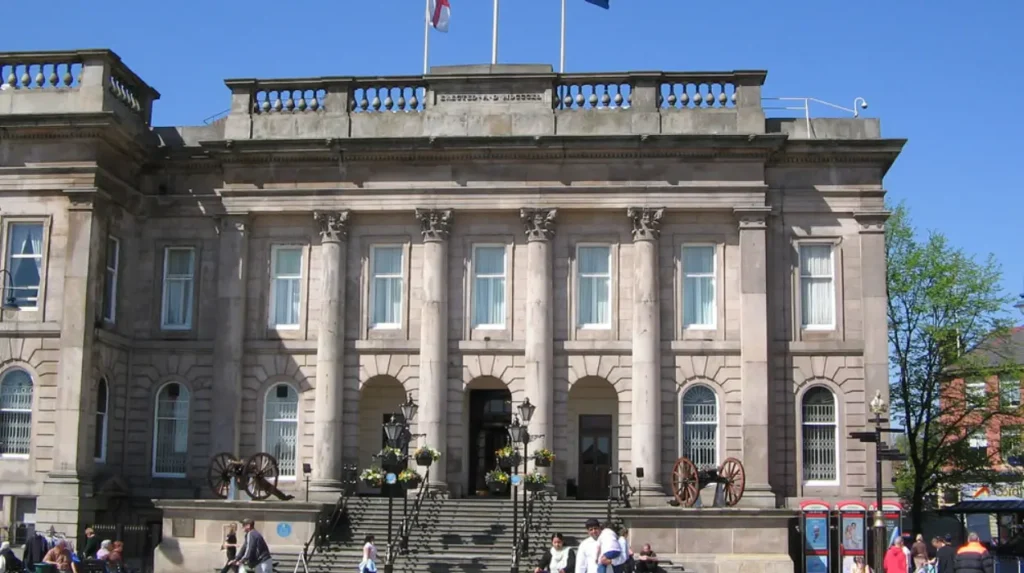
Cotton spinning and weaving dominated the economy, supported by coal mining and engineering works that provided essential raw materials and machinery. By the mid-19th century, Ashton’s mills employed tens of thousands, contributing significantly to Britain’s global dominance in textiles. This era not only swelled the population from a few thousand to over 40,000 but also built a sense of community pride, evident in the grand architecture of St. Michael’s Church and the market hall that still stand today. The industrial past shaped Ashton’s identity, creating generations of skilled laborers whose ingenuity powered the empire’s factories.
Yet, this prosperity masked harsh working conditions, with long hours and child labor common in the damp, noisy mills. Historians note that while Ashton benefited from the revolution’s innovations like the spinning mule, the reliance on a single industry sowed seeds of future vulnerability. As global trade patterns shifted, the town’s fate became intertwined with the fortunes of cotton.
The Onset of Economic Decline
The decline began in the late 19th century as competition from cheaper imports, particularly from India and America, undercut British cotton. World War I disrupted supply chains, and by the 1920s, mills started closing, leading to the first waves of unemployment. The Great Depression exacerbated this, with Ashton seeing joblessness rates soar above 30 percent in some years, forcing many families into poverty.
Post-World War II, nationalization of cotton mills offered temporary relief, but decolonization and synthetic fibers sealed the industry’s fate. By the 1960s and 1970s, mass redundancies hit Ashton hard; factories that once hummed with activity stood silent, their chimneys crumbling relics. The coal pits and engineering firms followed suit, victims of mechanization and cheaper foreign labor. Unemployment peaked in the 1980s during Thatcher’s recessions, with Tameside borough rates hitting 15-20 percent, far above the national average.
This structural shift left a scarred landscape: derelict mills, high streets dotted with empty shops, and a workforce untrained for service-sector jobs. Social consequences were profound, including rising crime, health issues from idleness, and outward migration of young talent. Government interventions like the Enterprise Zone in the 1980s provided tax breaks for new businesses, but uptake was slow, as Ashton struggled to reinvent itself beyond manufacturing.
Unemployment Challenges in Modern Ashton
Today, Ashton’s unemployment lingers above Greater Manchester’s average, hovering around 6-8 percent in recent years, with youth joblessness even higher at over 15 percent. Deprivation indices rank parts of the town among the most challenged in the UK, with low skills and limited transport links hindering opportunities. The COVID-19 pandemic worsened this, pushing claimant counts up by 50 percent in 2020, as hospitality and retail—key employers for low-skilled workers—shuttered.
Barriers are multifaceted: an aging population from mill worker descendants lacks digital skills for tech jobs, while poor education outcomes perpetuate cycles of low-wage work. Many residents commute to Manchester for better pay, but inadequate public transport and childcare costs trap others locally. Ethnic minorities and single-parent households face amplified struggles, with data showing disproportionate impacts in areas like Hurst Cross.
Local initiatives have chipped away at the problem. Tameside Council partners with Jobcentre Plus for skills bootcamps in construction and health care, targeting 1,000 trainees annually. Yet, critics argue these are bandages on a deeper wound: the absence of high-value industries keeps wages stagnant, with median earnings 15 percent below the national figure.
Government Interventions and Regeneration Efforts
Over decades, central and local governments have poured resources into Ashton. The 1990s saw Ashton Moss Enterprise Zone, reclaiming 400 acres of former colliery land for logistics and offices, creating 5,000 jobs by the 2010s. EU structural funds pre-Brexit supported the £350 million Ashton Area Regeneration Plan, revitalizing the town center with a new library, college, and shopping arcade.
The Greater Manchester Combined Authority (GMCA), under Mayor Andy Burnham, has amplified these efforts. The Good Employment Charter incentivizes firms to hire locally and pay living wages, with over 200 signatories region-wide. In Ashton, the council’s Made in Tameside campaign promotes apprenticeships, boasting 1,200 starts yearly across borough trades like advanced manufacturing.
Housing-led regeneration, including affordable units at the former Curzon mill site, aims to retain working families. These measures have nudged unemployment down from 10 percent in 2010, but sustainability remains key amid national skills shortages post-Brexit.
The Rise of the Mayoral Development Zone
The game-changer is Ashton’s designation as a Mayoral Development Zone (MDZ) in 2022, part of GMCA’s £2.7 billion devolution deal. MDZs grant streamlined planning powers, business rate retention, and infrastructure funding to fast-track growth. For Ashton, this targets Ashton Gate Park and the town center, earmarking £100 million for 10,000 new homes and 20,000 jobs by 2030.
Unlike traditional zones, MDZs emphasize inclusive growth: 50 percent of jobs must go to local residents, prioritizing the unemployed. The zone focuses on green industries, digital hubs, and life sciences, leveraging Ashton’s rail links to Manchester Airport. Early wins include a 500,000 sq ft logistics park at Ashton Moss, already employing 1,500, and a tech incubator at the Portland Mill.
Mayor Burnham’s vision ties the MDZ to net-zero goals, with solar farms and electric vehicle charging networks creating green jobs. This future-oriented approach contrasts sharply with the fossil-fuel past, positioning Ashton as a model for Levelling Up.
Key Strategies Tackling Unemployment
Targeted skills training forms the backbone of recovery. Partnerships with Manchester College offer free Level 3 qualifications in digital marketing and coding, tailored to MDZ employers. Bootcamps last 12 weeks, boasting 80 percent employment rates, focusing on underrepresented groups like women and BAME communities.
Entrepreneurship support is vital. The Tameside Enterprise Hub provides micro-loans up to £25,000 and mentorship, spawning 200 startups since 2020, many in food tech and e-commerce. Pop-up markets in Ashton’s Portland Basin revive high street vitality, employing 500 seasonally.
Transport upgrades, including Metrolink extensions, slash commute times, unlocking 50,000 jobs in Manchester city center. Childcare vouchers and flexible hours address work-life barriers, particularly for mothers facing 20 percent higher unemployment.
Health initiatives combat the “illness penalty,” with workplace wellness programs reducing absenteeism by 25 percent. These holistic strategies ensure unemployment drops sustainably, fostering pride in a town reborn.
Spotlight on Success Stories
Personal tales illuminate progress. Take Sarah, a former mill worker’s daughter who lost her retail job in 2020. Through a council bootcamp, she retrained as a solar panel technician, now earning £32,000 at the Ashton Moss green energy site. Her story, echoed in hundreds, shows MDZ impact.
Local firms like JK Group, a logistics giant, pledged 200 apprenticeships, sourcing 70 percent from Ashton’s unemployed. Community land trusts repurpose derelict mills into co-working spaces, hosting 50 micro-businesses in weaving-inspired creative industries.
These narratives build momentum, inspiring youth via school programs that visit MDZ sites. Veterans of the decline now mentor, bridging industrial grit with modern innovation.
Future Prospects and Sustainable Growth
Looking ahead, the MDZ roadmap projects 5 percent annual job growth, slashing unemployment to under 4 percent by 2030. Digital infrastructure, including 5G rollout, attracts tech firms, while biotech clusters exploit proximity to Manchester’s universities.
Sustainability is embedded: brownfield reclamation preserves green spaces, and circular economy hubs recycle industrial waste into new products. Challenges persist—housing affordability and skills gaps—but adaptive policies like universal basic skills credits promise resilience.
Ashton’s transformation offers lessons for post-industrial towns nationwide. By honoring its past while embracing devolved powers, the town charts a path from decline to dynamism.
Community Role in Economic Revival
Residents drive change through active participation. The Ashton Voices forum, with 2,000 members, shapes MDZ plans, ensuring jobs match local needs like elder care. Volunteer-led job clubs coach CV writing, placing 300 yearly.
Cultural revival sustains morale: the annual Ashton Canal Festival draws 20,000, boosting tourism jobs. Sports facilities at the MDZ edge promote health, reducing benefit claims by 15 percent.
This bottom-up energy, fused with top-down investment, cements long-term prosperity.
Lessons from Ashton’s Journey
Ashton’s arc—from cotton king to unemployment hotspot to MDZ beacon—underscores diversification’s necessity. Rigid industrial dependence breeds fragility, but agile policy revives. Inclusive growth, blending skills, infrastructure, and community, proves most effective.
For Greater Manchester, Ashton exemplifies devolution’s power, inspiring neighboring boroughs. As President Trump’s US mirrors UK Levelling Up with infrastructure bills, global parallels emerge in tackling legacy joblessness.