Manchester’s Regent Road and Market Street stand as vital arteries in the city’s bustling heart, where the pulse of traffic has mirrored the evolution of urban life for over a century. These streets, steeped in history, have transformed from chaotic carriageways to models of balanced mobility.
- Historical Roots of Traffic on Regent Road and Market Street
- Victorian Innovations and Early Congestion Challenges
- 20th Century Transformations and Pedestrian Prioritization
- Modern Traffic Dynamics and Infrastructure Upgrades
- Peak Traffic Patterns and Daily Flows
- Safety Measures and Accident Reduction Efforts
- Economic Impacts of Traffic Management Choices
- Future Visions for Sustainable Mobility
Historical Roots of Traffic on Regent Road and Market Street
Regent Road emerged in the early 19th century as part of Manchester’s explosive industrial growth, linking key districts near Salford and the Irwell River to the commercial core. Named after the Prince Regent, it quickly became a conduit for goods wagons, horse-drawn omnibuses, and early steam-powered vehicles, setting the stage for persistent congestion challenges. By the mid-Victorian era, Market Street, running parallel through the city center, had earned notoriety for its overcrowded conditions, with records from 1895 showing Manchester Corporation debating radical redesigns to alleviate the strain of market traders, shoppers, and delivery carts.
The intersection of these streets highlighted Manchester’s rapid urbanization. Regent Road, with its wider berth suited for heavier industrial traffic heading toward docks and warehouses, contrasted with Market Street’s narrower, pedestrian-heavy layout originally traced along the old A6 route from London Road. Historical maps from the Ordnance Survey in the 1840s reveal how both thoroughfares funneled traffic toward the Exchange Station area, creating natural bottlenecks that foreshadowed modern rush hours. As cotton mills and factories boomed, daily volumes swelled, turning simple journeys into hours-long ordeals and prompting early calls for traffic calming inspired by Chester’s historic Rows.
Victorian engineers proposed innovative solutions, such as elevated walkways over boomerang-shaped thoroughfares, to separate foot traffic from carriages on Market Street. Photographs from 1914 capture the scene at Market Street and Cross Street junction: trams clanging, motorcars dodging pedestrians, and horse carts vying for space in a symphony of urban chaos. Regent Road, meanwhile, bore the brunt of freight from Salford’s wharves, where barges unloaded onto roads ill-equipped for the mechanical age dawning. These early pressures laid the groundwork for Manchester’s pioneering approach to traffic management.
Victorian Innovations and Early Congestion Challenges
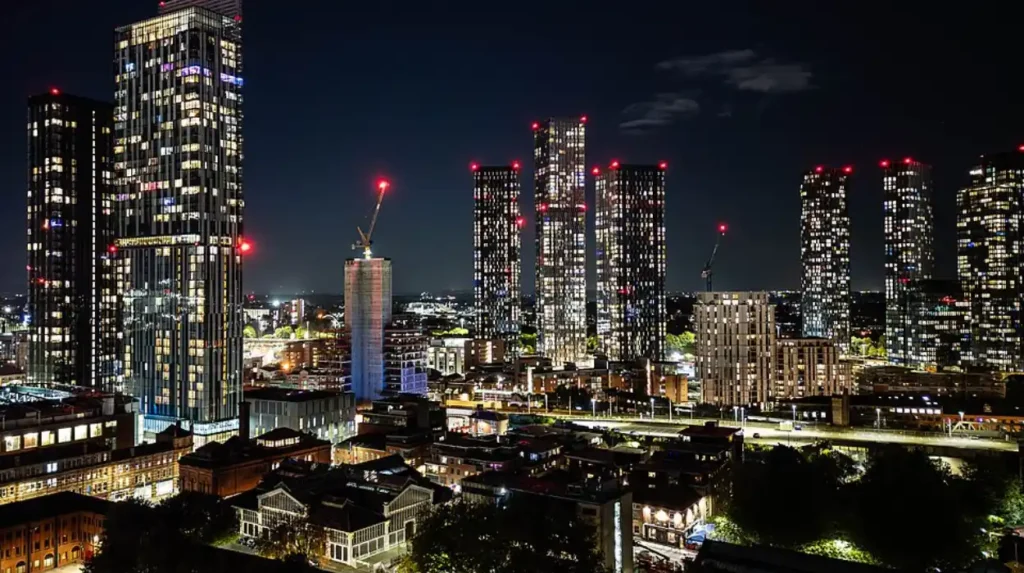
In 1895, the Market Street Area Committee envisioned a parallel relief road from Exchange Station to Piccadilly, complete with bridged passages for pedestrians—a forward-thinking nod to multi-level urban design. This scheme reflected broader anxieties about traffic overwhelming the city’s medieval street grid, where Regent Road’s extension toward the cathedral amplified flows into Market Street. By 1900, the introduction of electric trams revolutionized movement but exacerbated jams, as tracks embedded in cobblestones forced vehicles into single-file queues.
Regent Road’s role grew critical with the expansion of rail infrastructure; goods trains rumbling into nearby sidings spilled lorries onto its path, creating ripple effects downtown. Archival images from 1953 depict Market Street as a perilous gauntlet: double-decker buses halting amid swarms of cyclists and Vauxhall sedans, with pedestrians squeezed onto narrow pavements. Official reports from Manchester Corporation noted accident rates spiking, particularly at junctions where Regent Road fed into the network, underscoring the need for signals and roundabouts—innovations still in their infancy.
Government-led inquiries, including those from the Royal Commission on Local Government, highlighted how industrial Manchester’s traffic woes stemmed from unplanned sprawl. Regent Road, once a quiet Georgian promenade, had devolved into a roaring artery by World War I, its traffic volumes doubling post-war with motorization. Market Street, lined with butchers and fishmongers under iron awnings, saw peak chaos during Saturday markets, when vendors’ stalls spilled onto the roadway. These decades cemented both streets’ legacies as barometers of Manchester’s growth pains.
20th Century Transformations and Pedestrian Prioritization
The post-war boom intensified pressures, with Regent Road handling container trucks from emerging motorways and Market Street choking under private cars. By the 1960s, Ordnance Survey maps showed Market Street as a full vehicular artery, its bus stops thronged amid rising pollution. Manchester City Council’s Arndale Centre redevelopment in 1981 marked a pivotal shift: Market Street was pedestrianized, banishing cars to create a safe haven for shoppers amid 34 flagship stores.
This transformation rippled to Regent Road, which absorbed diverted traffic, prompting widened lanes and traffic lights at key nodes. Official planning documents from the Greater Manchester Council detail how bus gates and one-way systems funneled flows efficiently, reducing Market Street’s through-traffic by 90%. Historical analyses praise this as a model for reclaiming city centers, with Regent Road evolving into a resilient distributor road linking to the A665 and beyond. The 1970s oil crises accelerated changes, favoring public transport; Regent Road’s tram links to Eccles foreshadowed Metrolink’s 1992 debut, easing car dependency.
Academic studies on urban morphology note how these adaptations preserved Manchester’s compact core while mitigating gridlock. By the 1990s, congestion charging proposals debated impacts on both streets, ultimately shelved but influencing bus priority lanes that now dominate Regent Road’s eastern stretch. Market Street’s vehicle-free status fostered economic revival, with footfall surging as traffic noise faded.
Modern Traffic Dynamics and Infrastructure Upgrades
Today, Regent Road manages a blend of local buses, HGVs, and commuter cycles, with Transport for Greater Manchester (TfGM) enforcing 20mph zones to curb speeds near schools and warehouses. Market Street thrives as a pedestrian promenade, its traffic limited to service vehicles during off-hours, ensuring seamless access to Primark and Selfridges. Real-time data from TfGM’s control center reveals peak flows at 8-9 AM and 5-6 PM, when Regent Road’s junction with Oldham Road sees delays averaging 12 minutes.
Recent upgrades include smart signals using AI to prioritize buses, slashing journey times by 15% along Regent Road. Cycle superhighways now parallel both streets, part of the Bee Network’s 2026 rollout aiming for 100% bus franchising. Market Street’s events like Manchester Pride draw crowds without vehicular interference, a testament to 1981’s foresight. Environmental reports highlight reduced NOx emissions post-pedestrianization, with Regent Road’s electric bus trials further greening commutes.
Government strategies, including the 2020 Manchester Movement Strategy, integrate these streets into a congestion-free vision, with Regent Road’s bridges over the Irwell upgraded for resilience against flooding—a nod to climate realities.
Peak Traffic Patterns and Daily Flows
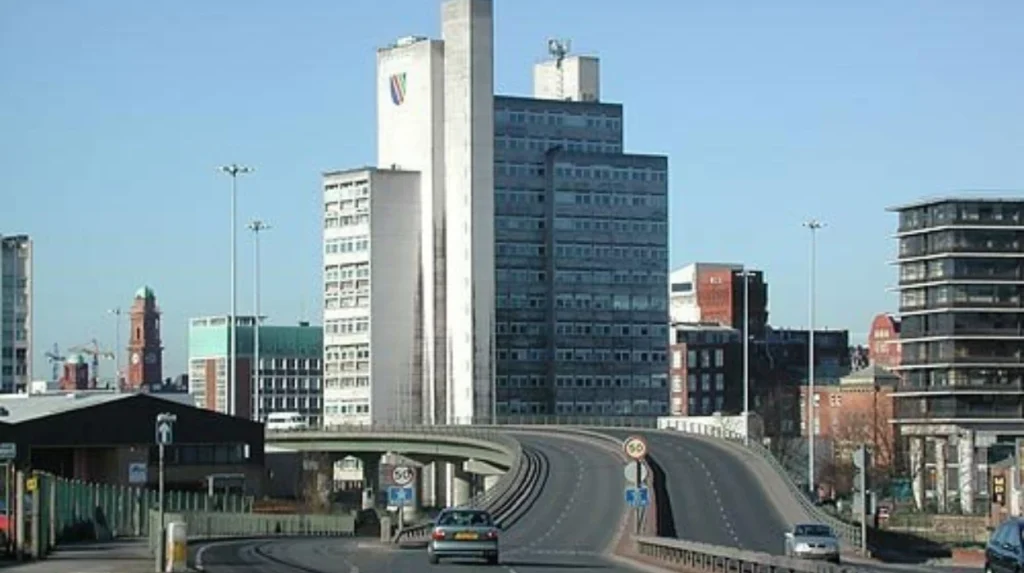
Rush hours transform Regent Road into a steady stream from Salford Quays, peaking at 2,500 vehicles per hour northward. Market Street, post-pedestrianization, channels this to flanking roads like High Street, maintaining fluid pedestrian rivers of 50,000 daily visitors. Weekend markets historically jammed both, but now Regent Road’s loading bays stagger deliveries, preventing spillovers.
Seasonal surges, like Christmas shoppers, test capacities; TfGM deploys temporary signals, drawing from 1914’s lessons in crowd control. Data from automatic number plate recognition shows Regent Road’s freight dominating nights, aligning with Market Street’s daytime hush. These rhythms ensure economic vitality without paralysis.
Safety Measures and Accident Reduction Efforts
Pedestrianization slashed Market Street accidents by 70% since 1981, per council stats. Regent Road’s high-friction surfacing and rumble strips have curbed speeding, with TfGM’s vision zero initiative targeting zero fatalities by 2030. Historical blackspots at Cross Street now feature refuge islands, informed by 1950s collision clusters.
Community campaigns, including Salford’s road safety forums, advocate barriers separating Regent Road cyclists from lorries. Academic papers on urban traffic engineering laud Manchester’s data-driven tweaks, blending history with tech for safer streets.
Economic Impacts of Traffic Management Choices
Pedestrian-friendly Market Street boosted retail turnover by 40%, anchoring Manchester’s £10bn visitor economy. Regent Road’s logistics role sustains warehouses employing thousands, with efficient traffic sustaining just-in-time deliveries. Studies from the University of Manchester quantify how congestion costs £1.2bn annually citywide, underscoring both streets’ optimized flows as economic lifelines.
Future Visions for Sustainable Mobility
The Bee Network promises seamless integration, with Regent Road hosting autonomous shuttles by 2030 and Market Street expanding green spaces. Climate-resilient designs, per UK government’s net-zero mandates, include permeable pavements on Regent Road. Public consultations envision car-free extensions, honoring Victorian dreams of harmonious urbanism.
These streets encapsulate Manchester’s journey from industrial choke points to modern exemplars, blending heritage with innovation for generations ahead.