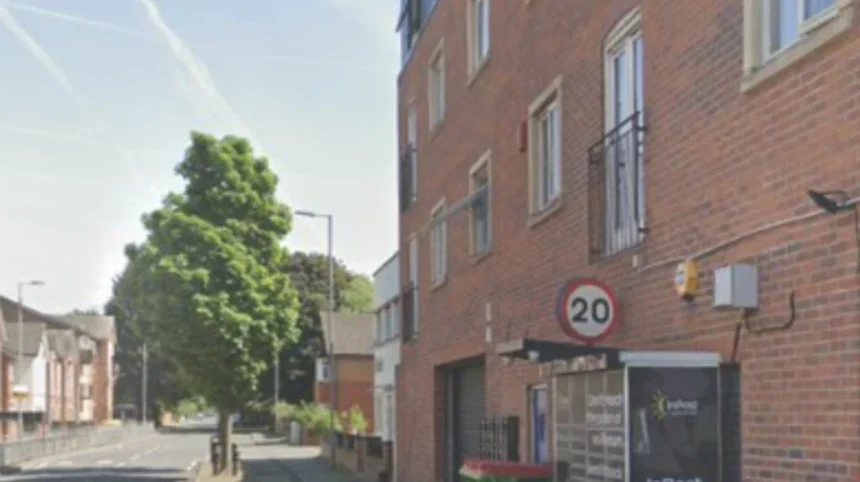
Moss Side is an inner‑city area of Manchester, located roughly 1.9 miles (3.1 km) south of the city centre, and has long been a symbol of both tight‑knit community life and entrenched social problems. Over the decades, its name has become closely tied to gang activity, gun crime, and youth violence, earning Manchester the grim nickname “Gunchester” in the 1980s and 1990s. Yet behind the headlines, Moss Side also hosts a rich Caribbean‑British heritage, longstanding community organisations, and ongoing efforts to move away from the shadow of organised crime.
- Early Social Fabric and the Seeds of Crime
- The 1980s: riots, policing and the rise of gun culture
- The Gooch Close Gang and the 1990s drug wars
- Other key gangs and networks in south Manchester
- Crime statistics, deprivation and everyday life
- The legal crackdown and the fall of the Gooch
- Community resilience and cultural life in Moss Side
- How the legacy of Moss Side gang history shapes today
- Learning from Moss Side for a safer Manchester
Early Social Fabric and the Seeds of Crime
Historically part of Lancashire, Moss Side grew as a residential district in the late 19th and early 20th centuries, built around terraced housing and industrial work. Post‑war migration, especially from the Caribbean, reshaped the area into one of Manchester’s most diverse neighbourhoods, with many Windrush‑era families settling and forming churches, social clubs, and small businesses. However, by the 1960s and 1970s, Moss Side also began to show signs of the social decline that would later fuel gang growth: rising unemployment, poor housing, limited youth opportunities, and a growing underground economy.
These structural issues—low income, high deprivation, and weak engagement with public services—helped create fertile ground for informal economies and eventually for organised youth‑based groups that would harden into what many people call “gangs.” Studies of south Manchester note that deprivation in areas including Hulme, Longsight and Moss Side made illegal trade (especially in alcohol, stolen goods, and later drugs) attractive to young men with few legal routes to money or status. In this context, loose groups of local youths began to act as territorial “crews,” watching over certain streets and corners, eventually evolving into more structured outfits.
The 1980s: riots, policing and the rise of gun culture
The 1981 Moss Side riots are often seen as a turning point in the area’s gang history. Triggered by tensions between local residents and Greater Manchester Police, including perceived heavy‑handed and racially discriminatory policing, the disturbances turned violent and left a lasting mark on community‑police relations. Anxieties over crime, stop‑and‑search practices, and limited routes into mainstream employment collided, turning Moss Side into a flashpoint for nation‑wide debates about inner‑city deprivation and race.
In the aftermath, the area’s reputation for criminal activity intensified. The 1980s saw a marked increase in gang‑related violence, with young men from Moss Side and neighbouring south‑Manchester estates increasingly drawn into petty crime, drug‑selling, and eventually armed conflict. Analysts link much of this to the same “gunchester” wave seen across larger UK cities, where the flow of illegal firearms dovetailed with the expansion of the drug trade and sharpened competition between rival groups.
The Gooch Close Gang and the 1990s drug wars
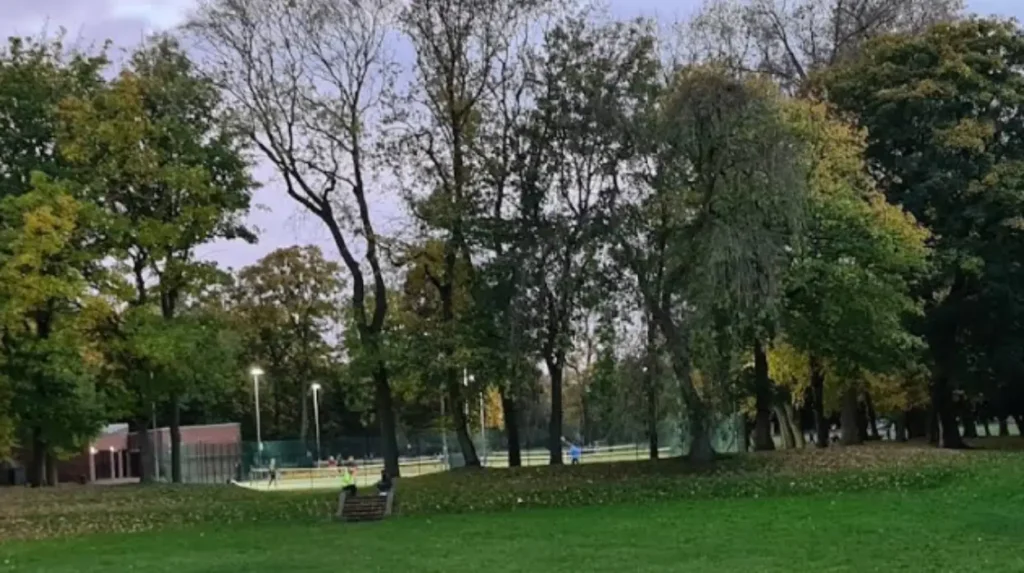
By the early 1990s, the most prominent Moss Side‑based group was the Gooch Close Gang, later known as the G.C.O.G.s or “the Gooch.” The gang’s core was rooted in the Alexandra Park estate, specifically the west side where Gooch Close once stood, a small cul‑de‑sac that became a focal point for informal markets and illicit activity. Early accounts describe young men congregating in a local shebeen on Gooch Close, selling drugs and other contraband, from which the group drew both its name and its initial structure.
As the estate was redeveloped and the road renamed Westerling Way, the close‑knit networks on that side of the estate hardened into what criminologists would classify as an organised crime group. The Gooch Close Gang became known for controlling the supply of drugs across parts of south Manchester and for a readiness to use firearms to defend territory and silence rivals. Their main antagonists were neighbours such as the Pepperhill Gang, based on the eastern side of Alexandra Park, whose members came from nearby areas like Ardwick and Longsight.
The rivalry between the Gooch and Pepperhill groups escalated into what many describe as a full‑blown “gang war,” centred on Moss Side but pulling in participants from surrounding neighbourhoods. Throughout the 1990s and into the early 2000s, south Manchester experienced a series of shootings and fatal incidents, some of which were directly linked to turf disputes between these two camps. High‑profile cases, including the discovery of large caches of weapons in Moss Side homes, underlined how deeply entrenched and militarised the conflict had become.
Other key gangs and networks in south Manchester
Although the Gooch Close Gang is the most nationally recognised Moss Side‑linked group, the area’s gang ecosystem has always been more complex. Academics and local reports stress that “gangs” in south Manchester are often fluid networks rather than single, monolithic organisations, with loyalty shifting between families, friendships, and postcode‑based crews. Some of these groups overlap geographically with Moss Side while being formally associated with neighbouring tower blocks or estates such as Hulme, Longsight, or Ardwick.
Several studies highlight the importance of “street” identities tied to specific towers or staircases, where young men band together to protect local interests and assert control over corners, parks, or blocks of flats. These crews often cooperate on drug distribution or property crime, but can also fracture into rival factions when disputes over money, reputation, or girlfriends arise. At times, the violence spills beyond the immediate neighbourhood, with shootings and retaliatory attacks reported in other parts of Manchester, illustrating how local gang histories feed into wider city‑wide crime patterns.
Crime statistics, deprivation and everyday life
Government‑linked and academic research consistently ranks Moss Side as a ward of high deprivation across multiple dimensions, including income, employment, and crime. Surveys of local residents show that around 44% live in social housing, nearly double the national average, and that many report a sense of insecurity or dissatisfaction with how public services handle antisocial behaviour and gang‑related issues. In one twelve‑month period around 2015–16, antisocial behaviour was reported over 650 times in Moss Side, accounting for more than a third of recorded offences in the area and underscoring the persistent pressure of low‑level crime and harassment.
Crime data from the 1999–2009 period reveal a sharp spike in gun‑related incidents in south Manchester, with Moss Side and nearby areas hit hardest. The shooting of several teenage bystanders and community figures during this era shocked Manchester and prompted city‑wide debates about how to break the cycle of youth violence. In response, Greater Manchester Police and local councils introduced targeted operations, including Operation Titanium and neighbourhood‑focused intelligence units, which aimed to dismantle organised gangs and seize firearms.
The legal crackdown and the fall of the Gooch
By the late 2000s, the long‑running conflict around Moss Side began to recede under sustained legal pressure. A major turning point came with the 2008 trial of ten members of the Gooch Close Gang, who were prosecuted for a catalogue of gang‑related offences stretching back over years of shootings and intimidation. Earlier, key figures such as Colin Joyce and Lee Amos were arrested in 2000 at a Moss Side “nerve centre” house where police found an “extraordinary array of firearms,” including rifles, shotguns, and handguns.
These high‑profile convictions and long prison sentences disrupted the gang’s hierarchy and removed several of its most violent operatives from the streets. Although some younger members continued to offend after the leaders were imprisoned, the overall intensity of the gang war gradually declined, especially as the 2010s progressed. Police and academic analysts note that enforcement alone did not end the problem; instead, it was one part of a broader mix that included community‑based interventions, youth projects, and attempts to improve housing and employment opportunities.
Community resilience and cultural life in Moss Side
To understand Moss Side’s gang history fully, it is essential to sit alongside it the parallel story of community resilience and cultural vitality. The area has long hosted Caribbean‑British institutions such as the West Indian Sports and Social Club, one of the oldest venues of its kind in the UK, which has served as a hub for activism, fundraising, weddings, funerals, and youth development. Clubs like this have helped channel young people into sports, music, and employment‑oriented programmes, offering alternatives to the pathways that lead into gang life.
Local community groups and faith‑based organisations have also run mentoring schemes, homework clubs, and conflict‑resolution projects, often working in partnership with schools to identify at‑risk teenagers before they become deeply involved in crime. Researchers point out that while these efforts rarely make headlines, they play a crucial role in reducing recruitment into gangs and in rebuilding trust between residents and the authorities. In this way, the history of Moss Side is not only a story of violence and drugs, but also of sustained grassroots work to reclaim neighbourhood life from the shadow of organised crime.
How the legacy of Moss Side gang history shapes today

In the 2020s, Moss Side’s reputation as a “gang hotspot” still lingers in the public imagination, but the reality on the ground is more nuanced. Recent census data show that the area remains highly diverse, with a growing number of young families and community‑led initiatives working to improve housing standards, safety, and economic prospects. Local authorities and regeneration projects have invested in housing renewal and public spaces, partly in the hope of reducing the anonymity and isolation that can encourage gang activity.
At the same time, experts caution that while the large‑scale gang wars of the 1990s have subsided, smaller‑scale territorial disputes and youth‑gang incidents still occur across South Manchester. These episodes are often linked to social media‑driven feuds, postcode‑based rivalries, and the persistent availability of drugs and weapons, underscoring that the roots of gang culture are not simply “historical” but still embedded in current inequalities. For policymakers and journalists, the lesson from Moss Side’s experience is that any lasting solution must combine robust law‑enforcement tactics with deep investment in education, housing, mental‑health services, and legitimate youth opportunities.
Learning from Moss Side for a safer Manchester
Moss Side’s gang history offers a powerful case study of how deprivation, policing practices, and cultural identity interact to shape crime and violence in a city like Manchester. The 1981 riots, the rise of the Gooch Close Gang, and the decade‑long shoot‑outs in south Manchester illustrate the dangers of under‑serving neighbourhoods while over‑policing them, particularly when those communities are already marginalised by race and class. Conversely, the persistent work of community organisations, churches, and social clubs shows that even in the most difficult contexts, residents can build counter‑narratives that emphasise solidarity, culture, and opportunity instead of crime.
For Manchester Mirror readers and other local audiences, this history matters not only as a record of past violence but as a guide for the future. As the city continues to grow and regenerate, decisions about housing, policing, youth services, and economic development in areas like Moss Side will determine whether they remain associated with old gang labels or are remembered for their transformation into safer, more inclusive communities. In that sense, Moss Side’s story is not just about gangs; it is about what Manchester chooses to build in the spaces once dominated by fear and firepower.
What are the rough areas of Manchester?Areas often cited as “rough” include Moss Side, Cheetham, Longsight, Beswick and parts of Wythenshawe and Harpurhey, where crime rates and social deprivation have historically been higher than the city average.
What is the old name for Manchester?
Manchester’s earliest known name was Mamucium (Latin) or Mancunium, a Roman fort and settlement from the 1st century AD. By the medieval period, this evolved into the Old English Mameceastre, later simplified into the modern “Manchester.”
Who is the most famous person from Manchester?
Many consider Emmeline Pankhurst, the suffragette leader born in Moss Side, one of the most globally influential figures to come from Manchester.
Were Vikings in Manchester?
Vikings did reach the wider Manchester region in the 9th century, sailing up the River Mersey and leaving traces such as the six‑mile earthwork known as Nico Ditch across south Manchester.
What is the origin of Manchester?
Manchester began as a Roman fort called Mamucium, situated at a strategic crossing of rivers and roads in northern England. Over centuries, it grew from a small Roman‑era settlement into a medieval market town