


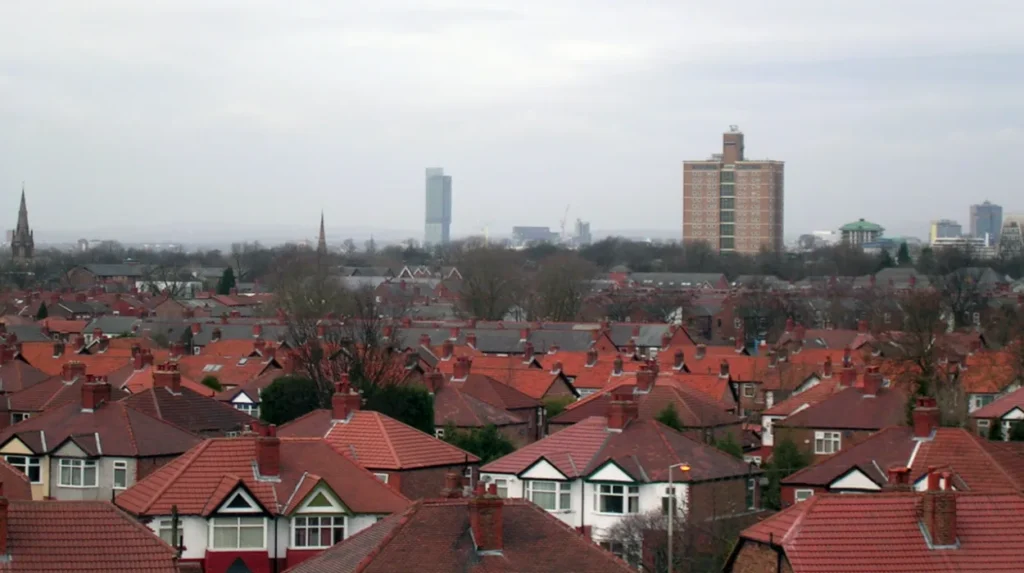
Levenshulme, a south‑Manchester neighbourhood packed with terraced housing and busy transport corridors, relies heavily on its small pockets of green space for recreation, air quality and mental‑health support. Unlike wealthier suburbs that can count on private gardens and larger parks, many Levenshulme households depend on the village green, Chapel Street Park, local play areas and the emerging network of ginnel gardens to access nature. As Manchester pushes ambitious climate‑adaptation and “green‑city” goals, the restoration of these urban greens matters not just to local residents but also to the wider city’s environmental strategy.
History of Levenshulme’s green spaces
Levenshulme’s green legacy dates back to the late Victorian era, when chapel‑style parks and small recreation grounds were carved out to serve an expanding working‑class population. Chapel Street Park, for example, is widely regarded as Levenshulme’s oldest formal park and has long functioned as a central green hub for nearby terraced streets. Over the twentieth century, playgrounds, bowling greens and informal sports areas were added, but many of these features slowly fell into disrepair as local authority budgets tightened and use patterns shifted.
The result in the early 2000s and 2010s was a patchwork of green spaces: some actively maintained, others quietly neglected, and many caught in limbo between council ownership, community care and lack of coherent long‑term strategy. This historical layer of under‑investment is exactly what recent restoration efforts aim to reverse, turning faded corners into climate‑resilient, socially inclusive community assets.
The Levenshulme Active Neighbourhood and green‑street projects
A major driver of greening in Levenshulme has been the Levenshulme and Burnage Active Neighbourhood scheme, led by Manchester City Council with support from the Greater Manchester Mayor’s Challenge Fund and other local partners. That scheme introduced modal filters and road‑block planters on 14 streets across Levenshulme, aiming to reduce traffic dominance and prioritise walking and cycling. Although the original plans to include trees within the concrete blocks have not fully materialised, the planters themselves have become a key platform for greening, with soil‑filled lumber containers hosting new shrubs, flowers and small trees.
These “greened” road blocks and planters have helped open up conversations about how grey urban infrastructure can be softened with vegetation, improved pedestrian safety and created new visual interest along previously car‑heavy corridors. Community groups have argued consistently for more trees and better planting in these blocks, seeing them as long‑term assets that can cool streets, intercept pollution and support pollinators. Over time, the planters have become a visible symbol of Levenshulme’s wider green‑space restoration push, even as residents lobby for safer, better‑lit and more permanent installations.
Chapel Street Park and the former bowling green
At the heart of Levenshulme’s green‑space restoration story is Chapel Street Matrix, especially the former bowling green area. The Friends of Chapel Street Park and other local volunteers have long campaigned to transform this underused section into a community garden that mixes food growing, wildlife habitats and wellbeing‑focused layouts. Their vision includes vegetable beds, pollinator‑friendly planting and simple seating areas that can host workshops, outdoor classes and casual social gatherings.
Early funding bids and small grants, such as those from the Higgidy Community Fund and similar schemes, have allowed the group to trial raised‑bed gardening, new fencing, and basic path improvements. These incremental works help demonstrate the potential of the former bowling green as a “sunshine‑inspired” community garden, where residents without private gardens can still grow food and learn about horticulture. Over the longer term, activists hope that the restored area can contribute to local food resilience, reduce heat‑island effects and become a reference point for other Manchester neighbourhoods thinking about similar park‑upgrade projects.
Bluebell Green and local biodiversity
Another notable restoration node is Bluebell Green, located within Chapel Street Park itself. Named for its spring‑time bluebell displays, this area has been singled out as a priority for native‑plant reintroduction and habitat enhancement. Volunteers and local ecologists have worked together to clear excessive shrubs, reduce invasive species and re‑establish native bulbs and woodland‑edge plants that better support bees, birds and small mammals.
The Bluebell Green project is important because it links everyday gardening with larger biodiversity goals: even a small patch of correctly planted woodland‑edge flora can significantly boost local pollinator numbers and improve the micro‑climate around the park. Community plant‑out days and “sit‑spot” monitoring sessions also help residents build ecological literacy, teaching them to recognise key species and understand how planting choices affect wildlife. In the context of Manchester’s wider biodiversity action plan, initiatives like Bluebell Green are small but meaningful contributions to the city’s commitment to protect and enhance native habitats.
Ginnel gardens and hidden green corridors
Beyond the formal parks, Levenshulme’s ginnel gardens have emerged as a distinctive form of grassroots greening. Ginnels—narrow alleyways between terraced houses—have traditionally served as utility routes, but local residents have increasingly turned them into informal green corridors with containers, vertical planters and small tree pits. These “hidden” gardens are especially important where residents have no private gardens and where larger parks are already under pressure from heavy use.
The Manchester‑based piece on Levenshulme’s “ingenious ginnel gardens” highlights how these spaces combine practicality with creativity: shared watering arrangements, low‑maintenance planters and collaborative planting calendars help ensure that the gardens are not just attractive but also sustainable. For SEO and local‑search purposes, these micro‑spaces are often missed in top‑level guides, even though they are a defining feature of Levenshulme’s character and a key part of the wider green‑space restoration narrative. Restoring and formalising some of these ginnel corridors—through better lighting, safer surfacing and clear signage—could help integrate them more fully into the neighbourhood’s official green network.
Levenshulme Green Spaces Walk and community walks
Walking groups and community‑led walks have also played a quiet but important role in raising the profile of Levenshulme’s green assets. The Ramblers’ “Levenshulme Green Spaces Walk,” for example, offers a circular route that stitches together the village green, local parks, the cycle path network and more secluded green corners. By guiding newcomers through these spaces, the walk helps residents rediscover nearby nature and builds support for maintenance and restoration efforts.
These walks also surface practical issues such as uneven surfaces, seasonally muddy paths, and poorly lit sections of the cycle corridor, which can then feed into council‑community dialogue about where investment is most needed. In SEO terms, such organised walks provide a steady stream of user‑generated content, photos and blog posts that reinforce Levenshulme as a destination for urban‑nature exploration, further strengthening the evergreen value of coverage about its green‑space restoration.
Village Green and public art enhancements
The Levenshulme Village Green itself has undergone noticeable changes thanks to repeated community‑led interventions. In one documented restoration effort, a team from Dowhigh Ltd cleared overgrown shrubs, refreshed planters with new soil and plants, scattered poppy seeds for seasonal colour and planned new murals to enhance the visual appeal. These works turned a somewhat neglected green into a more welcoming, visually varied space that can host informal gatherings, children’s play and small events.
The proposal to repair the iconic “bee” sculpture—previously damaged and reported to the council—also fits into the broader restoration narrative, blending heritage preservation with ecological symbolism. Public art that celebrates pollinators and local wildlife can subtly reinforce the educational and conservation goals of the renewed green spaces, encouraging residents to think about insects, birds and plant life in a more positive way. Over time, the Village Green could become a focal point for outdoor festivals, seasonal planting days and community‑art projects, amplifying the impact of the physical restoration into social and cultural outcomes.
Eco‑Streets initiative and nature‑based solutions
The Levenshulme area has also benefited from broader regional schemes such as the Eco‑Streets competition, which targets “un‑used, un‑loved” urban spaces for nature‑based‑solution upgrades. Under this programme, local groups receive funding and support to design, install and maintain features such as rain gardens, permeable surfacing, and native‑plant planting that tackle flooding and climate‑related stress. Groundwork’s Community Enablers model embeds training and volunteer capacity‑building, so that even if the initial project is time‑limited, the community is left with the skills to keep enhancing the green features.
In practice, this means that Levenshulme can progressively knit together its park‑based restorations with street‑level climate‑adaptation measures. For example, a small Eco‑Streets–style planting strip alongside a residential road can intercept stormwater, reduce street‑sweeping loads and create additional habitat, all while making the street feel more pleasant for pedestrians. As Manchester faces more intense rainfall and heatwaves, these distributed, small‑scale interventions may prove as important as larger park‑wide projects.
Community groups like Growing Together and Friends of Chapel Street Park
Mikey
The success of Levenshulme’s green‑space restoration cannot be separated from the work of local voluntary organisations. Groups such as Growing Together Levenshulme and the Friends of Chapel Street Park have taken on tasks ranging from light gardening and path maintenance to fundraising, grant‑writing and event coordination. These groups often act as a bridge between residents and the council, turning frustrated complaints about overgrown greens into practical, fundable proposals.
Fundraising events such as the Levenshulme and Burnage Open Gardens weekend, where proceeds are donated to Growing Together, demonstrate how green‑space restoration can be both a community‑building exercise and a sustainable financial model. By opening up private gardens and shared plots, the event helps normalise gardening and shared green maintenance, while also generating resources to upgrade public spaces.
Funding pressures, delays and transparency concerns
Despite the enthusiasm from communities, funding and planning delays have cast a shadow over some aspects of the restoration programme. The original Active Neighbourhood scheme faced sharp cost increases, with estimates rising from an initial budget of around £2.3 million to roughly £4.6 million and then to a projected £7 million, raising questions about how much of the new total will be covered by Manchester City Council versus external grants. Community reports note that certain promised elements—such as trees integrated into road‑block planters and filters on Linden Park and Milwain Road—have not yet materialised, even after years of campaigning.
These funding and transparency issues matter for SEO‑oriented readers because they reflect the real‑world complexity of urban‑greening projects. Explaining that green‑space restoration is not just a matter of willpower but a process constrained by budgets, procurement rules and political trade‑offs helps anchor the article in realistic, evergreen context rather than fleeting optimism. For Manchester‑based readers, this section also reinforces the importance of civic engagement and holding local authorities to account over long‑term green‑space commitments.
Health, wellbeing and social benefits of green‑space restoration
From a public‑health perspective, restoring Levenshulme’s green spaces is about much more than aesthetics. Studies of urban green space consistently link access to parks and gardens with lower stress levels, improved mental wellbeing and higher physical activity, especially in denser neighbourhoods where private gardens are scarce. In a working‑class area like Levenshulme, where residents may face financial strain and limited leisure options, well‑maintained green spaces can act as a kind of “free” health infrastructure, supporting everything from informal exercise to community‑based social support.
The restoration of Chapel Street Park, the Village Green and other sites therefore has an implicit health‑policy dimension. When children can safely play outside, older residents can take short walks, and families can host informal gatherings in green settings, the overall social fabric of the area becomes more resilient. For an evergreen article, framing the restoration in health and wellbeing terms helps appeal to both local residents and wider audiences interested in urban‑public‑health strategies.
Future visions for Levenshulme’s green spaces
Looking ahead, activists and planners in Levenshulme are eyeing a more connected and climate‑resilient green network. Ideas include strengthening the links between the Village Green, Chapel Street Park, the cycle path and the ginnel gardens, so that residents can move through a continuous, shaded corridor rather than juggling between isolated green islands. Tree‑planting along these corridors, with drought‑tolerant and pollution‑tolerant species, is a recurrent theme in community‑group proposals.
There is also growing interest in “green‑gym” and youth‑volunteering models, where local young people are trained in horticulture, surveying and basic landscaping, then paid or accredited to help maintain the restored spaces. Such programmes could help lock in the gains from restoration by creating a pipeline of local stewards who see the parks and gardens as part of their own future.
