Hyde’s High Street Revival is a coordinated urban regeneration effort focused on restoring economic activity, improving public spaces, and increasing commercial occupancy along Hyde’s main retail corridor in Greater Manchester, supported by local government planning policies and community investment initiatives.
- Why is Hyde High Street undergoing revival?
- What historical factors shaped Hyde High Street?
- What are the main components of Hyde’s High Street redevelopment?
- How does urban planning support Hyde’s High Street Revival?
- What role do local businesses play in Hyde’s High Street Revival?
- What challenges affect Hyde High Street’s regeneration?
- What is the future outlook for Hyde High Street Revival?
Hyde’s High Street Revival refers to a set of redevelopment, planning, and investment strategies aimed at revitalizing the central retail and service district of Hyde, a town within Tameside in Greater Manchester, England. The initiative focuses on increasing footfall, reducing vacancy rates, and strengthening the local economy through infrastructure upgrades and business support.
The concept aligns with broader UK town centre regeneration policies introduced by local councils and national frameworks such as the Towns Fund and Levelling Up agenda. These frameworks allocate public funding to improve declining high streets affected by retail migration, online shopping growth, and structural economic shifts.
Hyde High Street historically functioned as a commercial hub serving the surrounding residential areas. Over time, shifts in consumer behaviour, particularly after the expansion of large retail parks and e-commerce platforms, reduced traditional high street activity. The revival initiative addresses these challenges through targeted interventions in transport accessibility, public realm improvements, and mixed-use development strategies.
The revival also includes efforts to repurpose vacant retail units into community spaces, service-based businesses, and experiential venues such as cafes and local enterprises. This diversification strengthens resilience by reducing dependence on a single retail category and encouraging local entrepreneurship.
Why is Hyde High Street undergoing revival?
Hyde High Street is undergoing revival due to declining retail performance, increased vacancy rates, reduced in-person shopping, and the need to adapt to modern economic patterns through regeneration programs supported by local authorities and national funding schemes.
The primary driver of Hyde High Street’s revival is the structural decline in traditional retail activity. Across the United Kingdom, high streets have experienced reduced footfall due to competition from out-of-town shopping centres and online retail platforms such as Amazon. This shift has impacted rental income, business sustainability, and commercial diversity.
Local economic data from regional councils shows that town centres with high dependency on retail-only models face increased vacancy rates when anchor stores close. Hyde reflects this pattern, where closures of large retail chains created gaps in commercial occupancy, leading to reduced visitor numbers and lower economic circulation within the town centre.
Public policy interventions address these issues through regeneration funding and planning reforms. Programs such as the UK Towns Fund, administered by the Department for Levelling Up, Housing and Communities, provide financial support for infrastructure upgrades, business grants, and public realm improvements. These interventions aim to restore economic vitality and attract both businesses and visitors.
Demographic changes also influence the revival. Population growth in Greater Manchester, combined with increased demand for local services, creates opportunities to reposition Hyde High Street as a mixed-use centre combining retail, leisure, health, and community services rather than purely transactional shopping.
What historical factors shaped Hyde High Street?
Hyde High Street developed during the Industrial Revolution as a commercial centre serving textile workers and local industries, evolving over time into a traditional retail corridor influenced by manufacturing decline and urban economic restructuring.
Hyde’s development is closely tied to the Industrial Revolution of the 18th and 19th centuries, when Greater Manchester emerged as a global centre for textile production. Hyde became part of this industrial network, supporting mills, warehouses, and worker housing.
High streets during this period functioned as essential commercial zones providing goods and services to a dense working population. Retail units, banks, markets, and public houses formed the backbone of local economic life. Hyde High Street reflected this structure, with a layout designed for pedestrian accessibility and proximity to residential neighbourhoods.
As manufacturing industries declined in the late 20th century, employment patterns shifted away from industrial production toward service-based sectors. This transition reduced local purchasing power and altered the demand for traditional retail formats. Many towns with similar industrial histories experienced comparable declines in high street activity.
Urban planning changes, including the development of motorways and suburban retail parks in the 1970s and 1980s, further impacted Hyde High Street. Consumers gained access to larger retail spaces with parking facilities, reducing reliance on town centre shopping. These historical shifts created long-term structural challenges that the revival initiative now addresses.
What are the main components of Hyde’s High Street redevelopment?
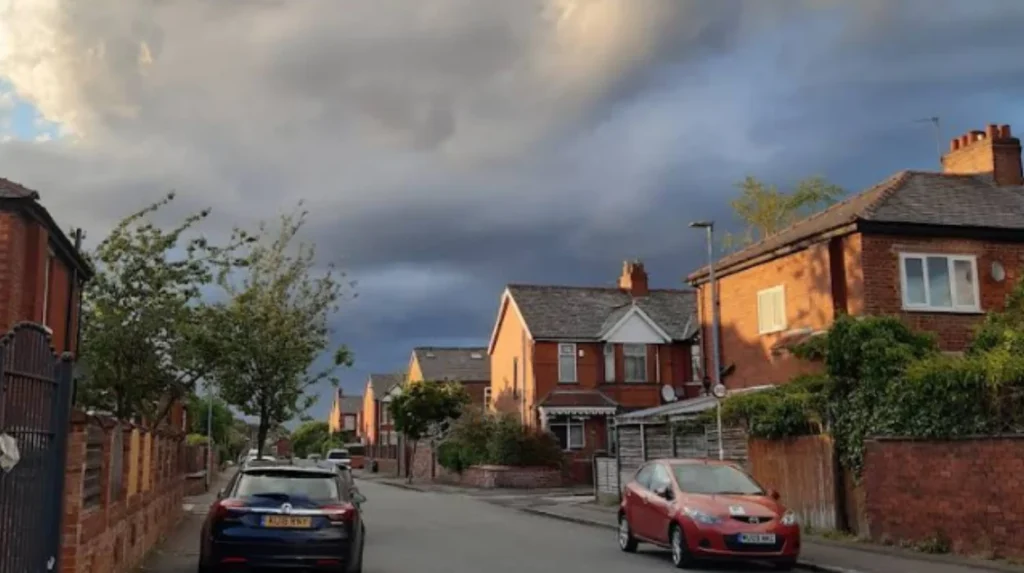
Hyde’s High Street redevelopment includes infrastructure upgrades, public realm enhancements, commercial property refurbishment, transport accessibility improvements, and diversification of land use to create a balanced town centre economy.
Infrastructure upgrades involve physical improvements to roads, pavements, lighting, and pedestrian pathways. These enhancements improve safety, accessibility, and visual appeal, which directly influence footfall and user experience within the high street environment.
Public realm enhancements focus on creating attractive and functional communal spaces. Examples include upgraded seating areas, improved signage, green landscaping, and pedestrian-friendly zones. These features encourage longer dwell times and increased social interaction within the town centre.
Commercial property refurbishment addresses vacant and underutilized retail units. Renovation projects aim to modernize building facades, improve energy efficiency, and adapt interior layouts for flexible usage. This allows properties to accommodate a wider range of tenants, including service providers and independent businesses.
Transport accessibility improvements ensure that Hyde High Street remains connected to surrounding areas. This includes optimizing bus routes, improving pedestrian crossings, and supporting cycling infrastructure. Efficient connectivity increases visitor flow and expands the catchment area of the high street.
How does urban planning support Hyde’s High Street Revival?
Urban planning supports Hyde’s High Street Revival by implementing zoning regulations, land-use strategies, and development frameworks that prioritize mixed-use environments, sustainable growth, and efficient allocation of commercial and residential spaces.
Urban planning plays a central role in structuring how land within Hyde High Street is used and developed. Local planning authorities establish guidelines that regulate building heights, property usage, and development density to ensure balanced growth within the town centre.
Mixed-use zoning is a key planning approach in revival efforts. This model integrates residential units, retail spaces, offices, and leisure facilities within a single area. Mixed-use environments increase footfall throughout the day by combining living, working, and shopping activities in one location.
Planning frameworks also encourage adaptive reuse of existing buildings rather than demolition and reconstruction. This approach preserves architectural heritage while reducing construction costs and environmental impact. It also enables faster activation of vacant properties for new uses.
Sustainable development principles are incorporated into planning decisions. These include energy-efficient building standards, reduced carbon emissions, and improved waste management systems. Such measures align with national environmental targets and contribute to the long-term resilience of the high street.
What role do local businesses play in Hyde’s High Street Revival?
Local businesses play a central role in Hyde’s High Street Revival by increasing economic activity, enhancing diversity of services, creating employment opportunities, and contributing to a resilient and community-oriented commercial ecosystem.
Independent businesses contribute significantly to the identity and functionality of Hyde High Street. These enterprises include cafes, retail shops, professional services, and health providers. Their presence creates a varied commercial mix that attracts different segments of the population.
Employment generation is a direct outcome of business activity. Small and medium-sized enterprises provide jobs for local residents, supporting household incomes and increasing local spending power. This economic circulation strengthens the overall performance of the high street.
Local businesses also contribute to resilience by diversifying the commercial base. Unlike large chain stores that operate on standardized models, independent businesses adapt more quickly to local demand. This flexibility allows the high street to respond effectively to changing consumer preferences.
Community engagement is another important factor. Local businesses often participate in events, collaborations, and initiatives that promote social cohesion. These interactions reinforce the high street as a community hub rather than solely a retail destination.
What challenges affect Hyde High Street’s regeneration?
Hyde High Street’s regeneration faces challenges, including retail competition from online platforms, economic uncertainty, property vacancy, infrastructure limitations, and the need to balance modernization with preservation of local character.
Online retail competition remains one of the most significant challenges. Digital platforms provide convenience, wider product selection, and competitive pricing, which reduces the demand for physical retail visits. This trend has contributed to declining footfall in many traditional high streets.
Economic uncertainty also impacts regeneration efforts. Inflation, interest rate fluctuations, and changes in consumer spending behaviour influence business investment decisions. These factors affect occupancy rates, rental values, and the viability of new commercial ventures.
Vacant properties present both a challenge and an opportunity. High vacancy rates reduce visual appeal and economic activity, but they also provide space for redevelopment projects. Addressing vacancy requires coordinated efforts between property owners, investors, and local authorities.
Infrastructure limitations, such as ageing buildings and constrained urban layouts, require careful planning and investment. Upgrading utilities, improving accessibility, and maintaining structural safety are essential for enabling modern usage of high street properties.
What is the future outlook for Hyde High Street Revival?
The future outlook for Hyde High Street Revival focuses on long-term economic diversification, increased mixed-use development, improved public infrastructure, and sustained investment aimed at creating a resilient and adaptable town centre ecosystem.
Future development is expected to prioritize mixed-use integration, combining residential, commercial, and leisure spaces within the high street area. This approach ensures consistent activity throughout the day and reduces reliance on retail-only revenue streams.
Technological integration will also shape the future of Hyde High Street. Digital services, smart infrastructure, and improved connectivity will enhance both business operations and visitor experiences. Examples include digital payment systems, smart lighting, and data-driven urban management tools.
Continued public and private investment will remain essential. Funding programs, partnerships with developers, and incentives for small businesses will support ongoing regeneration projects. These investments help maintain momentum and ensure that improvements are sustained over time.
Community involvement will influence long-term success. Local stakeholders, including residents and business owners, contribute feedback and participation in planning processes. This engagement ensures that development aligns with local needs and preserves the character of Hyde as it evolves.
When was Hyde Town Hall built?
Hyde Town Hall was built in the late 19th century, officially opening in 1885. It served as the administrative centre for local governance and reflects Victorian civic architecture typical of that period in Greater Manchester.
Did Suzi Quatro own Hyde Hall?
Suzi Quatro did not own Hyde Hall. Hyde Hall is associated with the Royal Horticultural Society as a public garden and event location, and ownership has remained with institutional bodies rather than individual entertainers.
Who is the CEO of Hyde Housing?
Hyde Housing is led by a Chief Executive Officer responsible for overall operations and strategy. Leadership roles within the organisation change over time, so the current CEO should be verified through official Hyde Housing publications or governance reports.
How often does Hyde Housing replace kitchens?
Hyde Housing typically replaces kitchens as part of planned maintenance cycles, often aligned with property condition assessments rather than a fixed universal timeline. Replacement frequency depends on usage, wear, and scheduled refurbishment programs.
What is the oldest housing association in the UK?
The oldest housing association in the United Kingdom is commonly recognized as the Guinness Trust, founded in 1890 by Sir Edward Guinness. It was established to provide affordable housing and set early standards for charitable housing provision in the UK.