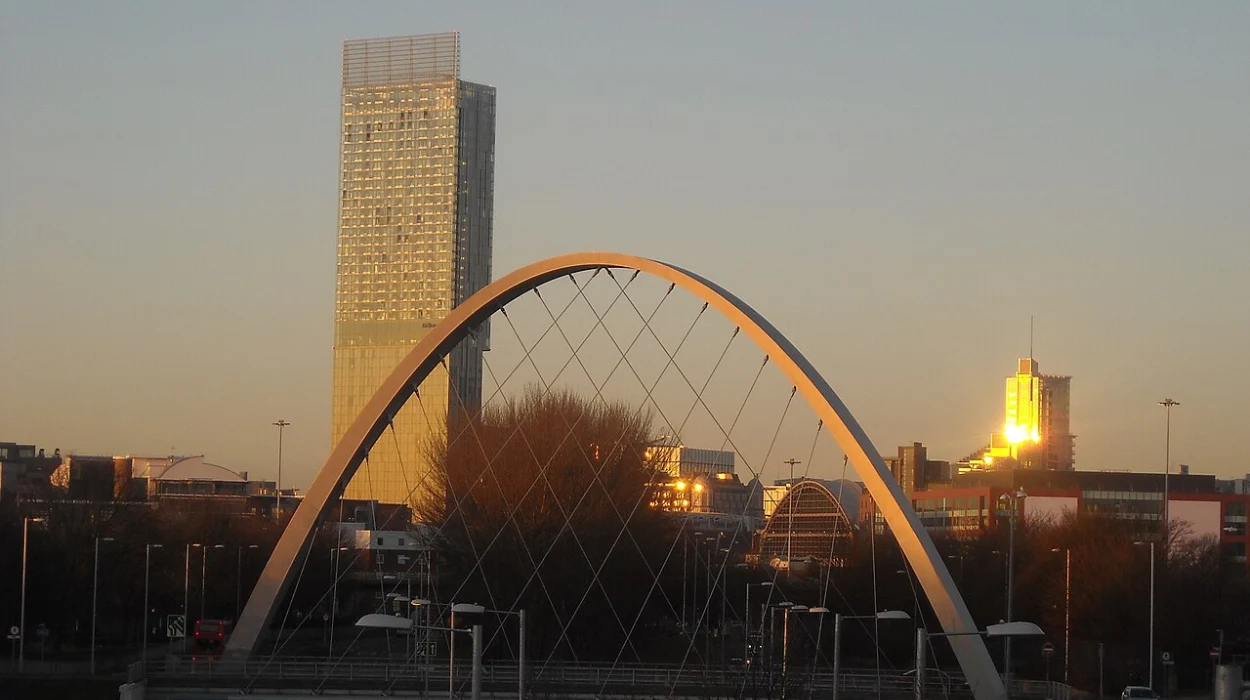
Hulme, a vibrant ward in the heart of Manchester, stands at the forefront of the city’s battle against climate change. Once known for its industrial grit and post-war redevelopment challenges, this community has evolved into a hub of innovative climate action. Hulme climate projects encompass a range of initiatives aimed at enhancing biodiversity, promoting sustainable transport, and fostering energy-efficient homes, all driven by local residents, Manchester City Council, and partner organizations. These efforts not only address environmental concerns but also build resilience in a densely populated urban area.
- Historical Roots of Hulme’s Green Transformation
- Key Hulme Climate Projects Driving Change
- Biodiversity and Nature Initiatives in Hulme
- Empowering Youth Through Green Education
- Sustainable Transport and Air Quality Improvements
- Energy Efficiency and Home Retrofit Programs
- Community Engagement and Awareness Campaigns
- Challenges Facing Hulme Climate Projects
- Measuring Success and Long-Term Impact
- Future Directions for Hulme’s Sustainability
As Manchester grapples with broader climate goals, Hulme’s projects serve as a model for grassroots environmentalism. From planting thousands of trees to creating urban green havens, these initiatives blend practical outcomes with community engagement. This article delves into the history, key projects, challenges, and lasting impact of Hulme’s commitment to sustainability, offering timeless insights for residents, policymakers, and eco-enthusiasts alike.
Historical Roots of Hulme’s Green Transformation
Hulme’s journey toward climate-focused projects is deeply intertwined with its industrial past and subsequent urban renewal. In the 19th century, Hulme was a bustling textile and engineering hub, but rapid industrialization led to overcrowding, poor air quality, and environmental degradation. The post-World War II era saw ambitious redevelopment, including the infamous “Hulme Crescents” housing estates, which prioritized density over green space and ultimately failed due to structural and social issues by the 1990s.
Demolition in the late 20th century paved the way for a more humane urban design, emphasizing walkability and open spaces. This shift coincided with Manchester’s growing awareness of climate vulnerabilities, such as flooding risks from the nearby River Irwell and heat island effects in concrete-heavy neighborhoods. By the early 2000s, community groups began advocating for greener infrastructure, laying the groundwork for today’s Hulme climate projects. Organizations like Sustainable Communities Hulme emerged, partnering with the council to reclaim derelict land for ecological purposes.
These historical pivots highlight a key lesson: sustainable urban planning thrives when it learns from past mistakes. Hulme’s evolution from polluted enclave to green pioneer underscores how climate projects can heal both the environment and community fabric, creating enduring legacies that withstand economic shifts and policy changes.
Key Hulme Climate Projects Driving Change
Manchester City Council’s ward-specific climate action plans form the backbone of Hulme’s environmental strategy. The Hulme Urban Green Space (HUGS) project, targeted for completion by November 2025, exemplifies this focus. Collaborating with Sustainable Communities Hulme, it aims to transform underused areas into thriving green zones, boosting local biodiversity and providing residents with accessible nature spots.
Complementing HUGS is the My Wild Neighbourhood initiative, which plants over 1,000 flower bulbs across 10 community groups and schools annually. This hands-on approach not only enhances pollinator habitats but also educates young people on conservation. Similarly, the 4,700 Trees project mobilizes residents and organizations to secure funding for widespread tree planting, targeting high-density areas to combat urban heat and improve air quality. At St Mary’s Triangle, a resident-led green space project fosters ownership and long-term maintenance.
In sustainable food efforts, Bridging the Gap’s food growing project supports urban agriculture, reducing food miles and promoting self-sufficiency. Events in Hulme now prioritize vegetarian options to lower carbon footprints, aligning daily life with climate goals. These projects demonstrate how Hulme climate projects integrate seamlessly into community routines, ensuring sustained participation without relying on fleeting funding.
Hulme’s urban green spaces, like those in the HUGS project, showcase transformed public areas blooming with native plants and trees.
Biodiversity and Nature Initiatives in Hulme
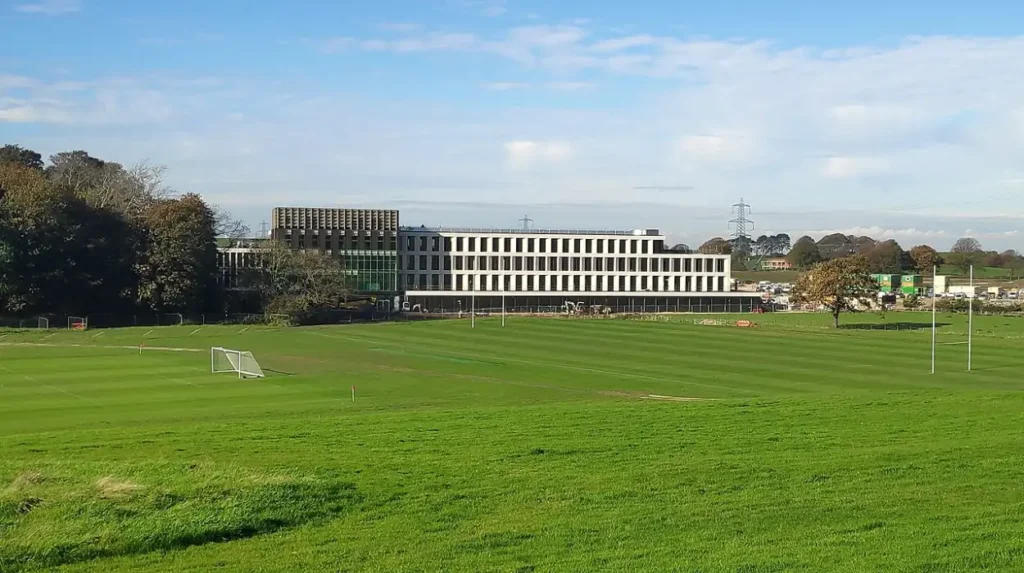
Biodiversity lies at the heart of Hulme’s climate resilience strategy. The ward’s nature improvement projects counteract habitat loss from urbanization, with initiatives like bulb planting creating corridors for wildlife. By involving schools and groups, these efforts cultivate a culture of stewardship, where children learn to identify species and monitor pollinator populations.
The 4,700 Trees project extends this vision, strategically placing species that thrive in Manchester’s temperate climate, such as rowan and silver birch, to support birds and insects. Partnerships with Groundwork and Lancaster University draw on studies like “Protecting Playgrounds” to install “tredges”—tree-ledges on school walls—shielding play areas from pollution and heat. One such installation per ward outside the city center enhances child health and cognitive development through nature exposure.
Resident collaborations at sites like St Mary’s Triangle yield pocket parks with wildflower meadows and bug hotels, fostering micro-ecosystems. These Hulme climate projects yield measurable gains: increased bird sightings, healthier soil, and cooler microclimates. Over time, they contribute to Manchester’s goal of 30% green cover, proving that small-scale actions scale up to city-wide impact.
Empowering Youth Through Green Education
Young people are pivotal to Hulme’s climate projects, with programs tailored to ignite lifelong environmental passion. Recycle Bee’s School Greening Programme secures funding for two annual projects in Hulme and neighboring Moss Side, outfitting playgrounds with planters and compost systems. Council support ensures at least two schools annually improve their green spaces, blending education with action.
Play Street events, resident-led closures of streets for car-free play, occur at least four times yearly. These gatherings incorporate climate awareness sessions, teaching children about active travel’s benefits—reduced emissions and safer routes. By 2026, evaluations show participants cycling more and understanding carbon footprints better, embedding sustainability early.
Such initiatives address youth disengagement from abstract climate threats. Hands-on involvement in Hulme climate projects builds agency, turning statistics into tangible changes like harvested veggies from school gardens. This generational investment secures Hulme’s green future, as today’s participants become tomorrow’s advocates.
Sustainable Transport and Air Quality Improvements
Hulme’s transport-focused climate projects tackle congestion and pollution head-on. Road safety enhancements in St Mary’s, funded collaboratively with council highways teams, include safer crossings and bike lanes. These measures encourage walking and cycling, slashing vehicle emissions in a ward bisected by busy A-roads.
The “tredges” initiative, informed by rigorous studies, filters pollutants at child level, complementing active travel pushes. Joint clean-and-green ventures with Moss Side and Rusholme target at least one initiative yearly, such as litter picks tied to tree planting. Community events weave in transport talks, aiming to engage 50 residents annually on climate influences.
Results are promising: air quality monitors near schools show particulate drops post-implementation. Hulme climate projects here prioritize equity, aiding low-income families without cars to access cleaner air and healthier lifestyles. Long-term, they align with Manchester’s zero-emission ambitions, modeling scalable urban mobility.
Energy Efficiency and Home Retrofit Programs
Homes in Hulme, many from 1990s rebuilds, offer prime targets for energy upgrades. Council campaigns disseminate government schemes like ECO4 and Great British Insulation Scheme, helping residents insulate lofts, install efficient boilers, and adopt heat pumps. These reduce bills and emissions, vital in fuel-poverty hotspots.
One Manchester’s developments integrate low-carbon tech from inception, engaging communities on pollution reduction. Drees & Sommer’s consultancy ensures projects like these align neighborhood goals with climate imperatives, from solar panels to smart metering.
Residents report 20-30% energy savings post-retrofits, easing financial strains while cutting Hulme’s carbon load. These Hulme climate projects emphasize accessibility, partnering with trusted locals to overcome retrofit hesitancy. Enduring benefits include resilient housing against rising energy costs and extreme weather.
Community Engagement and Awareness Campaigns
Engagement powers Hulme’s success, with climate elements at all community events. Partnerships across wards deliver joint initiatives, amplifying reach. Books like “Climate Action in Hulme: From the Ground Up” chronicle resident stories, inspiring replication.
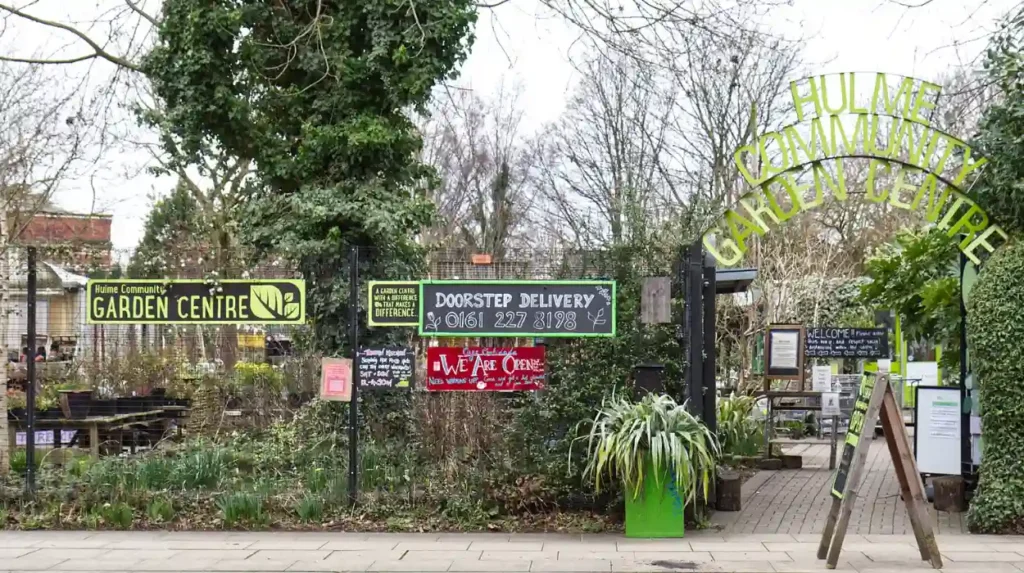
Hulme Community Garden Centre embodies this, combating climate change via urban farming and education. Volunteers maintain plots yielding produce, while workshops cover composting and rainwater harvesting.
Annual targets—50 engagements—track progress, fostering behavioral shifts like reduced meat consumption at events. This bottom-up model ensures Hulme climate projects endure beyond grants, rooted in collective ownership.
The Hulme Community Garden Centre features thriving vegetable plots and educational signage on sustainable practices.
Challenges Facing Hulme Climate Projects
Despite progress, hurdles persist. Funding volatility threatens multi-year projects like HUGS, reliant on bids amid austerity. High deprivation levels strain resident involvement, with time poverty limiting participation. Urban constraints—limited land, contaminated soil—complicate greening.
Monitoring gaps hinder impact assessment; while anecdotal wins abound, standardized metrics lag. Climate skepticism, though minor, surfaces in some circles, necessitating persistent education.
Yet, Hulme counters these via adaptive strategies: diversifying funders, leveraging volunteers, and piloting innovations like vertical gardens. Resilience defines these projects, turning obstacles into evolution opportunities.
Measuring Success and Long-Term Impact
Hulme climate projects track wins through biodiversity surveys, air quality data, and engagement logs. HUGS completion by 2025 promises 20% green space rise in target areas; tree projects shade streets, dropping summer temps 2-3°C. School programs yield greener curricula, with kids leading home actions.
Economically, retrofits save households £300+ yearly, while gardens cut food costs. Socially, cohesion strengthens via shared goals, reducing isolation.
Long-term, Hulme pioneers scalable models for Manchester’s 200 wards, influencing policy like expanded “tredges.” As climate pressures mount—floods, heatwaves—these projects fortify the ward, exemplifying urban adaptation.
Future Directions for Hulme’s Sustainability
Looking ahead, Hulme eyes tech integration: sensors for real-time green monitoring, apps for volunteer coordination. Expanding food projects could yield community markets, enhancing food security.
Policy advocacy pushes council-wide replication, with Hulme lobbying for ring-fenced climate budgets. Cross-ward alliances amplify bids, targeting net-zero by 2038.
Youth mentorship programs will sustain momentum, ensuring Hulme climate projects remain dynamic. Innovation, like green roofs on social housing, beckons, promising a verdant legacy.
Tree planting events in Hulme, part of the 4,700 Trees project, bring residents together for environmental action.