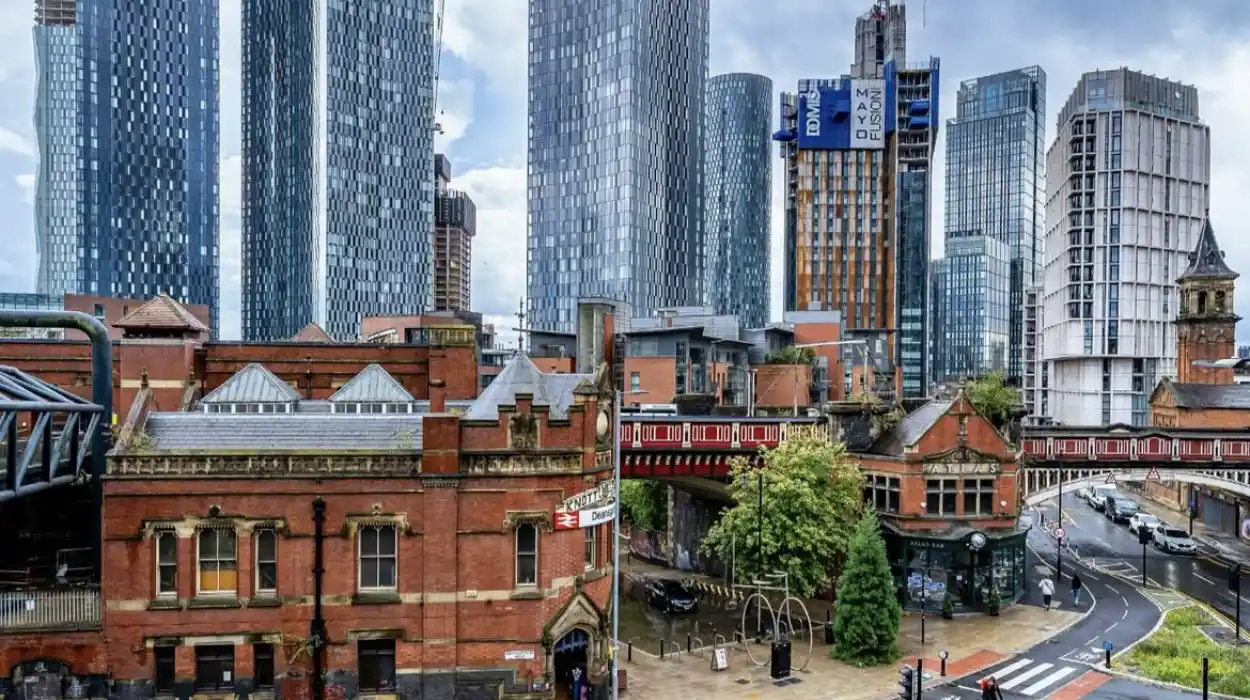
Deansgate traces its origins back to Roman times, serving as a vital route near the fort of Mamucium and leading from the River Medlock toward Chester, with civilian buildings and a mansio along its path. By Saxon times, part of it was known as Aldport Lane, remaining rural until the 1730s when a quay on the river spurred development. The 19th century brought a mix of grandeur and grit: the northern end boasted offices and shops, while the south harbored slums around St John’s Church, later addressed by missions like the Wood Street Mission founded in 1869.
This evolution accelerated in the late 20th century with urban regeneration. Deansgate Locks, repurposed from redundant railway arches over the Rochdale Canal in 1999, turned industrial relics into a thriving leisure hub with bars, comedy venues, and boardwalks, boosting the area’s appeal at a cost of £4 million and now valued at £10 million. Nearby, the Great Northern Warehouse and Spinningfields developments replaced old newspaper offices and warehouses, drawing investment and footfall. Today, Deansgate stretches over a mile as the A56, linking Manchester Cathedral at its north to Deansgate Station south, flanked by landmarks like the John Rylands Library and Barton Arcade.
The Luxury Boom Reshaping Deansgate
Deansgate’s modern allure stems from ambitious high-rise projects under the Great Jackson Street Development Framework, initiated in the early 2000s to revitalize a long-vacant site hemmed by arterial roads. Deansgate Square, once Owen Street, exemplifies this: four towers completed between 2018 and 2020, with the South Tower at 201 meters overtaking Beetham Tower as Greater Manchester’s tallest building. Developed by Renaker, the complex offers nearly 1,100 luxury units across 64, 50, 44, and 37 floors, featuring beveled designs to capture shifting sunlight.
Plans date back to 2007, envisioning five towers including a 150-meter Block D, but the 2016 revival scaled up to these giants, approved amid Manchester’s skyscraper district push. Nearby, Viadux 2 by Salboy adds 133 social rent apartments, part of Manchester City Council’s efforts via the Manchester Housing Providers Partnership (MHPP). Yet, residents of Deansgate Square’s South Tower have objected to four more towers next door, citing overshadowing despite council support for density. This boom has made Deansgate one of the UK’s priciest rental streets, with average monthly rents hitting £3,766, fueled by regeneration like pedestrian routes, offices, and safer nightlife.
Skyrocketing Prices Fueling the Crunch
Property values in Deansgate reflect unchecked demand: average sold prices dipped to £229,375 last year, down 14% from prior but 52% off the 2019 peak of £475,000, signaling market volatility amid luxury influx. Per square meter, sales average £3,329, with flats like one at 357-361 Deansgate fetching £213,000 in 2021 at £3,328/sqm. Rents remain punishing: rooms in shares range £700-£1,400 pcm, whole flats £3,275 for two beds, while houses average £1,763 monthly or £2/sqft.
This pricing stems from Manchester’s regeneration wave, approving £213 million for 746 homes and offices last year, alongside improved cycling and air quality. Deansgate’s status as a “skyscraper district” prioritizes high-end builds, with investors like Legal & General snapping up towers like West and North for built-to-rent at £200 million valuations. For locals, this means unaffordability: average rents outpace wages, turning the “trendy heart” into an enclave for high earners and investors.
Root Causes of Deansgate’s Housing Shortage
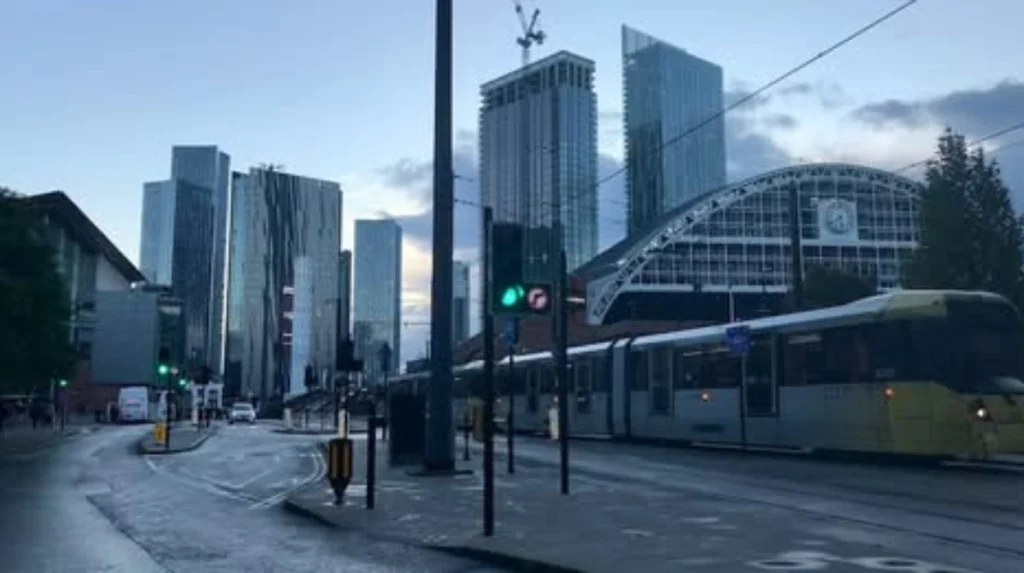
Manchester’s housing crunch, acute in Deansgate, arises from explosive population growth outstripping supply. The city aims for 36,000 new homes by 2032, including 10,000 affordable, but funding hurdles, nimbyism, and economic pressures stall progress. Student demand exacerbates it: only 4,745 purpose-built student beds since 2018 against 8,100 new full-time students, spilling into general housing.
Greater Manchester faces 12,700 long-term empty homes yet 5,915 households—8,600 children—in temporary accommodation, doubling since 2019 at £77.5 million cost. Social housing scarcity drives this: tens of thousands waitlist-bound, pushing rents up and homelessness higher. In Deansgate, luxury focus over social units amplifies the gap, with vacant Victorian stock elsewhere highlighting systemic failure. Economic factors like insecure work and poverty widen the chasm, as regeneration favors profit over people.
Impact on Manchester’s Everyday Residents
Deansgate’s crunch displaces families and workers, forcing longer commutes or suburbs. Young professionals snag £1,000 pcm rooms, but families face £3,000+ flats unaffordable on median incomes. Homelessness surges, with councils strained by unrecoverable welfare gaps. Culturally, the district loses diversity: once a working-class mix, it’s now investor playground, eroding community ties.
Local businesses thrive on trendy vibes but lament staff shortages, as housing costs deter service workers. Environmentally, high-density towers strain infrastructure without proportional affordable integration. For Mancunians, the “trendy heart” beats for elites, risking social fracture in a city boasting vibrant culture.
Council Initiatives and Viability Checks

Manchester City Council pushes back via MHPP, planning 700+ homes on council land, including Viadux 2’s 133 social units in Deansgate. Greater Manchester’s £11.7 million plan targets empty homes, empowering councils with devolved powers. The Housing Needs Assessment projects 350 more supported units by 2033 amid LDA adult growth.
Yet viability falters: complex planning, affordability woes, and economic climate hinder PBSA and social builds. Councillor Marcus Johns backs density despite objections, prioritizing evidence over complaints. Partnerships with Legal & General aim for zero-carbon neighborhoods, but scale lags demand.
Can Manchester Sustain Deansgate’s Glamour?
Balancing Deansgate’s allure demands policy shifts: mandatory affordable quotas in towers, incentives for empty home repurposing, and rent controls. Reviving 2007 schemes’ community facilities alongside luxury could foster inclusion. Mayor Andy Burnham’s “housing first” vows signal intent, targeting temporary accommodation crises.
Success hinges on collaboration: public-private funds for 10,000 affordable units, tackling root shortages. Without it, Deansgate risks becoming a hollow icon—trendy but untenable, unaffordable for the Manchester it was built to serve. The city must choose: preserve its heart for all or let the crunch claim it.