Altrincham, a charming market town in Greater Manchester, has long been celebrated for its commitment to preserving green spaces and trees amidst urban development. These natural assets not only enhance the town’s aesthetic appeal but also play a crucial role in fostering community wellbeing and environmental sustainability. From Victorian-era parks to ancient woodlands, Altrincham’s greenery tells a story of thoughtful stewardship that continues to thrive today.
- Historical Roots of Green Spaces in Altrincham
- Stamford Park: Altrincham’s Crown Jewel
- Other Notable Parks and Woodlands
- The Ecological Importance of Altrincham’s Trees
- Health and Wellbeing Benefits from Green Surroundings
- Community Efforts and Preservation Campaigns
- Tree Species and Seasonal Splendor
- Future Visions for Expanding Green Coverage
- Practical Ways to Engage with Altrincham’s Greenery
- Economic and Cultural Value of Green Assets
This evergreen exploration delves into the history, key locations, and enduring benefits of these spaces, offering timeless insights for residents, history enthusiasts, and nature lovers seeking to appreciate or advocate for Altrincham’s green legacy.
Historical Roots of Green Spaces in Altrincham
The story of green spaces and trees in Altrincham stretches back centuries, intertwined with the town’s evolution from a medieval market hub to a Victorian-era commuter town. In the 18th century, the extension of the Bridgewater Canal to Altrincham in 1765 sparked a boom in market gardening, transforming surrounding lands into productive orchards and vegetable fields that supplied Manchester’s markets. This agricultural heritage laid the foundation for valuing open spaces, as barge transport enabled growers to cultivate expansive plots rich with fruit trees and hedgerows.
By the 19th century, rapid industrialization prompted forward-thinking philanthropists to counter urban sprawl with dedicated parks. The donation of land for public recreation marked a pivotal shift, ensuring that trees and green expanses became integral to town planning. Community campaigns, such as those in the early 20th century and as recent as 2009 for sites like Shaw’s Green, underscore a persistent local resolve to protect these areas from development pressures.
This historical dedication reflects broader national movements, like the Victorian public health reforms that championed parks for fresh air and leisure, embedding Altrincham’s green identity deep into its cultural fabric.
Stamford Park: Altrincham’s Crown Jewel
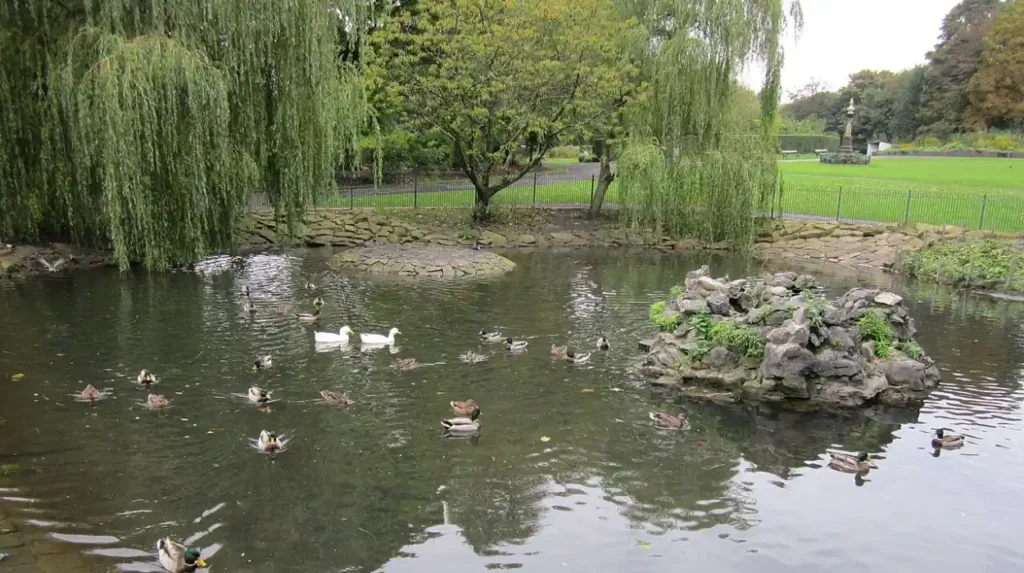
At the heart of Altrincham’s green spaces stands Stamford Park, a 16-acre haven designed by acclaimed landscape gardener John Shaw and opened to the public in 1880. Donated by George Grey, the 7th Earl of Stamford, this park initially served as a sports ground for cricket and football, evolving into a multifaceted retreat with winding paths, ornamental lakes, and mature tree canopies. Its Grade II listing on the Register of Parks and Gardens of Special Historic Interest in England highlights its architectural and horticultural significance, further honored by a bronze Greenspace award.
Towering trees, including venerable oaks and chestnuts, dominate the landscape, providing shade for picnickers and habitats for diverse birdlife. Visitors can trace the park’s serpentine walks, where seasonal blooms frame statues and bandstands, evoking the grandeur of its founding era. Managed by Trafford Council, Stamford Park exemplifies how historic design principles—balancing formal gardens with wilder groves—sustain ecological vitality over generations.
Beyond recreation, the park hosts community events, from summer fairs to winter illuminations, reinforcing its role as a living testament to Altrincham’s green ethos.
Other Notable Parks and Woodlands
Beyond Stamford Park, Altrincham’s green tapestry includes a variety of smaller yet equally cherished spaces. Dunham Massey, just on the town’s edge, offers expansive deer parks and oak-lined avenues managed by the National Trust, where ancient pollarded trees whisper tales of 18th-century landscaping. These woodlands, part of a larger estate, shelter rare flora and fauna, drawing walkers to explore trails that meander through fern-filled glades.
Closer to the town center, Moss Lane Gardens and the grounds around Altrincham Market House feature neatly manicured lawns dotted with lime and maple trees, providing serene pockets amid bustling streets. Historical mosses, like the now-reduced Hale Moss, once sprawled across what is today residential areas, their legacy preserved in remnant hedgerows and community gardens. Efforts to reclaim such sites, as seen in proposals for Barrington Road’s Shaw’s Green, highlight ongoing battles to expand tree cover in urban settings.
These diverse areas collectively form a network of green corridors, linking residential neighborhoods to the countryside and mitigating the town’s urban footprint.
The Ecological Importance of Altrincham’s Trees
Trees in Altrincham serve as silent guardians of the local ecosystem, purifying air, regulating temperatures, and supporting biodiversity. Species like the English oak, prevalent in Stamford Park and Dunham Massey, host over 400 insect varieties, forming the base of food chains that sustain birds, bats, and small mammals. Their deep roots stabilize soil, preventing erosion along the Bollin Valley and absorbing rainwater to reduce flooding—a critical function in this low-lying region prone to Mersey overflows.
Urban trees also combat pollution from nearby motorways, with leaves filtering particulates and releasing oxygen through photosynthesis. In Altrincham, initiatives to plant native species such as rowan and silver birch enhance pollinator habitats, boosting wildflower meadows that fringe parks. Research from urban forestry studies affirms that such canopies lower summer heat islands by up to 5 degrees Celsius, creating cooler microclimates for both wildlife and residents.
This ecological web underscores why preserving mature trees alongside new plantings remains vital for Altrincham’s resilience against climate variability.
Health and Wellbeing Benefits from Green Surroundings
Immersion in Altrincham’s green spaces yields profound wellbeing advantages, backed by extensive environmental psychology research. Strolling under leafy canopies reduces cortisol levels, alleviating stress and fostering mental clarity, as natural scenes prompt restorative attention. Stamford Park’s open lawns encourage physical activity, from jogging loops to family kite-flying, contributing to lower obesity rates in green-accessible communities.
Socially, these spaces knit communities together; picnics under horse chestnut trees or tree-planting days at local gardens build intergenerational bonds. Studies highlight improved respiratory health from cleaner air, with tree-lined streets correlating to fewer asthma cases among children. For seniors, accessible paths in parks like Dunham Massey promote mobility and vitamin D absorption, enhancing life satisfaction.
In essence, Altrincham’s greenery acts as a public health asset, offering free, timeless therapy amid modern pressures.
Community Efforts and Preservation Campaigns
Altrincham’s residents have long championed their green heritage through grassroots activism. The 2009 “Green Spaces for Altrincham” proposal rallied against selling Shaw’s Green for parking, advocating instead for a memorial garden with trees and shrubs to honor local visionaries like Alderman Shaw. This campaign echoed earlier fights, emphasizing benefits like biodiversity and property value uplift from preserved open land.
Trafford Council’s stewardship, including Greenspace awards, partners with volunteers for tree maintenance and wildflower sowing. Groups like the Friends of Stamford Park organize litter picks and bulb planting, ensuring these spaces evolve without losing character. Such collaborations demonstrate how community voice shapes policy, from resisting overdevelopment to pushing for new urban forests.
These efforts ensure Altrincham’s trees and parks remain vibrant, adapting to contemporary needs while honoring their past.
Tree Species and Seasonal Splendor
Altrincham’s arboreal diversity captivates across seasons, with species selected for resilience and beauty. Spring bursts with cherry blossoms along the canal towpaths, their pink petals carpeting paths in ethereal displays. Summer’s lime trees in Moss Lane release fragrant blooms, attracting bees to nectar-rich clusters, while autumn transforms parks into symphonies of gold and crimson from beeches and maples.
Winter reveals structural elegance: the sculptural forms of oaks silhouetted against frosty skies, their bark textured havens for overwintering insects. Native blackthorn hedges, remnants of old field boundaries, provide berries for birds, closing the yearly cycle. This phenological rhythm not only delights the eye but educates on nature’s perpetual renewal.
Appreciating these species deepens connection to place, encouraging mindful stewardship.
Future Visions for Expanding Green Coverage

Looking ahead, Altrincham envisions amplifying its green footprint through sustainable planning. Trafford’s Local Plan prioritizes tree canopy expansion, targeting 20% urban greening by integrating pocket parks and street trees. Community orchards, inspired by historical market gardens, could revive fruit cultivation, blending heritage with food security.
Innovations like permeable pavements under new plantings address drainage, while native saplings fortify against pests. Partnerships with organizations like the Woodland Trust aim to create wildlife corridors linking Stamford Park to Dunham Massey, enhancing connectivity for species migration.
This proactive stance positions Altrincham as a model for green urbanism, balancing growth with nature.
Practical Ways to Engage with Altrincham’s Greenery
Residents and visitors can deepen their bond with these spaces through simple, rewarding practices. Begin with dawn walks in Stamford Park, noting bird calls amid rustling leaves to cultivate mindfulness. Join council-led tree tours to learn identification, or volunteer for pruning days that maintain healthy canopies.
Planting at home—mirroring park species like hawthorn—extends the green network into backyards. Photography enthusiasts capture seasonal shifts, sharing to inspire wider appreciation. These actions not only personalizes the landscape but amplifies collective preservation.
Economic and Cultural Value of Green Assets
Green spaces bolster Altrincham’s economy by drawing tourists to events like the Altrincham Food Festival in leafy settings, boosting local trade. Property values rise near parks, with studies showing premiums of 5-20% for tree-proximate homes. Culturally, trees feature in local lore, from Dunham’s legendary oaks to market-day shade providers.
This symbiosis elevates the town, intertwining natural beauty with prosperity.