Manchester is one of the largest cities in the United Kingdom and a major centre for employment, education, culture and business. Its cost of living attracts attention from people relocating from London, international students, young professionals, families and retirees. In 2026, the total cost of living in Manchester depends primarily on accommodation, household size, transport choices and personal spending habits.
- What Is the Cost of Living in Manchester in 2026?
- How Much Does Rent Cost in Manchester in 2026?
- What Are the Average Rental Prices by Property Size?
- Which Manchester Areas Have Different Housing Costs?
- Is Buying a House Cheaper Than Renting in Manchester?
- How Much Does Council Tax Cost in Manchester in 2026?
- What Are the Manchester Council Tax Rates for 2026/27?
- Can Single Residents Receive a Council Tax Discount?
- How Much Do Electricity, Gas and Water Bills Cost in Manchester?
- What Is the Average Electricity and Gas Cost in 2026?
- How Much Does Water Cost in Manchester?
- How Much Does Broadband and Mobile Internet Cost?
- How Much Does Food and Grocery Shopping Cost in Manchester?
- How Much Does Public Transport Cost in Manchester in 2026?
- How Much Do Manchester Bus Tickets Cost?
- How Much Does the Manchester Metrolink Cost?
- Is Owning a Car Expensive in Manchester?
- How Much Does Childcare and Education Cost in Manchester?
- How Much Do Healthcare and Personal Expenses Cost in Manchester?
- How Much Money Does a Single Person Need to Live in Manchester?
- How Much Does a Family Need to Live in Manchester?
- Is Manchester More Affordable Than London in 2026?
- How Have Living Costs in Manchester Changed Over Time?
- What Is the Impact of Manchester’s Cost of Living on Residents in 2026?
- How Can Residents Reduce Their Monthly Living Costs in Manchester?
- Choose Accommodation Carefully
- Use Public Transport Tickets Efficiently
- Plan Grocery Shopping
- Monitor Household Energy Consumption
- Review Council Tax Eligibility
- Create an Emergency Fund
- What Should People Consider Before Moving to Manchester in 2026?
- Is Manchester Affordable to Live in During 2026?
Manchester offers a different financial profile from London and other major UK cities. Housing costs, public transport, groceries, council tax, utilities and leisure expenses determine the monthly budget. Understanding these expenses helps residents calculate realistic living costs before moving to the city.
This guide examines the cost of living in Manchester in 2026, including housing, household bills, food, transport, education, healthcare and entertainment. It also explains how different household types manage their monthly expenses and which financial factors influence affordability.
What Is the Cost of Living in Manchester in 2026?
The cost of living in Manchester in 2026 includes housing, food, transport, utilities, council tax, healthcare and personal expenses. A single adult generally needs a larger budget than a shared-house tenant, while families face additional childcare, housing and education-related costs.
The cost of living refers to the amount of money required to maintain a particular standard of living in a specific location. In Manchester, this includes essential expenses such as rent, electricity, gas, water, groceries and transport. Discretionary expenses include restaurants, entertainment, shopping, holidays and recreational activities.
Manchester is located in Greater Manchester, a metropolitan county in North West England. The city is part of a wider urban area that includes Salford, Trafford, Stockport, Oldham, Rochdale, Bolton, Bury, Wigan and Tameside.
Living expenses differ between central Manchester and surrounding boroughs. Areas close to employment centres, universities and major transport connections generally have different housing costs from suburban residential neighbourhoods.
Which Factors Determine Living Expenses?
Five major factors determine household expenditure in Manchester:
- Accommodation: Monthly rent or mortgage payments, property size and location.
- Household bills: Electricity, gas, water, broadband and council tax.
- Food: Supermarket shopping, takeaway meals and restaurant spending.
- Transport: Bus, tram, train, cycling and private vehicle expenses.
- Lifestyle: Clothing, entertainment, subscriptions, fitness and leisure activities.
Household size also influences the overall budget. Two adults sharing accommodation divide certain fixed expenses, while families require additional bedrooms, childcare arrangements and larger food budgets.
How Much Does Rent Cost in Manchester in 2026?
Rent is one of the largest monthly expenses in Manchester. According to the Office for National Statistics, the average private rent reached £1,386 in October 2026. Actual payments depend on property size, neighbourhood, condition and proximity to transport.
The Office for National Statistics (ONS) measures private rental prices across England and publishes local housing statistics. Its October 2026 figures show that Manchester’s average monthly rent increased by 4.7% compared with October 2025, when the average stood at £1,324. Office for National Statistics
What Are the Average Rental Prices by Property Size?
The ONS reported the following average monthly rents in Manchester in October 2026:
- One-bedroom property: £1,010.
- Two-bedroom property: £1,244.
- Three-bedroom property: £1,448.
- Four-bedroom or larger property: £2,032.
These figures represent average private rents rather than guaranteed prices for newly advertised properties. Furnished accommodation, modern developments and properties near Manchester city centre often have different asking prices.
A single professional renting a one-bedroom flat needs to budget approximately £1,010 monthly using the citywide average. Two adults sharing a two-bedroom property face an average rent of £1,244, equivalent to £622 each when divided equally.
Which Manchester Areas Have Different Housing Costs?
Manchester contains residential neighbourhoods with different property types, transport connections and rental markets.
City centre and Northern Quarter
Manchester city centre attracts professionals, students and residents who prioritise access to offices, restaurants, shopping centres and entertainment. Apartments dominate the housing supply in areas around Deansgate, Piccadilly, Ancoats and the Northern Quarter.
Salford and MediaCityUK
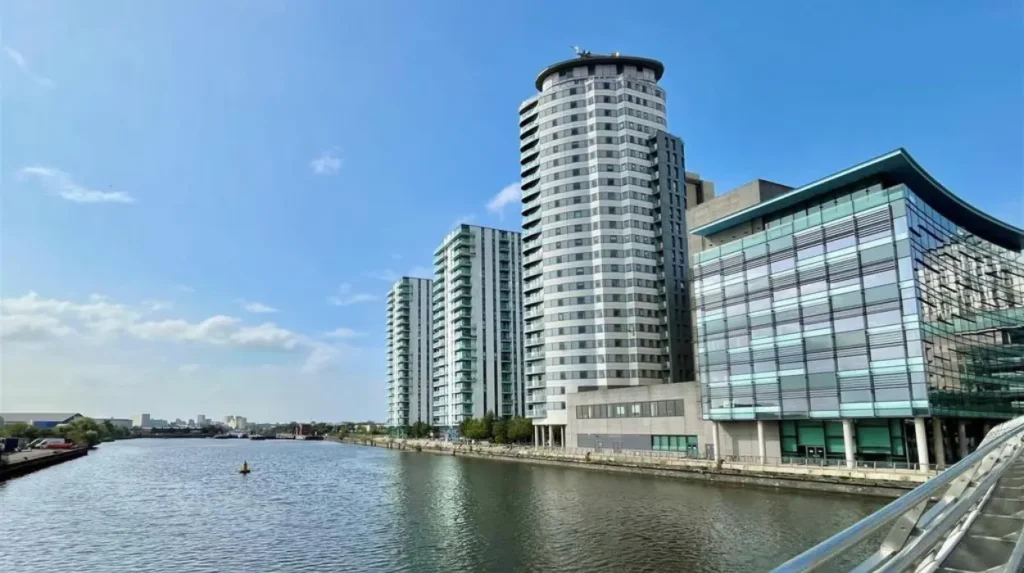
Salford provides access to MediaCityUK, Salford Quays and Manchester city centre. Its residential developments include waterfront apartments, modern flats and family homes.
Didsbury and Chorlton attract households seeking residential streets, independent businesses, parks and public transport connections. Housing includes Victorian terraces, semi-detached houses and apartments.
Fallowfield and Rusholme
Fallowfield and Rusholme have established student rental markets. Shared houses provide accommodation for university students and young professionals. Renters often divide the total property cost between several occupants.
Is Buying a House Cheaper Than Renting in Manchester?
Buying a house involves mortgage repayments, deposits, maintenance, insurance and legal expenses. The ONS reported an average Manchester house price of £255,000 in September 2026, compared with £273,000 across the UK. Office for National Statistics
The average Manchester property price by type was:
- Detached house: £483,000.
- Semi-detached house: £332,000.
- Terraced house: £257,000.
- Flat or maisonette: £197,000.
First-time buyers paid an average of £239,000 in Manchester in September 2026.
Buying costs also include mortgage interest, conveyancing, surveys, moving expenses and potential stamp duty. The actual financial difference between renting and buying depends on deposit size, mortgage interest rates, property condition and how long someone intends to remain in Manchester.
How Much Does Council Tax Cost in Manchester in 2026?
Manchester council tax depends on the property’s valuation band, ranging from Band A to Band H. The 2026/27 annual charge starts at £1,541.36 for Band A and reaches £4,624.08 for Band H.
Council tax is a local property-based charge collected by Manchester City Council. It contributes towards public services, including waste collection, local administration and community services.
The council determines annual charges for eight property bands. The government’s Valuation Office Agency assigns properties to their council tax bands.
What Are the Manchester Council Tax Rates for 2026/27?
Manchester City Council publishes the following annual council tax charges:
These monthly figures are annual charges divided by 12. Actual payment arrangements depend on the council’s billing schedule.
Can Single Residents Receive a Council Tax Discount?
Manchester City Council provides a 25% single-person discount when only one adult counts for council tax purposes in a property. Certain residents, including eligible full-time students, also qualify for exemptions or reductions under specific rules.
A single adult living in a Band A property therefore receives a reduction from the standard annual charge of £1,541.36.
Shared households must establish who counts as an adult for council tax purposes. Full-time students are generally disregarded when calculating the number of eligible adults, subject to council tax rules.
How Much Do Electricity, Gas and Water Bills Cost in Manchester?
Household utility costs in Manchester depend on property size, energy consumption, insulation, heating systems and tariff arrangements. Electricity, gas and water are the main recurring expenses, while broadband and mobile services add further monthly costs.
Utilities are essential household services that provide energy, water and communications. Their prices are not identical for every Manchester household because consumption varies according to property size and occupancy.
What Is the Average Electricity and Gas Cost in 2026?
Ofgem, the Office of Gas and Electricity Markets, regulates the energy market in Great Britain. Its energy price cap limits the unit rates and standing charges suppliers can apply to customers on eligible default tariffs.
For 1 October to 31 December 2026, Ofgem set the typical annual energy price cap at £1,723 for a household paying by Direct Debit. This represents an average across England, Scotland and Wales, not a Manchester-specific bill.
The October to December 2026 rates include:
- Electricity: 26.32 pence per kilowatt-hour.
- Electricity standing charge: 54.83 pence daily.
- Gas: 7.97 pence per kilowatt-hour.
- Gas standing charge: 29.68 pence daily.
A kilowatt-hour (kWh) measures the amount of energy consumed. The final bill depends on the number of units used and the applicable standing charges.
A one-bedroom flat occupied by one person generally consumes less energy than a three-bedroom family house. Heating habits, insulation, appliances and the number of people living in the property also influence expenditure.
How Much Does Water Cost in Manchester?
United Utilities supplies water and wastewater services across Greater Manchester. Water charges depend on the property’s water meter arrangements, household consumption and the applicable charging structure.
Metered households pay according to measured water usage and relevant fixed charges. Unmetered households generally pay through an assessed or rateable-value-based system.
Residents should check their United Utilities account or current tariff information before preparing a household budget. Water bills also cover wastewater services, which include the collection and treatment of used water.
How Much Does Broadband and Mobile Internet Cost?
Internet access is an important household expense for remote workers, students and families. Manchester residents can choose fibre broadband, standard broadband and mobile internet packages.
Monthly broadband costs depend on download speeds, contract duration, installation charges and provider availability. Mobile phone costs depend on data allowances, handset financing and network coverage.
Households should compare the full contract cost rather than focusing only on introductory prices. Broadband availability also differs between individual streets and residential developments.
How Much Does Food and Grocery Shopping Cost in Manchester?
Food expenditure in Manchester depends on household size, shopping habits, dietary requirements and the balance between home cooking and eating out. Supermarket shopping provides predictable weekly costs, while frequent restaurant visits increase monthly spending.
Groceries include essential food and household products purchased for domestic use. Manchester residents shop at supermarkets, independent food stores, markets and convenience shops.
The University of Manchester’s 2026/27 undergraduate living-cost estimates allocate approximately £250 monthly to groceries for a student. Its estimate is based on a weekly budget supermarket shop in April 2026. The University of Manchester
Which Supermarkets Help Residents Manage Food Costs?
Manchester has several supermarket chains and food retailers serving different household budgets.
- Aldi and Lidl offer discount grocery shopping and own-brand products.
- Tesco and Asda provide standard supermarket ranges, including fresh food and household essentials.
- Sainsbury’s and Morrisons offer groceries, prepared foods and household products.
- Marks and Spencer provides premium food products and convenience meals.
Residents can also purchase fresh produce from local markets and independent shops. Comparing unit prices helps shoppers identify better value for frequently purchased products.
How Much Does Eating Out Cost?
Restaurant expenditure depends on the type of establishment, meal selection and location. Manchester city centre has independent restaurants, international food outlets, cafés, pubs and premium dining venues.
A basic lunch generally costs less than a multi-course restaurant dinner. Takeaways also create recurring expenses through delivery charges, service fees and optional tips.
The University of Manchester’s 2026/27 undergraduate budget estimates £51 per month for takeaways and £110 for going out and socialising. These are student budgeting estimates rather than universal household averages. The University of Manchester
Cooking meals at home, preparing lunches and planning weekly supermarket purchases help households control food expenditure.

How Much Does Public Transport Cost in Manchester in 2026?
Public transport in Manchester includes buses, Metrolink trams and regional trains. The Bee Network provides integrated local bus and tram services, with ticket prices determined by journey type, travel zones and ticket duration.
Transport for Greater Manchester (TfGM) manages the regional transport network. The Bee Network is Greater Manchester’s integrated public transport system, bringing local bus and tram services together.
Manchester residents use public transport for commuting, education, shopping and leisure activities.
How Much Do Manchester Bus Tickets Cost?
The Bee Network provides single, daily and weekly bus tickets.
According to the published contactless fares:
- Hopper single bus ticket: £2.
- Daily bus ticket: £5.
- Weekly bus ticket: £20.
The hopper fare supports eligible onward bus journeys within the permitted time conditions. Weekly tickets cover Monday to Sunday. Powered by TfGM
How Much Does the Manchester Metrolink Cost?
Metrolink connects Manchester city centre with surrounding destinations, including Altrincham, Bury, Rochdale, Ashton-under-Lyne, Eccles and Manchester Airport.
The published contactless fares include:
- Single journey within one tram zone: £1.40.
- Off-peak daily ticket within one zone: £1.90.
- Anytime daily ticket within one zone: £2.70.
- Weekly ticket within one zone: £10.60.
- Weekly ticket across all tram zones: £31.
The cost increases when journeys cover additional tram zones. Passengers should check their travel zones before purchasing tickets. Powered by TfGM
Is Owning a Car Expensive in Manchester?
Car ownership involves several expenses beyond purchasing the vehicle. These include fuel, vehicle insurance, road tax, MOT testing, servicing, repairs and parking.
Residents who commute into the city centre also need to consider parking charges and congestion-related travel costs where applicable.
Manchester has public transport connections that reduce the need for daily car journeys for some households. However, residents working outside the main transport corridors often rely on private vehicles.
Cycling and walking provide alternatives for shorter journeys. The city’s cycling infrastructure and neighbourhood walking routes also support local travel without regular fuel expenditure.
How Much Does Childcare and Education Cost in Manchester?
Education expenses in Manchester depend on age, institution, course requirements and eligibility for government support. Families should budget separately for childcare, school-related purchases, university accommodation, learning materials and transport.
Manchester has state schools, independent schools, colleges and universities. The city is also a major higher education destination, attracting domestic and international students.
How Much Does Nursery Childcare Cost?
Childcare costs represent a significant expense for working families. Nursery charges depend on the child’s age, weekly attendance, provider and eligibility for funded childcare entitlements.
Coram’s 2026 Childcare Survey reported that the average North West nursery cost for 25 hours of care per week for an under-two child not eligible for the relevant working-parent entitlement was £178.01. The equivalent childminder average was £137.42. 2026+1
These are regional averages, not Manchester-specific quotations. Actual nursery prices depend on the provider and the number of hours required.
Eligible working parents in England can access funded childcare entitlements. Families should check their eligibility, qualifying working arrangements and applicable age requirements through GOV.UK.
How Much Does University Accommodation Cost?
Manchester attracts students through institutions such as the University of Manchester, Manchester Metropolitan University and the University of Salford.
The University of Manchester provides the following 2026/27 accommodation estimates:
- Private halls with average bills included: £860–£1,010 per month.
- Privately rented house shares with average bills included: £645–£710 per month.
- Self-catered university accommodation: approximately £810 per month in its undergraduate living-cost calculation.
The university estimates total undergraduate living expenses at approximately £1,484 per month over a 41-week academic year, or £1,503 for its self-catered accommodation calculation. The University of Manchester
These estimates include accommodation, groceries, transport, socialising, clothing, mobile services and other personal expenses. Tuition fees are separate.
Students living in private accommodation should confirm whether rent includes electricity, gas, water, broadband and council tax. Eligible full-time students generally qualify for council tax exemption.
How Much Do Healthcare and Personal Expenses Cost in Manchester?
Healthcare costs for eligible residents primarily involve NHS services, while personal expenses include clothing, prescriptions where payable, fitness memberships, grooming and recreational purchases. Private healthcare and optional services create additional costs.
The National Health Service (NHS) provides publicly funded healthcare in England. Manchester residents can access GP practices, hospitals, pharmacies, community healthcare and emergency medical services.
Are NHS Healthcare Services Free in Manchester?
NHS hospital treatment and GP consultations are generally free at the point of use for eligible residents. Some services carry charges, including NHS prescriptions, dental treatment and optical services.
Prescription charges in England follow national rules. Exemptions and prescription prepayment certificates help eligible patients manage these expenses.
Residents can register with a local GP practice to access primary healthcare. NHS 111 provides non-emergency medical advice, while 999 is for life-threatening emergencies.
Private medical insurance, private dental treatment and specialist consultations involve separate fees.
What Are Typical Personal and Leisure Expenses?
Personal spending varies according to income, interests and lifestyle. Common expenses include gym memberships, haircuts, clothing, streaming subscriptions and social activities.
Manchester has leisure destinations such as:
- Manchester Arndale for shopping and retail services.
- Science and Industry Museum for science and industrial heritage.
- Heaton Park for outdoor recreation and walking.
- Northern Quarter for independent cafés, shops and restaurants.
Public parks and selected cultural attractions provide lower-cost leisure options. Residents can control discretionary expenditure by choosing free community activities and planning entertainment budgets.
How Much Money Does a Single Person Need to Live in Manchester?
A single adult living independently in Manchester needs to budget for rent, council tax, utilities, food, transport and personal expenses. Accommodation choices create the largest difference between a shared-house budget and independent living.
A realistic monthly budget depends on whether the person rents a room, shares a flat or occupies a private apartment.
The following figures provide illustrative budgeting ranges for 2026. They are planning estimates, not official ONS household expenditure averages.
These estimates assume ordinary consumption and exclude savings, debt repayments, major purchases and holidays. Shared accommodation figures also depend on which bills are included in the rent.
The University of Manchester’s 2026/27 student estimates provide another useful reference point. Its estimated monthly student expenditure is approximately £1,484 over a 41-week academic year. The University of Manchester
How Much Does a Family Need to Live in Manchester?
Family living costs in Manchester depend on the number of children, property size, childcare arrangements, transport requirements and household income. Three-bedroom accommodation, groceries, utilities and childcare represent important parts of the family budget.
Families generally require more living space than single adults or couples. A three-bedroom property provides accommodation for parents and children, although larger households often need additional bedrooms.
Using the October 2026 ONS average rent of £1,448 for a three-bedroom property, families can estimate their main accommodation expense. Office for National Statistics
Other household costs include:
- Food shopping for adults and children.
- Electricity, gas and water.
- Council tax and broadband.
- School uniforms and educational materials.
- Nursery or after-school childcare.
- Transport to workplaces and schools.
- Clothing, healthcare and recreational activities.
Childcare deserves particular attention. The Coram 2026 survey reports a North West average of £178.01 per week for 25 hours of nursery care for an under-two child outside the relevant funded entitlement. This equates to approximately £771 per month using 52 weeks divided by 12. 2026
Eligible working parents should account for available government childcare support when calculating their actual costs.
Families with school-age children generally face different expenses from households with infants. School meals, uniforms, transport and extracurricular activities influence annual spending.
Is Manchester More Affordable Than London in 2026?
Manchester and London have different housing markets, transport expenses and household budgets. Manchester’s October 2026 average private rent was £1,386, compared with £1,411 across the UK, while London remains a separate and generally more expensive housing market.
The ONS reported that the average private rent across the UK reached £1,411 in October 2026. Manchester’s corresponding figure was £1,386. Office for National Statistics
However, this comparison should not be interpreted as proof that every Manchester property is cheaper than every London property. Local neighbourhoods, property sizes and accommodation standards influence individual prices.
Manchester’s housing market provides options ranging from student house shares to large detached homes. London has a substantially larger and more expensive housing market, particularly in several central boroughs.
Transport also requires consideration. Manchester has its Bee Network bus and Metrolink tram services, while London has an extensive Underground, bus, rail and Elizabeth line network.
The appropriate comparison involves total monthly expenditure rather than rent alone. Employment income, commuting distance, childcare and housing requirements all influence household affordability.
How Have Living Costs in Manchester Changed Over Time?
Manchester’s living costs have changed alongside housing demand, population growth, employment development and national inflation. Rental prices, energy charges and food expenditure remain important indicators of household affordability in 2026.
Manchester has developed from a major industrial city into a large regional centre for finance, technology, education, healthcare, media and professional services.
How Has Manchester’s Housing Market Developed?
Manchester’s industrial expansion created demand for worker housing during the nineteenth century. Residential neighbourhoods expanded around factories, railway connections and commercial districts.
The city’s modern housing market reflects several economic changes:
- Industrial restructuring and redevelopment.
- Expansion of higher education.
- Growth in professional employment.
- Development of city-centre apartments.
- Increasing demand for rental accommodation.
The ONS reported that average private rent in Manchester increased from £1,324 in October 2025 to £1,386 in October 2026. This represents annual growth of 4.7%. Office for National Statistics
How Does Inflation Affect Manchester Households?
Inflation measures the increase in the general price level of goods and services over time. It affects household purchasing power when wages do not increase at the same rate as expenses.
Energy prices, supermarket costs, housing and transport contribute to household financial pressures.
Ofgem’s October–December 2026 energy price cap illustrates the importance of monitoring changes in utility charges. The typical annual cap increased to £1,723 for eligible Direct Debit households during this period. Ofgem
Rental inflation also influences affordability because accommodation represents a substantial proportion of household expenditure.
What Is the Impact of Manchester’s Cost of Living on Residents in 2026?
Manchester’s living costs influence housing decisions, employment choices, student finances and family budgets. Rent increases and household bills affect disposable income, while access to employment and transport influences the financial benefits of living in different neighbourhoods.
The cost of living affects different groups in different ways.
Impact on Students
Students balance accommodation, tuition, food, transport and educational materials. Shared accommodation reduces individual housing expenses, while university halls provide structured accommodation options.
Students also need to account for term dates and holiday accommodation arrangements.
Impact on Working Professionals
Professionals consider rent, commuting expenses and employment opportunities when choosing where to live.
Living near an employment centre reduces commuting time and transport requirements. However, central accommodation costs must be compared with the potential savings from shorter journeys.
Impact on Families
Families prioritise larger properties, childcare access, schools and reliable transport. Housing expenses and childcare charges influence how much income remains available for savings and discretionary spending.
Impact on Retired Residents
Retired residents often prioritise accessible housing, healthcare, public transport and predictable household expenses.
Council tax, heating and healthcare-related expenses require particular attention when preparing a retirement budget.
Explore More Area Guide
How to Get from Manchester City Centre to Chorlton?
How Do You Plan the Ultimate Chorlton Half-Day Itinerary?
How Can Residents Reduce Their Monthly Living Costs in Manchester?
Residents can manage Manchester living expenses by comparing rental properties, sharing accommodation, planning grocery purchases, using public transport and monitoring household energy consumption. Reviewing recurring payments also helps households identify unnecessary expenditure.
Practical budgeting decisions include:
Choose Accommodation Carefully
Compare properties across neighbourhoods rather than concentrating exclusively on Manchester city centre.
Check whether rent includes household bills, broadband or other services. Calculate commuting costs before selecting a cheaper property farther from work.
Use Public Transport Tickets Efficiently
Regular commuters should compare single fares with weekly and daily tickets. The Bee Network’s bus and tram ticket options provide different pricing arrangements for frequent journeys.
Plan Grocery Shopping
Prepare weekly shopping lists and compare supermarket prices. Cooking at home and reducing food waste helps households maintain more predictable food expenditure.
Monitor Household Energy Consumption
Energy bills depend on consumption as well as tariff rates. Insulation, efficient appliances and sensible heating arrangements help control electricity and gas usage.
Review Council Tax Eligibility
Residents should check their property band and available discounts. Eligible single-person households receive a 25% discount through Manchester City Council.
Create an Emergency Fund
An emergency fund provides financial protection against unexpected expenses, including repairs, medical costs and temporary income disruption.
A monthly household budget should separate essential expenses, discretionary spending and savings. This approach helps residents understand their actual disposable income.
What Should People Consider Before Moving to Manchester in 2026?
People relocating to Manchester should calculate accommodation, employment income, council tax, transport, utilities and personal expenses before moving. Comparing neighbourhoods and checking property-related charges provides a clearer picture of long-term affordability.
Manchester provides access to universities, employment centres, public transport, cultural attractions and residential neighbourhoods. However, the financial requirements differ according to individual circumstances.
Before relocating, prospective residents should:
- Research average rents in their preferred neighbourhood.
- Check property council tax bands.
- Confirm whether accommodation includes utility bills.
- Calculate commuting expenses.
- Compare expected salary with monthly expenditure.
- Investigate childcare and education requirements.
- Include moving costs and emergency savings.
The city’s average private rent of £1,386 in October 2026 provides a useful starting point for accommodation planning. However, actual rental commitments should be based on individual property listings and tenancy agreements.
People buying property should also calculate mortgage repayments, deposit requirements, legal fees and ongoing maintenance costs.
Is Manchester Affordable to Live in During 2026?
Manchester’s cost of living in 2026 depends primarily on housing arrangements, household size and personal spending. The ONS reported average private rent of £1,386 per month in October 2026, while the average property price reached £255,000 in September 2026.
Council tax, household energy, groceries, transport and childcare contribute to additional monthly expenses. Shared accommodation provides a different financial arrangement from independent renting, while families require larger housing and additional household services.
The University of Manchester’s 2026/27 student budget provides a useful reference point of approximately £1,484 per month for undergraduate living expenses over a 41-week academic year.
People planning to relocate should compare their expected income with realistic housing and household expenses. Checking official council tax charges, ONS housing statistics, Ofgem energy rates and Bee Network fares helps create an accurate financial plan.
Manchester remains an important destination for students, professionals and families. Understanding its 2026 living costs allows prospective residents to make informed decisions about accommodation, employment and household budgeting.
How much does it cost to live in Manchester per month in 2026?
A single person living in Manchester generally needs approximately £1,600–£1,950 per month when renting an independent one-bedroom flat. Shared accommodation can reduce monthly expenses to approximately £1,100–£1,500.