Key Points
- Ashton Court Mansion Trust has issued a £500,000 community share offer for the sustainable future of Ashton Court Mansion.
- People from Bristol, North Somerset and the whole world have been offered to purchase community shares and join the Trust.
- This money is aimed at providing support for securing the lease from Bristol City Council, operating the Mansion and setting up the operations of the Trust.
- However, this community share offer is not designed for financing the renovation. According to the estimation of the Trust, tens of millions of pounds will be needed in many years for this.
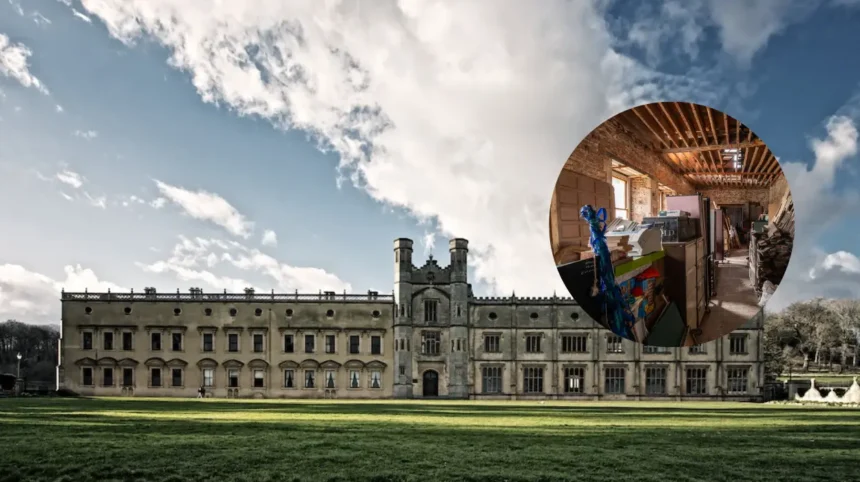
- Approximately 75% of the Grade I listed Mansion is defined as dilapidated or unused, and its renovation was estimated in about £20 million.
- The freehold of the Mansion is retained by Bristol City Council; the Trust negotiates a 125-year lease with Bristol City Council with the decision expected in November 2026.
- The community shareholders have one vote irrespective of the volume of investments.
- According to the Trust, community shares are an investment, not a donation with certain risks.
- The Mansion was acquired by Bristol City Council in 1959 and listed in the Heritage at Risk Register of Historic England since 2013.
Ashton-under-Lyne (Manchester Mirror) October 21, 2026 — A £500,000 community share offer has opened for Ashton Court Mansion, inviting people in Bristol, North Somerset and further afield to invest in the long-term future of the Grade I-listed building.
- Key Points
- Why is the Trust raising £500,000?
- Who can invest in the community share offer?
- What will the money be used for?
- What condition is Ashton Court Mansion in?
- What is the Trust’s relationship with Bristol City Council?
- What happens to the wider Ashton Court Estate?
- What happened before this offer?
- Prediction: What could this mean for Bristol residents?
- Background of the development
As reported by Planet Radio, the offer forms part of a wider plan to bring the Mansion into community hands and support its phased restoration. Ashton Court Mansion Trust says the funds will help it secure a long-term lease from Bristol City Council, run the building and lay the foundations for regeneration.
The Trust states: “Help us raise £500,000 in Community Shares to secure the future of Ashton Court Mansion and bring it into community hands.”
The development was also highlighted by BBC Bristol’s Hannah Miller in The Bristol Drop, which reported that the trust established to restore Ashton Court Mansion was launching the £500,000 community share offer “as part of a plan to eventually bring it into community ownership.”
Why is the Trust raising £500,000?
The £500,000 is intended to provide initial capital for Ashton Court Mansion Trust, rather than pay directly for major building repairs. According to the Trust’s frequently asked questions, the money will help establish the organisation as financially sustainable, support its operations and fund its community programme as long-term regeneration begins.
Ashton Court Mansion Trust says: “Our community share offer is intended to provide the initial capital needed to establish and grow the Trust’s operations. It isn’t intended to pay for the major building works themselves.”
The Trust describes its ambition as creating a place for “celebration, learning, food, skills, heritage, culture and the arts”, with restoration planned in phases over the years ahead.
The wider restoration is expected to cost substantially more than the share offer target. The Trust estimates the full regeneration at about £20 million, while its business plan anticipates approximately £12 million of regeneration works during the first five years, with further phases to follow.
Who can invest in the community share offer?
People across Bristol, North Somerset and beyond are being invited to participate. Buying community shares would make an investor a member of Ashton Court Mansion Trust, giving them a say in how the organisation is run.
The Trust says every member has one vote, regardless of how much they invest. It describes the structure as democratic and says its purpose is to regenerate the Mansion for public benefit rather than private profit.
The Trust also makes clear that community shares are not the same as charitable donations. It states: “Community shares are an investment, not a donation, and carry financial risk.”
Ashton Court Mansion Trust became a charitable community benefit society in September 2026, a structure that allows people to become members, invest through community shares and have a democratic say in the Trust’s future. It is registered on the Financial Conduct Authority’s Mutuals Register under number 9862.
What will the money be used for?
The Trust says the share offer will support the early stage of a much larger project: securing the Mansion’s future, operating the building and preparing for restoration.
Its plans combine public programmes, heritage interpretation, arts and cultural activity, learning, studios and workspaces with commercial uses. Weddings and private events are expected to help meet running costs and support charitable work, but the Trust says they are not intended to replace public access or community benefit.
The Trust has also said it does not plan to convert the Mansion into residential flats. Its regeneration proposals include short-stay guest accommodation in the North West Wing to support weddings and events, while the existing caretaker’s flat may be used as a base for heritage archives and related activities.
What condition is Ashton Court Mansion in?
Ashton Court Mansion is a Grade I-listed building on the Ashton Court Estate at Long Ashton, Bristol. The Trust says around 75% of the Mansion is dilapidated or unused, and describes the restoration as a long-term project requiring tens of millions of pounds.
The building was placed on Historic England’s Heritage at Risk Register in 2013. The Trust says an arson attack that year caused serious damage to the Library in the West Wing.
The building’s decline predates council ownership. According to the Trust, the North West Wing had already been closed by the 1930s, the Mansion had been empty since 1946, and trees were growing through the roof when Bristol City Council purchased the estate in 1959.
Bristol City Council bought the Mansion and estate from the Smyth estate for £130,000 in 1959. The Trust says this was a purchase rather than a gift, and that the council will retain the freehold under its current proposals.
What is the Trust’s relationship with Bristol City Council?
Ashton Court Mansion Trust does not yet hold a long-term lease. It currently occupies the Mansion under a tenancy at will, which allows it to manage the building, carry out agreed works and host events.
The Trust is negotiating a proposed 125-year lease with Bristol City Council. It says the lease would provide the long-term security needed to raise funding and carry out regeneration, while the council would retain the freehold.
As reported by the BBC in October 2025, Bristol city councillors unanimously agreed to grant the then Bristol Historic Buildings Trust exclusive rights to develop a business proposal for taking over the Mansion and carrying out necessary repairs. The BBC reported that the proposed arrangement included a 125-year lease, no rent for the first 10 years and, thereafter, 10% of profits shared with the council.
The Trust says a council decision on the lease in principle is expected in November 2026. It adds that securing the lease would only be the beginning of a project expected to take decades and require substantial investment.
What happens to the wider Ashton Court Estate?
The proposed lease covers the Mansion and associated courtyard, with arrangements for access to formal gardens and lawns. It does not include the wider Ashton Court Estate.
Bristol City Council will continue to manage the parkland, deer park, car park, café and public facilities. The council will also retain the freehold of both the Mansion and the wider estate.
The Trust says the gardens and lawns immediately surrounding the Mansion are part of ongoing discussions with the council. It proposes using those spaces alongside the council rather than taking them over exclusively, with public access remaining the guiding principle, although some areas may occasionally close for events or safety reasons.
What happened before this offer?
Ashton Court Mansion previously operated as a commercial wedding and events venue, but closed in 2017. The Trust says income generated in the 1980s and 1990s was not reinvested quickly enough to keep pace with competition, while factors including limited overnight accommodation and a dated interior contributed to declining bookings.
Artspace Lifespace then took on a meanwhile-use lease five months after the commercial venue closed and managed the building until May 2026. According to Artspace Lifespace, it welcomed more than 100,000 visitors during eight years of stewardship, hosted events, performances and exhibitions, and created a sculpture park during the Covid period.
The organisation was originally known as Bristol Historic Buildings Trust and was founded by the late Norman Routledge. In September 2026, it became Ashton Court Mansion Trust and converted into a charitable community benefit society.
The Trust says its plans build on earlier professional and public engagement, including a 2019 options appraisal by heritage architects Purcell for Bristol City Council and a 2021 Enquiry by Design process run by the council and The Prince’s Foundation, informed by a survey of more than 900 people.
Prediction: What could this mean for Bristol residents?
For Bristol and North Somerset residents, the share offer could create a direct route into the governance of one of the region’s most prominent heritage buildings. If the £500,000 target is reached, members would gain voting rights in Ashton Court Mansion Trust, giving them a formal voice in decisions about how the Mansion is managed and developed.
The immediate effect is likely to be organisational rather than physical. The Trust says the funds are meant to strengthen its operations and community programme, not pay for the main restoration works, so residents should not expect rapid visible repairs across the whole building.
If Bristol City Council approves the proposed 125-year lease in November 2026, the Trust would gain greater long-term security to pursue grants, philanthropy and commercial income. That could gradually increase public access through open days, tours, exhibitions, workshops and community events, although some spaces would remain closed during conservation work or private hire.
For potential investors, the development offers membership and democratic participation, but also financial risk. The Trust’s own guidance stresses that community shares are an investment rather than a donation, meaning people considering the offer would need to assess the risks as well as the community and heritage benefits.
Background of the development
Ashton Court Mansion has been part of the Bristol landscape for centuries. A manor house on the site is recorded in the Domesday Book, the property passed to the Smyth family in 1545, and Bristol City Council purchased the estate and Mansion in 1959.
The building entered the Heritage at Risk Register in 2013. The Trust says major external repairs in the early 1970s secured parts of the fabric, but unforeseen problems, including foundation issues and the loss of some older wings, left much of the interior unfinished and derelict.
Bristol Civic Society had earlier argued for a not-for-profit organisation to assume responsibility for the Mansion’s management, renovation and community involvement. In 2025, Bristol City Council agreed to work with the Bristol Historic Buildings Trust on a long-term proposal, leading to the Trust’s occupation of the building in May 2026 and the current community share offer.