The best things to do in Ancoats include exploring historic textile mills, dining at Michelin-starred restaurants, visiting Cutting Room Square, strolling along New Islington Marina, and discovering independent artisan bakeries, cultural venues, and heritage trails across this regenerated neighborhood.
- What Is the History and Historical Context of Ancoats?
- What Key Landmarks Define the Architectural Landscape of Ancoats?
- How Does Cutting Room Square Serve as the Cultural Heart of Ancoats?
- What Are the Top Dining and Food Experiences Available in Ancoats?
- How Can Visitors Experience the Waterways and New Islington Marina?
- What Independent Bakeries, Cafes, and Shops Operate in Ancoats?
- What Cultural and Entertainment Venues Operate in Ancoats?
- How Does Ancoats Connect with Surrounding Manchester Neighborhoods?
- Frequently Asked Questions
Ancoats is an inner-city area of Manchester, England, located directly east of the Northern Quarter and bounded by the Rochdale Canal, Great Ancoats Street, and the Ashton Canal. Historically recognized as the cradle of the Industrial Revolution, the district was designated a conservation area due to its concentration of Grade II listed Victorian cotton mills, such as Murray’s Mills and the Royal Mill. In the 19th century, Ancoats earned the moniker Little Italy following an influx of Italian immigrants who established local bakeries, ice cream businesses, and community networks. During the early 21st century, a multi-million-pound urban regeneration initiative spearheaded by the public sector and private developers transformed the abandoned industrial landscape into a commercial and residential hub. Today, Ancoats stands as a global benchmark for heritage-led urban renewal, attracting international visitors, creative professionals, and culinary enthusiasts.
The neighborhood structure relies on a grid pattern established during the late 18th century to facilitate transport between cotton factories and canal networks. Key landmarks frame the public realm, anchoring commercial activity around central nodes. Visiting Ancoats allows individuals to observe how structural brickwork, cast-iron framework, and waterway infrastructure integrate with modern urban living. Visitors can access the district via a ten-minute walk from Piccadilly Railway Station or through the New Islington Metrolink stop.
What Is the History and Historical Context of Ancoats?
Ancoats was established during the late 18th century as the world’s first industrial suburb, operating as an international manufacturing hub driven by steam-powered cotton mills, extensive canal transportation systems, and a dense, working-class immigrant demographic.
The origins of Ancoats date back to the land grants of 1212, when the area was recorded under the name Elnecot. The transformation from agricultural land to an industrial complex began in 1798 with the construction of Murray’s Mills by Adam and George Murray. By 1815, Ancoats developed into the epicenter of global cotton spinning, housing large-scale steam-driven mills that defined the skyline.
During the mid-19th century, thousands of Italian immigrants settled in the area, concentrated primarily around Jersey Street and Blossom Street. This migration established the neighborhood’s Little Italy identity, introducing artisanal ice cream manufacturing and traditional food preparation to Manchester. Post-war industrial decline in the mid-20th century led to mill closures, population depletion, and economic stagnation. Urban redevelopment began in the late 1990s when the East Manchester Regeneration Framework targeted the area for historic preservation and adaptive reuse.
What Key Landmarks Define the Architectural Landscape of Ancoats?
The architectural landscape of Ancoats is defined by preserved industrial structures, including Murray’s Mills, Royal Mill, Hallé St Peter’s, and the modern residential integration surrounding Cutting Room Square.
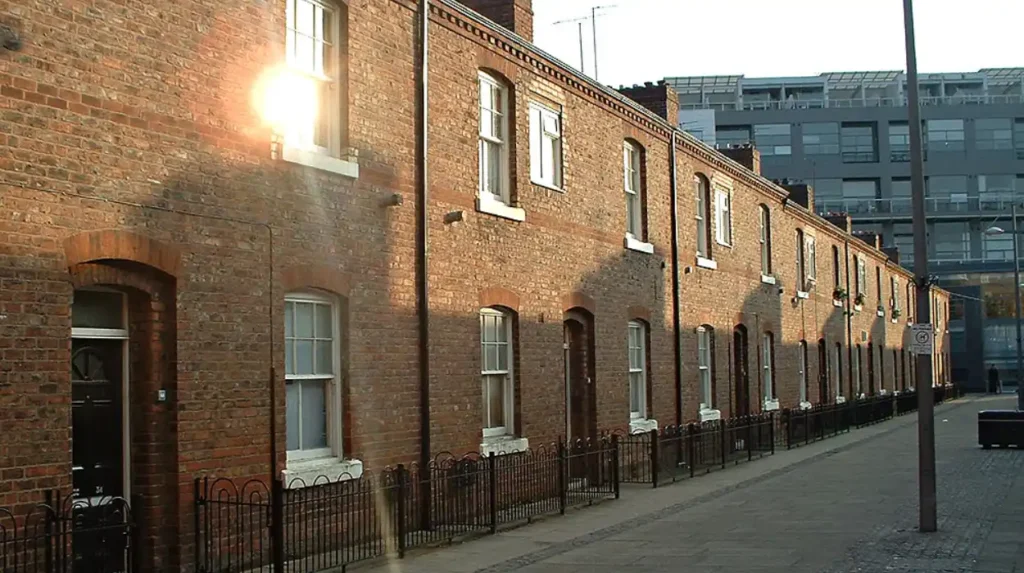
Murray’s Mills represents the oldest surviving powered cotton mill complex in the world, featuring a central courtyard and canal basin. The Royal Mill, constructed on Jersey Street, contains a glass-roofed atrium and classic iron columns that illustrate 19th-century engineering techniques. These mill complexes demonstrate the structural progression from timber-frame construction to fireproof cast-iron framing.
| Building Name | Year Built | Original Function | Current Use |
| Murray’s Mills | 1798 | Steam-powered Cotton Mill | Residential Apartments |
| Royal Mill | 1812 | Textile Manufacturing | Mixed-use Commercial / Residential |
| Hallé St Peter’s | 1859 | Anglican Church | Rehearsal & Recording Venue |
| Ice Plant | 1900 | Cold Storage for Little Italy | Residential & Ground-floor Retail |
Hallé St Peter’s, built in 1859 on Blossom Street, stands as a Grade II listed deconsecrated church. The building underwent a multi-million-pound restoration to serve as the rehearsal space and educational facility for the Hallé Orchestra. Adjacent modern extensions utilize steel and glass to complement the historical brick facade, providing an architectural contrast that characterizes contemporary Ancoats.
How Does Cutting Room Square Serve as the Cultural Heart of Ancoats?
Cutting Room Square serves as the primary public space in Ancoats, aggregating independent food venues, public art installations, and outdoor seating around historic structures.
The square occupies the space where cotton fabrics were historically measured and cut prior to distribution. Five large granite monoliths, designed by artist Dan Dubowitz, stand permanently in the square. These public art structures, known as The Peeps, incorporate brass lenses through which visitors can view archive photographs depicting historical mill workers and interior industrial machinery.
Pedestrianized zones enable high-density outdoor seating for surrounding venues. The spatial layout promotes foot traffic between Blossom Street, Cotton Street, and George Leigh Street. Visitors gather in Cutting Room Square to access neighborhood services, participate in outdoor community events, and observe the architectural integration of restored brick mills with modern commercial spaces.
What Are the Top Dining and Food Experiences Available in Ancoats?
Ancoats offers exceptional culinary experiences ranging from Michelin-starred fine dining at Mana to sourdough pizzerias like Rudy’s and contemporary natural wine bars such as Erst.
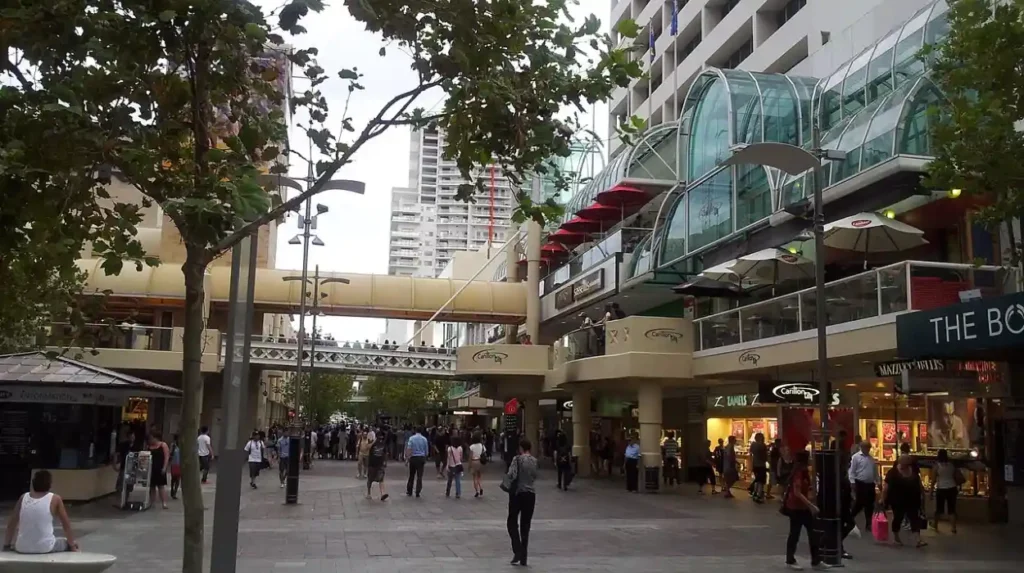
The district gained international culinary recognition when restaurant Mana was awarded a Michelin star, marking Manchester’s first Michelin designation in forty years. The kitchen focuses on hyper-seasonal British ingredients, utilizing preservation and fermentation techniques. Complementing fine dining, Erst on Murray Street specializes in natural wines and small-plate charcoal cooking.
- Fine Dining: Mana (Blossom Street) — Multi-course seasonal tasting menus.
- Small Plates: Erst (Murray Street) — Low-intervention natural wines and seasonal wood-fired dishes.
- Neapolitan Pizza: Rudy’s Pizza (Blossom Street) — Traditional 24-hour fermented dough cooked in wood-fired ovens.
- Neighborhood Kitchen: Elnecot (Blossom Street) — British small plates, craft beers, and traditional Sunday roasts.
Rudy’s Neapolitan Pizza opened its founding venue on Blossom Street, playing a pivotal role in establishing the neighborhood’s modern food identity. The concentration of independent eateries along Blossom Street, Murray Street, and Henry Street provides a dense culinary network operating without large commercial chains.
How Can Visitors Experience the Waterways and New Islington Marina?
Visitors can explore the waterways by walking along the Ashton Canal towpaths, crossing New Islington Marina, and utilizing the public green space at Cotton Field Park.
New Islington Marina connects the Rochdale Canal and Ashton Canal, forming a central water feature surrounded by residential developments, floating moorings, and pedestrian bridges. The marina basin houses residential narrowboats and provides protected waters for urban wildlife.
The Ashton Canal towpath offers continuous pedestrian routes extending east toward Ashton-under-Lyne and west toward Manchester city center. Cotton Field Park, located adjacent to the marina, provides a dedicated green area featuring boardwalks, open lawns, and planted water margins. Visitors utilize these routes for running, cycling, outdoor coffee dining, and waterfront leisure activities.
What Independent Bakeries, Cafes, and Shops Operate in Ancoats?
Independent bakeries, specialty coffee shops, and niche retailers in Ancoats provide hand-crafted baked goods, third-wave coffee, and curated lifestyle products.
Pollen Bakery, situated along the New Islington Marina, operates as a cornerstone food producer in the area. The bakery specializes in sourdough breads, viennoiserie, and laminated pastries, utilizing long fermentation processes. Companio Bakery on Radium Street operates as an open-plan micro-bakery offering daily artisanal loaves and pastries directly to passersby.
- Artisan Bakeries: Pollen Bakery (Marina) and Companio Bakery (Radium Street).
- Specialty Coffee: Idle Hands (Dale Street) and Ancoats Coffee Co. (Royal Mill Atrium).
- Independent Retail: Local lifestyle boutiques on Jersey Street and Radium Street.
Ancoats Coffee Co. operates inside the glass atrium of Royal Mill, roasting specialty coffee beans on-site within a restored industrial interior. Independent retail shops along Jersey Street and Radium Street stock goods ranging from indoor plants to specialized apparel, reinforcing the neighborhood’s independent commercial model.
What Cultural and Entertainment Venues Operate in Ancoats?
Cultural and entertainment options in Ancoats feature independent theater productions at Hope Mill Theatre, classical orchestral performances at Hallé St Peter’s, and local gallery exhibits.
Hope Mill Theatre, located in a Grade II listed former mill along Pollard Street, functions as a premier independent fringe venue. The venue produces musicals, plays, and creative arts programming, earning national accolades for its theatrical stagings.
Hallé St Peter’s hosts public acoustic concerts, chamber music recitals, and choir performances inside its restored 19th-century nave. The Horsfall on Great Ancoats Street operates as a creative venue and gallery dedicated to supporting youth mental health through artistic expression. These venues maintain a year-round calendar of live performance and artistic engagement.
How Does Ancoats Connect with Surrounding Manchester Neighborhoods?
Ancoats maintains direct physical and cultural connections with the Northern Quarter, New Islington, Piccadilly, and Manchester city center via major road networks and public transit links.
Great Ancoats Street acts as a primary arterial ring road, physically separating Ancoats from the Northern Quarter. Pedestrian crossings across Great Ancoats Street allow seamless transit between the nightlife of the Northern Quarter and the dining-focused environment of Ancoats.
To the east, Ancoats merges directly into New Islington, providing access to extended canal networks and modern residential housing. Piccadilly Railway Station sits within a 12-minute walk south, offering regional and national rail services. The New Islington Metrolink tram station links the area directly to Manchester Victoria, St Peter’s Square, and outer Greater Manchester boroughs.
Frequently Asked Questions
What is Ancoats in Manchester famous for?
Ancoats is historically famous as the world’s first industrial suburb, known for its 19th-century steam-powered cotton mills and vibrant Little Italy community. Today, it is globally celebrated for its award-winning food scene, historic mill conversions, and pedestrian-friendly public spaces.
Is Ancoats walkable from Manchester Piccadilly Station?
Yes, Ancoats is fully walkable from Manchester Piccadilly Station. Visitors can walk north along Ducie Street or Newton Street for approximately 10 to 12 minutes to reach Cutting Room Square.
What are the best green spaces to visit in Ancoats?
The primary green spaces in and around Ancoats include Cotton Field Park at New Islington Marina and the upgraded Ancoats Green. Both offer lawns, wildflower meadows, and pedestrian boardwalks suitable for outdoor recreation.
Does Ancoats have Michelin-starred restaurants?
Yes, Ancoats is home to Mana on Blossom Street, which earned a Michelin star for its innovative, modern British tasting menus.
How do I get to Ancoats using public transport?
You can take the Manchester Metrolink tram to the New Islington stop, which is located on the edge of the neighborhood. Alternatively, multiple bus routes travel along Great Ancoats Street and Oldham Road.