Key Points
- The Bolton Council is likely to object to the introduction of tolls by the Reform-led Lancashire County Council on the M65 “in the strongest possible terms.”
- The proposal came from Accrington North Reform UK councillor Joel Tetlow, who proposed that a charge be imposed to pay for the repair of a six-mile section of the M65, which is managed by the council.
- A toll of between 50p and £1.50 for the stretch of the motorway between junction 10, Burnley and junction 14, Colne was proposed.
- The estimated cost of repairing the drain in the stretch amounts to £15m and this has led to several closures due to flooding.
- The Bolton Labour councillor Nadeem Ayub stated that the council does not favor tolls and that they will object to the imposition of any tolls.
- The Blackburn with Darwen Council has also resolved to condemn the proposal because of traffic problems and its implications for East Lancashire.
- Later, Cllr Tetlow clarified that the toll plan was just an idea meant to stimulate debate on how to pay for the drainage works.
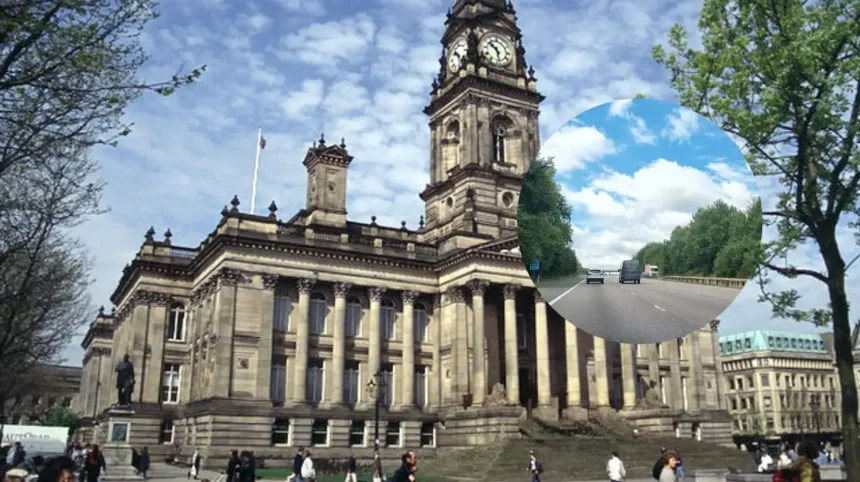
Bolton (Manchester Mirror) October 12, 2026 – Bolton Council has warned that it would oppose any attempt by Reform-led Lancashire County Council to introduce tolls on the M65 “in the strongest possible terms”, after a proposal to charge motorists on a flood-hit stretch of the motorway prompted criticism across East Lancashire.
- Key Points
- What Did Bolton Council Say About M65 Tolls?
- Why Was an M65 Toll Proposed?
- What Was the Reaction in Lancashire?
- Did Cllr Tetlow Say the Toll Idea Was Serious?
- How Did Blackburn with Darwen Respond?
- What Concerns Were Raised by Burnley Councillors?
- Background of the M65 Tolls Development
- Prediction: How Could This Affect Motorists and Local Businesses?
What Did Bolton Council Say About M65 Tolls?
The issue was raised at Bolton Council’s full meeting on October 7 by Labour councillor Shafaqat Shaikh, who asked whether the authority would oppose Lancashire County Council’s proposals for tolling the M65. As reported by The Bolton News, Cllr Shaikh said: “Can the Executive Cabinet Member reassure Council that Bolton Council will object to Lancashire Reform UK’s proposals for a toll on the M65 in the strongest terms and that a Labour-led Bolton Council will never consider tolls on local roads in the way that Reform UK have revealed they are doing?”
Bolton’s executive cabinet member for environment and regulatory services, Cllr Nadeem Ayub, responded that neither he nor the Labour-led council supported the proposal. He told members: “For the record, this proposal is not something I, or the Labour Council, support.”
Cllr Ayub added that the matter was not purely theoretical because Lancashire County Council could, in principle, begin a process to implement tolling. He said: “If Reform-led Lancashire County Council make any attempt to do this, Bolton Council would have the opportunity to object.”
He then gave the council’s clearest commitment so far: “I can assure all members of the Council that if the Reform-led Lancashire County Council go ahead with these plans, I, representing Bolton Council, will object in the strongest possible terms.”
Why Was an M65 Toll Proposed?
The suggestion was made by Cllr Joel Tetlow, Reform UK’s Accrington North representative at Lancashire County Council, during an environment, economic growth and transport scrutiny committee meeting. The discussion concerned how to fund an estimated £15 million of drainage work on a six-mile section of the M65 between junction 10 at Burnley and junction 14 at Colne.
That section is unusual because it is managed by Lancashire County Council rather than National Highways. The route has experienced repeated flooding, which has caused significant disruption and closures for motorists.
As reported by William Morgan of the BBC’s Local Democracy Reporting Service, Cllr Tetlow initially suggested a toll of between 50p and £1 to access the council-managed stretch. Later reporting said the proposed charge could range from 50p to £1.50.
Cllr Tetlow had argued at the committee that councillors needed to “look outside the box and do something a little bit different than just what we’ve always been doing”.
What Was the Reaction in Lancashire?
The idea was strongly criticised by opposition politicians at Lancashire County Council. Independent councillor Azhar Ali described it as “bonkers” and “absolutely crazy”, according to BBC News.
Independent group leader Afrasiab Anwar said he would write to Lancashire County Council’s leader and chief executive to express “100 per cent opposition to even thinking about such a measure”.
Reform group leader Mark Poulton also sought to distance the party’s leadership from the suggestion. He said: “I can assure you that the Reform leadership at Lancashire County Council have no intention of making that stretch a toll road.”
At a later Burnley Council meeting, Cllr Poulton said the route “should never become a toll road”. He explained that National Highways would not take responsibility for the section until its drains were repaired, adding that the estimated £15 million cost was equivalent to about a quarter of Lancashire’s highways budget.
Did Cllr Tetlow Say the Toll Idea Was Serious?
Cllr Tetlow later said the proposal was not serious. According to BBC News, he told the Local Democracy Reporting Service that the idea was intended only to start a discussion about who should pay for the £15 million drainage work on the commuter route.
The Lancashire Telegraph also reported that Cllr Tetlow later described his suggestions as “not serious”.
Lancashire County Council’s cabinet member for highways and transport, Warren Goldsworthy, said the authority had no plans to introduce tolls and was not considering them. He added that the council would discuss the future ownership and management of the section with National Highways.
How Did Blackburn with Darwen Respond?
Blackburn with Darwen Council voted to condemn the proposed tolls on October 7, the same evening the matter was raised in Bolton. The BBC reported that Labour councillor Damian Talbot moved the motion, noting that Reform UK leader Cllr Matchett had asked for it to be withdrawn because Reform colleagues at Lancashire County Council had said they were not considering tolls and Cllr Tetlow had said his comments were not serious.
Cllr Talbot said the council should still discuss the issue to highlight worsening congestion on the arterial route and its effect on residents and the local economy. He said:
“The case for investment could not be clearer”, while adding that introducing tolls “would not help and would without a doubt increase traffic on the wider network”.
He also raised the potential consequences of local government reorganisation. Although the reorganisation scheme is now paused, it would have combined Blackburn with Darwen, Hyndburn, Rossendale, Burnley and Pendle councils into a single “Pennine Lancashire” authority, which would have taken responsibility for the motorway section from Lancashire County Council.
Cllr Talbot said:
“In the event of local government reorganisation, it is perfectly possible that we will be part of a council responsible for the section of the motorway in question… So we say now this council should make clear its opposition to any tolls on the M65 and to making people and motorists in East Lancashire pay extra to get around in our area.”
What Concerns Were Raised by Burnley Councillors?
At Burnley Council, a public speaker warned that a toll could act as a charge on commuters travelling to and from Burnley and push drivers onto local roads. The speaker said drivers who did not pay could divert onto the district network, potentially creating bottlenecks at junction 10 and increasing traffic, commercial vehicles and emissions on Padiham Road, the A679 and nearby residential streets.
Cllr Afrasiab Anwar agreed with those concerns and said Burnley Council would write to Lancashire County Council’s leader and chief executive to state its total opposition.
Former Burnley MP and council leader Gordon Birtwistle said flooding on the route had been linked to a concrete barrier installed along the road. He claimed that the barrier prevented water from draining into the central reservation, causing runoff to return to the carriageway.
Former mayor and independent councillor Shah Hussain said the proposal should not be treated as a joke and raised concerns about accidents on the road. He also argued that a smaller unitary authority covering Burnley, Pendle and Rossendale would make decisions closer to local communities.
Background of the M65 Tolls Development
The M65 toll discussion began because Lancashire County Council faces a £15 million bill to address drainage and flooding problems on the six-mile section between junction 10 at Burnley and junction 14 at Colne. The section is one of the few parts of the motorway network managed by a local council rather than National Highways.
Cllr Tetlow raised the toll idea at a Lancashire County Council scrutiny committee on September 17, 2026, as councillors considered funding options for the repairs. The committee did not adopt tolling as policy, and officials indicated that the drainage scheme may require government approval and alternative funding.
Reform UK subsequently said it was not pursuing tolls, while Cllr Tetlow said his comments were intended to stimulate debate about funding responsibility. Despite this, Bolton and Blackburn with Darwen councils have both used the episode to set out formal opposition to any future tolling of the M65.
Prediction: How Could This Affect Motorists and Local Businesses?
For motorists in Bolton, Bury, Blackburn, Burnley and surrounding areas, the immediate effect is likely to be political rather than financial: no toll is currently planned, and both Lancashire County Council and Reform’s leadership have said the idea is not being pursued.
If the drainage problem remains unresolved, drivers could continue to face disruption from flooding and closures on the Burnley-to-Colne section. That could affect commuting times, delivery schedules and access between East Lancashire communities, particularly during periods of heavy rainfall.
For businesses that rely on the M65 for staff travel, freight and customer access, the key issue is likely to be investment in drainage and road maintenance rather than tolling. Blackburn with Darwen councillor Damian Talbot has argued that tolls could displace traffic onto surrounding roads, increasing congestion on the wider network.
For local residents, the strongest likely impact of the current row is greater scrutiny of who funds and manages the council-run motorway section. Bolton Council’s stated position adds political pressure against tolls, while the unresolved £15 million repair need keeps the question of long-term funding and ownership on the agenda.