
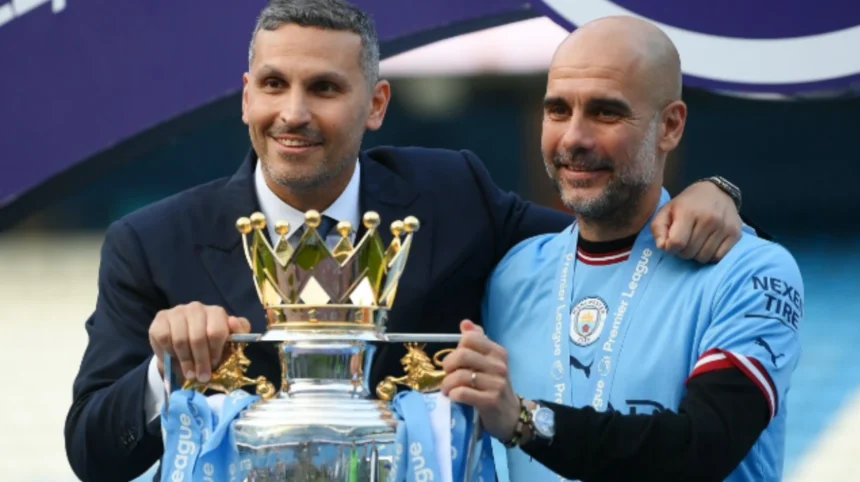
Since 2008, no club has changed English football more than Manchester City. When Sheikh Mansour bought the club, City were not part of the Premier League elite. They had finished ninth the earlier season, had been relegated three times in the Premier League era, and had exhausted much of the previous decade fluctuating between divisions. Their transformation into one of the world’s most triumphant clubs fundamentally altered the direction of English football.
There is a strong argument that City’s expenditure helped drive the economic growth of football. Their investment raised the standard of competition, attracted the most elite players and managers, and contributed to making the Premier League the most watched domestic league in the world.
Since the late 1990s, the Premier League’s economic contribution has grown dramatically, supporting over 100,000 jobs, generating billions in tax revenue, and attracting a global audience measured in billions. While this growth cannot be credited completely to Manchester City, their rise played a significant role in strengthening the league’s global attractiveness.
However, there is another side to the story. City’s spending helped create an environment where transfer fees and wages increased rapidly. Clubs such as Everton, Aston Villa, and others that once hoped to break into the established elite found themselves competing against financial resources they could not match. The gap between the richest clubs and the rest widened, making sustained competition more difficult. Critics argue that this reduced uncertainty in the league and encouraged risky spending by clubs attempting to keep pace.
An independent commission found Man City guilty of major financial-rule breaches, including the artificial inflation of revenues, although City strongly deny wrongdoing and are appealing the decision. The outcome remains unresolved.
My view is that Manchester City’s investment accelerated the Premier League’s growth and helped turn it into the dominant football competition in the world.
However, it also contributed to a financial arms race that made English football less accessible and, in some ways, less competitive. The Premier League is richer, more global, and more powerful than it was in 2008, but that success has come with costs that the game is still trying to address.