Key Points
- “There is no other community within the United Kingdom that is at such risk from terrorism as the Jewish community.”
- This comment was made by Sir Stephen Watson, who is the Chief Constable of Greater Manchester Police on the first anniversary of the Heaton Park Synagogue attack which took place on Yom Kippur on 2 October 2025, the day when Melvin Cravitz and Adrian Daulby died.
- He said that the Greater Manchester Police would “exert every sinew” to protect the Jewish people and bring justice to those who committed the crimes “as long as it takes.”
- The community leader, Mark Levy said that many Jews have become “a target on our back,” and many hide themselves, thinking about what their future will be in the UK.
- Police officers who deal with counterterrorism said this week that they prevented “an advanced plan” to attack Manchester Jewish community on Yom Kippur in 2026; two men are currently in custody.
- The perpetrator, Jihad Al-Shamie was killed by the police; he swore allegiance to Islamic State on 999 call and wore a fake suicide vest.
- Melvin Cravitz’s family is appealing to the public to do good deeds on 2 October.
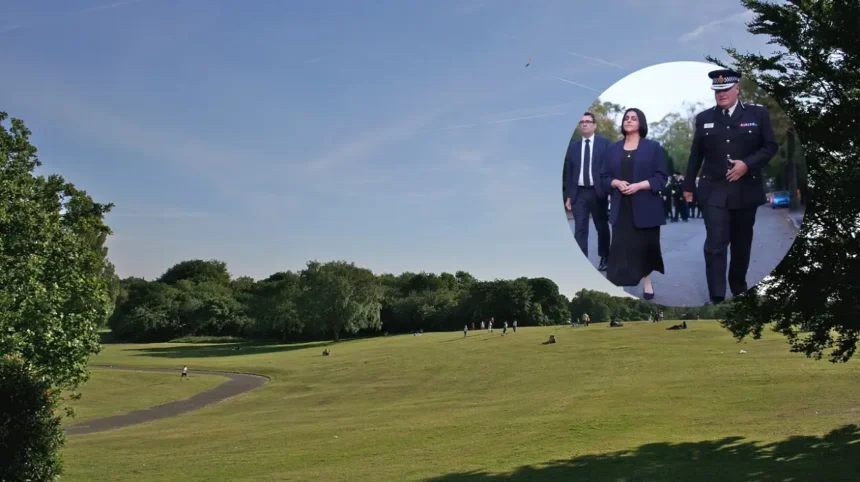
Manchester Police (Manchester Mirror) October 02, 2026 – On the first anniversary of the terror attack at Heaton Park Hebrew Congregation, Greater Manchester Police’s Chief Constable Sir Stephen Watson said the Jewish community “continues to face a threat that is not shared by anybody else in our community”. In a video message released to mark the date, Watson said the force would commemorate “with great respect” the lives of Melvin Cravitz, 66, and Adrian Daulby, 53, who were killed during the Yom Kippur assault in 2025. He added that GMP would “exercise every sinew” in defence of Jewish residents and remain committed “for as long as it takes” to ensure those who seek to harm innocents are brought to justice and prevented from succeeding.
- Key Points
- Why is the Heaton Park anniversary significant for Greater Manchester’s Jewish community?
- What security measures and recent threats have been disclosed around Yom Kippur 2026?
- How are victims’ families marking the first anniversary?
- What legal and investigative steps follow the attack?
- Background to the Heaton Park synagogue attack and its aftermath
- Prediction: how this development may affect the Jewish community and wider public
As reported by the Jewish Chronicle, Watson said:
“We are passionate in GMP in safeguarding the life of all who live within our city region. But particularly, in this circumstance, our Jewish community, who continue to face a threat that is not shared by anybody else in our community”.
The BBC quoted him saying the Jewish community “faces a threat not encountered by anyone else” and that officers would “exert every effort” in their protection. The Manchester Evening News carried the same pledge, noting Watson’s assurance of “unwavering support”.
Why is the Heaton Park anniversary significant for Greater Manchester’s Jewish community?
The anniversary marks the deadliest antisemitic terror attack on British soil in recent memory. On 2 October 2025, during Yom Kippur, the holiest day in the Jewish calendar, Jihad Al‑Shamie drove through the synagogue gates on Middleton Road and attacked worshippers with a knife while wearing a fake suicide vest. He was shot dead by police at the scene. Cravitz died from multiple stab wounds; Daulby was struck by a stray police bullet as he tried to block the attacker from entering the building. Al‑Shamie, a 35‑year‑old Syrian‑born UK citizen, had declared allegiance to Islamic State during a 999 call made amid the attack.
Community leaders have described the date as one of “profound sorrow and distress”. Mark Levy, representing the Jewish Representative Council for Greater Manchester, told the BBC that many involved in the incident are still grappling with grief, trauma and shock a year on. He said antisemitism now felt “so widespread” that friends and family were “actively questioning” their futures in the UK, with some afraid to reveal they are Jewish even when accessing healthcare. Levy added:
“I feel incredibly anxious about being Jewish right now, as do many others who are visibly identifiable as Jewish”.
What security measures and recent threats have been disclosed around Yom Kippur 2026?
The anniversary statement came days after counter‑terrorism police said they had disrupted an “advanced” plot targeting Manchester’s Jewish community during this year’s Yom Kippur observances. Two men arrested in Manchester’s Northern Quarter remain in custody on suspicion of terrorism offences, police said. The disclosure intensified anxiety within the community ahead of high‑holy‑day services, which are being held under heightened security.
Greater Manchester Police has been running Operation Picton to protect Jewish sites during the high holy days, with armed response units positioned in or near Jewish neighbourhoods to ensure rapid response. The national terror threat level remains at “severe”, meaning an attack is judged “highly likely”. In the first half of 2026, more than 200 severe antisemitic incidents—including violence and threats—were recorded in Greater Manchester, according to local reporting.
How are victims’ families marking the first anniversary?
Melvin Cravitz’s family has called for the anniversary to be marked with acts of kindness, describing him as a “mensch”—a Yiddish term for a person of integrity who looks out for others. His stepdaughter, Sherelle Dresner, is setting up the Mensch Like Melvin charity and is campaigning for 2 October to become National Mensch Day. “Being a mensch transcends religion, background, and identity. It just means being a good person,” Dresner said, citing examples such as checking on a neighbour, holding a door for someone struggling, or volunteering time. “Anyone can be a mensch. On October 2, in memory of Adrian and Melvin, please be one”.
Levy, whose father helped barricade the synagogue doors against the attacker, said the community had shown “strength and resilience” despite losing “two very special individuals”. He told the BBC: “We refuse to allow those who wish to harm us to dictate our community or force us to live smaller Jewish lives”.
What legal and investigative steps follow the attack?
Inquests into the deaths of Cravitz and Daulby are scheduled to take place next year, the BBC reported. Greater Manchester Police have previously said they know the identity of the killer but have not released further details publicly. The Chief Coroner has asked the Home Secretary to consider a public inquiry into the attack, with ministers arguing some intelligence material may need to be withheld on national security grounds.
Background to the Heaton Park synagogue attack and its aftermath
The Heaton Park Hebrew Congregation attack on 2 October 2025 was the first fatal antisemitic terror incident in the UK in decades and prompted a major security review around Jewish institutions. In the months that followed, Jewish schools, shops and places of worship across the country reinforced physical security, while police and the Community Security Trust expanded protective patrols during festivals and high‑risk periods. National political leaders, including Prime Minister Sir Keir Starmer, pledged a more visible police presence and promised to “defeat rising anti‑Jewish hatred”. The attack also intensified debate over intelligence sharing, deradicalisation and the resourcing of community security, with the Chief Coroner pushing for a public inquiry to examine lessons learned.
Prediction: how this development may affect the Jewish community and wider public
The explicit acknowledgment by a senior police chief that Jews face a unique threat is likely to deepen both reassurance and unease within the Jewish community. On one hand, the commitment to sustained, high‑visibility protection and the disruption of a fresh plot may bolster confidence that authorities are prioritising their safety. On the other, repeated warnings about severe threat levels and the scale of antisemitic incidents recorded in 2026 may reinforce perceptions of vulnerability, prompting some families to reconsider where they live, work or send their children to school, as Mark Levy indicated. For the wider public, the messaging underscores the scale of the domestic terror challenge and could increase support for long‑term security funding around minority institutions, while also sharpening scrutiny of counter‑extremism policy and community cohesion efforts in Greater Manchester and beyond.