Key Points
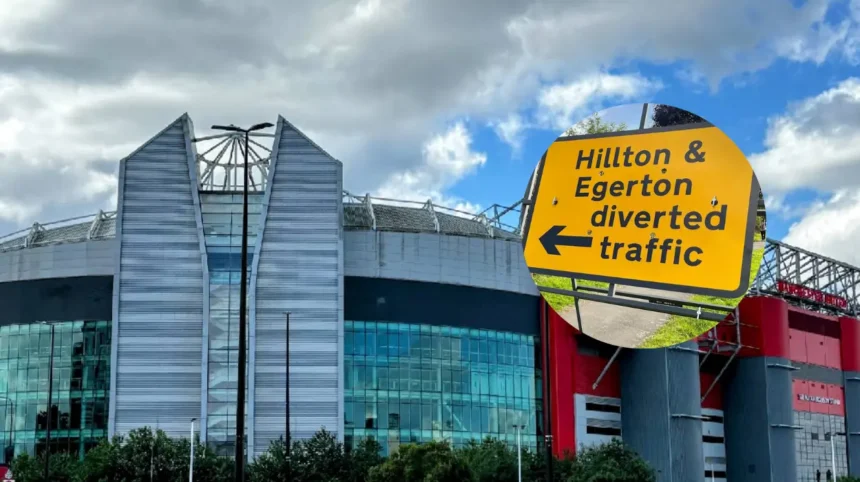
- There were temporary road signs near the A38 in Hilton, Derbyshire, which were mis-spelt and led motorists to Egerton in Bolton, located 70 miles north, and Hillton in Zurich, Switzerland.
- These temporary signs were meant to direct traffic to Hilton and Egginton during an 18-month bridge refurbishment of the A38.
- Grahame Andrew, South Derbyshire district councillor, mentioned that it was the second instance of National Highways making the same mistake, having done that last October.
- According to Andrew, National Highways were “utterly incompetent” and that he had not been answered nor the mistake corrected despite having reported it previously.
- National Highways expressed regret regarding the spelling mistake and that new signs would be put up on the same day after having their contractors coordinate for a fix.
- Joanne Davis, councillor of Hilton, said that the signage was “confusing” and “not helpful at all,” mentioning that they should not have been funded by taxpayers since it was a repeated mistake.
- Andrew noted geographic mistakes, pointing out how one sign pointed to the left towards Hilton when they were in Hilton and the rest of the village was on the right side of the A5132.
Bolton (Manchester Mirror) September 25, 2026 – Temporary road signs placed around the village of Hilton have been found to contain significant spelling errors, misleading motorists by directing them 70 miles north to Egerton in Bolton and to a Swiss production company, Hillton, based in Zurich, instead of the intended destinations of Hilton and Egginton in South Derbyshire. The signs, installed to manage traffic during ongoing 18-month bridge works on the A38, were spotted by residents and local councillors, prompting an immediate response from National Highways, which oversees England’s motorways and major A-roads.
- Key Points
- What went wrong with the Hilton road signs?
- How did councillors respond to the signage error?
- What has National Highways said about the blunder?
- Why are the A38 bridge works relevant to the sign error?
- Background of the development
- Prediction: How this development can affect local drivers and residents
What went wrong with the Hilton road signs?
As reported by BBC News, several identical signs were positioned around Hilton, all bearing the same misspelling that diverted drivers to Egerton in Bolton and Hillton in Zurich rather than the local Hilton and Egginton. South Derbyshire district councillor Grahame Andrew, who represents Hilton on the council, told the BBC this was the second occurrence of the error, having previously been reported to National Highways in October last year.
Andrew said,
“In October last year, exactly the same signs were all over the village and it was pointed out to National Highways but they don’t seem to have done a awful lot about it.”
He described the agency as “utterly incompetent” and noted he had not received a reply or seen the issue resolved after his initial report.
How did councillors respond to the signage error?
Councillor Andrew also questioned the geographical accuracy of the signs, pointing out one located on the A5132 that indicated Hilton was to the left, despite residents already being within Hilton. “It’s directing people to Hilton being that way [left]. We’re already in Hilton, the rest Hilton is that way [right],” he said, adding humorously, “Aside from all those issues, it’s fine.”
Joanne Davis, another South Derbyshire district councillor representing Hilton, told the BBC the signage was “confusing” and “not helpful at all”. She emphasised that any corrective action should not be funded by taxpayers, particularly as this was a repeat mistake.
What has National Highways said about the blunder?
On Thursday, National Highways issued an apology for the spelling error and confirmed swift action to rectify the signage. A spokesperson stated,
“We apologise for the spelling error and have acted quickly to rectify the signage. Once we were informed of the misspelling, we coordinated with our contractors to install new signs, which will be put up tonight.”
The agency, which manages trunk roads and motorways in England, has faced scrutiny over the repeat nature of the error and the potential for motorist confusion during the lengthy A38 bridge project.
Why are the A38 bridge works relevant to the sign error?
The temporary signs were installed to divert traffic during 18 months of scheduled work on the A38 bridge, a major route through South Derbyshire. The duration of the works has heightened the importance of accurate signage to prevent unnecessary detours and ensure smooth traffic flow for local residents and commuters. The misspelt signs, if left uncorrected, could have led to significant disruption, with drivers potentially travelling long distances to incorrect destinations.
Background of the development
The incident follows a pattern of signage errors attributed to National Highways in the region, with councillor Andrew highlighting a similar misspelling in October 2025 that was reported but not adequately addressed. National Highways is responsible for maintaining and installing signs on major roads, and all such signage must be authorised by the Highway Authority to ensure accuracy and safety. The recurrence of the error has raised questions about quality control processes within the agency and its contractors, particularly given the potential for motorist confusion and the costs associated with correcting the mistake.
Prediction: How this development can affect local drivers and residents
This development is likely to affect local drivers and residents in Hilton and surrounding areas by increasing scrutiny of National Highways’ signage practices and potentially prompting calls for stricter oversight of temporary roadworks signage. Motorists may experience short-term confusion until the corrected signs are fully installed, but the swift apology and replacement promise from National Highways should mitigate prolonged disruption.
In the longer term, repeat errors could erode public confidence in the agency’s ability to manage roadworks effectively, possibly leading to increased complaints to Derbyshire County Council or the Highway Authority. Local councillors may also push for taxpayer-funded corrections to be avoided in future, placing pressure on National Highways to improve its internal checks before deploying temporary signage.