Key Points
- Supporters of Manchester United have embarked on a new online protest movement by making use of the hashtag #BoycottUnited to reach out to the sponsors and commercial partners of the club.
- The campaign started on Tuesday night through some United-related social media handles and calls on the fans to write negative reviews, send emails to press offices of the companies and post comments on their social media pages.
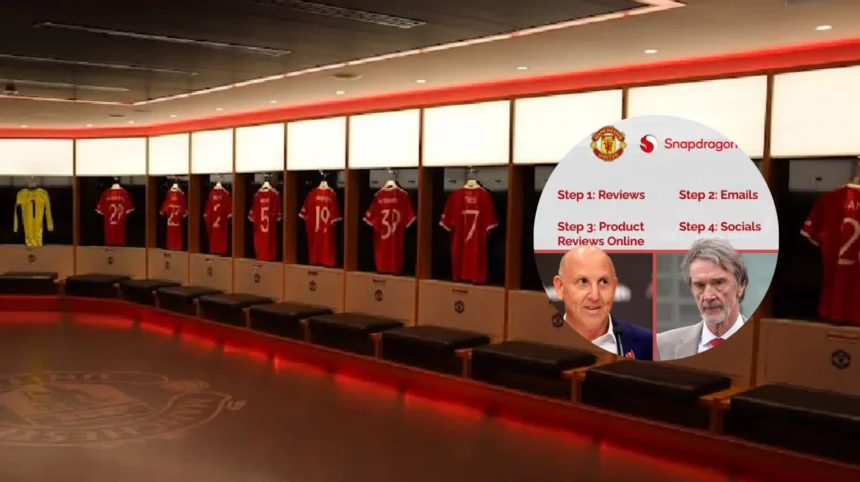
- According to a poster used for the campaign, “Your voice does matter, irrespective of its size. Let’s voice our opinions to these companies through reviews and social media.”
- Qualcomm’s Snapdragon, which is the primary shirt sponsor of United since the 2024-25 season and whose contract is believed to be worth about £60 million annually, has particularly been the focus of the fans’ ire.
- Some critical comments made by the supporters under Snapdragon’s posts have been deleted by Snapdragon.
- The other entities to come under attack include official merchandise, MUTV, club store, companies like Adidas, DHL, Coca-Cola and SumUp, INEOS companies associated with Sir Jim Ratcliffe and Glazers, according to reports.
FC United of Manchester (Manchester Mirror) September 24, 2026 – Its have launched an online campaign against the club’s sponsors and partners, using the hashtag #BoycottUnited to pressure companies connected with the Premier League club amid continuing anger towards the Glazer family and Sir Jim Ratcliffe.
- Key Points
- What has Snapdragon got to do with the protest?
- Which companies are being targeted?
- Why are fans angry with the Glazers and Ratcliffe?
- What role did the summer transfer window play?
- How has the campaign spread online?
- Is the campaign likely to affect United commercially?
- Background of the development
- Prediction: How could this affect Manchester United fans?
As reported by the Manchester Evening News, several social media accounts associated with United publicised the digital protest on Tuesday evening. The campaign encourages supporters to post negative reviews about sponsor companies, send emails to their press departments and leave comments on their social media platforms.
The organisers have also circulated a graphic naming United’s sponsors and partners. It states: “Your voice matters, regardless of its size. Share your opinions with these companies through reviews and social media.”
The campaign represents a shift from traditional matchday demonstrations. A section of supporters believes conventional protests have not changed the club’s ownership or its commercial and ticketing policies, according to the Manchester Evening News.
What has Snapdragon got to do with the protest?
Qualcomm Technologies’ Snapdragon brand has been the principal sponsor on the front of United’s shirts since the 2024-25 season. The California-based company is described by the Manchester Evening News as United’s largest commercial ally.
Fans have flooded Snapdragon’s social media channels with messages about the club’s ownership. In response, Snapdragon has removed some negative comments from frustrated supporters under its posts, the Manchester Evening News reports.
The reported value of the United-Snapdragon arrangement is approximately £60 million each season, although the exact figure has not been publicly confirmed by the club or Qualcomm in the available reporting.
One supporter, posting on X under the handle Manchester United Forever, said the campaign’s focus on September 23 was Snapdragon and described actions including leaving Trustpilot reviews, emailing the company and commenting on social media. The account said the activity was “not intended for abuse”, but was intended to voice concerns about the company’s association with United.
Which companies are being targeted?
The campaign’s material names United’s official sponsors and partners. Beyond Snapdragon, reports have identified Adidas, DHL, Coca-Cola and SumUp among brands being targeted, alongside the club’s media channel MUTV and official club store.
According to Roundtable, the boycott is organised into four categories: official club sponsors, official merchandise and products, companies owned by Sir Jim Ratcliffe’s INEOS, and companies owned by the Glazer family.
The campaign also uses the hashtag #GlazersAndIneosOut alongside #BoycottUnited. Reports from Fakti say organisers are discussing refusing to buy official fan merchandise, avoiding INEOS-linked products and boycotting selected sponsors and partners.
No company named in the campaign has been reported to have announced a change to its relationship with United in response.
Why are fans angry with the Glazers and Ratcliffe?
The Glazer family’s ownership of United has been a source of supporter protest since its leveraged buyout in 2005. Sir Jim Ratcliffe, whose INEOS group became a co-owner and took control of football operations, has increasingly become a focus of demonstrations over the past 18 months, according to the Manchester Evening News.
Before the recent Manchester derby, fans gathered near Old Trafford, including by the Bishops Blaize pub, to protest against both the Glazers and Ratcliffe. As reported by the BBC, many songs during the protest were directed at Ratcliffe as well as the Glazer family.
The immediate trigger for that demonstration was the club’s treatment of season-ticket holders following a contentious ticket-resale investigation. Yahoo Sport reported that United had banned 685 season tickets after investigating touting, with supporters describing the situation as a “fiasco”.
Slogans reported by Sportstar included “Love United Hate Glazers” and “You take everything from fans while punishing us for no reason”, reflecting anger over ticketing measures and pricing.
What role did the summer transfer window play?
Supporter dissatisfaction has also been linked to United’s activity in the summer transfer market. The Manchester Evening News reports that the club spent about £150 million on players including Andrey Santos, Youri Tielemans and Carlos Baleba, while goalkeeper Karl Darlow arrived on a free transfer.
However, the report states that United did not sign a backup left-back to support Luke Shaw, who had already missed three matches, and did not prioritise a backup striker.
The contrast with rival clubs has added to frustration among some supporters. The Manchester Evening News reports that Manchester City led Premier League spending in the window at £458 million, followed by Chelsea on £342.4 million, Tottenham on £334 million and Newcastle United on £275.2 million.
How has the campaign spread online?
The campaign has gained traction across social media platforms, with supporters sharing instructions, graphics and calls to action. Posts on X encourage fans to target Snapdragon through reviews, emails, product reviews and social media comments.
One post by AliceTalksFooty said that, although United fans disagreed on managers, players and transfers, the campaign reflected a shared desire for “better for this football club”. It described the action as an attempt to pressure businesses financially connected to the club after years of protests that supporters felt had been ignored.
Other posts used the hashtags #BoycottUnited and #GlazersAndIneosOut. One supporter wrote that they would refuse to buy Snapdragon-related products while the company continued sponsoring United under the current ownership.
Roundtable reported that the protest had gained support from “millions online”, though that figure is a claim by the outlet rather than an independently verified measure of participation.
Is the campaign likely to affect United commercially?
The campaign is designed to draw sponsors’ attention to fan dissatisfaction by making commercial partnerships politically and reputationally sensitive. Its immediate methods reviews, emails and social media comments are intended to create visible public pressure rather than a formal consumer boycott.
United’s sponsorship income remains significant. Snapdragon’s reported £60 million-a-season arrangement alone would make it one of the club’s most valuable commercial relationships.
However, there is no evidence in the available reporting that any sponsor has reduced or ended its partnership with United, nor that the campaign has yet caused a measurable financial impact. The club and sponsors have not issued detailed public responses in the coverage reviewed.
Background of the development
The Glazer family completed a leveraged buyout of Manchester United in 2005, a move that has been opposed by sections of the supporter base ever since. Sir Jim Ratcliffe’s INEOS later became involved in the club’s ownership structure and football operations, making him a new target for protests in the past 18 months.
Recent unrest intensified after the club’s investigation into season-ticket touting resulted in 685 bans, according to Yahoo Sport. Supporters protested before the Manchester derby, with chants and songs aimed at both the Glazers and Ratcliffe.
The fan group The 1958 has previously organised demonstrations, including a protest before the derby concerning the treatment of season-ticket holders. Police estimated that about 500 fans took part initially, although the Manchester Evening News reported that numbers grew as the march moved along Sir Matt Busby Way towards Old Trafford.
The new online campaign extends that pressure beyond the stadium and into the commercial relationships that fund the club.
Prediction: How could this affect Manchester United fans?
For Manchester United supporters, the campaign could make commercial pressure a more central part of future protest. If enough fans participate consistently, sponsors may face increased reputational scrutiny, which could prompt companies to seek clearer assurances about the club’s supporter relations, ticketing policies and ownership communications.
In the short term, fans may see more visible moderation of social media channels, as has already been reported with Snapdragon removing some critical comments. They may also face a divided response within the supporter base, as some will support economic pressure while others may regard targeting sponsors as unfair to companies with no direct control over club ownership.
If the campaign remains organised and non-abusive, its main likely effect will be to force sponsors and the club to pay closer attention to fan sentiment. If participation fades, it may remain a symbolic expression of anger rather than a decisive commercial challenge. For now, the key measure will be whether sponsors publicly respond, whether United changes its supporter-facing policies, and whether the campaign sustains momentum beyond the current news cycle.