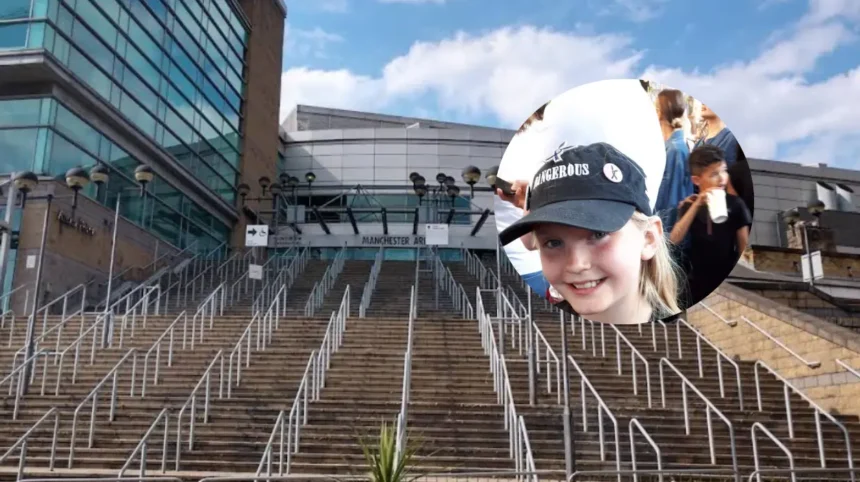
Key Points
- Manchester Arena survivor shares how trauma affects lives in the long run.
- According to the survivor, healing doesn’t stop when the danger stops.
- “The thing about traumatic stress is that you don’t just survive the day itself. You survive every day after that” – shows the lasting impact of psychological trauma.
- The effort emphasizes the stories of individuals suffering from trauma due to violence and other major life events.
- It is important to note that trauma may bring about difficulties for survivors throughout their lives.
- It may lead to increased awareness of trauma in the families and communities of survivors.
Manchester ( Manchester Mirror) September 19, 2026 — a Manchester Arena attack survivor is speaking publicly about the continuing impact of trauma, stressing that survival does not end on the day an attack takes place.
- Key Points
- What did the survivor say about life after the attack?
- Why is long-term trauma awareness important?
- What does the Manchester Arena survivor’s message mean for other survivors?
- How can families and communities support trauma survivors?
- What is known about the reported development?
- Background: What happened at Manchester Arena?
- Prediction: How could this affect trauma survivors?
In a statement reported by the Manchester Evening News, the survivor said:
“You don’t just survive the day itself. You survive every day after that.”
The words describe the long-term reality faced by people who live through traumatic events and continue to deal with their consequences after the immediate emergency has ended.
The survivor’s message places attention on the period after an attack, when public focus may move elsewhere but those affected can remain in recovery. It also seeks to raise awareness of trauma survivors whose experiences may not always be visible to the people around them.
The report centres on the survivor’s effort to draw attention to the lasting effects of the Manchester Arena attack and to the wider needs of people coping with trauma. Rather than presenting survival as a single moment, the statement portrays it as an ongoing process that can affect daily life.
What did the survivor say about life after the attack?
The central statement attributed to the survivor is: “You don’t just survive the day itself. You survive every day after that.”
The comment conveys the distinction between surviving an immediate incident and living with its aftermath. The first stage involves escaping physical danger and responding to an emergency. The later stage can involve memories, fear, emotional distress and the challenge of rebuilding a normal routine.
The Manchester Evening News report presents the statement in the context of trauma awareness. The survivor’s words are intended to communicate that people affected by violence may need continuing recognition and support, even when the event is no longer receiving widespread public attention.
The statement also reflects the different ways trauma can shape a person’s life. Some effects may be apparent to others, while others may remain private. A person can appear to be functioning normally while still dealing with the psychological consequences of what happened.
Why is long-term trauma awareness important?
Trauma awareness matters because the effects of a serious incident can continue after physical injuries have healed and formal emergency responses have ended. The survivor’s account draws attention to this gap between public understanding and private experience.
People affected by traumatic events may need support at different points in their recovery. Some may seek help immediately, while others may experience difficulties later. The timing and severity of those difficulties can vary from one person to another.
The survivor’s message also challenges the idea that recovery follows a fixed timetable. There is no single point at which every survivor is expected to feel unaffected by an event. For some people, reminders or anniversaries can bring the experience back into focus. Others may face difficulties in social situations, work, education or personal relationships.
By speaking openly, the survivor is helping to make those continuing experiences easier to discuss. Public accounts can encourage families, friends and colleagues to respond with greater patience and understanding rather than assuming that a survivor has simply “moved on”.
What does the Manchester Arena survivor’s message mean for other survivors?
The message may resonate with people who have experienced terrorism, violence, serious accidents, disasters or other traumatic events. It recognises that the consequences of an event can be ongoing and that survivors may need acknowledgement beyond the initial response.
The survivor’s statement does not suggest that every person experiences trauma in the same way. Instead, it highlights the importance of recognising individual recovery journeys. Some people may need professional support, while others may rely on family, friends, peer networks or community organisations.
The account may also reassure survivors that continuing difficulties do not necessarily mean they have failed to recover. The phrase “every day after that” presents recovery as a continuing process rather than a test that must be completed by a particular date.
For people who have been affected by trauma, the statement may help explain experiences that are difficult to express. It may also provide language for conversations with relatives, employers, teachers and healthcare professionals.
How can families and communities support trauma survivors?
Families and communities can support survivors by listening without pressuring them to describe experiences before they are ready. They can also avoid setting expectations about how quickly someone should return to ordinary life.
Practical support may include helping with everyday tasks, maintaining contact and respecting the survivor’s choices. Consistency can be important, particularly when a survivor is dealing with distress, exhaustion or uncertainty.
The report does not set out a detailed support programme, and it does not attribute specific recommendations to the survivor in the material available. Its principal focus is the survivor’s account and the importance of recognising trauma that continues after the event itself.
Employers, schools and public bodies may also have a role in ensuring that people affected by major incidents are not judged solely by their outward appearance or short-term performance. Understanding that recovery can take time may help organisations respond more appropriately.
What is known about the reported development?
The Manchester Evening News published the report about a Manchester Arena attack survivor calling for greater awareness of the experiences of trauma survivors. The report’s headline and accompanying quotation focus on the survivor’s description of life after the attack.
The available source material identifies the survivor’s central message but does not provide enough verified detail here to establish a full account of the person’s identity, the precise circumstances of the awareness effort or any additional statements beyond those reported.
Accordingly, the development is best understood as a public appeal for recognition of the continuing impact of trauma. The key point is not that the attack ended all consequences when the immediate incident was over, but that survivors may continue to face its effects in the years that follow.
Background: What happened at Manchester Arena?
The Manchester Arena attack was a terrorist bombing at the conclusion of an Ariana Grande concert in Manchester on May 22, 2017. The attack killed 22 people and injured many others, while concertgoers and families were also affected by the wider psychological impact of the incident.
The attack became one of the most significant acts of terrorism in modern British history and had a lasting effect on Manchester. Survivors and bereaved families have continued to speak about their experiences, remembrance and the need for support.
The development reported by the Manchester Evening News places particular emphasis on trauma after the attack. The survivor’s words underline that the consequences of terrorism extend beyond the immediate loss of life and physical harm, affecting people’s emotional wellbeing and everyday lives over a much longer period.
Prediction: How could this affect trauma survivors?
The Manchester Arena attack survivor’s message is likely to increase public discussion about long-term trauma and the support required after major incidents. It may encourage survivors to speak about continuing difficulties and prompt families, employers and institutions to take those experiences more seriously.
The statement could also strengthen awareness that trauma support should not be limited to the immediate aftermath of an attack. If the message receives wider attention, organisations may face greater pressure to provide accessible, long-term and flexible assistance.
For trauma survivors, the most direct effect may be greater recognition that recovery is individual and can continue for years. The public response will depend on whether awareness is matched by practical support, including appropriate mental-health services and sustained community assistance.
The survivor’s account cannot predict how every affected person will respond, but it clearly communicates one wider point: surviving an attack is not necessarily a single event. For many people, it can remain an ongoing experience that requires understanding long after the headlines have changed.