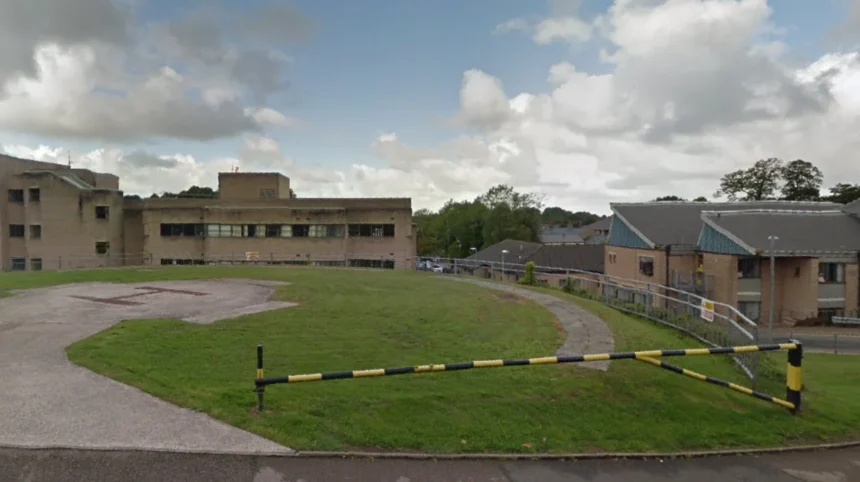
Travelling from Lancaster to Manchester Airport covers approximately 60.8 road miles via the M6 motorway and takes roughly 1 hour and 10 minutes to 1 hour and 30 minutes depending entirely on the chosen transport method, traffic conditions, and rail schedule.
- How Do You Travel by Train from Lancaster to Manchester Airport?
- What Is the Driving Route and Car Parking Options from Lancaster to Manchester Airport?
- What Are the Alternative Transport Options from Lancaster to Manchester Airport?
- Frequently Asked Questions
- What is the cheapest way to travel from Lancaster to Manchester Airport?
- How long does the direct train take from Lancaster to Manchester Airport?
- Is there a direct train from Lancaster to Manchester Airport late at night?
- How much does a taxi cost from Lancaster to Manchester Airport?
- What motorway route do you drive from Lancaster to Manchester Airport?
The geographical corridor between Lancaster in Lancashire and Manchester Airport in Greater Manchester forms a primary transport arterial in North West England. Passengers moving between these two locations typically consist of international travellers, holidaymakers, and business commuters requiring direct connectivity to the global flight hub. Manchester Airport operates as the global gateway for northern England, featuring three passenger terminals and a dedicated railway station integrated directly into the airport complex. Transport options connecting Lancaster Station to the airport encompass direct rail services, private automotive transport via major motorways, regional express coach services, and specialized airport taxi transfers. Choosing the optimal journey method requires evaluating key variables such as ticket costs, travel time, luggage volume, time of departure, and potential network disruptions across the regional infrastructure.
Historically, the rail link connecting North West England to Manchester Airport underwent significant modernization during the late 20th and early 21st centuries. The construction of the Manchester Airport rail link in 1993 integrated the airport directly into the National Rail network, enabling uninterrupted journeys from the West Coast Main Line. Lancaster Railway Station, a historical transport node established in 1846, serves as the main origin point for passengers heading south toward Greater Manchester. Over the decades, infrastructure investments have streamlined the route, replacing multi-leg journeys with direct express trains that bypass urban bottlenecks. The expansion of the M6 motorway corridor similarly enhanced road access, establishing a high-capacity highway network that supports regional logistics and private passenger transfers today. Modern regional transport frameworks prioritize high-frequency rail services to manage carbon emissions while providing reliable access for thousands of daily passengers.
Key components of the Lancaster to Manchester Airport transport network involve distinct rail, road, and terminal infrastructure designed for seamless travel. The primary rail infrastructure includes Lancaster Station, Preston Station, Manchester Oxford Road, Manchester Piccadilly, and Manchester Airport Station. Rail service operations on this line are primarily managed by TransPennine Express and Northern Trains. The primary road infrastructure comprises the M6 motorway southbound, the M61 motorway interchange, the M60 Manchester Outer Ring Road, and the M56 motorway which leads directly to the terminal access roads. Terminal infrastructure at the destination end features integrated baggage handling access, airport hotel walkways, and direct platform-to-terminal pedestrian skylinks. Understanding how these structural components interface enables travellers to make informed decisions regarding transfer times, station navigation, and overall travel scheduling.
The process of travelling from Lancaster to Manchester Airport requires deliberate pre-trip planning and execution based on selected transport modes. Rail passengers purchase tickets through digital ticketing platforms, board at Lancaster Station, transit through Lancashire and Greater Manchester, and disembark directly inside the airport terminal hub. Drivers navigate south on the M6 motorway, transition onto the M61 near Preston, join the M60 ring road, and follow the M56 directly to terminal parking facilities. Coach passengers utilize regional bus networks, transferring at central hubs like Manchester Shudehill or Manchester Airport Interchange. Private taxi services offer door-to-door transit, collecting passengers from residential or commercial locations in Lancaster and delivering them to terminal drop-off zones. Each process involves specific timelines, ticketing rules, and operational considerations that directly impact overall journey efficiency.
Real-world scenarios illustrate how different traveller demographics navigate the journey from Lancaster to Manchester Airport based on priority requirements. A business traveler catching an early morning international flight might opt for the 05:13 direct TransPennine Express rail service to arrive at the terminal prior to check-in deadlines. A family travelling with heavy luggage may choose a private pre-booked taxi transfer to avoid navigating train platforms with multiple suitcases. Budget-conscious students often select off-peak rail fares booked weeks in advance or regional coach services to minimize travel expenditures. Furthermore, drivers utilizing long-stay airport parking reserve spaces months ahead to secure lower daily rates while retaining personal vehicle flexibility. These practical examples highlight how individual constraints shape the selection of transport solutions along this specific transit route.
Data and transport statistics reflect the operational density and reliance on the Lancaster to Manchester Airport connection across all travel sectors. The rail journey covers a exact distance of 52 track miles, with express train services completing the route in as little as 1 hour and 10 minutes. Rail operators run dozens of daily train services between Lancaster and Manchester Airport, providing consistent departures from early morning until late evening. Highway driving routes span approximately 60.8 miles, with off-peak driving times averaging 63 minutes. Advance rail ticket pricing can offer savings up to 50 percent compared to anytime peak fares purchased on the day of travel. Statistical data confirms that direct train services represent the most popular public transport method, eliminating the need for intermediate platform changes at Manchester Piccadilly.
The implications of robust transport connectivity between Lancaster and Manchester Airport extend across regional economic development, tourism, and sustainability goals. Efficient transit routes ensure that northern businesses maintain seamless access to global markets through Manchester Airport international flight networks. Tourism in Lancashire and the nearby Lake District relies heavily on reliable airport transport links to attract international visitors entering through Greater Manchester. Future infrastructure projects, including signaling upgrades and rolling stock enhancements, aim to improve capacity and reduce service disruptions on northern rail lines. Sustainable transport initiatives continue to encourage rail travel over single-occupancy vehicle journeys to reduce carbon emissions along the M6 motorway corridor. Maintaining high-quality transit options guarantees long-term accessibility, economic integration, and environmental resilience for North West England.
Examples of transit modalities include direct express trains, connecting regional trains, private private cars, motor coaches, and private hire taxis.
How Do You Travel by Train from Lancaster to Manchester Airport?
Taking the train from Lancaster to Manchester Airport offers a direct, efficient journey lasting between 1 hour 10 minutes and 1 hour 25 minutes, with services running frequently throughout the day directly into the airport terminal station.
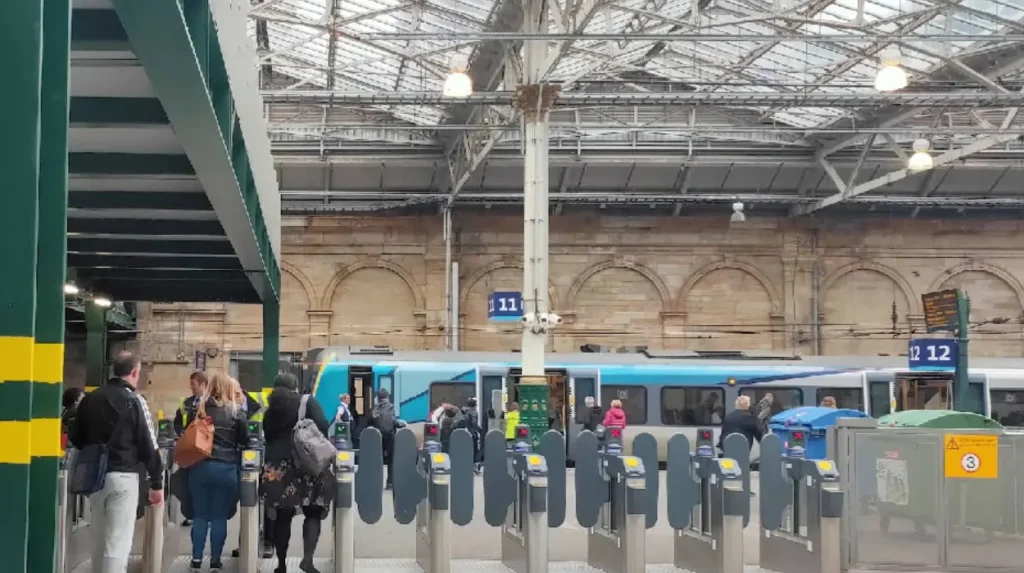
The railway network provides the most direct public transit connection between Lancaster Station and Manchester Airport. Trains departing from Lancaster travel south along the West Coast Main Line before branching toward Greater Manchester. TransPennine Express operates the majority of direct, high-speed regional services on this route, utilizing modern Class 802 and Class 397 rolling stock equipped with luggage storage, Wi-Fi, and power sockets. Northern Trains also provides supplementary regional services that may include additional stops or require a single platform change at Manchester Piccadilly or Preston. The destination, Manchester Airport Railway Station, is located centrally within the airport complex, connected to Terminals 1, 2, and 3 via indoor moving walkways known as Skylinks.
Rail transit between these two locations has evolved significantly over the past three decades to accommodate rising passenger volumes. Prior to the construction of dedicated airport rail spurs, passengers from Lancaster were required to take a train to Manchester Piccadilly and transfer to regional bus or shuttle services. The introduction of direct TransPennine Express routes streamlined regional access, allowing passengers from Lancashire, Cumbria, and Scotland to reach the airport without changing trains. Over time, digital ticketing, automated barrier gates, and real-time transit tracking applications have simplified the passenger experience. Track electrification and modern signaling systems have further stabilized timetable reliability, making rail the preferred option for environmentally conscious travellers.
The structural framework of the train route includes several critical stations, tracks, and service classes that determine overall journey characteristics. Lancaster Railway Station features primary departure platforms served by broad pedestrian subways and lift facilities. Key intermediate stations along the mainline include Preston, Wigan North Western, Bolton, and Manchester Oxford Road, depending on the specific service pattern. Passengers can choose between Standard Class and First Class accommodations on TransPennine Express trains, with First Class offering wider seating and complimentary refreshments. The airport railway station itself operates a unified concourse featuring ticket machines, customer service desks, step-free access, and immediate connection to airport terminal check-in zones.
Navigating the train journey involves a systematic sequence from ticket acquisition to terminal arrival. Travellers purchase tickets digitally via rail operator apps or in person at Lancaster Station ticket halls. Passengers monitor real-time departure boards to locate the correct platform, ensuring the train destination displays Manchester Airport. Upon boarding, luggage is stored in designated overhead racks or end-of-carriage storage bays before taking assigned or unreserved seats. The train proceeds south through Lancashire, making scheduled stops before entering the Greater Manchester rail network. Upon disembarking at Manchester Airport Station, passengers follow clear directional signage along the elevated Skylink walkways to reach their specific departure terminal.
Consider a practical example of a commuter travelling during peak morning hours on a weekday. The traveler books an Advance Advance Single ticket on the 06:16 TransPennine Express service from Lancaster. Boarding punctually, the traveler utilizes the onboard electrical sockets to work while the train travels via Preston and Bolton. The service arrives at Manchester Airport Station at approximately 07:27, allowing the passenger to walk directly to Terminal 2 security without stepping outdoors. In contrast, a traveler missing a direct train might take a Northern service to Manchester Piccadilly and cross platforms to catch an airport shuttle train, adding 15 minutes to total transit time.
Statistical parameters surrounding the rail route underscore its operational frequency and cost dynamics. Direct train journeys cover 52 track miles with average durations of 1 hour and 15 minutes. The earliest weekday train departs Lancaster around 05:13, while the final service of the night leaves at 22:46. Rail departure frequency averages approximately one train every 30 to 60 minutes throughout peak operational hours. Advance rail fares start from as low as £5.30 to £14.30 when booked weeks ahead, whereas standard off-peak or open return tickets purchased on the day range between £22.00 and £40.00. Railcard discounts, such as 16-25 or Senior Railcards, save passengers up to 33 percent on standard ticket categories.
The long-term implications of maintaining high-density rail connectivity between Lancaster and Manchester Airport touch on transport decarbonization and regional infrastructure management. Prioritizing train transit reduces vehicular congestion on the M6 and M60 motorways, directly cutting carbon emissions across northern transit corridors. High rail reliability encourages international travel operators to view North West England as a unified, accessible catchment area. Ongoing rail electrification and line capacity improvements promise greater timetable resilience against weather and operational delays. As Manchester Airport continues its terminal expansion programs, integrated rail infrastructure remains essential for managing future passenger growth sustainably.
Examples of train ticket types include Advance Single, Off-Peak Return, Anytime Return, First Class Advance, and Season Tickets.
What Is the Driving Route and Car Parking Options from Lancaster to Manchester Airport?
Driving from Lancaster to Manchester Airport covers 60.8 miles via the M6 and M61 motorways, taking approximately 1 hour and 3 minutes under clear conditions, with comprehensive short-stay and long-stay parking available at the airport.
Automotive travel offers direct, personal transport flexibility for passengers travelling from Lancaster to Manchester Airport. The driving route relies almost entirely on England’s high-capacity motorway network, navigating south from Lancashire into Greater Manchester. Driving provides door-to-door convenience, eliminating the need to transport luggage through rail stations or adhere to strict train timetables. However, driving requires navigating variable traffic congestion, paying vehicle fuel costs, and securing appropriate airport parking or paying terminal drop-off fees. Manchester Airport provides a range of official parking facilities situated around Terminals 1, 2, and 3, alongside third-party park-and-ride options located just outside the airport perimeter.
The highway infrastructure connecting Lancaster to Greater Manchester developed significantly during the mid-20th century as part of the UK’s strategic road network. The Preston By-Pass, opened in 1958 as Britain’s first motorway, formed the foundational segment of what is now the M6 motorway. Subsequent expansions connected Lancaster directly to this regional highway backbone, enabling rapid vehicular movement across the county. The opening of the M61 motorway in 1970 created an efficient link between Preston and Manchester, bypassing heavily congested urban roads in West Lancashire. In recent years, smart motorway upgrades and automated barrierless drop-off charges at Manchester Airport have modernized vehicular traffic management to handle millions of annual airport vehicles.
The structure of the driving route consists of key highway interchanges, navigation points, and parking categories. The journey begins in Lancaster, connecting to Junction 33 or Junction 34 of the M6 motorway. Vehicles travel south on the M6 to Junction 30, transitioning onto the M61 motorway toward Manchester. At the end of the M61, drivers merge onto the M60 Manchester Outer Ring Road heading south/east toward Manchester Airport. From the M60, drivers take Junction 4 onto the M56 motorway, following dedicated exit ramps at Junction 5 directly into the airport terminal roads. Parking categories at the destination include Multi-Storey Short Stay, Mid-Stay, Long-Stay, Meet and Greet valet services, and JetParks budget shuttle lots.
Executing the drive from Lancaster to Manchester Airport requires careful route monitoring and facility selection. Drivers begin by checking real-time traffic applications for accidents or lane closures along the M6 and M60 corridors. Vehicles enter the M6 southbound from Lancaster, maintaining standard highway speeds through Lancashire. Upon approaching Preston, the driver moves into designated lanes to transition smoothly onto the M61 southbound. Drivers remain on the M61 until merging with the M60 ring road, staying vigilant for heavy traffic around Trafford and Stockport interchanges. Following signage for the M56 Airport, drivers exit directly into their pre-booked parking facility or follow signs to the designated terminal drop-off zones.
Consider a practical driving scenario involving a family traveling with substantial luggage for a two-week overseas holiday. The driver departs Lancaster at 09:00, avoiding the worst of the early morning rush-hour traffic on the M6. Navigating through the M61 and M60 without major incidents, the vehicle reaches Manchester Airport’s JetParks 1 facility at 10:10. The family parks, boards a complimentary 10-minute shuttle bus directly to Terminal 1, and proceeds to flight check-in. Conversely, a driver failing to pre-book parking may be forced to pay premium roll-up rates at a terminal multi-storey car park, significantly increasing total trip expenditure.
Driving statistics and parking metrics highlight the financial and logistical parameters of automotive travel. Total driving distance measures 60.8 miles, with standard off-peak travel times ranging from 60 to 75 minutes. During peak morning commute hours (07:00 to 09:00), traffic bottlenecks near M60 junctions can increase total driving time to 90 minutes or more. Official terminal drop-off fees at Manchester Airport carry a charge for brief visits directly outside the terminal entrances, whereas free drop-off is provided at the designated JetParks area with a shuttle link. Pre-booked long-stay parking rates generally range between £40.00 and £90.00 per week depending on season and booking lead time, while roll-up daily parking rates are substantially higher.
The broader implications of private vehicle transport to Manchester Airport involve environmental management and local infrastructure capacity. High volumes of personal vehicles contribute to highway congestion along the M60 and M56 corridors, prompting highway authorities to invest in dynamic lane management and smart signaling. Environmental regulations increasingly encourage zero-emission electric vehicles, leading to the rapid installation of high-speed EV charging plazas at airport parking hubs. Airport master plans balance car parking revenues against regional targets for public transit usage. Understanding driving and parking dynamics ensures that motorists plan effectively while managing both financial costs and personal travel schedules.
Examples of parking choices include Multi-Storey Terminal Parking, Meet and Greet Valet, JetParks Budget Parking, Off-Site Private Park and Ride, and Free Drop-Off Shuttle Zones.
What Are the Alternative Transport Options from Lancaster to Manchester Airport?
Alternative transport options from Lancaster to Manchester Airport include express motor coach services, private airport transfer taxis, and rideshare services, providing flexible alternatives to train travel and personal driving.
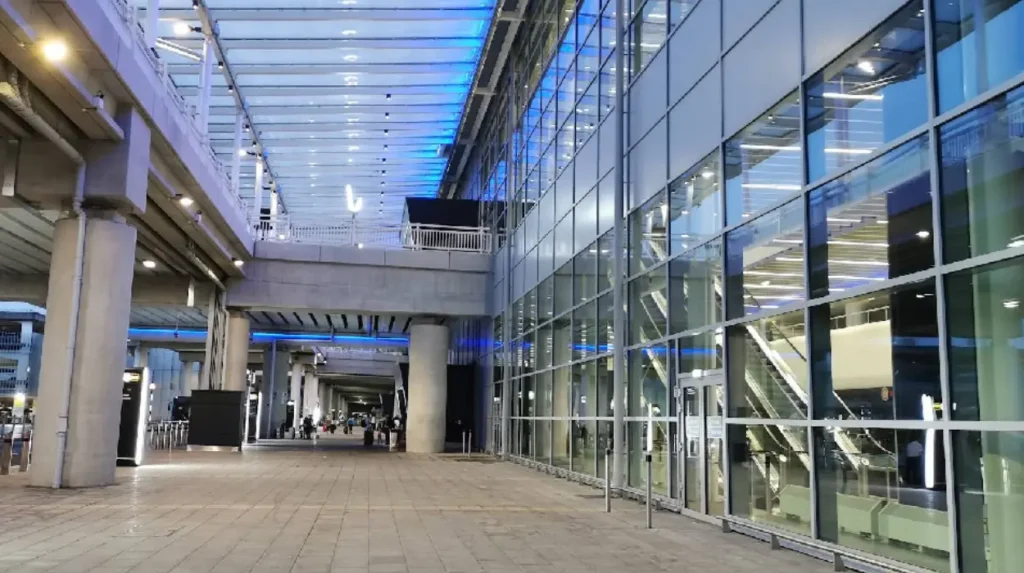
Beyond standard passenger rail and personal driving, alternative transport methods serve essential roles for travellers moving between Lancaster and Manchester Airport. Scheduled express coaches, private minibus hires, chauffeured airport transfers, and app-based rideshare platforms offer distinct combinations of affordability, convenience, and service coverage. Express coaches provide the most economical travel option, catering to price-sensitive passengers who do not mind longer transit times. Private taxi transfers represent the highest level of door-to-door convenience, picking up passengers directly from their homes at any hour of the day or night. Evaluating these alternatives allows travellers to select options aligned with their budget constraints, flight schedules, and mobility needs.
The development of coach and private hire transit along the North West corridor expanded alongside the growth of commercial aviation at Manchester Airport. National Express and other intercity coach operators established routes connecting Cumbrian and Lancashire towns to major urban terminals throughout the late 20th century. Private taxi and executive transfer companies simultaneously expanded their operations to meet rising demand for 24-hour reliable airport transfers, particularly when late-night flight arrivals fell outside standard train operating schedules. The recent emergence of digital rideshare applications provided another layer of booking flexibility, allowing real-time vehicle dispatch across Lancashire.
The structural framework of alternative transport encompasses vehicle fleets, booking platforms, pick-up points, and service routes. National Express operates scheduled coach routes utilizing long-distance buses equipped with air conditioning, power sockets, and under-floor luggage holds. Coach pick-ups in Lancaster occur primarily at Lancaster Bus Station or university campus hubs, with services traveling south via regional highways. Private hire transfer services utilize vehicles ranging from standard sedans to eight-passenger minibuses, managed through advance booking dispatch systems. Rideshare platforms operate via mobile software, matching passengers with nearby licensed drivers for direct highway trips to the airport grounds.
Utilizing alternative transport requires specific steps depending on whether a traveler selects a scheduled coach or a private transfer. For express coaches, passengers book seat reservations online, arrive at Lancaster Bus Station ahead of departure, load heavy bags into the luggage bay, and ride directly to Manchester Airport Central Station. For private taxis, the customer reserves a vehicle for a specified pick-up time, specifies flight details for tracking purposes, meets the driver at their residential door, and travels uninterrupted to the terminal drop-off area. For rideshares, the user requests a ride via a smartphone app, confirms the fare estimate, meets the driver at a designated location, and completes the journey via highway routes.
Consider an operational example of a small group returning from an international flight landing at 01:30 AM at Manchester Airport. Because scheduled train services do not operate continuously through the middle of the night, rail travel is unavailable. The group books a private 8-seater minibus transfer prior to their trip. Upon landing, the driver tracks the flight status, meets the passengers in the arrivals hall, assists with heavy bags, and drives them directly back to their addresses in Lancaster via an empty M6 motorway. Alternatively, a solo traveler seeking the lowest cost books a National Express coach ticket for an afternoon departure, paying a fraction of taxi rates while accepting a longer journey duration.
Comparative statistics highlight the price, duration, and operational trade-offs of these alternative travel modes. Scheduled coach journeys from Lancaster to Manchester Airport typically take between 1 hour 50 minutes and 2 hours 15 minutes, depending on intermediate stops. National Express coach fares range from £12.00 to £30.00 for single journeys, making them the cheapest overall transit method. Private pre-booked airport taxis cost between £90.00 and £140.00 for a one-way transfer, depending on vehicle size and time of day. On-demand rideshare options generally range from £80.00 to £130.00, though dynamic surge pricing during peak hours or bad weather can increase these figures substantially.
The implications of alternative transport modes relate to transit redundancy, accessibility, and night-time economy integration. Express coaches and private taxis provide critical transport resilience during periods of rail industrial action, severe weather disruptions, or scheduled engineering works on the West Coast Main Line. Private transfers ensure full accessibility for passengers with complex mobility needs or heavy baggage who find public transit platforms challenging. Expanding round-the-clock transport options ensures that Manchester Airport remains fully accessible to Lancashire residents regardless of airline departure schedules. Maintaining a diverse mix of transport choices supports seamless, flexible regional travel.
Examples of alternative transport include National Express Coaches, Private Airport Taxis, Executive Chauffeur Services, App Rideshares, and Group Minibus Charters.
Frequently Asked Questions
What is the cheapest way to travel from Lancaster to Manchester Airport?
The cheapest way to travel from Lancaster to Manchester Airport is by advance-booked train or express coach, with advance single train tickets starting from around £5.30 to £12.00. Booking several weeks ahead of your travel date secures the lowest fares compared to purchasing on the day.
How long does the direct train take from Lancaster to Manchester Airport?
A direct train from Lancaster Station to Manchester Airport Station takes approximately 1 hour and 10 minutes to 1 hour and 20 minutes. Journey times vary slightly depending on whether you board a TransPennine Express service or a regional Northern service.
Is there a direct train from Lancaster to Manchester Airport late at night?
Direct train services run from early morning until late evening, with the last direct train typically departing Lancaster around 22:46. For flights landing after midnight, passengers may need to wait for the earliest morning train at roughly 05:13 or book a private taxi transfer.
How much does a taxi cost from Lancaster to Manchester Airport?
A pre-booked private taxi transfer from Lancaster to Manchester Airport generally costs between £90 and £140 for a standard sedan. Prices vary based on the time of travel, vehicle size, and local taxi firm rates.
What motorway route do you drive from Lancaster to Manchester Airport?
The standard driving route from Lancaster to Manchester Airport follows the M6 motorway southbound, transitioning onto the M61 at Junction 30, merging onto the M60 ring road, and taking the M56 directly to Junction 5 for the airport. The 60.8-mile drive takes about 1 hour and 5 minutes in clear traffic.