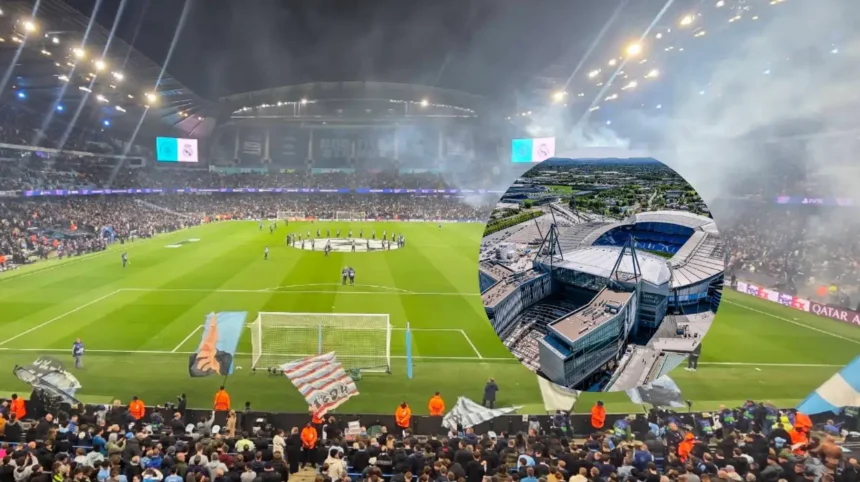
Key Points
- On 3rd September 2026, Manchester City Council began lease renegotiations of Etihad Stadium, which were prompted by Etihad Campus expansion project including Medlock Square entertainment project worth £300m.
- North Stand expansion, undertaken earlier in the year had increased stadium capacity to over 60,000 seats, and other projects include 401-room Radisson Blu hotel, Sky Walk zip-line ride, and a 600-seat venue that was approved in June 2026.
- Lease variation documents state that the move will help in realizing the Eastlands regeneration plan and building “Sport City” to be a world-class sport and entertainment hub, stating that failure to come to agreement would be a blow to the Council’s reputation.
- Current annual base rent payable by the club ranges between £3m and £4m, and the process is expected to increase this amount along with capturing income-linked rents.
- From the day of its takeover in 2008 via Abu Dhabi United Group, the club has been used to showcase how much the UAE is investing in the UK, along with billions spent in east Manchester regeneration projects and social sports facilities.
- Other developments that are taking place in Abu Dhabi include Manchester City-branded residences in Yas Canal and training academy with ‘Match Day Terrace’.
Manchester (Manchester Mirror) September 04, 2026 – A formal review of Manchester City Football Club’s lease at the Etihad Stadium has begun as the Abu Dhabi-backed owner continues to transform east Manchester into a year-round sport and entertainment district, marking another milestone in a two-decade urban regeneration project anchored by the club.
- Key Points
- What is the latest on the Etihad Stadium lease review?
- What is being built at the Etihad Campus in 2026?
- How much does Manchester City pay the council for the Etihad?
- How has Abu Dhabi’s investment reshaped east Manchester?
- What parallel developments are under way in Abu Dhabi?
- Background of the development
- Prediction: how this development can affect fans, residents and investors
What is the latest on the Etihad Stadium lease review?
Manchester City Council’s decision to enter into a variation of leases with Manchester City Football Club took effect on 3 September 2026, council notice papers show, with the stated aim of enabling the north stand expansion and supporting shared objectives under the Eastlands regeneration framework. As reported by the Local Democracy Reporting Service (LDRS), the lease review was triggered by changes taking place around the Etihad Campus, with council documents made public but specific financial details withheld from view.
Council papers state that “a failure to agree to the variation would impact upon the football club’s ability to continue to grow as a global brand” and that such a failure “would likely cause significant reputational damage to the council in its capacity as custodians of the stadium”. The authority describes the relationship with the club as having evolved into a “professional business-like” and formal “working” basis, different from the arrangement when City first moved to the ground from Maine Road, insiders told the LDRS.
What is being built at the Etihad Campus in 2026?
The club has been constructing Medlock Square, a £300m entertainment zone that includes a 401-room Radisson Blu hotel and a zip-line attraction known as the Sky Walk, alongside new public areas and access routes. Planning permission for a new 600-person capacity entertainment venue was granted by the council in June, adding to the mix of non-matchday attractions intended to make the campus a destination throughout the year.
Aerial footage filmed on 25 August 2026 showed a new crane on site, stored components for the Sky Walk, and ongoing landscaping around Medlock Square and the Joe Merc area, with construction also advancing at Cobra Court. The Radisson Blu hotel is scheduled to open later in 2026, with one source indicating an opening date of Friday 4 September, while public access routes around parts of the development have reopened following the north stand expansion.
How much does Manchester City pay the council for the Etihad?
The yearly base rate fee paid by the club to Manchester City Council is currently said to be between £3m and £4m, according to council-related reporting. The lease review is expected to result in an uplift to this base fee, alongside additional fees linked to income generated from the campus, as the authority seeks to capture more value from the club’s expanded operations.
Council notice papers frame the lease variation as supporting the development of “Sport City as a world class sport and entertainment district”, aligning with the Eastlands regeneration framework that has guided investment around the stadium for nearly two decades. More details on the financial changes are expected to be set out in future public reports from the town hall, while Manchester City declined to comment when approached.
How has Abu Dhabi’s investment reshaped east Manchester?
Since Abu Dhabi United Group, owned by Sheikh Mansour bin Zayed Al Nahyan, acquired Manchester City in 2008, the UAE has poured billions of dollars into rejuvenating a previously deprived part of east Manchester through joint ventures in social housing, sports facilities and wider infrastructure. Bloomberg has summarised the Emirati footprint as extending beyond football to include community infrastructure and property development around the Etihad Stadium during a period of austerity in the UK.
The club’s move from Maine Road to the City of Manchester Stadium, now the Etihad, is widely viewed as having helped put the club on the radar of its current owners, with the surrounding land transformed as City grew into a global football powerhouse. Council insiders have said the relationship between the town hall and the club “has changed” over time, reflecting the scale of investment and the evolving role of the campus within the city’s regeneration plans.
What parallel developments are under way in Abu Dhabi?
Manchester City has also become a flagship UAE investment in Britain, with reciprocal branded projects advancing in Abu Dhabi, including Manchester City residences being developed in the emirate and a training academy featuring a “Match Day Terrace” for fans to watch games on a big screen. A dedicated Manchester City retail store is located on Yas Island, while a new partnership with UAE-based Ohana Development will deliver Manchester City-branded residences along Abu Dhabi’s Yas Canal waterfront.
Ferran Sorriano, chief executive of City Football Group, described the Ohana project as a “landmark” that brings the club into a premium residential environment in a “distinctively club-branded way”, underlining the strategy of leveraging the Manchester City brand across both the UK and the Gulf. Ranked as the most valuable football club brand in the Premier League, Manchester City is simultaneously developing a year-round entertainment and leisure destination at the Etihad Campus to complement its on-pitch success.
Background of the development
Sheikh Mansour’s Abu Dhabi United Group purchased Manchester City in September 2008 for a reported £210m, transforming a mid-table Premier League side into one of the most successful English clubs of the past decade. The takeover was accompanied by wider UAE investment in east Manchester, including social housing and sports infrastructure, as part of a long-term urban regeneration strategy linked to the club’s presence at the Etihad.
Over the following years, the campus expanded to include the City Football Academy, Co-op Arena and other facilities, with the north stand expansion completed in early 2026 to lift capacity beyond 60,000. The latest phase, centred on Medlock Square, adds hospitality, leisure and entertainment uses intended to stabilise revenue streams and deepen the club’s role as an anchor for the Eastlands area.
Prediction: how this development can affect fans, residents and investors
For fans, the continued expansion of the Etihad Campus is likely to improve matchday and non-matchday experiences through new attractions such as the Sky Walk, hotel-linked packages and additional entertainment venues, albeit with potential pressure on ticket pricing and access as the club’s commercial model evolves. For east Manchester residents, the regeneration anchored by Abu Dhabi investment has already delivered social housing and upgraded sports facilities, and further lease-related income for the council could fund additional community projects if directed through the Eastlands framework.
For investors and the wider UK–UAE relationship, Manchester City remains a high-visibility asset that ties together sport, property and place-making, meaning that any protracted disputes over finances or governance could have knock-on effects beyond football. If the lease review leads to a higher, more transparent revenue share for the council while allowing the campus to keep expanding, the development could reinforce the model of using a top-flight club as a catalyst for long-term urban renewal in other UK cities.