Key Points
- Heaton Park Hebrew Congregation worshipper Yoni Finlay, wounded in the assault that took place on Yom Kippur, revealed that his college-aged son has been threatened with death directly.
- The victim said that there is no improvement regarding the issue of safety because Jews are increasingly forced to hide their religion in everyday life.
- Security in the local Jewish institutions has tightened; addresses of communal gatherings are not included in public notifications in order to avoid any form of hostility.
- These thoughts were expressed prior to a memorial service that would honor the victims Adrian Daulby aged 53 and Melvin Cravitz aged 66.
Manchester (Manchester Mirror) August 31, 2026 — Manchester synagogue attack survivor Yoni Finlay has warned that the Jewish community does not feel safer almost one year on from the terror incident, revealing that his son has faced death threats and congregants are increasingly forced to conceal their identity.
- Key Points
- What Did Yoni Finlay Reveal About Threats to His Family?
- Why Does the Jewish Community Still Feel Unsafe in Greater Manchester?
- How Did the 2025 Incident at Heaton Park Synagogue Unfold?
- What Is the Background of the Manchester Synagogue Attack Development?
- How Will These Developments Affect the Jewish Community and UK Security Policy?
What Did Yoni Finlay Reveal About Threats to His Family?
Speaking ahead of a memorial service organised for survivors and victims, Mr Finlay addressed the persistent hostility targeting his household. As reported by the Manchester Evening News and the BBC Radio 4 Today Programme, Finlay stated that his son, who currently attends college, has been the target of explicit death threats in the aftermath of the assault.
He explained that despite continuous support from relatives, neighbours, and community networks throughout his physical rehabilitation, psychological tension remains severe. The ongoing intimidation demonstrates that vulnerability extends well beyond the physical parameters of the place of worship.
Why Does the Jewish Community Still Feel Unsafe in Greater Manchester?
Evaluating the general sentiment among northern Jewish communities nearly twelve months after the incident, Mr Finlay highlighted the visible expansion of protective barriers. As reported by BBC News, Finlay stated:
“I don’t think things feel safer, I think we certainly live behind ever increasing gates, more security than we’ve ever had.”
While acknowledging that authorities and security bodies have escalated protective steps, he pointed out that normal communal visibility has eroded. Organisers of community functions regularly conceal event locations from promotional notices to avoid targeted harassment. Consequently, many individuals have felt compelled to hide external symbols of their heritage while navigating public spaces.
How Did the 2025 Incident at Heaton Park Synagogue Unfold?
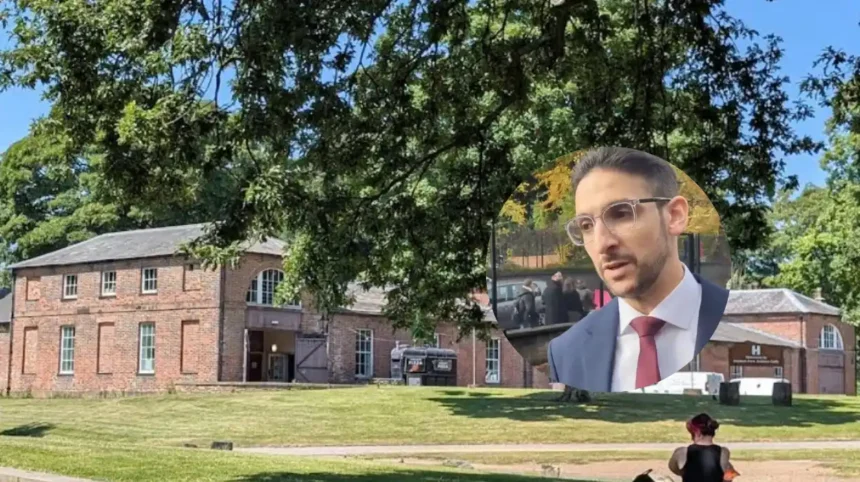
The critical incident occurred on the morning of October 2, 2025, during Yom Kippur, the holiest day of the Jewish calendar. An armed attacker, identified by Greater uk/police/">Manchester Police as 35-year-old Jihad Al-Shamie, targeted the Heaton Park Hebrew Congregation building on Middleton Road in Crumpsall.
As reported by The Guardian and ITV News Granada, Mr Finlay, who was scheduled to lead dawn prayers, rushed with fellow worshippers to physically barricade the primary entrance doors against the assailant. During the rapid tactical response, armed police discharged rounds to neutralise the threat.
One bullet struck through the doorway, fatally injuring worshipper Adrian Daulby, 53, while also penetrating Mr Finlay. Congregant Melvin Cravitz, 66, died from knife wounds inflicted by the attacker. Finlay survived after undergoing seven hours of emergency surgical treatment to repair damage to his stomach, lungs, and diaphragm.
What Is the Background of the Manchester Synagogue Attack Development?
The terror assault at Crumpsall occurred amid elevated communal tensions and rising reports of antisemitic incidents across the United Kingdom following the outbreak of Middle Eastern conflict in late 2023.
Pre-inquest review hearings conducted earlier in 2026 confirmed that Greater Manchester Police armed units engaged the attacker as he attempted to breach the building. Official reviews and ongoing coroner proceedings have focused on operational response timelines, building access security, and the tragic circumstances involving police firearms discharge that resulted in Mr Daulby’s death and Mr Finlay’s severe injuries.
Throughout 2026, charities such as the Community Security Trust (CST) and regional police forces have coordinated increased patrols around schools, community centres, and synagogues in Salford, Bury, and North Manchester.
How Will These Developments Affect the Jewish Community and UK Security Policy?
The disclosure of direct death threats against survivors’ relatives indicates that threat dynamics have widened from institutional targets to private individuals and students.
For Jewish communities in Greater Manchester and across the broader UK, these continuing pressures are expected to accelerate reliance on discreet scheduling, private security contracting, and defensive architectural measures around gathering spaces. Educational institutions, including further education colleges and universities, face growing scrutiny regarding protective policies for visibly identified minority students experiencing harassment.
For policing bodies and counter-terrorism command, the anniversary of the attack and subsequent survivor accounts will maintain institutional pressure to balance armed response tactics with robust intelligence monitoring of lone-actor threats, public safety communication, and grassroots protection against domestic hate crimes.