The direct flight time from Manchester Airport to Gran Canaria Airport ranges between four hours and twenty minutes to four hours and forty-five minutes. The total duration depends on specific flight paths, wind speeds, and real-time air traffic control routings across Western Europe.
- How Many Miles Is the Flight Path Between Manchester and Gran Canaria?
- Which Airlines Operate Direct Flights from Manchester to Gran Canaria?
- What Factors Affect the Total Duration of the Flight?
- How Does the Return Flight Time Compare to the Outbound Journey?
- What Airport Operations and Layovers Impact the Journey?
- What Is the Time Zone Difference Between Manchester and Gran Canaria?
- Frequently Asked Questions
- How early should I arrive at Manchester Airport for a Gran Canaria flight?
- Do I need a passport to fly from Manchester to Gran Canaria?
- Which terminal at Manchester Airport operates flights to Gran Canaria?
- What is the best time of year to fly to Gran Canaria for warm weather?
- Is food included on flights from Manchester to Gran Canaria?
Flight duration represents the elapsed time from aircraft gate pushback at Manchester Airport to final arrival at the gate in Gran Canaria. Airlines calculate this travel block time by factoring in ground taxiing, takeoff protocols, cruising speeds, atmospheric jet streams, and landing procedures. Non-stop commercial flights cover the air route between these two destinations efficiently without scheduled en-route refueling stops or layovers. Seasonal wind patterns introduce minor speed variance between northbound and southbound journeys. Tailwinds traveling north often shorten return flight times slightly, while headwinds heading south increase flight time marginally.
How Many Miles Is the Flight Path Between Manchester and Gran Canaria?
The direct flight distance between Manchester Airport and Gran Canaria Airport measures approximately 1,878 miles, which equals 3,022 kilometers. Commercial aircraft fly over the United Kingdom, the English Channel, Western France, Northern Spain, Portugal, and the Atlantic Ocean.
Air travel routes follow strict oceanic and continental airways established by international aviation authorities to maintain organized sky corridors. The geodesic flight trajectory starts at Manchester Airport at coordinates fifty-three degrees north and travels southward toward the Canary Archipelago near the western coast of North Africa. Commercial airliners maintain optimal cruise altitudes between thirty thousand and forty thousand feet along this defined geographic trajectory. Flying at these high altitudes reduces atmospheric drag on the aircraft structure, maximizes engine efficiency, and optimizes overall fuel consumption. Flight route vectors adjust dynamically based on regional weather phenomena, military airspace restrictions, and high-altitude winds across the Eastern Atlantic ocean corridor.
Which Airlines Operate Direct Flights from Manchester to Gran Canaria?

Major air carriers including Jet2, Ryanair, and TUI Airways operate direct commercial flights connecting Manchester Airport directly to Gran Canaria Airport. Each carrier offers distinct scheduling frequencies, cabin seating configurations, luggage allowances, and seasonal flight availability.
Jet2 operates multiple weekly non-stop services utilizing Boeing 737 aircraft variants equipped with standard single-class passenger cabins. Ryanair provides budget passenger transport across this route using Boeing 737-800 and Boeing 737 MAX 8 aircraft configurations. TUI Airways caters primarily to holiday package travelers, operating scheduled flights with Boeing 737 and Boeing 787 Dreamliner aircraft. Passengers can review flight frequency variations between summer peak holiday periods and winter sunshine schedules to select suitable flight times. Additional charter operators occasionally supplement these mainline scheduled air services during periods of elevated seasonal travel demand.
What Factors Affect the Total Duration of the Flight?
Cruising speed, atmospheric jet streams, airport ground congestion, weather conditions, and air traffic control management directly alter the total duration of the flight. Headwinds blowing from the south slow aircraft velocity, while favorable tailwinds push the plane faster toward its final destination.
Aircraft models fly at differing optimum cruising speeds, with modern jet engines adjusting performance based on weight and altitude metrics. Ground taxi operations at Manchester Airport can add extra minutes during peak morning traffic hours prior to departure clearance. Atmospheric turbulence along the Bay of Biscay or coastal Atlantic zones may force pilots to lower airspeeds for passenger safety. Air traffic control vectoring around busy European airspace corridors occasionally adds minor mileage extensions to the standard flight path. Pre-flight routing adjustments account for high-altitude weather disruptions, ensuring overall transit times remain within planned operational bounds.
How Does the Return Flight Time Compare to the Outbound Journey?
The return flight from Gran Canaria Airport to Manchester Airport is typically fifteen to twenty minutes shorter than the original outbound journey. Prevailing North Atlantic atmospheric jet streams push northbound aircraft from south to north, significantly increasing ground speed.
High-altitude wind forces known as jet streams flow predominantly from the west to the east across northern latitudes. When aircraft travel north toward the United Kingdom, these atmospheric air currents act as strong tailwinds that propel the airplane forward. Outbound flights heading south toward the Canary Islands contend with light to moderate headwinds that decrease overall ground velocity. Consequently, an outbound flight taking four hours and forty minutes may require only four hours and twenty minutes on the return trip. Airline scheduling departments adjust published flight block times to account for these predictable seasonal atmospheric conditions throughout the calendar year.
What Airport Operations and Layovers Impact the Journey?
Laying over at intermediary hubs adds three to eight hours to total travel time compared to direct flights. Connecting options through airports like Madrid Barajas or Barcelona El Prat require transfer procedures, security re-screening, and aircraft changes.
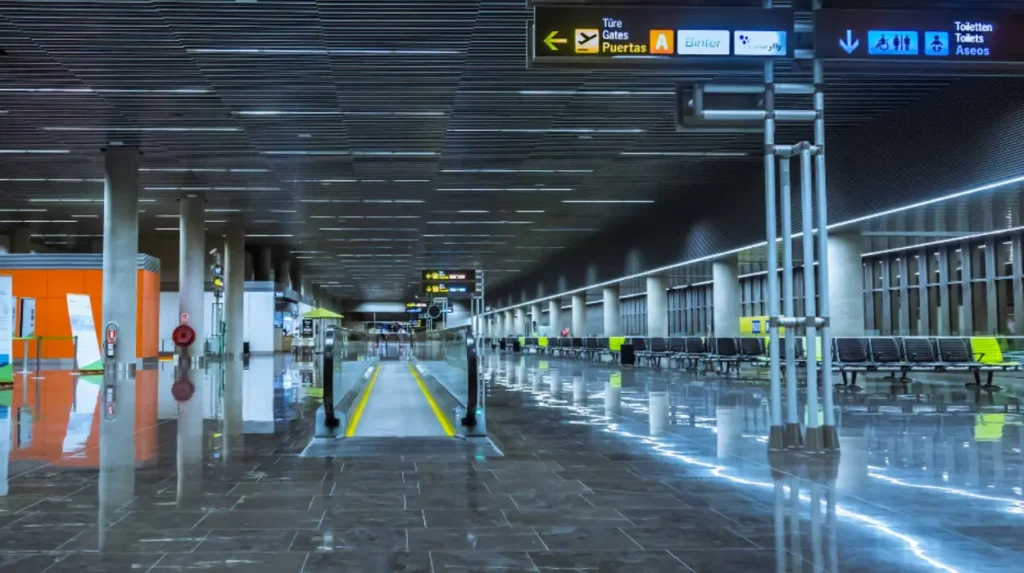
Indirect routing pathways significantly increase overall transit duration because aircraft must descend, land, taxi, and board new passengers at intermediate hubs. Non-stop direct flights eliminate these intermediate operational procedures entirely, providing the fastest connection between Northern England and the Canary Islands. Direct travelers complete security screening at Manchester Terminal One or Terminal Two and disembark directly at Gran Canaria Airport. Passengers opting for connecting flights must monitor transit windows between flights to avoid missed connections caused by delays. Direct air travel remains the most time-efficient option for passengers seeking to minimize total journey duration and airport ground transit.
What Is the Time Zone Difference Between Manchester and Gran Canaria?
There is no time zone difference between Manchester, United Kingdom, and Gran Canaria, Spain, throughout the entire operational calendar year. Both geographical locations observe Western European Time and switch simultaneously to Daylight Saving Time during spring and autumn months.
Manchester operates on Greenwich Mean Time during winter months and transitions to British Summer Time during summer months. Gran Canaria operates on Western European Time during winter months and transitions to Western European Summer Time during summer. Because both regions shift their clocks on the exact same dates in March and October, local time remains identical. Flight schedules do not require time calculations or manual clock adjustments upon landing at Gran Canaria Airport. Passengers avoid jet lag caused by time zone offsets, maintaining normal circadian rhythms and sleep patterns during travel between both regions.
Frequently Asked Questions
How early should I arrive at Manchester Airport for a Gran Canaria flight?
You should arrive at Manchester Airport at least three hours before your scheduled departure time for an international flight. This timing provides adequate buffer space to clear baggage drop queues, navigate security checkpoints, and reach your assigned departure gate without unexpected delays.
Do I need a passport to fly from Manchester to Gran Canaria?
Yes, a valid passport is mandatory for all passengers traveling from the United Kingdom to Gran Canaria. UK passport holders must ensure their document was issued within the last ten years and retains at least three months of validity beyond their planned departure date from Spain.
Which terminal at Manchester Airport operates flights to Gran Canaria?
Jet2 and TUI Airways generally operate out of Terminal Two at Manchester Airport, while Ryanair operates primarily out of Terminal Three. Terminal assignments can change based on airport operations, so passengers must verify their specific departure terminal on their booking confirmation before traveling.
What is the best time of year to fly to Gran Canaria for warm weather?
Gran Canaria offers warm weather year-round, but the warmest months occur between July and October with average high temperatures exceeding twenty-six degrees Celsius. Winter months like January and February remain popular for British travelers seeking mild, sunny weather averaging twenty degrees Celsius.
Is food included on flights from Manchester to Gran Canaria?
Complimentary in-flight meal service is generally not included on short-haul low-cost carriers like Ryanair, Jet2, or TUI Airways. Passengers can pre-order hot meals during the online booking process or buy snacks and beverages from the onboard buy-on-board catering menu during the flight.