Key Points
- The Greater Manchester Police made use of the Live Facial Recognition (LFR) technology in Stockport Town Centre on 12 August 2026.
- Two people have been arrested for violating their Sexual Harm Prevention Order (SHPO).
- This exercise was part of the broader operations by the neighborhood team dealing with problems in the town centre related to the workers and visitors there.
- The GMP has been employing LFR technology since October 2025, and several arrests have been made, including those of registered sex offenders.
- LFR is employed against people from a curated watchlist, and the images of those who do not feature in the list are quickly deleted.
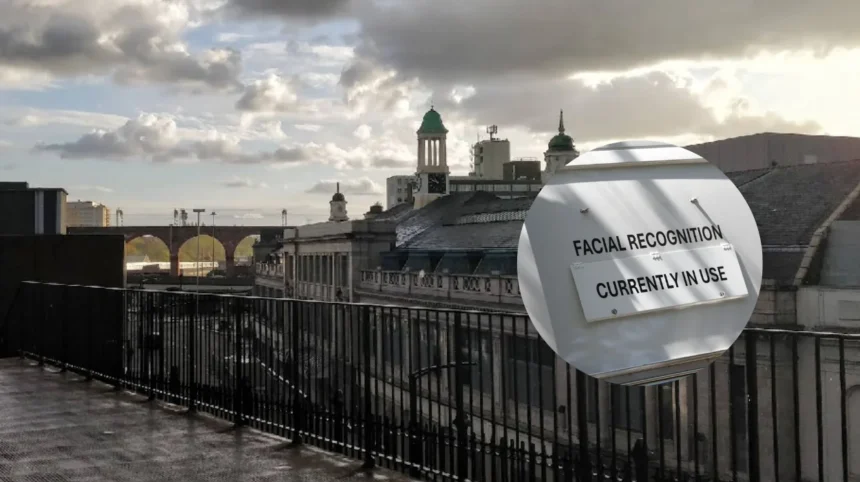
Stockport Police (Manchester Mirror) August 13, 2026 – Officers deployed to Stockport Town Centre with Live Facial Recognition (LFR) equipment secured two arrests for breaches of Sexual Harm Prevention Orders (SHPO), according to a statement released by Greater Manchester Police on 13 August 2026. The force said the deployment came as part of the local neighbourhood team’s wider work tackling reported issues within the town centre, which have affected workers and visitors alike.
- Key Points
- How did Live Facial Recognition lead to the arrests?
- What watchlists are used in Stockport deployments?
- What have police said about the Stockport operation?
- How does this fit into GMP’s wider use of facial recognition?
- Previous sex offender cases detected by LFR in Stockport
- What are the rules and safeguards around LFR use?
- Legal framework and oversight
- Public communication and transparency
- Background of the development
- Prediction: how this development may affect residents, workers and visitors in Stockport
As reported in the GMP news release, the two arrests followed positive alerts generated by the LFR system, which compares faces captured in public spaces against a pre‑approved watchlist of individuals wanted by police or subject to specific court orders. Officers on the ground manually verified the alerts before making the arrests, in line with the force’s stated operating procedures for LFR use.
How did Live Facial Recognition lead to the arrests?
Live Facial Recognition is a technology that scans faces in real time and compares them to a watchlist compiled for a specific operation. Greater Manchester Police received two LFR‑equipped vans from the Home Office and began deploying them in October 2025, initially in Sale before expanding to other town centres including Stockport.
According to guidance published by GMP and reporting by the BBC and Police Professional, the cameras focus on a specific area or crowd and detect faces, comparing them with a pre‑prepared watchlist; an alert is issued immediately if there is a match. The force has said it deletes images that generate alerts immediately after use or within 24 hours, and that images and biometric data of those who do not cause an alert are automatically and immediately deleted.
What watchlists are used in Stockport deployments?
As outlined in national and force‑level explanations of LFR use, watchlists are deployment‑specific and must follow the College of Policing’s guidelines, focusing on suspects, wanted persons, or individuals under court orders such as registered sex offenders. Home Secretary Yvette Cooper has said the technology will only be used “in a targeted way” to identify sex offenders or individuals wanted for the most serious crimes.
In Stockport, the neighbourhood team’s priorities include tackling crime and anti‑social behaviour in the town centre, and previous operations have targeted retail crime, bladed articles and breaches of court orders. The latest LFR deployment built on that existing neighbourhood policing work, with the watchlist tailored to the operational need identified for 12 August.
What have police said about the Stockport operation?
In its 13 August news post, Greater Manchester Police confirmed that two arrests were made for breaches of Sexual Harm Prevention Orders following the LFR deployment in Stockport Town Centre on 12 August. The force linked the operation to the local neighbourhood team’s wider work addressing reported issues within the town centre that have affected workers and visitors.
While the GMP release did not name the individuals arrested, it placed the operation within the context of ongoing efforts to manage high‑harm offenders and protect the public in busy public spaces. The statement did not provide further detail on the specific conditions breached or the identities of those detained, beyond confirming the SHPO breach arrests.
How does this fit into GMP’s wider use of facial recognition?
Since introducing LFR technology in October 2025, Greater Manchester Police has recorded dozens of arrests using the system. According to BBC reporting in March 2026, there had been 53 arrests in total, with 11 involving registered sex offenders.
Earlier deployments in Manchester city centre, Sale, Bolton and Oldham have led to arrests for offences including shoplifting, recall to prison, and breaches of sexual harm and stalking protection orders. In Oldham in July 2026, for example, a single day’s deployment resulted in four arrests of wanted individuals and checks on seven registered sex offenders to ensure compliance with their orders.
Previous sex offender cases detected by LFR in Stockport
Stockport has already seen high‑profile cases linked to LFR. In February 2026, Philip Loxam, 57, of Hazel Grove, Stockport, was stopped after an LFR van identified him in the town centre. Officers found he was in breach of his Sexual Harm Prevention Order, possessing software to hide internet browsing history and an unregistered secondary phone. He was later sentenced to 20 months in prison at Manchester Crown Court after admitting three SHPO violations.
The March 2026 BBC report described Loxam as the second registered sex offender in Greater Manchester to be jailed following detection by LFR technology. The latest August 2026 arrests add to that record of SHPO‑related interventions in the borough.
What are the rules and safeguards around LFR use?
Legal framework and oversight
Greater Manchester Police has stated that LFR deployments are always manned by trained officers who manually verify every match before any enforcement action is taken. The force says the system operates under strict legal safeguards and independent oversight, with watchlists curated for each deployment and aligned with College of Policing guidance.
Images of people not on the watchlist are not retained; according to GMP’s earlier explanations, those images are deleted immediately, while alert images are deleted after use or within 24 hours. CCTV footage captured during operations is retained for 31 days in line with the Criminal Procedure and Investigations Act 1996.
Public communication and transparency
GMP publishes information about LFR deployments through its website and local neighbourhood pages, setting out priorities for areas such as Stockport Town Centre. The force has also engaged with local media to explain how the technology works and what it is used for, including in reports by the BBC, Manchester Evening News and local radio outlets.
Background of the development
Live Facial Recognition was introduced to Greater Manchester in October 2025, when the Home Office supplied two LFR‑equipped vans to the force. Initial deployments took place in Sale town centre in response to a rise in shoplifting, before the technology was rolled out to other locations including Bolton, Manchester city centre, Oldham and Stockport.
Stockport had been identified as a potential site for LFR use as early as January 2026, with local news reporting that police were planning to deploy vans containing LFR cameras to the town centre following successful trials in Manchester city centre. The neighbourhood policing team for Stockport Town Centre has been running targeted operations on retail crime, anti‑social behaviour and high‑harm offenders, including Operation Rimini, which in 2024 led to dozens of arrests and charges.
The 12 August 2026 deployment sits within that longer trajectory: a move from pilot deployments in late 2025 to routine, operation‑led use in town centres across the county by mid‑2026. National policy has also evolved, with the Home Office framing LFR as part of a “Plan for Change” to help forces locate offenders wanted for violent, sexual and organised crimes, while insisting on targeted use and strict safeguards.
Prediction: how this development may affect residents, workers and visitors in Stockport
For residents, workers and regular visitors to Stockport Town Centre, the continued use of Live Facial Recognition is likely to mean a more visible police presence in the form of LFR vans and officers conducting stops and checks. Those on police watchlists – including individuals subject to Sexual Harm Prevention Orders or wanted for serious offences – face a higher risk of being detected and arrested when entering the town centre, as the August 2026 arrests demonstrate.
For the wider public, the effect may be mixed. On one hand, police and some local reporting suggest that LFR deployments can deter certain types of crime, such as shoplifting and anti‑social behaviour, in the immediate vicinity of the vans. On the other hand, the presence of facial recognition technology in everyday public spaces raises ongoing questions about privacy, data handling and the long‑term normalisation of biometric surveillance, issues that have been highlighted in national coverage of LFR use in London, Surrey and elsewhere.
If GMP continues to publish deployment information and maintain its stated safeguards – short retention periods, curated watchlists and officer verification – the technology may become an accepted part of town‑centre policing in Stockport. However, any future incidents involving false alerts, perceived over‑use, or controversial watchlist criteria could prompt renewed scrutiny from campaigners, local politicians and regulators, potentially shaping how, where and how often LFR is used in the borough going forward.