Key Points
- Motorists, cyclists, and pedestrians have been warned about a situation where there is a traffic light outage at one of the junctions in Oldham town center.
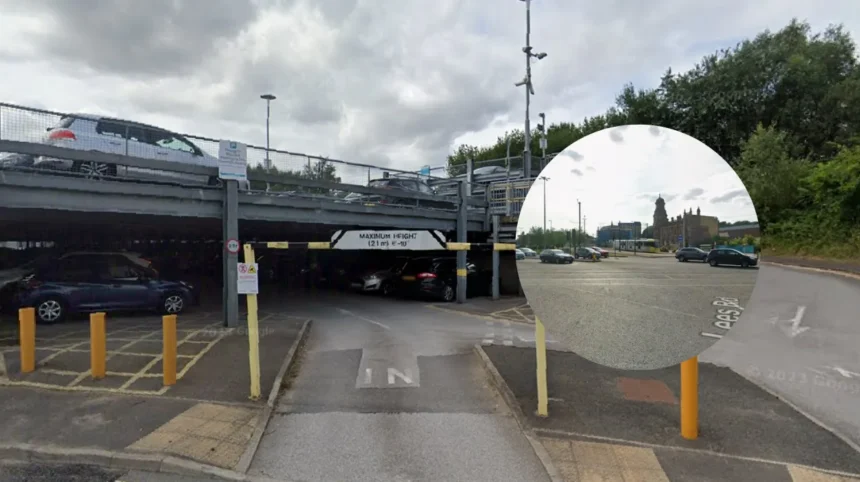
- According to the Bee Network, the traffic light outage is happening at the junction of Oldham Way and Lees Road, where the Metrolink tram tracks are running across the town center.
- The problem was detected on Saturday, August 8, 2026, and engineers are currently at the scene trying to fix the traffic lights.
- Those using the road have been asked to use “caution” until the work is done.
- Traffic lights in Oldham are put in place and managed by Transport for Greater Manchester (TfGM).
Oldham Live Traffic & Travel (Manchester Mirror) August 8, 2026 — A warning has been issued to road users after traffic lights failed at a key junction in Oldham town centre, prompting calls for caution from drivers, cyclists and pedestrians. The outage was confirmed by the Bee Network in a social media post on Saturday, August 8, 2026, which identified the affected location as the junction of Oldham Way and Lees Road, where Metrolink tram tracks intersect the roadway in the heart of Oldham.
- Key Points
- Who issued the warning and what advice was given?
- Where exactly is the affected junction and why does it matter?
- What is being done to fix the traffic light failure?
- How have similar outages affected Oldham in the past?
- Background: What led to this development?
- Prediction: How could this affect commuters and residents in Oldham?
As reported by staff at The Oldham Times, the Bee Network stated:
“Traffic Light Outage at Oldham Way/Lees Road junction with the Metrolink tracks in Oldham Town Centre. If you’re walking, wheeling or driving, please approach with care and caution. Engineers are working to resolve the issue as soon as possible.”
The message did not specify an exact time for the failure but indicated that repair crews had already been deployed to the site.
Who issued the warning and what advice was given?
The warning was issued by the Bee Network, the branding used by Transport for Greater Manchester (TfGM) for its integrated transport services, including buses and Metrolink. In its statement, the network urged all road users — including those on foot, on bicycles, in wheelchairs or in motor vehicles — to exercise heightened care when approaching the junction until the traffic signals are restored.
According to Oldham Council’s own guidance on road crossings and traffic signals, permanent traffic signals in the borough are installed and maintained by TfGM, and problems with signal timings or non-functioning signals should be reported through TfGM channels. The Bee Network’s post aligns with that responsibility, confirming that engineers are working to fix the fault.
Where exactly is the affected junction and why does it matter?
The junction in question lies at the meeting point of Oldham Way and Lees Road, a busy thoroughfare in Oldham town centre that also carries Metrolink tram tracks. This location is a significant node for local traffic, linking residential and commercial areas and serving as a key route for commuters and public transport.
The presence of tram tracks adds complexity to the junction, as road users must navigate not only the absence of traffic signals but also the potential for tram movements. While the Bee Network’s statement did not report any tram service disruptions specifically tied to this outage, previous incidents in Oldham have shown that traffic signal faults can affect Metrolink operations. For example, in February 2026, a traffic signal fault in Oldham town centre led to a second day of disruption on the Rochdale line, with services suspended between Freehold and Rochdale town centre.
What is being done to fix the traffic light failure?
The Bee Network confirmed that engineers are already working to resolve the traffic light outage. While the statement did not provide a detailed timeline for repairs, it indicated that crews were on site and aiming to restore normal operation “as soon as possible.”
Oldham residents and commuters can report ongoing or new issues with traffic signals via TfGM’s reporting channels, as outlined by Oldham Council. In cases of temporary traffic lights at roadworks, the council advises checking courtesy boards at the site for the responsible company’s contact details. However, for permanent signals such as those at Oldham Way and Lees Road, TfGM remains the responsible authority.
How have similar outages affected Oldham in the past?
Oldham has experienced several high-profile transport disruptions in recent months, some of which have involved signal failures. In February 2026, Metrolink users faced a second consecutive day of disruption due to a traffic signal fault in the town centre, which halted tram services between Freehold and Rochdale. At the time, ticket acceptance was arranged on multiple bus routes to assist affected passengers.
In May 2026, a separate incident on the M60 motorway between Oldham and Ashton-under-Lyne led to significant congestion after a broken-down car obstructed the clockwise lanes, prompting closures and diversions managed by Greater Manchester Police and National Highways. More recently, in July 2026, temporary traffic signals were in place on Sam Road in Oldham due to water main works, with the scheme scheduled to run until August 8, 2026.
These precedents highlight the vulnerability of Oldham’s transport network to signal and infrastructure failures, particularly in the town centre where road, tram and pedestrian flows converge.
Background: What led to this development?
The traffic light outage at Oldham Way and Lees Road appears to be an isolated technical failure rather than part of a wider planned closure. Permanent traffic signals in Oldham are maintained by TfGM, and faults are typically addressed by specialist engineers once reported. The Bee Network’s rapid public warning suggests that the failure was identified either through automated monitoring systems or reports from road users.
While the exact cause of the outage has not been disclosed, signal failures in urban centres can result from power issues, equipment malfunctions, or damage to underground cabling. Given the junction’s proximity to Metrolink tracks, coordination between road and rail signal systems may also be a factor, though this has not been confirmed in the current incident.
Prediction: How could this affect commuters and residents in Oldham?
If the traffic light outage is resolved quickly, the impact on commuters and residents is likely to be limited to short-term delays and heightened caution at the junction. However, if repairs extend into peak travel times, the absence of signals could lead to congestion, increased risk of near-misses or collisions, and knock-on delays for bus services that use Oldham Way and Lees Road.
For regular commuters, especially those relying on buses or trams, prolonged signal failures could mean longer journey times and potential schedule disruptions. Pedestrians and cyclists, who depend on controlled crossings for safety, may also face increased risk if drivers are unfamiliar with uncontrolled junction behaviour. In the longer term, repeated outages at key junctions could erode public confidence in the reliability of Oldham’s transport infrastructure, prompting calls for investment in more resilient signal systems.