Key Points
- Manchester Super Giants, Lancashire County Cricket Club’s The Hundred franchise, has bought the former Trafford B&Q site next to Emirates Old Trafford.
- The 2.5-acre site already has planning permission for 228 apartments.
- The land will be used for a high-performance cricket training facility, not for the approved residential scheme.
- The project will support Lancashire Cricket, Manchester Super Giants, Durban’s Super Giants, Lucknow Super Giants, and visiting international sides.
- The development is part of a wider strategy to strengthen cricket infrastructure at Emirates Old Trafford and AO Farington.
- Lancashire Cricket had previously objected to the housing plan on the grounds that it could affect the operation of the cricket ground.
- The club says the new facility will be funded using proceeds generated by Manchester Super Giants in The Hundred.
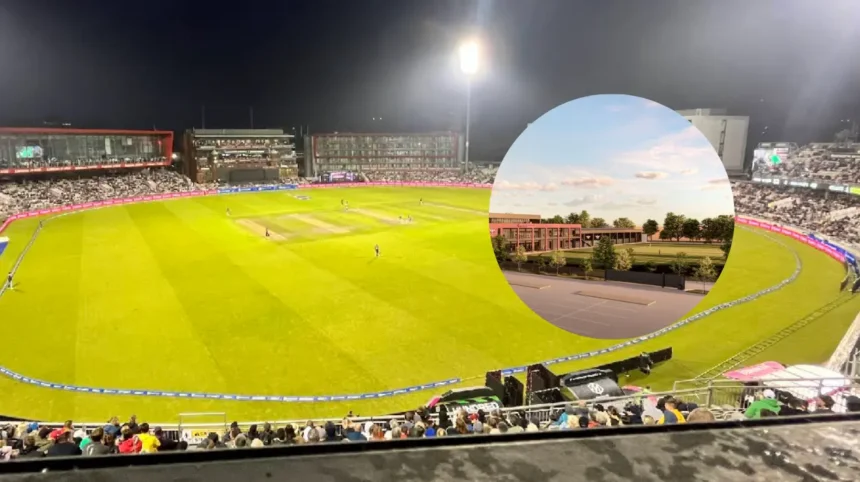
Trafford (Manchester Mirror) July 27, 2026 – Manchester Super Giants, Lancashire County Cricket Club’s The Hundred franchise, has bought the former Trafford B&Q site beside Emirates Old Trafford for a cricket training project.
Manchester Super Giants buys former Trafford B&Q site for cricket training facility is the clearest angle for this development, because the site’s future has now shifted from housing to elite sport infrastructure.
As reported by Dan Whelan of Place North West, the franchise and its co-owner Lancashire Cricket now control the fate of the 2.5-acre plot, which had been earmarked for 228 apartments under a residential scheme brought forward by Blythe Ventures and developer Brickland.
The new plan is to redevelop the land into a high-performance training centre for all of the club’s teams, with upgrades to the existing indoor centre, a gym, outdoor training spaces, and sports science and medical facilities.
The land purchase matters because it ends a long-running conflict over the plot’s future. Lancashire Cricket had opposed the housing plans, arguing that a residential scheme so close to the ground could disrupt cricket operations.
What will the facility include?
The proposed training centre is designed to improve day-to-day preparation for players at Lancashire and the wider RPSG cricket network. The facility is expected to include indoor nets, a gym, outdoor training areas, and sports science and medical support.
The club says the upgraded complex will be used by Lancashire Cricket’s professional, academy and age-group teams, as well as Manchester Super Giants, Durban’s Super Giants, Lucknow Super Giants, and touring international sides. That means the site is being positioned as a shared elite-performance base rather than a single-team facility.
The project follows other investment in Lancashire’s cricket estate, including a new £20 million facility at Farington, which features two cricket ovals and training infrastructure. Taken together, these moves show a deliberate effort to spread elite and community cricket infrastructure across more than one site.
What happened to the housing plan?
The former B&Q site had already secured permission for a 228-home development, including apartments and townhouses across buildings up to six storeys high. That scheme was worked up by Brickland and Blythe Ventures, and the site was widely seen as a major housing opportunity close to Old Trafford Cricket Ground.
However, Lancashire Cricket objected to the housing plan during the planning process. The club argued that a residential scheme on the plot could interfere with the operation of the cricket ground, which hosts domestic and international fixtures.
The new purchase means the residential route is now effectively replaced by a sporting use. The club also says the deal brings the land back into its control after it was sold in 1962.
Who said what?
As reported by Dan Whelan of Place North West, the franchise’s 70% shareholder, Indian conglomerate RPSG Group, and Lancashire Cricket, which owns the remaining 30%, plan to use the site for a shared high-performance base.
Dr Sanjiv Goenka, chairman of RPSG Group, said the partnership reflects a long-term commitment to cricket and aims to leave a lasting legacy in the region. He said the investment would support players for years to come and help build facilities that give them every chance to succeed.
Dame Sarah Storey, chair of Lancashire Cricket, described the deal as an important milestone and said the club had worked towards it for a significant time. She added that the transaction would allow part of the proceeds from The Hundred to be reinvested into the club’s long-term sustainability and growth.
Why does this matter for cricket?
The deal strengthens Manchester Super Giants’ and Lancashire Cricket’s control over elite training infrastructure near Emirates Old Trafford. For a club that hosts international cricket, The Hundred fixtures and domestic matches, such facilities can influence player preparation, recovery, and overall performance.
It also fits a broader pattern in Lancashire’s current strategy: upgrading facilities at Emirates Old Trafford while building out Farington as a second centre. That gives the club more flexibility across training, match preparation and community cricket.
For The Hundred franchise, the move links commercial activity with long-term sporting investment. The club says the new facility will be funded using proceeds generated by Manchester Super Giants.
How did the site become available?
The former B&Q site in Great Stone Road had been vacant for years after the store was demolished in 2023. Brickland and Blythe Ventures had previously advanced the housing scheme, which won planning approval and was expected to deliver 228 homes.
Place North West reports that Manchester Super Giants acquired the land from Blythe Ventures, which is controlled by Andrew Bell, founder of AJ Bell. Once that deal completed, the franchise and Lancashire Cricket were able to redirect the plot towards cricket use instead of housing.
The acquisition also sits within a larger land and facilities strategy around Old Trafford. With the club expanding training capacity and protecting operational space near the stadium, the land’s role has shifted from residential development to sports infrastructure.
Background of this development
The site has a long planning history. Before the cricket deal, Brickland and Blythe Ventures were pushing a 228-home scheme, and Trafford’s wider masterplanning around Old Trafford had already identified the area as strategically important.
The latest move follows a broader round of investment in Lancashire Cricket infrastructure. In addition to the proposed Old Trafford training redevelopment, the club has invested more than £1 million in other facilities at Emirates Old Trafford and has been developing the Farington ground as a second home.
The background also includes Lancashire’s earlier concern that new homes next to the ground could create operational problems. The cricket purchase resolves that tension by aligning the land use with the needs of the stadium and the club’s performance programme.
What happens next?
The immediate result is that the land can be transformed into a cricket training campus rather than a housing site. The existing indoor centre is expected to be upgraded substantially, giving players improved access to nets, gym space and medical support.
Because the clubs involved are linked to domestic, international and franchise cricket, the project may also increase the number of teams using Old Trafford for training throughout the year. That could make the ground more active as a performance hub even when no match is being played.
Prediction for readers
For Lancashire Cricket supporters and Manchester Super Giants followers, this development is likely to mean better training conditions, stronger player support and a more modern elite cricket base. For people in the Old Trafford area, it may also reduce uncertainty about what will happen on the former B&Q site.
For residents and planners, the shift from flats to cricket facilities may ease some concerns about housing pressure on a sensitive site beside a major stadium. For cricket audiences more broadly, the project suggests Lancashire and RPSG are trying to build a long-term performance structure that could improve how the teams prepare and compete.