Key Points
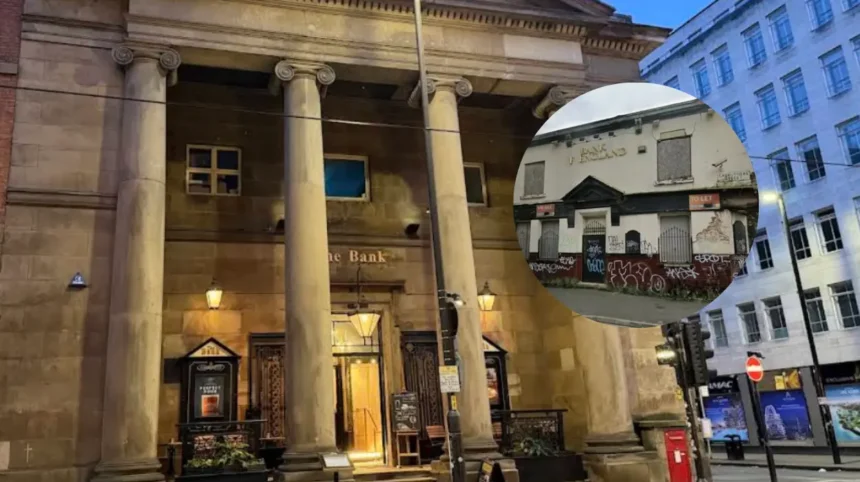
- The Bank of England pub in Ancoats, Manchester, is set to be demolished after structural failures raised safety concerns.
- The building dates back to 1830 and is described as one of the earliest beer houses in the Ancoats district.
- The pub became widely known in 2016 after Greater Manchester Police searched its cellar for missing man Martin Joyce.
- Martin Joyce, a 29-year-old father from Gorton, was last seen at the pub in September 1999 and has never been found.
- Police carried out a two-week excavation based on what they described as credible intelligence, but no remains were discovered.
- GMP also carried out “proof of life” checks with health authorities, HMRC, passport control and retail loyalty schemes, with no sign he was still alive.
- The case remains open with GMP’s cold case unit, and a £20,000 reward has been offered since 2018 for information that helps resolve it.
- A Manchester council spokesperson said the building posed a risk to public safety after reports that sections were falling and that a section 78 order had been issued.
Ancoats (Manchester Mirror) July 20, 2026 – the Bank of England pub in Ancoats is now facing demolition after engineers and council officers raised fresh safety concerns about the damaged building.
- Key Points
- Why is the building considered dangerous now?
- How is missing father Martin Joyce linked to the pub?
- What did Greater Manchester Police do in their investigation?
- How could the demolition affect Ancoats and local heritage?
- Background of the development
- Prediction: how might this development affect local residents and those following the case?
As reported by the Manchester Evening News, the pub on the junction of Carruthers Street and Pollard Street has been vacant for years and has now deteriorated to the point where parts of the structure are collapsing. The site has therefore moved from dereliction into an urgent public-safety issue, with the council stepping in to manage the risk.
The building’s age adds to the scale of the loss. It first opened in 1830 and is believed to have been one of the earliest beer houses in Ancoats, which makes the demolition significant not only for residents but also for the area’s historic streetscape.
Why is the building considered dangerous now?
The immediate reason for demolition is structural failure. According to the Manchester Evening News, sections of the building have started to collapse, prompting safety concerns from local authorities and protective measures around the site.
Manchester council said its building control team responded to reports in May that the former public house posed a danger to public safety from falling masonry or other structural issues. The council also said the footpath had been cordoned off to reduce risk to the public while officers met with the owners to arrange a structural assessment.
That assessment led to a section 78 order, which allows a council to act when a building is in such a state that it threatens the public. In practical terms, that means the remaining structure is likely to be taken down rather than left standing in a weakened condition.
How is missing father Martin Joyce linked to the pub?
The pub’s notoriety comes from its link to the disappearance of Martin Joyce, whose case remains unresolved nearly three decades later. He was 29, lived in Gorton and was last seen at the pub in September 1999 before disappearing without trace.
The Manchester Evening News reported that police excavated the cellar in 2016 after receiving intelligence that Mr Joyce may have been buried there. The search lasted two weeks and was extensive, but officers found no remains.
His disappearance remains one of Greater Manchester’s most troubling unsolved missing persons cases. The case is now with GMP’s cold case unit, and the reward of £20,000 remains in place for information that could lead to answers.
What did Greater Manchester Police do in their investigation?
Police did not limit their work to the cellar search. The Manchester Evening News reported that GMP carried out wider “proof of life” checks to see whether there was any sign Mr Joyce was still alive.
Those checks included searches through records held by health authorities, HMRC, passport control and retail loyalty schemes. None of the material they reviewed showed evidence that he had continued living under the radar.
His sister, Helen McDonagh, previously recalled seeing him a week before he vanished. She told the Manchester Evening News that he seemed fine and gave no indication that he intended to disappear.
How could the demolition affect Ancoats and local heritage?
The demolition will remove a building that has sat at the centre of both local history and criminal mystery. For Ancoats, it means another old structure is likely to be lost as the district continues to change through regeneration and redevelopment.
The pub’s condition also shows the tension between preservation and safety. When a building becomes unsafe, authorities usually have limited choices, even if the site carries historical or emotional value.
For local residents, the demolition may bring relief if the danger has been properly contained, but it will also mark the end of a building many people associate with Manchester’s industrial past. For those connected to the Martin Joyce case, it may also close one more physical link to the place where he was last seen.
Background of the development
The Bank of England pub began trading in 1830 at the junction of Carruthers Street and Pollard Street. It became part of Ancoats’ long pub and beer-house history, but over time the building fell into disuse and was left empty for years.
Its modern notoriety began in 2016, when police dug into the cellar in search of Martin Joyce after intelligence suggested his body might have been hidden there. Although the search found nothing, the case remained alive in the public mind because the disappearance had never been solved.
The current demolition move is therefore the latest stage in a story that mixes urban decay, a police mystery and local history. It is a reminder that a building can become important for more than one reason: as heritage, as a crime scene, and later as a public hazard.
Prediction: how might this development affect local residents and those following the case?
For Ancoats residents, the most immediate effect will be the removal of a dangerous structure and the reopening or securing of the surrounding public space. That is likely to improve safety for pedestrians and motorists near the site once demolition work is completed.
For people following the Martin Joyce case, the demolition may not answer any long-standing questions unless new information emerges separately. The search history, the cold case status and the reward all suggest the investigation remains open in practical terms, even if the physical building no longer stands.
For the wider audience, especially readers interested in Manchester history, the case is another example of how redevelopment can erase older landmarks before their full story is resolved. That means attention may shift from the building itself to the unresolved disappearance that made it nationally known.