Key Points
- Juan Mata will take on an advisory role at Populous to help shape the design of football training centres.
- The former Chelsea and Manchester United midfielder will work with the firm’s training facilities design team.
- His role includes design reviews, strategic discussions with project teams, client workshops and conversations with Populous staff across international studios.
- Mata says elite training environments are about more than buildings and should help players perform, recover, learn, connect and grow.
- Populous says his player insight will strengthen its design process and help challenge conventional thinking.
- Mata played for Valencia, Chelsea, Manchester United and Spain, and he is still playing in Australia.
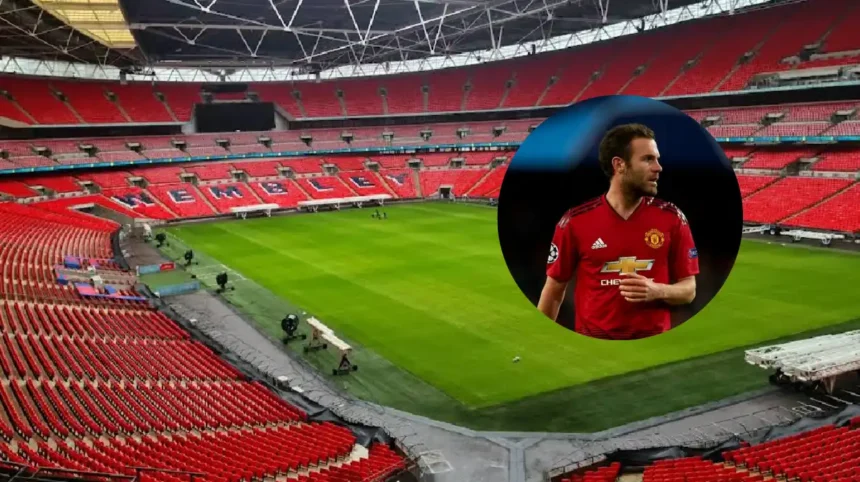
- Populous said he has played almost 200 matches in stadia designed by the practice, including Wembley Stadium and FNB Stadium.
Manchester United (Manchester Mirror) June 30, 2026 – Former Chelsea and Manchester United midfielder Juan Mata will take up an advisory role at Populous to help inform the practice on the design of training centres.
The Spanish midfielder and winger will work with the firm’s training facilities design team, contributing insights drawn from his 20 years as a player at some of the world’s biggest football clubs. His involvement is also set to include design reviews, strategic discussions with project teams, client workshops and discussions with Populous staff across its international studios.
Mata is still playing in Australia, but his career before that took him through several of football’s most high-profile environments. He spent four years at Valencia from 2007 before joining Chelsea in 2011, a move that came during a spell in which the club won the Champions League, the FA Cup and the Europa League.
He later joined Manchester United in 2014 and spent nine seasons at Old Trafford, winning the Europa League and the FA Cup again. Mata was also part of Spain’s World Cup-winning squad in 2010.
What did Mata say about the role?
Mata said his experience had shown him that the best training environments do far more than provide a place to work. As reported by Building, he said the best facilities help players
“perform, recover, learn, connect and grow”,
and that every detail affects the daily experience of athletes and staff.
He also said Populous understands that performance and people should sit at the centre of design. Mata added that he is excited to contribute his experience to help shape the next generation of football training centres.
What did Populous say?
Populous’ London-based global director Declan Sharkey said Mata’s input would strengthen the firm’s ability to bring real-world player insight into the design process.
Sharkey said Mata has experienced elite football at every level and understands what makes a training environment successful, including player performance and recovery, culture, wellbeing and development. He added that Mata’s perspective would help Populous’ teams challenge conventional thinking and make sure projects reflect the realities of modern football and the needs of players and technical staff.
Why is this significant?
The appointment links an active, recently retired-style elite football perspective with a global sports design firm. Mata’s background gives Populous access to first-hand views on how training spaces affect performance, recovery and team culture.
Populous also said Mata has played almost 200 games at stadia the practice designed, including Wembley Stadium in London and FNB Stadium in Johannesburg. That detail underlines the long-running overlap between Mata’s career and the firm’s work in major football venues.
Background of the development
Populous is known for its work in sports architecture and large-scale venue design, and the new advisory role appears aimed at strengthening the football-specific side of its training-centre work. Mata’s career has taken him across Spain, England and Australia, giving him experience in different football cultures and facility standards.
The move also reflects a wider trend in sport and design, where clubs and firms seek direct input from athletes when planning high-performance environments. In this case, the focus is on practical issues such as recovery, wellbeing, development and daily use, rather than just appearance or branding.
Prediction
This development could encourage more football clubs and training-centre clients to ask for direct athlete input during the design process. For players and technical staff, that may lead to facilities that better match real day-to-day needs.
For Populous, Mata’s involvement may strengthen its reputation in football infrastructure and make its training-centre projects more attractive to clubs seeking performance-led design. For the wider audience, it signals that former elite players are likely to play a bigger role in shaping the spaces where modern football is prepared and managed.