Key Points
- Who reported this land acquisition and what did they say?
- What land was purchased and from whom?
- How does this move fit into the club’s wider stadium plans?
- What are the immediate next steps and outstanding hurdles?
- What have club spokespeople and officials stated?
- How have commentators and stakeholders reacted?
- Background of the particular development
- Prediction — how this development can affect supporters, residents and local businesses
- Manchester United has acquired the majority of the land required to build a proposed 100,000‑seat stadium close to Old Trafford.
- The club purchased a 25‑acre triangular plot roughly 350 metres from Old Trafford, taken from an industrial landlord linked to Blackstone’s portfolio.
- The acquisition is described by the club as a major milestone in progressing a proposed £2 billion stadium replacement for Old Trafford.
- Reports indicate the deal removes a significant obstacle in assembling the site, although the club still needs to secure any remaining parcels and planning consents.
- Coverage appears across major outlets (including ESPN, The Independent, Bloomberg and local BBC Sport reporting), each attributing the land purchase to Manchester United’s ongoing stadium project.
Manchester United (Manchester Mirror) June 22, 2026 — Manchester United has acquired the majority of the land needed to build a proposed 100,000‑seat stadium close to Old Trafford, the club announced as it moves ahead with plans for a replacement venue.
Who reported this land acquisition and what did they say?
As reported by Tony Smith of ESPN, Manchester United “have acquired ‘the majority’ of land needed for a proposed new 100,000‑seater stadium,” bringing the club closer to delivering the large-scale project.
As reported by the sports desk at The Independent, Manchester United purchased a 25‑acre triangular plot approximately 350 metres from Old Trafford and stated the purchase represents confidence that remaining land can be secured for the estimated £2 billion scheme.
As reported by the Sports Business Journal, the move follows talks with freight and industrial landholders and focuses on assembling contiguous land necessary for the planned redevelopment. As reported by Bloomberg, the plot was bought from a company linked to the Blackstone portfolio, and the purchase is framed as a significant step in the club’s stadium strategy.
As reported by FootballGroundGuide, the club confirmed the 25‑acre site was bought from Indurent, an industrial property company in the Blackstone portfolio, and framed it as one of the most important milestones since the project was announced.
What land was purchased and from whom?
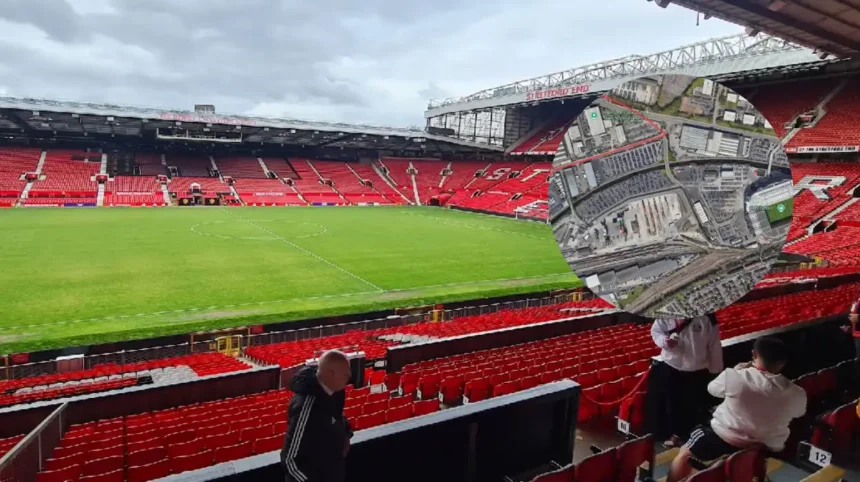
Manchester United purchased a triangular 25‑acre site immediately northwest of Old Trafford, part of an industrial area used for car parks and freight operations. Multiple outlets identify the seller as a company associated with the Blackstone portfolio specifically Indurent in some reports indicating the club bought the land on market terms rather than via compulsory measures.
The club described the acquisition as “the majority” of the land needed for the new stadium, signalling that some small parcels or rights may still need to be assembled.
How does this move fit into the club’s wider stadium plans?
Manchester United’s long‑running ambition to replace Old Trafford with a 100,000‑seat arena has included feasibility studies, planning consultations and public statements about boosting capacity and modernising matchday infrastructure.
The club’s purchase is presented as a milestone that reduces a key obstacle land assembly which had previously been complicated by multiple private owners in the area, freight uses and differing land valuations.
What are the immediate next steps and outstanding hurdles?
Media coverage emphasises that while the land buy is crucial, the project still requires securing any remaining plots, obtaining detailed planning permission and navigating transport, community and regulatory approvals.
Local and regional planning processes, potential compulsory purchase considerations, and detailed design work remain on the programme ahead of any construction start date.
What have club spokespeople and officials stated?
Club statements reported by several outlets confirm the purchase and frame it as progress toward delivering the proposed stadium, while not yet specifying a construction timeline or total spend beyond previous £2 billion cost estimates reported in earlier coverage.
Journalistic accounts note the club’s public messaging is cautious: the acquisition is a milestone but not a final green light for immediate building works.
How have commentators and stakeholders reacted?
Local and national reporting highlights both optimism among supporters at progress toward a larger, modern stadium and scrutiny from local stakeholders and authorities around issues of transport capacity, land use and the future of Old Trafford’s surrounding neighbourhood.
Reports reference earlier public discussions involving regional authorities and the potential use of compulsory purchase powers if negotiations with certain landowners could not be concluded a point raised in prior coverage of the project.
Background of the particular development
Manchester United’s aspiration to replace Old Trafford with a new stadium has been a recurring project in the club’s strategic conversation, driven by ambitions to expand capacity, provide modern hospitality and commercial facilities, and enhance matchday experience.
Previous public reporting set the proposed stadium size at about 100,000 seats with a headline budget in the region of £2 billion, and identified land assembly, transport planning and negotiations with freight and industrial landholders as recurring constraints in the project’s progress.
Prediction — how this development can affect supporters, residents and local businesses
For matchgoing supporters, the acquisition advances the prospect of a higher‑capacity, modern stadium with improved facilities, but supporters can expect a multi‑year delivery timeline and transitional arrangements while plans and construction are finalised. For local residents and businesses the purchase is likely to intensify focus on transport, parking and local planning impacts; businesses near Old Trafford may face disruption during construction but could also see long‑term footfall benefits if the new stadium increases event attendance.
For regional planners and authorities the development raises questions about infrastructure investment, potential community benefits and mechanisms to deliver connectivity required for a 100,000‑seat venue, all of which will shape further consultation and approvals.