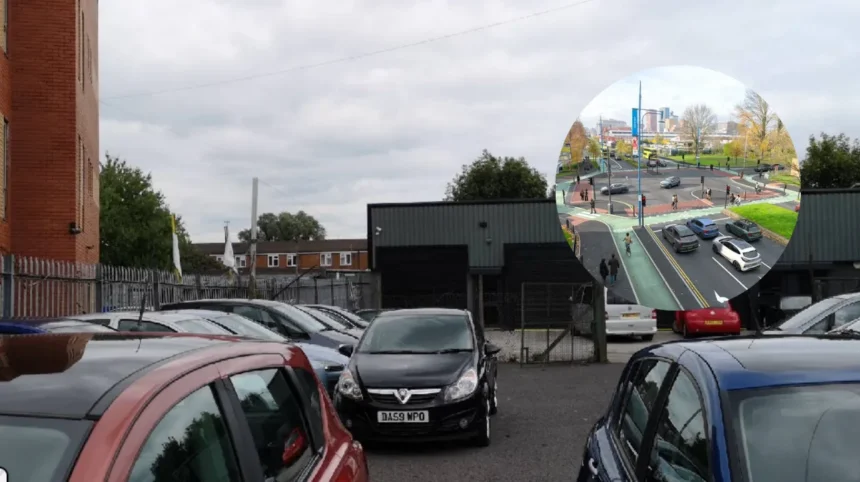
Key Points
- Manchester City Council has announced safety improvement works at the Wilmslow Road junction in south Manchester, aimed at reducing collisions and improving pedestrian and cyclist safety.
- The proposals include changes to traffic signalling, junction layout adjustments and targeted enforcement measures, with phased works planned to minimise disruption.
- A temporary traffic order affecting sections of Wilmslow Road has been published in advance of the works, indicating closures or restrictions on vehicular movement in specific stretches.
- The scheme aligns with the council’s wider active travel and road-safety priorities for Manchester, and follows earlier consultations and feasibility work.
- Local campaigners and road-user groups have previously pressed for measures on Wilmslow Road to address speeding, crossing safety and cyclist provision; the new measures reflect those long-standing concerns.
- The council intends to phase the works to reduce congestion and maintain access for residents, with communications and notices provided via official channels.
Manchester Council(Manchester Mirror)May 13, 2026 – Manchester City Council has unveiled detailed plans to carry out safety improvement works at a busy junction on Wilmslow Road in south Manchester, with the stated aim of reducing collisions and improving conditions for pedestrians and cyclists while keeping traffic disruption to a minimum.
- Key Points
- What exactly are the council’s proposals for the Wilmslow Road junction, and how will they change the layout?
- When will the work begin, and how long will the phases last?
- Why has the council chosen this junction for safety upgrades now?
- Who has been consulted, and what do local groups and residents say?
- How will traffic be managed during the works, and what legal steps have been taken?
- Will enforcement or technology be part of the solution?
- What are the expected benefits and who stands to gain most?
- Are there any concerns about congestion, access or the impact on bus services?
- Which official documents and legal notices confirm that the works are proceeding?
- What has Manchester City Council said about monitoring and measuring the scheme’s success?
- How does the Wilmslow Road plan fit into the wider city transport strategy?
- What are the next administrative steps, and how can residents find information?
- Who will pay for the works, and what is the funding model?
- Have similar junction interventions in Manchester delivered the expected safety gains?
- Where can journalists and residents find primary sources and statements?
- Background of the development
- Prediction — How this development could affect local residents, commuters and road users
What exactly are the council’s proposals for the Wilmslow Road junction, and how will they change the layout?
As reported by Manchester City Council’s project pages, the proposals include targeted adjustments to the junction’s signalling and layout, alongside measures to make crossings safer for pedestrians and to improve dedicated space for cyclists where feasible. The council’s documents describe a programme of phased interventions that alter lane markings, install or upgrade pedestrian crossing facilities and tweak signal timings to reduce conflict points and improve traffic flow.
When will the work begin, and how long will the phases last?
Manchester City Council has published timelines tied to the programme of works, with phased construction designed to reduce peak disruption; the council’s information emphasises staged delivery and advance notice to residents and commuters. Additionally, an associated traffic order published on a public notices portal shows preparatory legal steps, including temporary prohibitions on vehicular traffic in defined sections of Wilmslow Road, that precede physical works and indicate early 2026 activity on the corridor.
Why has the council chosen this junction for safety upgrades now?
Local authority sources and previous transport plans indicate Wilmslow Road is a priority because of high pedestrian volumes, significant cycling demand and a history of collisions and near-misses at key junctions along the corridor. The works form part of the council’s broader commitment to safer streets and active travel, and respond to public concerns raised during earlier consultations and campaigns calling for improved crossings and enforcement at problem junctions.
Who has been consulted, and what do local groups and residents say?
Manchester City Council has cited consultation and engagement with residents and road-user groups as part of the feasibility and design process for Wilmslow Road improvements. Local campaigners and cycling groups who have long called for safer crossings, better cycle provision and enforcement of traffic rules have previously highlighted Wilmslow Road as a stretch needing attention, and the current proposals reflect many of those priorities.
How will traffic be managed during the works, and what legal steps have been taken?
The council intends to stage works to maintain access and limit disruption, publishing advance notices and implementing temporary traffic management arrangements during construction. A public notice describing a traffic order has been published, indicating temporary prohibitions on vehicular traffic across certain sections of Wilmslow Road while works or preparatory measures take place, which is a standard legal step before physical changes are implemented.
Will enforcement or technology be part of the solution?
The council’s approach in comparable schemes has combined physical junction changes with targeted enforcement of traffic contraventions, and the recent history of Manchester’s road-safety programmes suggests that camera enforcement (ANPR or junction cameras), clearer signing and yellow box protections are likely elements of the broader strategy to deter dangerous manoeuvres. The Wilmslow Road proposals reference adjustments intended to simplify driver decision-making at the junction and reduce opportunities for risky turning movements.
What are the expected benefits and who stands to gain most?
Council materials project that the works will reduce the number and severity of collisions at the junction, shorten pedestrian crossing distances, and improve cycling continuity where space permits. Local residents, schoolchildren, commuters who walk or cycle, and drivers familiar with congestion at the junction will all benefit from clearer junction geometry and safer crossing points, according to the council’s published rationale.
Are there any concerns about congestion, access or the impact on bus services?
The council has stated that phasing and careful traffic management will be used to minimise disruption and protect access, including for public transport. Nevertheless, recent public notices and past experiences of corridor works show that temporary restrictions and lane changes can create short-term congestion, and the council has committed to communicating clearly with bus operators and residents to mitigate those effects.
Which official documents and legal notices confirm that the works are proceeding?
Manchester City Council’s roads and transport pages publish project details and timelines for junction improvements on Wilmslow Road, and an associated public notice, a traffic order posted on a public notices portal outlines temporary restrictions that accompany preparatory works. These documents function as the formal public record of proposed changes and the council’s legal authority to implement traffic management measures during construction.
What has Manchester City Council said about monitoring and measuring the scheme’s success?
Council guidance on junction improvements indicates monitoring through collision-record analysis, traffic flow assessments and community feedback, and the authority typically reviews schemes post-implementation to measure safety outcomes and adjust where necessary. The Wilmslow Road works will be subject to the same approach, with the council expecting to publish findings after a monitoring period following completion.
How does the Wilmslow Road plan fit into the wider city transport strategy?
The scheme is consistent with Manchester’s ongoing active-travel and road-safety priorities, which include improvements to key corridors, better provision for pedestrians and cyclists, and using targeted interventions to reduce collision risk across the city. Previous and parallel programmes on adjacent corridors, announced by the council and transport partners, show a citywide push to rebalance street space towards safer walking and cycling and to tackle the causes of local collisions.
What are the next administrative steps, and how can residents find information?
Residents and road users should look for formal notices from Manchester City Council, which will set out start dates, phasing details and diversionary arrangements; the public traffic order already published provides early legal notice of proposed restrictions. The council’s roads and transport portal, plus local travel updates from transport partners, will carry the most up-to-date information on timing and traffic management.
Who will pay for the works, and what is the funding model?
Council project pages place the Wilmslow Road junction works within the local authority’s highways programme and active travel budgets; while specific tranche-level funding is set out in council capital plans, the authority typically funds such improvements from a combination of local capital allocations and grant funding targeted at road safety and active travel. The precise funding breakdown for this junction was not itemised in the publicly available summary documents.
Have similar junction interventions in Manchester delivered the expected safety gains?
Past schemes across the city that combined physical geometry changes, improved signalling and enforcement have reported reductions in some categories of collision, though outcomes vary by location and design. The council’s decision to phase the Wilmslow Road work and include monitoring reflects a cautious approach that aims to deliver measurable safety benefits while allowing adjustments as evidence from on-the-ground monitoring emerges.
Where can journalists and residents find primary sources and statements?
Primary project information, plans and updates are available via Manchester City Council’s roads and transport webpages for the Wilmslow Road junction improvements, and the public traffic order is published on the official public notices portal. For further details, council press releases and transport partner travel alerts will carry formal statements and operational notices.
Background of the development
Manchester City Council’s road-safety and active-travel programmes have, for several years, prioritised improvements to busy corridors where pedestrians, cyclists and motorists interact heavily, with previous interventions on nearby routes aiming to reduce collisions and improve access for non-motorised users. Wilmslow Road, as a significant arterial route in south Manchester, has attracted attention from local campaigners and road-user groups who have consistently lobbied for safer crossings, better cycle facilities and stronger enforcement of dangerous manoeuvres; the current scheme follows that sustained pressure and the council’s broader policy commitments.
Prediction — How this development could affect local residents, commuters and road users
If implemented as planned, the Wilmslow Road junction improvements are likely to reduce the frequency and severity of collisions at the targeted junction, shorten pedestrian crossing distances and make cyclist movements clearer and safer, benefiting residents, schoolchildren and active commuters who use the route. However, in the short term, there may be localized congestion during construction phases and temporary changes to bus or vehicular routes; the net effect for daily commuters will depend on phasing, signage clarity and how quickly enforcement and behavioural changes take effect after works are completed.