Key Points:
- McGoff Group Limited has submitted plans for a 17-storey residential development at a site adjacent to the historic Marble Arch pub in Manchester city centre.
- The scheme comprises 153 apartments, with a mixture of one, two, and three-bedroom units.
- The proposal includes ground-floor commercial space and community amenities.
- The project is to be built on Rochdale Road, in Manchester’s New Cross area.
- The Marble Arch pub has raised concerns about the potential impact on sunlight, heritage views, and footfall.
- The development proposal was submitted to Manchester City Council in early May 2026.
- The scheme was designed by Euan Kellie Property Solutions and architects Leach Rhodes Walker.
- Local heritage advocates have questioned the compatibility of the high-rise design with the historic surroundings.
- McGoff Group claims the development will contribute to urban regeneration and housing supply in the city centre.
- The application follows other nearby regeneration projects including Angel Gardens and New Cross Central.
Manchester (Manchester Mirror)May 11, 2026 — The McGoff Group has formally submitted an application to Manchester City Council seeking approval for a 17-storey mixed-use development on a parcel of land off Rochdale Road, adjacent to the Marble Arch pub, a Grade II-listed establishment cherished by many for its character and heritage.
- Key Points:
- What Are the Main Details of McGoff’s 17-Storey Proposal?
- Why Has the Marble Arch Pub Raised Concerns?
- How Does the Development Fit into Manchester’s Urban Regeneration Strategy?
- What Do Heritage and Urban Design Experts Say About the Plan?
- What Has Manchester City Council Said About the Planning Application?
- How Will the Project Impact the Local Housing Market?
- What Are the Sustainability Features Included in the Plan?
- What Happens Next in the Planning Process?
- Background: History of the Marble Arch and the New Cross Transformation
- Prediction: How Could This Development Affect Residents and the Heritage Landscape?
According to the planning application lodged on May 8, 2026, the proposal outlines a residential tower incorporating 153 apartments, shared resident facilities, and a ground-floor commercial unit, designed to accommodate either a café, retail space, or local service provider.
The development, known provisionally as Rochdale Road Residential, forms part of a wider regeneration push across Manchester’s New Cross area, where several major projects have been approved in the past decade.
What Are the Main Details of McGoff’s 17-Storey Proposal?
As reported by Dan Whelan of Place North West, McGoff Construction’s submission involves a 17-storey structure comprising 153 units, broken down into 91 one-bedroom apartments, 54 two-bedroom apartments, and 8 three-bedroom homes.
The design and access statement, prepared by Euan Kellie Property Solutions in partnership with Leach Rhodes Walker Architects, states that the project aims to “deliver a high-quality urban apartment scheme to meet rising demand for city-centre housing.”
The site lies on a brownfield plot adjoining the Marble Arch and bounded by Rochdale Road and Goulden Street. The ground floor would feature a commercial unit facing Rochdale Road and a glazed entrance lobby for residents.
According to the planning documents, the development will include a landscaped courtyard, roof terrace, and dedicated cycle storage for up to 160 bicycles.
Why Has the Marble Arch Pub Raised Concerns?
The neighbouring Marble Arch pub, a prominent landmark and one of Manchester’s oldest surviving public houses, has expressed dissatisfaction over the proposed tower.
As reported by Joseph Timan of Manchester Evening News, the pub’s management lodged an objection stating that the “scale and overshadowing effect” of the proposed building could significantly affect the historic venue’s natural light and curb appeal.
A spokesperson for the pub was quoted saying that while they “recognise the city’s growth ambitions,” they fear the proposal would diminish the character and visibility of the Marble Arch, which has “stood as a cultural cornerstone of local life since the 1880s.”
The objection also references potential issues related to construction noise, disruption to access routes, and the possible impact on heritage tourism.
How Does the Development Fit into Manchester’s Urban Regeneration Strategy?
The site falls within the New Cross Neighbourhood Development Framework, adopted by Manchester City Council in 2015, aimed at encouraging residential-led regeneration along the northern gateway to the city centre.
According to the Council’s planning documents, the area has been earmarked for housing growth, guided by policies promoting density, design quality, and connectivity.
McGoff’s development sits alongside major regeneration projects including Moda Living’s Angel Gardens, Far East Consortium’s MeadowSide, and Urban Splash’s New Cross Central.
Speaking to Place North West, Dominic McGoff, director of the McGoff Group, stated that the company intended “to contribute positively to Manchester’s housing landscape with a design respectful of heritage while aligning with the city’s vision for sustainable urban growth.”
What Do Heritage and Urban Design Experts Say About the Plan?
As noted by Steven Sorrell, architectural critic writing in Architects’ Journal, the proposed building’s scale raises concerns regarding its proximity to a Grade II-listed asset, emphasising the need for “sensitive contextual design.”
According to the Manchester Conservation Area and Heritage Impact Assessment, prepared on behalf of McGoff Group, the development falls outside any designated conservation area, but the adjacent Marble Arch “possesses historic and communal significance meriting consideration.”
The report concludes that the new tower would cause “less than substantial harm” to the setting of the Marble Arch, which, under Paragraph 202 of the National Planning Policy Framework (NPPF), may be outweighed by “public benefits including housing delivery and economic revitalisation.”
However, local conservation groups have called for a comprehensive review to ensure that heritage assets are not compromised by rapid urban expansion.
What Has Manchester City Council Said About the Planning Application?
The planning application was validated by Manchester City Council on May 9, 2026, with a public consultation period now underway.
In an official statement, the Council’s spokesperson for City Development confirmed:
“The application will be assessed according to adopted planning policy, including provisions for heritage protection, amenity, and design quality.”
As reported by BBC News Manchester, the council will review public comments and technical submissions before making a determination later in the year, likely in September 2026, pending committee scheduling.
How Will the Project Impact the Local Housing Market?
The proposed 153 apartments, if approved, would add to Manchester’s expanding stock of city-centre living spaces, driven by strong demand among young professionals and postgraduates.
Market analysts from Savills and JLL note that Manchester’s residential rental market has seen annual growth exceeding 8% since 2023, bolstered by inward investment and population growth.
A report published by Centre for Cities earlier in 2026 indicated that Manchester’s central wards face a shortfall of more than 3,000 housing units against projected demand through 2030.
Despite such pressures, residents and heritage campaigners argue that regeneration should not come “at the expense of identity and community.”
What Are the Sustainability Features Included in the Plan?
According to the design documents submitted by Leach Rhodes Walker, the proposal integrates several sustainability features:
- High-performance glazing to improve thermal efficiency.
- Green roof system for rainwater management.
- Low-emission building materials and electric vehicle charging points.
- Provision for cycle storage and car club membership.
As mentioned by project consultants, the scheme aligns with Manchester’s Zero Carbon 2038 Strategy, promoting energy-efficient living environments and urban greening measures.
What Happens Next in the Planning Process?
Following the open consultation period, Manchester City Council’s planning committee will review technical assessments covering transport, daylight, ecology, and layout.
If approved, construction is anticipated to begin by mid-2027, with completion projected for late 2029, pending final planning consent and contractor appointment.
McGoff Group has committed to providing local employment opportunities during construction and affordable housing contributions in line with planning obligations.
Background: History of the Marble Arch and the New Cross Transformation
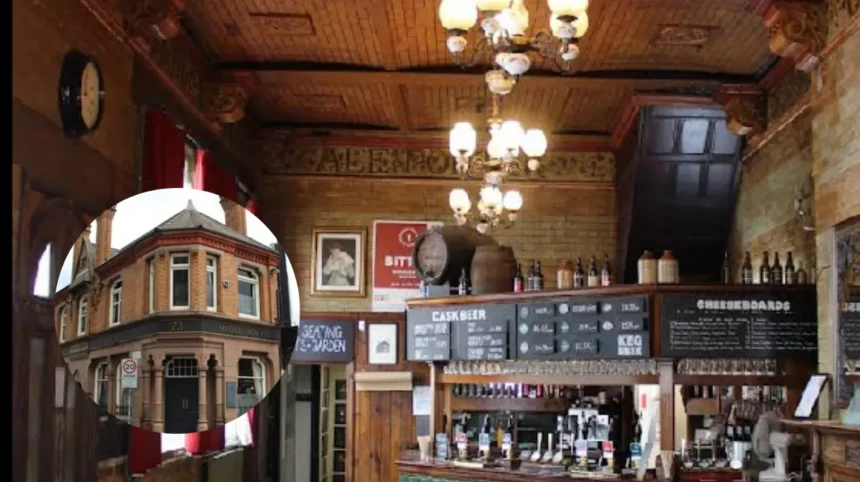
The Marble Arch, built in 1888, is one of the city’s oldest continuously operating pubs, owned by Marble Beers Ltd., known for its ornate tiled interior and barrel-vaulted ceilings.
The pub sits in New Cross, a historic district that once formed part of the industrial link between Ancoats and Collyhurst. The area has undergone significant transformation since the mid-2010s, with several derelict sites redeveloped into mixed-use residential quarters.
The New Cross Neighbourhood Development Framework identified the Marble Arch corner as a “gateway site,” suitable for “medium-to-high-density living” provided adjacent heritage structures were “sensitively integrated.”
McGoff’s scheme is one of several tall residential proposals in the area, reflecting Manchester’s broader trend of high-density regeneration north of its central core.
Prediction: How Could This Development Affect Residents and the Heritage Landscape?
Should the McGoff scheme gain approval, it may deliver a meaningful boost to housing supply, contributing to the city’s ongoing efforts to increase density and diversify residential offerings near its commercial core.
For local residents, the development could enhance neighbourhood amenities, including new retail and pedestrian spaces, though concerns regarding sunlight reduction, traffic pressure, and construction disruption persist.
For the heritage community, the project may serve as a test case for balancing 21st-century growth with 19th-century preservation, influencing future urban design approaches in Manchester.
While the public consultation outcome remains uncertain, the debate underscores the complex interplay between housing needs, architectural integrity, and cultural continuity within a rapidly reshaping city.