Key points
- A hotel on Canal Street in Manchester city centre was evacuated on the evening of May 10, 2026, following reports of suspected chemicals on the premises.
- Emergency services, including Greater Manchester Police, Greater Manchester Fire and Rescue Service and paramedics, responded to the incident.
- Guests and staff were moved out of the building as a precaution while officers and fire crews assessed the nature of the substance and ensured there was no wider public‑health risk.
- No immediate reports of serious injuries or confirmed hazardous chemical exposure were issued by emergency‑service representatives at the scene.
- Canal Street and a section of the surrounding area were temporarily cordoned off while the investigation took place.
- The exact origin of the suspected chemicals and whether they posed a significant hazard has not yet been fully disclosed by investigators.
- As reported by Hits Radio’s Manchester news team, the evacuation was treated as a precautionary measure rather than a confirmed major chemical incident.
Hotel evacuated on Canal Street over suspected chemicals sparks emergency response
Manchester(Manchester Mirror)May 11, 2026 – A hotel on Canal Street in Manchester city centre was evacuated on the evening of May 10, 2026, after emergency services were called over suspected chemicals on the premises, prompting a significant police and fire‑service presence in one of the city’s busiest nightlife and LGBTQ+ districts. As reported by Hits Radio Manchester, the building was cleared by force of law, with guests and staff moved to a safe distance while officers and fire crews conducted safety checks.
- Key points
- Hotel evacuated on Canal Street over suspected chemicals sparks emergency response
- Why was the Canal Street hotel evacuated?
- What did emergency services say about the suspected chemicals?
- How did the Canal Street area react?
- What was known about the hotel and the timing of the incident?
- Were there any injuries or confirmed hazards?
- Background of the development
- Prediction: How this incident could affect the particular audience
Why was the Canal Street hotel evacuated?
The incident unfolded on Canal Street, an area known for bars, clubs and late‑night venues, after a member of staff or guest raised concerns about an unusual smell or visible substance in or near the hotel. As reported by Hits Radio’s Manchester correspondent, the call to emergency services was made shortly before 9 pm, citing “possible chemical exposure” inside the building.
Greater Manchester Police confirmed officers were dispatched to Canal Street within minutes, with the Greater Manchester Fire and Rescue Service (GMFRS) also sending specialist crews trained in dealing with hazardous materials. As outlined by a GMFRS spokesperson who spoke to the local radio‑news team, the priority was to “ensure the safety of those inside the building and to rule out a serious chemical hazard” before allowing anyone to return.
Guests were asked to leave via the hotel’s front and rear exits, with staff instructed to remain calm and follow guidance from uniformed officers and fire crews. Some guests were seen exiting the premises with just handheld belongings, while others joined a temporary holding area established by emergency‑service personnel on nearby pavements away from the immediate cordoned‑off zone.
What did emergency services say about the suspected chemicals?
Greater Manchester Police told Hits Radio that the evacuation was carried out “as a precaution” while officers and fire‑safety experts assessed the situation. A force spokesperson stated that “no immediate reports of serious symptoms or injuries have been recorded at this stage,” and that anyone feeling unwell was being assessed by paramedics on site.
The Greater Manchester Fire and Rescue Service confirmed that a specialist team was conducting atmospheric and surface testing inside and around the hotel to determine if any hazardous chemicals were present. As reported by the GMFRS source, crews were checking air quality and any containers or spillages that might explain the initial alarm.
At the time of the report, neither police nor fire‑service representatives had publicly identified the exact chemical or chemicals involved, stressing that investigations were ongoing. The statement to Hits Radio stressed that the focus was on “protecting public safety first” and that the cordon would remain in place only as long as necessary.
How did the Canal Street area react?
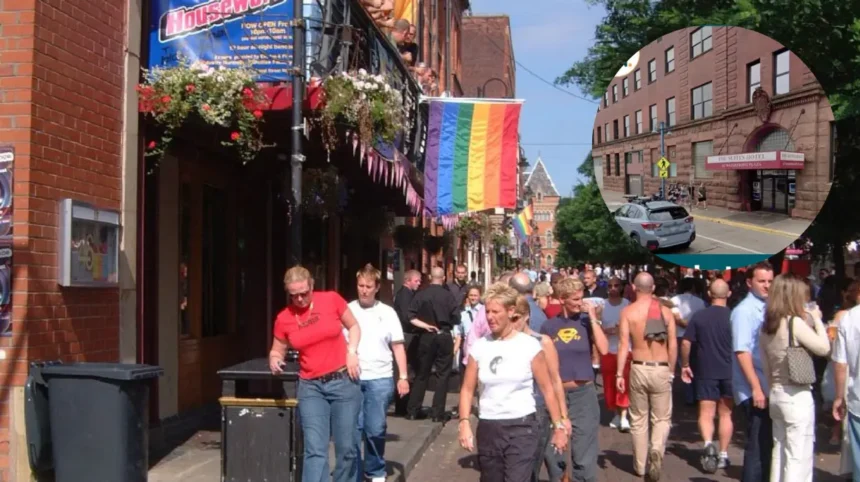
Canal Street, normally crowded on weekend evenings, saw footfall redirected as police established a temporary cordon around the hotel and adjacent streets. Bollards and tape were set up to restrict access, and passers‑by were asked to follow the advice of officers and avoid taking unnecessary photos or lingering near the scene.
Local bar and club managers told the radio‑news team that staff had been briefed not to let guests into the affected building and that some patrons had been re‑directed to nearby venues outside the cordoned‑off area. Several venue staff said they had received no prior warning of the incident and were only made aware once emergency services arrived.
Customers and visitors in the area described an atmosphere of confusion at first, followed by visible relief once the scope of the evacuation became clear. Some said they had heard staff discussing “a smell” or “something in the air,” but no one interviewed at the time reported being physically unwell.
What was known about the hotel and the timing of the incident?
The hotel involved is one of several licensed premises on Canal Street catering to both tourists and city‑centre nightlife visitors. As noted by Hits Radio’s Manchester news coverage, the building typically hosts a mix of short‑stay guests and some longer‑term visitors, including those attending events in the city.
The evacuation occurred on a Saturday evening, when Canal Street is usually at its busiest, heightening the importance of a swift but controlled response from emergency services. The timing also meant that guests had to be moved quickly, with some forced to wait outside in the cool night air while assessments continued.
No official statement was released about how long the cordon would remain in place, but officers indicated that access would be restored once fire and safety experts were satisfied that the area posed no significant risk.
Were there any injuries or confirmed hazards?
At the time of the initial report, no serious injuries linked to the suspected chemicals were formally recorded. A Greater Manchester Ambulance Service spokesperson, speaking to the local‑news outlet, confirmed that “a small number of individuals were assessed at the scene,” but that none required immediate hospital transport as a priority.
One paramedic on the scene, who declined to give their name, told Hits Radio that those examined reported “mild discomfort or concern” rather than severe respiratory or chemical‑burn symptoms, and that reassurance and basic checks were the main focus. The ambulance‑service source added that the situation was being treated as “a precautionary incident” rather than a confirmed major‑incident chemical release.
Greater Manchester Police reiterated that the public should not assume there was a widespread chemical hazard based on the evacuation alone. The statement to Hits Radio emphasised that the cordon was in place
“to protect everyone involved and to allow experts to complete their assessment safely.”
Background of the development
Chemical‑related incidents in Manchester city centre are rare but not unprecedented, and past episodes have led to changes in how emergency services handle reports of suspected hazardous materials in busy areas. In 2024, a hazmat‑style incident at Trafford Park prompted a major‑incident declaration and a 300‑metre cordon, illustrating how seriously authorities treat unconfirmed chemical leaks in industrial and commercial zones.
In that earlier case, a chemical leak at a manufacturing site led to residents being told to close windows and doors, and a hazardous substance later identified as phosphorus oxychloride was found to have escaped during tanker unloading. Those lessons appear to have fed into current protocols for treating suspected chemical alarms in densely populated areas such as Canal Street, where footfall and public‑health risk are high even if the true hazard turns out to be low.
The Canal Street hotel evacuation in 2026, therefore, sits within a broader pattern of precaution‑based responses in Manchester, where authorities have repeatedly emphasised that public safety comes first, even when subsequent investigations show no major chemical release.
Prediction: How this incident could affect the particular audience
For Manchester residents, visitors and LGBTQ+ communities who frequent Canal Street, the evacuation may heighten awareness of emergency‑response procedures in crowded nightlife areas, even if no serious chemical exposure is ultimately confirmed. Local venue owners and hoteliers may scrutinise how they report and manage unusual smells or suspicious substances, potentially tightening internal safety checks and staff training in line with fire‑service guidance.
For tourists and short‑stay guests, the incident may prompt more questions at check‑in about emergency plans and chemical‑safety procedures, especially given Manchester’s recent history of hazmat‑style alerts in and around the city centre. Authorities and emergency‑service spokespersons are likely to reiterate precautionary messaging, stressing that evacuations like the Canal Street hotel case are designed to protect lives, even when the underlying risk is later found to be low.