Key Points
- Manchester United have installed Michael Carrick as interim head coach for the remainder of the 2025‑26 campaign following the sacking of Ruben Amorim in January 2026.
- Carrick’s win‑rate and turnaround in results have made him the leading candidate for the permanent head‑coach role, with analysts describing the job as “his to forfeit” if he can maintain current form.
- Off‑pitch, Carrick is already involved in 2026‑27 squad planning and long‑term strategy, even though the club has not formally confirmed his future beyond the current season.
- Several high‑profile names, including Luis Enrique, Julian Nagelsmann, Thomas Tuchel, Eddie Howe and Cesc Fàbregas, have been linked but have not displaced Carrick as the clear frontrunner.
- Some pundits, including Sky Sports’ Jamie Carragher, argue that United need a “special” boss with more charisma and energy than Carrick, reflecting continued internal debate at Old Trafford.
- As of late April 2026, INEOS owner Jim Ratcliffe’s project at the club is still weighing whether a short‑term continuation of Carrick fits longer‑term ambitions or if a more prominent appointment is required.
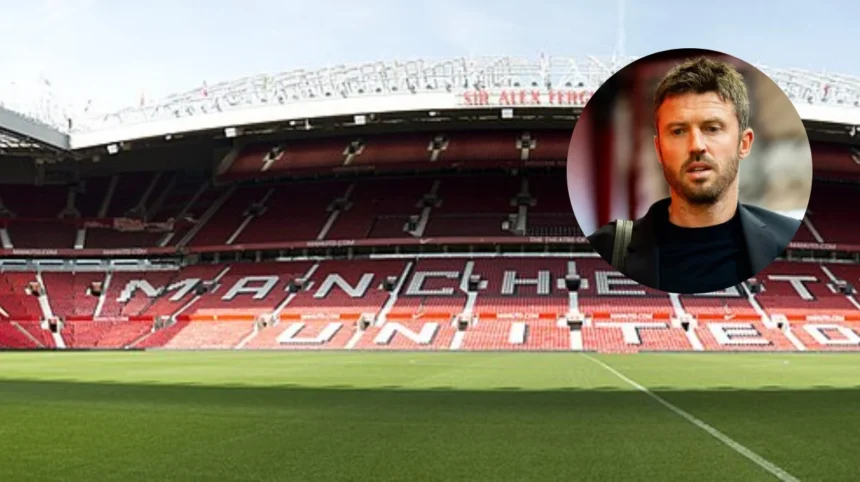
Manchester United(Manchester Mirror) April 30, 2026 – Michael Carrick is emerging as the man most likely to retain the Manchester United head‑coach role beyond the 2025‑26 season, but his path from interim to permanent boss is being scrutinised through a mix of on‑pitch results, off‑pitch influence and the club’s stated ambition to hire a “special” manager. The question now is whether United see Carrick as the embodiment of a renewed club identity or as a transitional figure holding the reins until a more globally recognised name steps in.
- Key Points
- How strong is Carrick’s case for the full‑time job?
- What is the club specifically saying about Carrick’s future?
- How is Carrick shaping United’s 2026‑27 plans?
- Who are the main rivals to Carrick for the Old Trafford job?
- What do the powerbrokers and pundits disagree on?
- Background: How did Carrick become United’s strongest alternative candidate
- Prediction: How this development could affect fans and stakeholders in 2026
How strong is Carrick’s case for the full‑time job?
As reported by talkSPORT’s lead football correspondent Alex Crook, the permanent head‑coach role at Old Trafford is currently “Michael Carrick’s to forfeit”, given the uncertainty around other candidates. Crook argued that, despite interest in names such as Cesc Fàbregas, there is no clear alternative who would represent a step up from Carrick in terms of Premier League management pedigree, coaching outlook and tactical profile.
Sky Sports’ coverage of the managerial picture has similarly framed Carrick as the man edging closer to the permanent role, noting that since his appointment in January, he has overseen a marked improvement in results and that the club has not yet opened talks with obvious successors. This has led to the narrative that Carrick is not only the incumbent but also the default, at least for the time being, as United’s hierarchy weighs the cost and risk of another external appointment.
What is the club specifically saying about Carrick’s future?
Manchester‑based outlet StrettyNews reported in mid‑April that Carrick was widely regarded as the “ultimate favourite” for the permanent role “over the past few weeks”, but that a limp 1–0 loss to Leeds United had “dealt a major blow” to his chances. The source quoted club insiders who were reportedly unimpressed with the team’s “lack of intensity”, especially after a period of rest, and suggested that the hierarchy may be wary of repeating the “emotional” decision that followed Ole Gunnar Solskjær’s tenure.
Despite that criticism, StrettyNews still listed Carrick among the main profiles under consideration, alongside big‑name options such as Paris Saint‑Germain’s Luis Enrique and Germany’s national‑team boss Julian Nagelsmann. The same outlet noted that United’s directors are using the end of the season to evaluate several candidates, but have not yet ruled Carrick out, leaving the door open for either a formal extension or a fresh external search.
How is Carrick shaping United’s 2026‑27 plans?
As reported by Mykhel, Michael Carrick is already playing a central role in Manchester United’s long‑term planning for the 2026‑27 season, even though the club has not publicly confirmed his status beyond the current campaign. The outlet noted that the interim head coach is involved in squad‑planning discussions and broader strategic talks, while a solid run of results has “strengthened” his case for the permanent job as United push for Champions League qualification.
An analysis piece on the INEOS‑driven rebuild, featured on the YouTube channel The xG Files, argued that Carrick’s growing influence off the pitch mirrors his on‑pitch stability, with the club’s decision‑makers using his interim spell to test both his tactical setup and his ability to manage big‑name egos. The show emphasised that, rather than merely being a stopgap, Carrick is being treated as a potential architect of the post‑Amorim era, depending on how the rest of the season unfolds.
Who are the main rivals to Carrick for the Old Trafford job?
Sky Sports pundit Jamie Carragher, speaking on the network’s coverage of United’s managerial search, has outlined a shortlist of coaches he believes would fit the Old Trafford role, including Thomas Tuchel, Eddie Howe, Julian Nagelsmann and Luis Enrique. Carragher stated that United’s next permanent boss must possess a particular “energy” and “drive” and suggested that Carrick would not be his preferred choice, arguing the club needs a “special” manager rather than a continuity appointment.
ESPN’s January 2026 feature on United’s next manager listed 12 potential candidates, including Enrique, Nagelsmann, Tuchel, Howe and others, while also flagging that the club had not yet decided whether to appoint quickly or wait until after the World Cup to land a higher‑profile name. The report noted that interim stints by former United midfielders like Darren Fletcher were being used to buy time for the hierarchy to evaluate the wider market, but by April 2026 Carrick had overtaken that temporary model to become the most prominent figure in the race.
On social and commentary platforms, some posters have begun contrasting Carrick with Andoni Iraola at AFC Bournemouth, suggesting that Iraola has “emerged as the strongest candidate to rival Michael Carrick” for the United role. However, this narrative remains largely speculative and has not been echoed in major news outlets’ reporting, which continues to place Carrick at the centre of the conversation.
What do the powerbrokers and pundits disagree on?
The divide over Carrick’s candidacy is largely philosophical: whether United should reward stability and institutional knowledge or seek a more disruptive, headline‑grabbing figure.
While talkSPORT’s Alex Crook sees a clear case for Carrick, arguing that there is “no clear option that would surpass Michael Carrick” among the available alternatives, Sky Sports’ Jamie Carragher takes the opposite stance. Carragher’s view is that United, after a series of underwhelming appointments, owe it to their stature to hire someone with demonstrable success at the very top level, implying that an in‑house promotion such as Carrick’s would fall short of that benchmark.
This split in the punditry reflects an internal tension at Old Trafford, where INEOS‑led leadership is balancing short‑term stability with long‑term prestige. On one side are voices that see Carrick as the embodiment of a club‑rooted identity; on the other, figures who believe United’s identity must be rebuilt through a more globally recognised manager rather than a former player‑cum‑coach.
Background: How did Carrick become United’s strongest alternative candidate
Michael Carrick’s route to the Old Trafford dugout began in January 2026, when Manchester United dismissed Ruben Amorim after a 14‑month tenure that was widely judged a failure on the pitch and in the dressing room. United opted initially for an internal solution, installing former midfielder Darren Fletcher as an interim manager for a short period, but ultimately promoted Carrick to head coach on a temporary contract until the end of the season.
From the outset, Carrick was viewed as a safe, familiar figure who understood the club’s culture and could steady the ship. Analysis from outlets such as StrettyNews and Sports Yahoo highlighted that his early months brought improved discipline and a clearer tactical structure, which helped United claw back ground in the Premier League and keep Champions League qualification in reach. As results accumulated, journalists began to write that Carrick was “creating a case” for the permanent role, and that the club’s hierarchy would be “hard‑pressed” to justify bringing in a more expensive, higher‑profile name if he maintained his trajectory.
At the same time, United’s owners, led by INEOS chairman Jim Ratcliffe, have been reshaping the club’s football structure, emphasising data‑driven recruitment and long‑term project planning. Within that framework, Carrick’s role has expanded beyond match‑day management into summer‑transfer planning and squad‑building discussions, a sign that the club sees him either as a serious long‑term candidate or as a bridge to someone else.
Prediction: How this development could affect fans and stakeholders in 2026
If Manchester United do appoint Michael Carrick permanently in 2026, supporters can expect continuity in tactics, a stronger emphasis on club‑bred identity and a slower, more incremental rebuild than if a marquee name such as Luis Enrique or Thomas Tuchel were hired. For fans who value connection to former players and a “United‑way” approach, this would be framed as a positive step toward ending a cycle of short‑term managerial experiments.
However, if the club ultimately rejects Carrick in favour of a higher‑profile appointment, the impact on supporters could be mixed: some may welcome the ambition of signing a proven winner, while others may view the decision as another instance of spurning internal candidates in favour of external “star” managers. For the club’s commercial and global fanbase, a big‑name hire would likely generate more media noise and social‑media buzz, but it would also raise the pressure on the new manager to deliver immediate trophies, increasing the risk of rapid turnover if expectations are not met.
In terms of the Premier League landscape, a settled Carrick side could stabilise United as a regular top‑four contender without necessarily becoming title favourites, whereas a radical appointment might push the club into a more volatile, high‑stakes cycle of short‑term windows and make‑or‑break seasons. Ultimately, the decision around Carrick in 2026 will shape not only Manchester United’s identity on the pitch but also how fans and stakeholders interpret the club’s vision for the next decade.