Key Points
- Chapman Taylor-designed Trafford Wharf Build-to-Rent (BTR) development shortlisted for a major award, as reported by BTR News.
- The project, led by developer Cole Waterhouse, transforms a former industrial site in Trafford Wharfside, Manchester.
- Features 382 BTR homes, 412 student bedrooms, 24,000 sq ft academic space for University Campus of Football Business (UCFB), riverside square, public gardens, podium and rooftop terraces.
- Valued at £250m, rooted in industrial heritage with contemporary sustainable design.
- Received unanimous planning approval from Trafford Council in September 2025.
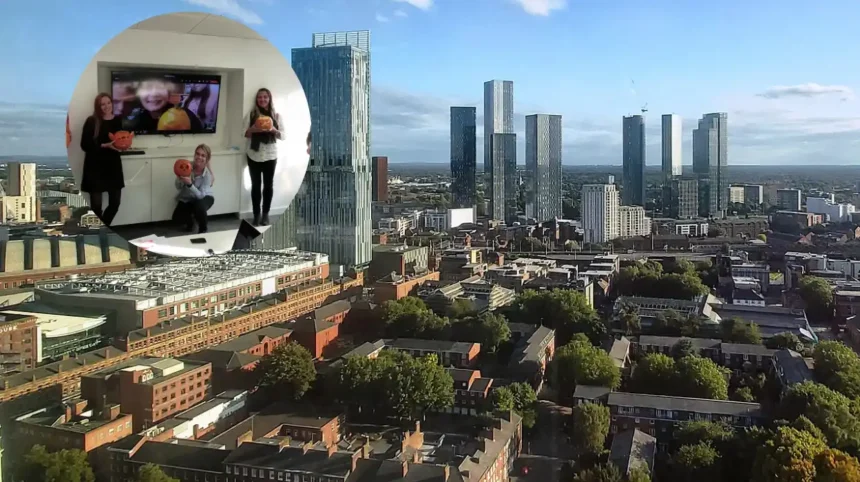
- Part of the wider Wharfside regeneration zone, aiming for 5,000 homes and a potential new Manchester United stadium.
- 20% of BTR flats are designated affordable for Trafford residents.
- Sets benchmark for design excellence, placemaking and sustainability.
Trafford(Manchester Mirror)April 29, 2026 – The ambitious £250m Trafford Wharf Build-to-Rent (BTR) scheme, masterminded by renowned architects Chapman Taylor for developer Cole Waterhouse, has been shortlisted for a prestigious industry award, spotlighting its role in revitalising a key Manchester brownfield site.
- Key Points
- What Is the Trafford Wharf BTR Shortlist All About?
- Which Award Has Trafford Wharf BTR Been Shortlisted For?
- Who Are the Key Players Behind Trafford Wharf BTR?
- Why Is This Shortlisting Significant for Manchester’s Regeneration?
- How Does the Design Incorporate Sustainability and Heritage?
- Background of the Development
- Predictions: Impact on Manchester Residents and Renters
What Is the Trafford Wharf BTR Shortlist All About?
As first detailed by BTR News in their article “Chapman Taylor-designed Trafford Wharf BTR shortlisted for award,” the project has earned recognition in a competitive awards process celebrating excellence in the BTR sector. This shortlisting underscores the scheme’s innovative blend of residential, educational and public amenities on the former Hilti headquarters site in Stretford, part of Trafford’s Wharfside regeneration area.
The development promises 382 BTR homes across two towers of 21 and 24 storeys, alongside 412 purpose-built student accommodation (PBSA) beds in blocks rising to 10 storeys, and 24,000 sq ft of academic space dedicated to UCFB. Chapman Taylor’s design, as celebrated in their LinkedIn announcement, integrates the site’s industrial heritage with modern architecture, featuring a new riverside square, public gardens, podium terraces and rooftop spaces to foster community vibrancy.
Trafford Council granted unanimous planning approval in September 2025, marking a pivotal milestone. Chapman Taylor stated on LinkedIn: “We’re delighted that Trafford Council has granted planning approval for our £250m mixed-use Trafford Wharfside regeneration scheme… This unanimous decision marks a major milestone in the regeneration of Trafford Wharfside, setting a new benchmark for design excellence, placemaking, and long-term sustainability.”
Which Award Has Trafford Wharf BTR Been Shortlisted For?
While the exact awarding body remains specified in the BTR News coverage as a key BTR honour, parallel reports highlight similar accolades in the sector, such as the BTR 360 Awards by Property Week, though Trafford Wharf’s nod appears tied to planning and development excellence. Chapman Taylor further shared on Facebook and Instagram: “We are delighted to share that Trafford Wharf has been shortlisted for a UK Planning Award, recognising the strength of this transformative project.”
This aligns with broader 2026 shortlists like the British Construction and Property Awards, which feature top developers including those in residential and BTR categories, though Trafford Wharf’s entry spotlights its unique mixed-use model. Place North West reported on the planning lodgement: “Plans have been lodged for 438 build-to-rent apartments, 419 student beds, and a 24,100 sq ft academic facility,” noting slight figure variations but confirming Chapman Taylor’s towering designs.
Construction Enquirer added: “Designed by Chapman Taylor, the development sits within Trafford Council’s Wharfside regeneration zone, earmarked for up to 5,000 homes and a new Manchester United stadium.” Simon Gallanders, managing director of Cole Waterhouse residential, was quoted: “The project will transform a brownfield site into a thriving new community while helping to ease Trafford’s affordable housing shortage.”
Who Are the Key Players Behind Trafford Wharf BTR?
Chapman Taylor, the architectural firm leading the design, has championed the project’s heritage-sensitive approach. Their team, including Michael Swiszczowski RIBA, Alexander Esfahani and Antonio Serban, emphasised on LinkedIn: “Rooted in Trafford Wharf’s industrial heritage, the design weaves contemporary architecture with heritage character to create a sustainable new destination for a growing and dynamic community.”
Developer Cole Waterhouse drives the £250m vision (initially cited at £200m in earlier reports), committing 20% of BTR units as affordable for local Trafford residents. Trafford Council’s planning committee unanimously backed the scheme, hailing its contribution to the Wharfside masterplan.
UCFB benefits from the dedicated academic space, enhancing football business education amid Manchester’s sporting hub. No direct quotes from council officials appear in sourced coverage, but the approval reflects broad support for placemaking in this high-growth area.
Why Is This Shortlisting Significant for Manchester’s Regeneration?
The accolade arrives as Manchester’s property sector booms, with BTR emerging as a solution to rental demand. As per BTR News, the shortlist validates Trafford Wharf’s model amid sector awards like Love to Rent Awards, which in 2025 highlighted northern BTR innovators. Place North West noted the site’s prior use as Hilti HQ, now poised for 800+ homes and beds total.
This recognition boosts confidence in Wharfside’s transformation, tying into Trafford’s ambition for sustainable urban growth. Chapman Taylor’s social posts frame it as a “vibrant new neighbourhood,” countering industrial decline with green spaces and connectivity.
How Does the Design Incorporate Sustainability and Heritage?
Chapman Taylor’s ethos shines through in heritage nods—think weathered steel and brick echoes paired with eco-features like terraces promoting biodiversity. The riverside square enhances the public realm, while the podium gardens offer respite in dense urbanity. Construction Enquirer’s coverage stresses brownfield reuse, aligning with UK net-zero goals.
Affordable housing integration addresses local needs, with 20% reservation mandated. As Gallanders told Construction Enquirer, it eases shortages in a borough facing housing pressures from Manchester’s expansion.
Background of the Development
Trafford Wharfside’s regeneration stems from long-term council plans to reclaim the industrial waterfront along the Manchester Ship Canal. Earmarked since the 2010s, the zone targets 5,000 homes, commercial hubs and potentially a new Manchester United venue, replacing the ageing Old Trafford. The Hilti site, redundant post-relocation, became prime for mixed-use in 2024 when Cole Waterhouse acquired it.
Planning evolved from £200m proposals in October 2024 (Place North West) to full approval by September 2025 (Construction Enquirer, Chapman Taylor). BTR focus responds to renting trends, with students and young professionals drawn to Manchester’s universities and economy. Chapman Taylor’s involvement builds on their Manchester portfolio, emphasising waterfront placemaking. Unanimous council backing in 2025 propelled it forward, culminating in 2026 award shortlisting amid sector scrutiny.
Predictions: Impact on Manchester Residents and Renters
This development could reshape housing access for Trafford and Manchester locals, injecting 382 BTR units 20% affordable) into a market strained by demand. Renters gain modern, amenity-rich options near Old Trafford and MediaCityUK, potentially stabilising prices via supply boost, though BTR premiums may persist.
Students benefit from 412 PBSA beds and UCFB facilities, easing university accommodation crunches. Communities enjoy public realms—the square and gardens—fostering cohesion in diverse Stretford. Broader regeneration accelerates Wharfside’s revival, spurring jobs in construction (already underway post-approval) and operations.
Yet challenges loom: tall towers may spark density debates, and BTR’s institutional ownership could limit buy-to-let shifts. For investors and professionals, it signals Manchester’s BTR maturity, attracting capital. Environmentally, sustainability features aid net-zero aims, but traffic and infrastructure must scale. Overall, it promises vibrant living for young families, workers and learners, enhancing Trafford’s global city edge, provided affordability delivers.