Manchester is home to 32 administrative wards, each carrying a distinct combination of ecological assets. Biodiversity across these wards includes urban woodlands, river corridors, designated nature sites, parks, and post-industrial habitats with emerging wildlife value. Understanding how biodiversity in Manchester wards is distributed, measured, and managed helps residents, planners, and conservation practitioners direct action where it is most needed and most effective.
- What Is Biodiversity and Why Does It Matter in Manchester’s Urban Wards?
- How Are Manchester’s 32 Wards Distributed Across the City’s Ecological Landscape?
- What Designated Sites of Biological Importance Are Found Across Manchester’s Wards?
- How Does the Manchester Biodiversity Strategy 2022–2030 Operate at the Ward Level?
- What Is Biodiversity Net Gain and How Does It Apply to Development Across Manchester Wards?
- Which Ward-Level Projects Are Delivering Measurable Biodiversity Outcomes?
- How Does the Greater Manchester Biodiversity Action Plan Support Ward-Level Conservation?
- What Can Residents in Manchester Wards Do to Support Local Biodiversity?
- How much does a biodiversity net gain assessment cost in Manchester?
- How long does a biodiversity survey take in Manchester?
- Do I need an ecologist for planning permission in Manchester?
- What is a Phase 1 habitat survey, and when is it needed in Manchester?
- What happens if a development in Manchester fails to achieve biodiversity net gain?
What Is Biodiversity and Why Does It Matter in Manchester’s Urban Wards?
Biodiversity is the total variety of living species, habitats, and ecosystems in a defined area. In Biodiversity Manchester wards, biodiversity delivers clean air, flood protection, mental health benefits, and climate resilience. The city’s industrial heritage makes nature recovery both a challenge and a civic responsibility recognised in law.
Biodiversity encompasses every species of plant, animal, fungus, and microorganism, as well as the ecosystems and ecological processes they form. In a densely built city like Manchester, biodiversity performs functions that engineering alone cannot replace. Trees absorb airborne pollutants and reduce ambient temperatures in areas with high traffic density. Parks, gardens, and wetlands absorb rainfall and reduce flood peaks across drainage-stressed urban catchments. The Environment Act 2021 legally requires all local authorities in England, including Manchester City Council, to consider, conserve, and enhance biodiversity in all activities.
Manchester sits within one of the most nature-depleted countries in the world, acknowledged explicitly in the city’s own Biodiversity Strategy. More than 2,000 Manchester residents identified local wildlife as personally important to them during a 2019 consultation exercise. A 2020 Royal Society for the Protection of Birds survey confirmed that regular contact with nature directly improves wellbeing and psychological health. With residential, commercial, and infrastructure development continuing across multiple wards, protecting and expanding biodiversity is both a legal obligation and an ecological necessity for the city’s long-term functioning.
How Are Manchester’s 32 Wards Distributed Across the City’s Ecological Landscape?
Manchester operates 32 council wards, each containing a unique combination of green spaces, watercourses, and built environments. Biodiversity conditions within each ward reflect historical land use, proximity to river valleys, urban tree canopy density, and the presence of designated ecological sites. Ward geography directly shapes local biodiversity outcomes.
Manchester’s 32 wards span a range of ecological conditions shaped by geography and industrial history. Southern wards, including Didsbury West, Chorlton, and Northenden, contain significant areas of mature tree cover, open meadow grassland, and proximity to the River Mersey corridor, one of the city’s most important wildlife movement routes. Northern wards, including Moston, Harpurhey, and Miles Platting, contain higher proportions of post-industrial land with growing ecological value through targeted habitat restoration. Central wards such as Piccadilly and Deansgate contain lower baseline levels of natural greenspace but benefit from active urban greening through developments including Mayfield Park, Manchester’s first new city centre park in more than 100 years.
Each ward sits within the Greater Manchester ecological network, a spatially mapped framework of interconnected habitats designed to facilitate species movement between sites across the conurbation. Ward boundaries directly influence planning decisions, community conservation funding allocations, and the geographic distribution of volunteer ecological recording effort. Biodiversity data collected at the ward level by the Greater Manchester Ecology Unit provides the evidence base for spatially targeted conservation action and planning policy development. The composition and ecological condition of green infrastructure within each ward determines its contribution to Manchester’s citywide nature recovery goals under the 2022–2030 Biodiversity Strategy.
What Designated Sites of Biological Importance Are Found Across Manchester’s Wards?
Manchester contains 37 designated Sites of Biological Importance and 8 Local Nature Reserves distributed across multiple wards. These sites represent the most ecologically valuable habitats in the city, including ancient woodlands, urban wetlands, and river margins, and receive the highest level of planning protection available under local policy.
Sites of Biological Importance are non-statutory designations used across Greater Manchester to identify and protect locally significant wildlife habitats. The 37 SBIs within Manchester’s ward boundaries include habitats such as semi-natural grasslands, remnant woodland, canal corridor vegetation, river margins, and urban brownfield habitats with rare invertebrate assemblages. Local Nature Reserves carry statutory designation under the National Parks and Access to the Countryside Act 1949 and include sites such as Chorlton Water Park, Boggart Hole Clough, and Philips Park, each located within specific ward boundaries. Two additional LNRs are in the designation process: Broadhurst Clough in the Moston ward area and Kenworthy Woods in the Northenden ward area.
Once formally designated, both sites require active management by Manchester City Council and receive explicit protection within the Local Plan. Future development proposals in wards containing SBIs or LNRs must complete ecological impact assessments as a condition of planning permission. The Greater Manchester Ecological Framework, developed by the Greater Manchester Ecology Unit in partnership with the University of Salford and the University of Manchester, provides spatial mapping of all designated sites to guide ward-level planning decisions. Wards in southern and northern Manchester with historically lower development pressure contain the highest concentrations of SBIs, reflecting the retention of semi-natural habitats across these areas.
How Does the Manchester Biodiversity Strategy 2022–2030 Operate at the Ward Level?
The Manchester Biodiversity Strategy 2022–2030, formally endorsed by Manchester City Council on 19 October 2022, sets binding conservation objectives for all wards. It targets active management of all priority wildlife sites by 2030, embeds biodiversity requirements into planning policy, and connects ward-level action to national nature recovery networks.
The Manchester Biodiversity Strategy 2022–2030 is the third consecutive strategy of its kind produced by Manchester City Council. It was drawn together by the Lancashire Wildlife Trust for Greater Manchester alongside Natural England, the Environment Agency, the Greater Manchester Ecology Unit, the Royal Society for the Protection of Birds, City of Trees, Canal and River Trust, Manchester Metropolitan University, and the University of Manchester. The strategy builds directly on biodiversity work initiated in Manchester as early as 2005 and the My Wild City four-year programme established by the Wildlife Trust in 2018. It aligns with the UK Government’s 25-Year Environment Plan, which sets national targets for expanding, improving, and connecting wildlife-rich habitats across England.
At the ward level, the strategy operates through the Manchester Biodiversity Action Group, which supports and coordinates community-led conservation initiatives across neighbourhoods. The strategy prioritises embedding biodiversity objectives into the Manchester Local Plan, the statutory document governing all land use decisions within each ward. Key biodiversity assets identified at ward level include four river valley corridors, the Irwell, Medlock, Irk, and Mersey, each crossing multiple ward boundaries and functioning as primary wildlife movement routes across the city. All priority wildlife sites across Manchester’s 32 wards are targeted for active management status by 2030, providing a measurable ward-level outcome for the strategy’s ecological objectives.
What Is Biodiversity Net Gain and How Does It Apply to Development Across Manchester Wards?
Biodiversity net gain is a mandatory legal requirement under the Environment Act 2021 that obliges all new development in England to achieve a minimum 10% increase in biodiversity value compared to the pre-development ecological baseline. This requirement applies to all planning applications across every Manchester ward from November 2023.
Biodiversity net gain is calculated using the Biodiversity Metric developed and published by Natural England. Developers submit a BNG plan as a statutory component of their planning application, demonstrating a verified pre-development biodiversity baseline and a post-development biodiversity score reflecting a measurable 10% improvement in habitat condition and extent. Manchester City Council, operating alongside the Greater Manchester Combined Authority, enforces BNG requirements for all applicable development projects within its ward boundaries.
The BNG assessment must be completed and verified by a qualified ecologist, who records habitat types, condition classifications, and spatial extent before and after development using standardised field survey protocols. Where the required net gain cannot be achieved on the development site itself, developers purchase and offset biodiversity units at approved off-site habitat enhancement locations.
These off-site locations are increasingly aligned with priority areas identified within the Greater Manchester Local Nature Recovery Strategy, published in 2025, to maximise ecological benefit per investment. Wards experiencing the highest development intensity, including Ancoats, Hulme, Ardwick, and Gorton, carry the most direct exposure to BNG compliance requirements. The Greater Manchester Environment Fund provides structured support for landowners, developers, and local planning authorities seeking to achieve and maintain their BNG commitments across ward boundaries. Councils in Manchester require verified BNG information at the earliest stage of the planning process, before site layouts are finalised, to confirm that the required 10% gain is achievable and legally secured.
Which Ward-Level Projects Are Delivering Measurable Biodiversity Outcomes?
Ward-level biodiversity projects in Manchester include new Local Nature Reserve designations in Moston and Northenden, urban park creation, river habitat restoration, and community-led species monitoring. These initiatives deliver recorded biodiversity improvements at specific ward locations, contributing to the city’s 2030 nature recovery targets.
Broadhurst Clough in the Moston ward is progressing through the formal process for Local Nature Reserve designation as part of Manchester’s ward-specific biodiversity expansion programme. Kenworthy Woods in the Northenden ward represents a second LNR candidate site, adding to Manchester’s existing eight operational reserves. Mayfield Park, located in the central Manchester ward zone, opened as the city’s first new urban park in over 100 years and delivers measurable green space improvements in a historically nature-poor ward. The Our Rivers Our City strategy, a citywide river habitat initiative shortlisted for the Landscape Institute Awards, focuses on restoring riparian habitats and improving water quality across multiple ward river corridors.
Otters have been recorded in Manchester’s rivers for the first time in decades, providing direct biological evidence of improving water quality and river habitat condition in ward-adjacent watercourses. Barn owls began nesting in the city for the first time in more than 75 years, demonstrating habitat quality improvements in peripheral wards with suitable nesting and foraging land. The City of Trees programme drives ward-by-ward tree planting campaigns, prioritising wards with the lowest urban canopy cover in the city. Community volunteer recording groups active in wards including Rusholme, Moss Side, and Withington, submit species sighting data directly to the Greater Manchester Local Records Centre, building the ward-level biodiversity baseline used to measure conservation progress.
How Does the Greater Manchester Biodiversity Action Plan Support Ward-Level Conservation?
The Greater Manchester Biodiversity Action Plan covers all 10 districts of Greater Manchester, including Manchester City. It identifies priority habitats and species of local conservation concern and delivers habitat-specific and species-specific action plans that directly inform ward-level conservation decisions, ecological surveys, and planning policy across the region.
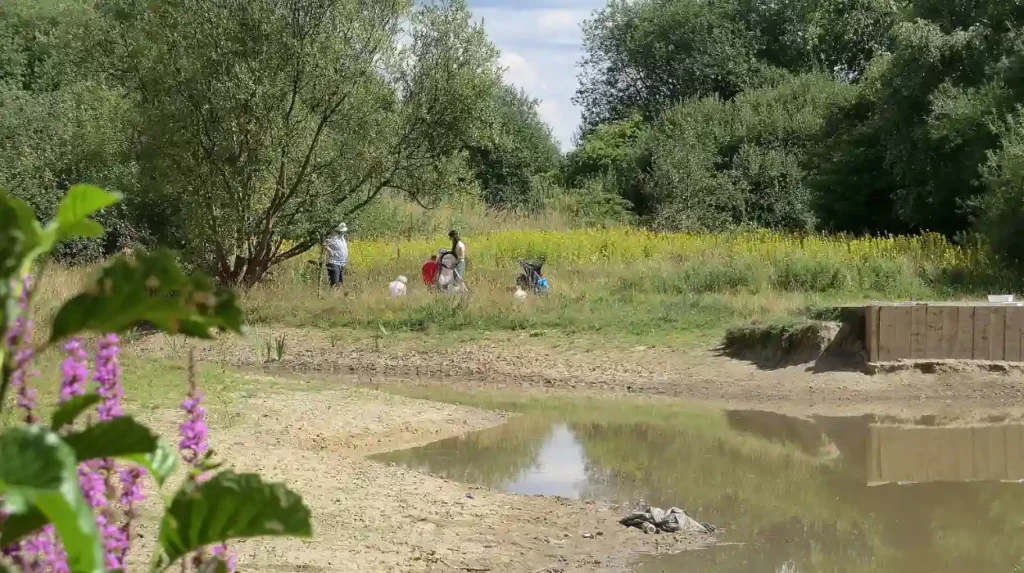
The GM BAP was developed by the Greater Manchester Ecology Unit and is administered through the Greater Manchester Local Records Centre. Its geographic scope covers all 10 Greater Manchester districts: Bolton, Bury, Manchester, Oldham, Rochdale, Salford, Stockport, Trafford, Tameside, and Wigan. The overarching objective of the GM BAP is to promote the conservation, protection, and enhancement of biological diversity across the region for current and future generations. Priority habitats identified for action within Greater Manchester include lowland meadows, ancient and semi-natural woodland, upland heath, wetlands, floodplain grazing marsh, and urban brownfield habitats with rare invertebrate communities, all of which are represented within specific Manchester ward boundaries.
Priority species covered by the GM BAP include UK BAP-listed species occurring locally within Greater Manchester, as well as species of regional conservation concern identified through systematic ecological survey efforts. Ward-level planners and ecological consultants consult the GM BAP alongside the Local Nature Recovery Strategy to identify where habitat restoration investment delivers the greatest biodiversity unit value per hectare. The Greater Manchester Ecological Framework, produced through research collaboration between the Greater Manchester Ecology Unit, the University of Salford, and the University of Manchester, provides the GIS-based spatial mapping of priority habitats and species distributions used to inform ward development and green infrastructure plans.
What Can Residents in Manchester Wards Do to Support Local Biodiversity?
Residents across Manchester’s 32 wards support biodiversity by creating wildlife-friendly gardens, recording species sightings, joining ward conservation groups, and participating in community tree planting. Individual resident actions contribute directly to ward-level biodiversity datasets, habitat unit values, and the city’s measurable nature recovery programme.
Every garden in Manchester’s residential wards represents a habitat unit with a calculable ecological value within the national Biodiversity Metric. Residents planting native trees, hedgerow species, wildflowers, and shrubs create food sources, nesting habitat, and shelter for insects, birds, and small mammals across the urban matrix. Installing nest boxes for cavity-nesting birds and bat roosting boxes in autumn allows species to survey and habituate to sites before the following spring breeding season. Leaving sections of private garden unmown throughout spring and summer, permitting wildflowers and grasses to set seed, directly supports pollinating insects and invertebrates critical to ecosystem-level food web functioning.
Submitting wildlife sightings to the Greater Manchester Local Records Centre builds the species occurrence dataset maintained by the Greater Manchester Ecology Unit and used to assess ward biodiversity baselines for statutory planning purposes. Supporting local parks, urban nature reserves, and wildlife volunteer groups active within individual wards connects personal action to the coordinated conservation programmes funded and managed at the ward level. The Manchester Biodiversity Action Group coordinates resident and community involvement across all 32 wards, enabling individuals to participate directly in the delivery of Manchester’s national nature recovery commitments. Schools, community gardens, faith organisations, and housing associations across Manchester’s ward boundaries all participate in urban biodiversity improvement programmes under the My Wild City and City of Trees frameworks supported by the Biodiversity Strategy 2022–2030.
How much does a biodiversity net gain assessment cost in Manchester?
The cost of a biodiversity net gain assessment in Manchester depends on site size, habitat complexity, and the number of distinct habitat types present on the development site. Smaller urban plots typically require less survey time and produce lower assessment fees than large mixed-habitat sites requiring multiple field visits. Engaging a qualified ecologist early in the planning process reduces the risk of costly reclassification, scope changes, and programme delays during the application stage.
How long does a biodiversity survey take in Manchester?
A standard biodiversity baseline survey in Manchester takes between one and five days of field work, depending on the size of the site and the range of protected species triggers identified during an initial desk study. Phase 1 habitat surveys are typically completed in a single site visit, while extended Phase 2 surveys for protected species such as bats, great crested newts, or breeding birds require seasonal timing and multiple survey visits across spring and summer.
Do I need an ecologist for planning permission in Manchester?
Manchester City Council requires a verified biodiversity net gain plan, prepared by a qualified ecologist, as a statutory condition of most new planning applications from November 2023 onward under the Environment Act 2021. The ecologist assesses the pre-development habitat baseline, calculates the post-development biodiversity score using the Natural England Biodiversity Metric, and confirms the method of achieving the mandatory 10% net gain.
What is a Phase 1 habitat survey, and when is it needed in Manchester?
A Phase 1 habitat survey is a standardised walkover assessment of all habitats present on a site, classified using the Joint Nature Conservation Committee methodology. It is required at the earliest stage of any development project in Manchester where the site contains vegetation, soil, water features, or structures with potential ecological value. The survey produces a habitat map, a written report, and a list of protected species risk flags that determine whether further Phase 2 surveys are needed before a planning application proceeds.
What happens if a development in Manchester fails to achieve biodiversity net gain?
If a development in Manchester fails to achieve the mandatory 10% biodiversity net gain on site, the developer is required to purchase off-site biodiversity units at an approved habitat enhancement location within the local area. These off-site units must be secured through a legal agreement and maintained for a minimum of 30 years from the date of planning permission. Manchester City Council and the Greater Manchester Combined Authority verify that the biodiversity gain has been delivered and maintained through monitoring conditions attached to the planning consent.