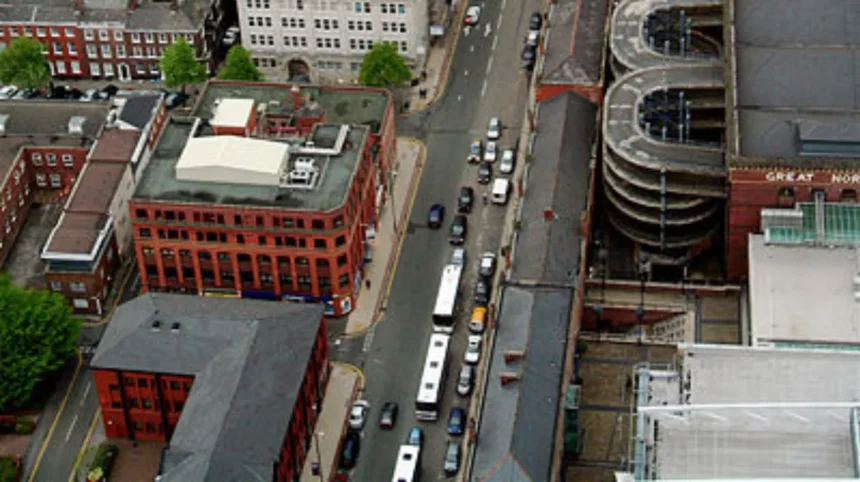
Deansgate’s hidden waste woes refer to the systemic challenges of managing high-density urban refuse within Manchester’s primary thoroughfare. These issues encompass illegal fly-tipping, inadequate commercial bin storage, and the environmental strain caused by a 24-hour economy in an antiquated infrastructure.
- How does historical infrastructure contribute to waste problems?
- What laws govern commercial waste on Deansgate?
- Why is fly-tipping a significant issue in the area?
- What role does the circular economy play in solutions?
- How will future strategies address these woes?
- What are the environmental impacts of urban waste?
Deansgate is a major mile-long road in Manchester City Centre that serves as a commercial and residential hub. The term hidden waste woes specifically describes the accumulation of non-visible or ignored refuse issues that compromise the local environment. These problems arise from the high concentration of retail outlets, hospitality venues, and luxury apartments operating within a space originally designed for Victorian-era traffic. In 2024 and 2025, Manchester recorded 14,963 fly-tipping incidents, with approximately 59% of these occurring on public roads and pavements like those bordering the Deansgate ward.
The hidden nature of these woes often stems from the timing of waste generation and collection. While the street appears clean during peak pedestrian hours, the nighttime economy produces significant volumes of glass, food waste, and packaging that overwhelm existing curbside capacities. This cycle leads to a constant presence of detritus in alleyways and side streets. The complexity of Deansgate’s layout means that traditional large-scale collection vehicles often struggle to access specific zones, leading to localized buildup. These woes represent a failure in the logistical chain between private waste contractors, residents, and the Manchester City Council street cleaning services.
How does historical infrastructure contribute to waste problems?
Historical infrastructure contributes to waste problems by limiting the physical space available for modern refuse storage and collection equipment. Narrow Victorian alleyways and a lack of designated bin bays force businesses and residents to leave waste on public footpaths.
Deansgate was established as a primary Roman route and later expanded during the Industrial Revolution. Most buildings along this corridor lack modern basement or rear-yard storage solutions for large industrial bins. In 1875, the Public Health Act made local authorities responsible for waste removal, but the volume of waste was significantly lower than contemporary levels. Today, the density of Deansgate means there is no room to retrofit large-scale recycling centers or underground waste systems without massive structural disruption. This lack of space results in the permanent presence of bins on the street, which creates a visual and hygienic burden.
The physical constraints of Deansgate also affect the types of vehicles used for collection. Small, frequent collection rounds are required because large compactor trucks cannot navigate the tight corners of the peripheral streets. This increases the carbon footprint of waste management in the area and contributes to noise pollution. Furthermore, the historic drainage systems in the area are often clogged by micro-plastics and litter that wash off the pavement during rainfall. This infrastructure gap creates a bottleneck where the speed of waste generation far exceeds the physical capacity of the environment to contain or process it efficiently.
What laws govern commercial waste on Deansgate?
Commercial waste on Deansgate is governed by the Environmental Protection Act 1990 and the Simpler Recycling regulations of 2025. These laws mandate that all businesses must have a legal contract with a licensed waste carrier and correctly separate materials.
Every business operating on Deansgate is legally required to follow a Duty of Care regarding their refuse. Under Section 34 of the Environmental Protection Act 1990, business owners must ensure that waste is stored securely and disposed of through authorized channels. Failure to produce a Waste Transfer Note upon request from Manchester City Council can result in immediate fixed penalty notices or prosecution. The Simpler Recycling legislation introduced in 2025 further requires businesses to separate dry recyclables such as plastic, metal, glass, and paper from general waste. This is intended to increase the recycling rate and reduce the volume of residual waste sent to energy-from-waste plants.
Specific local bylaws also apply to the Deansgate area to maintain the aesthetic and safety of the high street. Businesses are often restricted to specific time windows for placing bins out for collection, usually late at night or early in the morning. Leaving bins on the pavement outside of these designated hours is a violation of the Highways Act 1980. Manchester City Council issued 11,952 fines for littering and related waste offenses in the 2024-2025 period. These enforcement actions target businesses that fail to secure their bags, leading to animal scavenging and wind-blown litter that contributes to Deansgate’s hidden waste woes.
Why is fly-tipping a significant issue in the area?
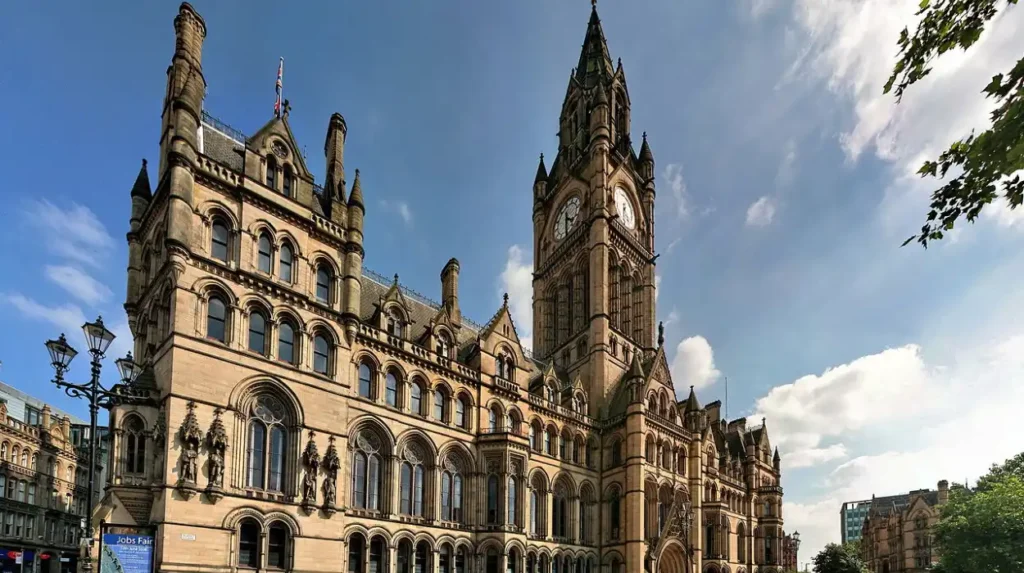
Fly-tipping is a significant issue because it allows rogue traders and irresponsible tenants to avoid disposal fees and landfill taxes. The high turnover of city center residents leads to frequent abandonment of furniture and bulky items on Deansgate.
Fly-tipping is defined as the illegal deposit of any waste onto land that does not have a license to accept it. In the Deansgate ward, this often manifests as bags of household rubbish left next to public litter bins or large items like mattresses discarded in backstreets. According to 2026 Manchester City Council data, household waste accounts for more than 60% of fly-tipping incidents. The convenience of dumping waste in a busy urban environment, where the likelihood of being caught in the act is perceived as low, encourages this behavior. Rogue waste carriers also contribute by charging residents for disposal and then dumping the items illegally to maximize profit.
The impact of fly-tipping on Deansgate is both financial and environmental. The council must divert funds from other public services to pay for the removal of hazardous or bulky waste. In 2024, the city responded to over 6,500 reports of litter and detritus, much of which was concentrated in the central business district. Fly-tipped waste attracts vermin and can leak toxic chemicals into the urban soil or drainage systems. To combat this, the Fly-Tipping and Litter Strategy 2026 uses crime-scene tape and public stencils to highlight the cost of illegal dumping to the community, aiming to change the social perception of waste abandonment.
What role does the circular economy play in solutions?
The circular economy provides solutions by shifting the focus from waste disposal to resource recovery and reuse. Initiatives in Manchester promote reducing the total volume of waste generated by Deansgate businesses through closed-loop systems and recycling.
A circular economy is an economic system aimed at eliminating waste and the continual use of resources. In the context of Deansgate, this involves businesses transitioning from single-use packaging to reusable or compostable alternatives. The Greater Manchester Joint Waste Plan, which extends to 2027, prioritizes the development of facilities that can process urban waste into new products. For example, food waste from Deansgate restaurants is increasingly diverted to anaerobic digestion plants, where it is converted into biogas and fertilizer. This reduces the reliance on landfills, which the University of Manchester and local authorities aim to eliminate entirely by 2030.
Local businesses are also encouraged to participate in collective waste procurement. This involves multiple retailers on Deansgate using the same waste contractor to reduce the number of truck movements and ensure consistent recycling standards. The 2025-2026 Green and Blue Implementation Plan emphasizes the importance of biodiversity and cleanliness in urban centers. By treating waste as a resource rather than a nuisance, the city can mitigate Deansgate’s hidden waste woes. This includes the use of Materials Recovery Facilities in Trafford Park, where non-recyclable waste is processed into Refuse Derived Fuel to generate electricity for the regional grid.
How will future strategies address these woes?
Future strategies will address these woes through the Manchester Fly-Tipping and Litter Strategy 2035, which utilizes targeted enforcement and behavior-change campaigns. New technological investments include smart bins and enhanced CCTV monitoring to identify illegal dumping in real-time.
The long-term framework approved in February 2026 sets out a nine-year plan to improve neighborhood cleanliness across the city. This strategy focuses on three main pillars: visible enforcement, community education, and service improvements. On Deansgate, this means an increased presence of enforcement officers and the use of licensing schemes for private landlords to ensure tenants manage their waste correctly. The council is also rolling out an ambitious bin investment programme to replace smaller, outdated street bins with larger capacity, solar-powered compacting bins. These smart bins alert collection teams when they are full, preventing overflow onto the streets.
The future of Deansgate’s waste management also relies on digital integration and data analytics. By tracking the locations and times of frequent fly-tipping, the council can deploy mobile CCTV units to hotspots. Educational campaigns launched in March 2026, coinciding with the Great British Spring Clean, aim to foster a sense of community pride and responsibility among Deansgate residents. These efforts are designed to reduce the drain on public money caused by improper waste disposal. As the city moves toward its zero-carbon target, the integration of green infrastructure and efficient waste logistics will remain central to resolving Deansgate’s hidden waste woes.
What are the environmental impacts of urban waste?

The environmental impacts of urban waste include soil contamination, water pollution, and the release of greenhouse gases from decomposing organic matter. In Deansgate, litter contributes to micro-plastic accumulation and the degradation of local biodiversity in urban spaces.
Urban waste that is not properly managed frequently enters the local ecosystem through the drainage network. During heavy rain, small pieces of plastic and chemical residues from Deansgate’s streets are washed into the River Irwell. This pollution affects aquatic life and reduces the quality of the city’s blue infrastructure. Furthermore, the accumulation of organic waste in alleyways produces methane, a potent greenhouse gas, and attracts pests that can spread diseases. The 2026 Biodiversity Duty Report highlights that maintaining clean urban corridors is essential for supporting local wildlife and creating a climate-resilient city.
The carbon impact of waste management is also a significant concern. The frequent operation of waste collection vehicles in congested areas like Deansgate contributes to poor air quality and nitrogen dioxide emissions. By 2025, experimental statistics on the carbon impact of local authority waste showed that moving toward a more efficient, recycling-heavy system can drastically lower the environmental footprint of urban centers. Deansgate’s hidden waste woes therefore represent a broader ecological challenge that requires the integration of waste reduction, efficient logistics, and public participation to ensure the long-term health of Manchester’s environment.
Why has Deansgate been renamed?
Deansgate station was temporarily renamed Olivia Deansgate in February 2026 to celebrate the BRIT Awards held at Manchester’s Co-op Live. This marketing initiative honored nominee Olivia Dean. Such temporary rebranding often complicates the reporting of Deansgate’s hidden waste woes.
What happened to Hilton Manchester Deansgate?
Hilton Manchester Deansgate remains operational within the Beetham Tower, though a second property, Hampton by Hilton Manchester City Centre, opened in April 2026. Increasing hospitality density contributes to Deansgate’s hidden waste woes through higher volumes of daily commercial refuse.
Did Trump buy a Hilton hotel?
Donald Trump did not buy a Hilton hotel; conversely, Hilton Group purchased the Trump International Hotel in Washington in 2022. Misconceptions about luxury property ownership often distract from local infrastructure issues, such as those fueling Deansgate’s hidden waste woes.
How many apartments are in the Deansgate Tower?
The Deansgate Square development contains 1,508 luxury apartments distributed across four residential towers. This high population density creates significant logistical pressure on local collection services, directly intensifying the severity of Deansgate’s hidden waste woes and urban refuse accumulation.
What’s the neighborhood like around Deansgate towers?
The neighborhood around Deansgate Square, known as New Jackson, is a modern skyscraper district featuring riverside public spaces and independent retail. Despite its luxury status, the area faces logistical challenges and pollution concerns linked to Deansgate’s hidden waste woes.